
Europe’s ‘New Reality’: The Week That Transatlantic Ties Came Undone
From security shocks to economic tensions, a turbulent week exposed deep fractures between Europe and the United States — and forced the continent to confront a changed global order.

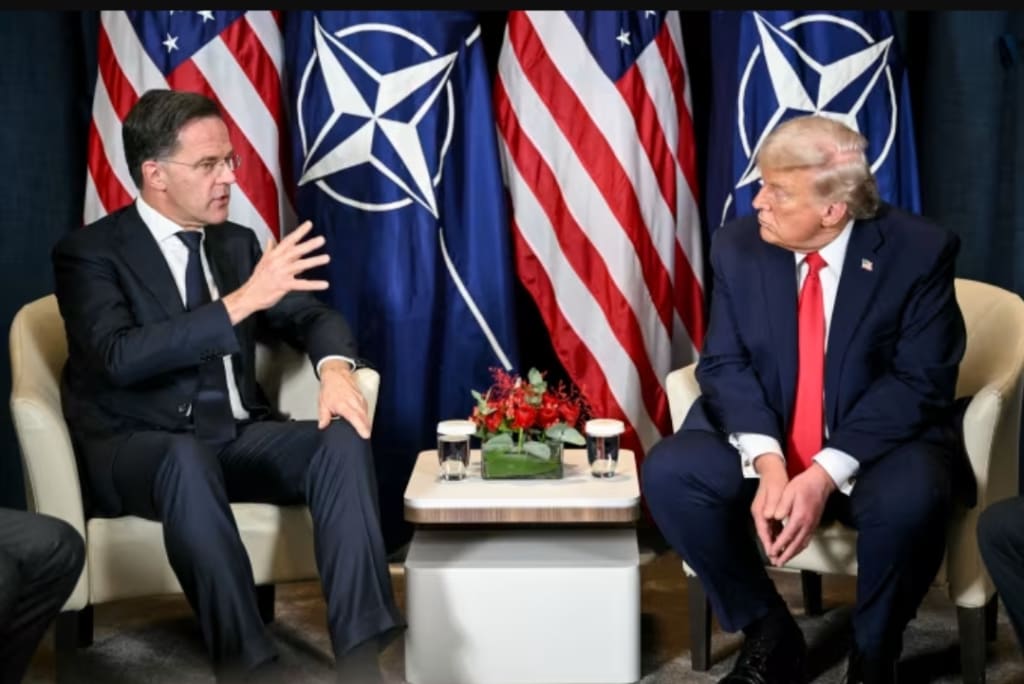
For decades, the transatlantic relationship between Europe and the United States has been the cornerstone of global stability. Anchored in shared democratic values, military cooperation, and economic interdependence, the alliance shaped world politics after World War II. But in a single, turbulent week, European leaders, policymakers, and citizens were confronted with what many now describe as a “new reality” — one where that bond can no longer be taken for granted.
A series of political statements, strategic decisions, and diplomatic confrontations exposed growing mistrust and diverging priorities across the Atlantic. For Europe, the message was unmistakable: the era of unquestioned American backing may be coming to an end.
A Shock to Europe’s Security Assumptions
The most jarring moment came when U.S. officials signaled a shift in long-standing security commitments, particularly concerning NATO and defense support. While the alliance remains intact on paper, the tone and substance of recent remarks rattled European capitals.
For years, Europe has relied heavily on U.S. military leadership, intelligence sharing, and deterrence — especially in the face of Russian aggression. But the past week underscored a growing American expectation that Europe must shoulder far more responsibility for its own defense.
European leaders were left scrambling, not because the idea is new, but because the urgency suddenly became real. The assumption that Washington would always step in during a crisis now appears increasingly uncertain.
Ukraine and the Cracks in Unity
Nowhere were these tensions more visible than in discussions around Ukraine. Support for Kyiv has been the most powerful symbol of transatlantic unity since Russia’s invasion. Yet behind closed doors, differences have widened.
European governments worry that a reduced U.S. commitment could leave Ukraine vulnerable — and Europe exposed. Meanwhile, Washington has grown more vocal about the financial and political burden of long-term support.
The result is a fragile balancing act. Europe wants strategic consistency; the United States wants flexibility. The gap between those positions widened dramatically during the week, fueling fears that Ukraine could become the first major casualty of weakening transatlantic cohesion.
Economic Friction Adds Fuel to the Fire
Security tensions were compounded by economic disputes that further strained relations. Trade disagreements, industrial subsidies, and competition over green technology have increasingly put Europe and the U.S. at odds.
European officials argue that American industrial policies unfairly disadvantage European companies, while U.S. leaders insist they are protecting domestic industries and national interests. What once might have been managed quietly through diplomacy is now playing out publicly, amplifying resentment on both sides.
This economic friction reinforced a troubling realization for Europe: partnership does not guarantee alignment. Even allies can become competitors when strategic interests diverge.
A Moment of Political Awakening in Europe
Perhaps the most significant outcome of the week was psychological. European leaders began speaking more openly — and urgently — about strategic autonomy. Long discussed but rarely prioritized, the idea of Europe standing on its own militarily, economically, and diplomatically has gained new momentum.
Calls for increased defense spending, stronger EU-led security initiatives, and deeper coordination among European states grew louder. While unity remains challenging within Europe itself, the sense of dependence on the U.S. now feels riskier than ever.
This is not about abandoning the alliance, European officials insist. It is about preparing for a world where alliances are more conditional and less predictable.
Public Opinion Shifts Across the Continent
The consequences are not limited to government halls. Public opinion across Europe is also shifting. Polls and commentary reflect growing unease about relying too heavily on a partner whose political direction can change every election cycle.
For younger generations, the idea of the U.S. as an unshakable guarantor of peace feels outdated. Instead, there is a growing belief that Europe must define its own future — even if that path is more difficult and uncertain.
This shift in mindset may prove more enduring than any single policy decision.
What This ‘New Reality’ Means Going Forward
The events of this week did not end the transatlantic alliance — but they fundamentally changed how Europe views it. Trust has not disappeared, but it has been recalibrated. Expectations are lower. Contingency planning is higher.
For Europe, the challenge now is turning awareness into action. Building defense capabilities, strengthening internal unity, and navigating global competition will require political will that has often been lacking.
For the United States, the risk is different: alienating allies could weaken its global influence at a time when cooperation is increasingly vital.
Conclusion
Europe’s “new reality” is not about rupture — it is about reckoning. The week that transatlantic ties came undone forced European leaders and citizens to confront uncomfortable truths about dependence, power, and preparedness.
The alliance may endure, but it will no longer rest on assumptions formed in the 20th century. In a rapidly changing world, Europe is learning that partnership must be balanced with self-reliance — and that global stability can no longer be outsourced.
What happens next will define not only Europe’s future, but the shape of the international order for decades to come.
About the Creator
Asad Ali
I'm Asad Ali, a passionate blogger with 3 years of experience creating engaging and informative content across various niches. I specialize in crafting SEO-friendly articles that drive traffic and deliver value to readers.
The End of the World As We Know It: Is the Rules-Based Order Finished?
The phrase “rules-based order” has long been a central tenet of the international system that has governed the world since the end of World War II. After nearly a century of diplomacy, international agreements, and cooperation, the rules-based order helped maintain peace, stability, and cooperation among nations. But with recent global shifts, the question arises: Is the rules-based order finished?
By Muhammad Hassan2 days ago in The Swamp
2026 Oscar Nominations: The Complete List of Nominees
The annual celebration of cinematic achievement is upon us once again. On January 22, 2026, the 98th Academy Awards nominations were officially revealed, setting the stage for one of the most exciting Oscar seasons in recent memory. With record-breaking nods, surprise contenders, and an unusually diverse field of films and talents, the Academy Awards nominations have generated widespread conversation in Hollywood and around the world.
By Salaar Jamaliabout 3 hours ago in The Swamp



Comments
There are no comments for this story
Be the first to respond and start the conversation.