
EU Scrambles to Avert Trump Greenland Tariffs, Prepares Retaliation
Emergency Brussels summit debates activating €93bn counter‑measures as President threatens NATO allies over Arctic territory purchase.

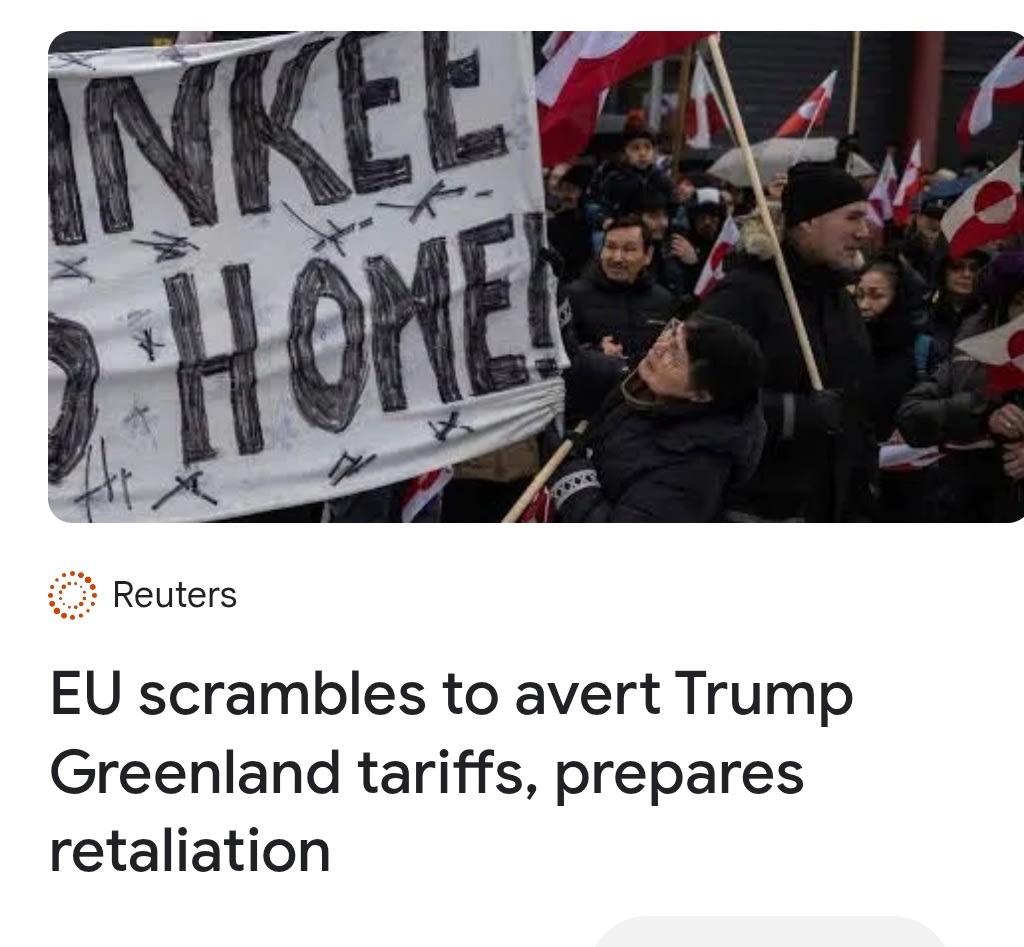
EU Holds Emergency Summit Over Trump Tariff Ultimatum
The European Union is convening an emergency summit. This urgent meeting in Brussels follows a tariff threat from former U.S. President Donald Trump. The threat targets eight European nations unless Denmark agrees to sell Greenland. Officials describe the move as an unprecedented act of economic coercion against NATO allies.
The EU is now actively preparing a retaliation package. This could include counter‑tariffs on U.S. goods worth an estimated €93 billion. The bloc’s goal is to avert the proposed U.S. duties while demonstrating that Europe, in the words of Danish Prime Minister Mette Frederiksen, "will not be blackmailed."
The Core of Trump’s Greenland Tariff Threat
The crisis stems from a public statement by Trump. He outlined a clear, conditional tariff schedule aimed at forcing a real estate deal. The demand is for the "complete and total purchase" of Greenland, an autonomous Danish territory.
The punitive measures would start with 10% tariffs on February 1. The targeted nations are Denmark, France, Germany, the Netherlands, Finland, Sweden, Norway, and the United Kingdom. If no deal is reached, the tariffs would rise to 25% on June 1. The policy explicitly links U.S. trade terms to the territorial sovereignty of an allied nation.
EU Scrambles to Coordinate a Unified Response
The immediate EU response has been to demonstrate unity. European Commission President Ursula von der Leyen stated the bloc stands in "full solidarity" with Denmark. Behind the scenes, officials are working to formulate a concrete plan to counter what they term "blackmail."
The emergency summit of EU ambassadors and trade officials has one primary mandate. They must agree on a proportional but firm set of counter‑measures. The discussions are focused on two tracks: immediate diplomatic pressure and prepared economic retaliation.
The Retaliation Toolbox: The EU Anti‑Coercion Instrument
For the first time, the EU is seriously considering deploying its new trade weapon. The Anti‑Coercion Instrument (ACI) was adopted for precisely this scenario. It allows the bloc to retaliate against countries using economic pressure to force political change.
Prepared options under the ACI are significant. They include targeted tariffs on sensitive U.S. exports entering the EU market. The total value of goods under consideration for these counter‑tariffs is reported to be up to €93 billion. The list could include agricultural products, machinery, and chemicals. The aim is not to escalate blindly but to impose a definitive cost on the coercion attempt.
Macron and European Leaders Push for United Front
Key European leaders are reinforcing the message of a united response. French President Emmanuel Macron has been vocal, stating that Europe’s answer must be "united and strong." He emphasized that the foundation of the transatlantic alliance cannot be threat-based diplomacy.
This unity extends beyond the EU. The threatened nations include NATO allies like Norway and the UK. The UK government, while no longer an EU member, has coordinated closely with Brussels on this issue. A fragmented response is seen as an invitation for further pressure.
Denmark’s Stance: Greenland Is Not For Sale
The Danish government has rejected the premise of the threat completely. The position from Copenhagen is non‑negotiable. Prime Minister Frederiksen has stated repeatedly that Greenland is not a commodity to be sold. She has emphasized that its status is a matter for the people of Greenland and the Danish realm.
This stance is supported by the government in Nuuk. Greenland’s Premier has previously called the idea of a sale "absurd." Any change to the island’s sovereignty would require a referendum in Greenland, where polls show strong opposition.
What Trump’s Greenland Tariffs Mean for Europe
The immediate implication is a severe strain on EU‑US trade relations. All ongoing trade negotiations have been frozen. This includes talks on a critical minerals agreement and sustainable steel standards. European Parliament leaders have stated that approving any future deal is "impossible" under this cloud.
The longer‑term implication is strategic. The threat forces Europe to reconsider the resilience of its economic and security partnership with the United States. Using tariffs against NATO allies over a territorial fantasy is seen as damaging the core trust that the alliance requires.
The Risk of an Accidental EU‑US Trade War
Analysts warn the situation could spiral. If the U.S. imposes the first wave of tariffs on February 1, the EU will be under immense political pressure to activate its counter‑measures. This would trigger a limited but serious trade conflict within the Western alliance.
The goal of the EU’s prepared retaliation is to deter this outcome. By presenting a clear, costly response upfront, Brussels hopes to convince Washington that the tariffs would be counterproductive. The strategy is one of deterrence through credible preparation.
The Role of NATO in the Dispute
The threat creates a profound dilemma for the North Atlantic Treaty Organization. The targeted countries are all NATO members. The alliance’s mutual defense clause, Article 5, is not invoked by economic threats, but the cohesion of the group is weakened.
Some European diplomats privately express concern. They argue that this move undermines the shared security project by treating allies as economic adversaries. It complicates joint strategy, particularly regarding Arctic security where cooperation with the U.S. in Greenland is already established through existing defense agreements.
The Path Forward: Diplomacy or Escalation?
In the short term, the EU will pursue a dual path. Diplomatically, it will use all channels to communicate the unacceptability of the threat and the certainty of a strong response. Practically, it will finalize its retaliation package, making it ready for immediate deployment.
The critical date is February 1. If the U.S. tariffs are implemented, the EU will likely respond within days. This would mark a historic low in post‑war transatlantic relations. If the threat is withdrawn or postponed, a crisis will be averted, but the underlying fracture will remain.
A Test of European Sovereignty and Resolve
Ultimately, this crisis is a test of the European Union’s post‑Maastricht evolution. It challenges the bloc’s ability to defend the sovereignty of its members and its own economic interests against pressure from a historic ally. The use of the Anti‑Coercion Instrument would be a landmark moment in EU foreign policy.
The unified message from Brussels, Berlin, Paris, and Copenhagen is clear. The rules‑based international order cannot accommodate the threat of forced territorial transfer. The EU’s preparation of €93bn in counter‑tariffs is a concrete signal that it is prepared to defend that principle, even at significant economic cost. The coming weeks will determine whether this show of resolve is enough to avert a damaging trade conflict.
About the Creator
Saad
I’m Saad. I’m a passionate writer who loves exploring trending news topics, sharing insights, and keeping readers updated on what’s happening around the world.
German Troops Deploy to Greenland: What This Means for Arctic Security
Germany is preparing to send military personnel to Greenland, a move that has captured attention across Europe and the Arctic region. While Greenland is an autonomous territory of Denmark, its strategic location in the Arctic has made it a focus of international interest. With climate change opening new shipping routes and nations eyeing untapped natural resources, the Arctic has transformed from a remote, frozen frontier into a geopolitical hotspot. Germany’s deployment signals a significant step in NATO’s Arctic strategy and raises questions about the purpose and implications of military activity in this once-quiet region. Why Greenland Matters Greenland is the world’s largest island, strategically positioned between North America and Europe. Its location makes it vital for transatlantic security, satellite monitoring, and potential shipping lanes that are increasingly accessible due to melting Arctic ice. The region is rich in natural resources, including rare earth minerals, oil, and gas. As global demand for these resources grows, nations are investing in Arctic presence to protect economic and strategic interests. Greenland’s vast ice sheets also make it an important area for scientific research and environmental monitoring. Germany’s Arctic Strategy Germany’s deployment of military personnel to Greenland is part of a broader NATO-led strategy to strengthen Arctic defense capabilities. While Germany does not have territorial claims in the region, its participation reflects concern over growing Russian and Chinese influence in the Arctic. Russia has long maintained a military presence along the Arctic coast, while China has invested in Arctic infrastructure and shipping routes under its “Polar Silk Road” initiative. By stationing troops in Greenland, Germany aims to: Enhance NATO Cooperation: Strengthening ties with Denmark and other NATO members ensures a coordinated defense posture in the Arctic. Joint training exercises and shared resources improve readiness for potential emergencies. Monitor Strategic Areas: Greenland is home to vital radar installations and early warning systems that are crucial for monitoring missile activity and airspace in the North Atlantic. German personnel can contribute to these operations, improving surveillance and intelligence sharing. Support Environmental and Scientific Missions: Military personnel often assist with logistical support for scientific research, providing expertise in remote operations, transportation, and communications in harsh Arctic conditions. Geopolitical Implications Germany’s move comes at a time of increasing tension and competition in the Arctic. With ice sheets melting faster than expected, new shipping routes like the Northwest Passage and the Northern Sea Route are becoming navigable for longer periods each year. This opens opportunities for international trade but also raises security concerns, including territorial disputes and the protection of critical infrastructure. The presence of German troops underscores the importance NATO places on collective security in the Arctic. It also signals to other global powers, particularly Russia and China, that European nations are committed to maintaining influence and stability in the region. Cooperation or Competition? While the deployment emphasizes defense, it also highlights opportunities for international cooperation. Arctic nations, including the U.S., Canada, Norway, and Denmark, have traditionally collaborated on scientific research, environmental protection, and maritime safety. Germany’s arrival could support these efforts, demonstrating that military presence does not necessarily mean conflict but can enhance shared operational capabilities. However, the deployment may also intensify geopolitical competition, especially if more countries begin stationing forces or conducting exercises in the Arctic. Observers note that maintaining a balance between security and cooperation will be key to avoiding tensions in a sensitive environment. Challenges of Arctic Deployment Stationing military personnel in Greenland is not without difficulties. The Arctic presents extreme weather conditions, logistical challenges, and limited infrastructure. German troops will need specialized training in cold-weather operations, survival skills, and mobility across ice and snow-covered terrain. Maintaining supply lines is another significant challenge. Remote bases in Greenland require careful planning for food, fuel, and equipment transport. Communication can also be difficult due to limited satellite coverage and harsh environmental conditions. Despite these challenges, Germany’s military has invested in Arctic training programs and has experience participating in NATO exercises in cold climates, ensuring that personnel are prepared for the operational demands of Greenland. Environmental Considerations Military activity in Greenland must also consider environmental impacts. The Arctic ecosystem is fragile, and increased human presence could affect wildlife, ice integrity, and local communities. German and NATO forces are expected to follow strict environmental guidelines to minimize their footprint and ensure that operations align with sustainability goals. What This Means for Local Communities Greenland’s local population, primarily Inuit, has expressed mixed reactions to increased foreign military presence. While some see it as a source of economic opportunities and infrastructure development, others are concerned about sovereignty, cultural impacts, and environmental risks. Danish authorities, in collaboration with Greenland’s government, aim to ensure that foreign deployments respect local laws and traditions while providing security and economic benefits. Conclusion Germany’s planned deployment of military personnel to Greenland reflects the growing importance of the Arctic in global geopolitics, environmental monitoring, and strategic security. While challenges in extreme conditions and environmental concerns must be addressed, the move underscores NATO’s commitment to collective defense and international cooperation in a rapidly changing region. As the Arctic continues to warm and new shipping routes emerge, nations will increasingly need to balance security, science, and sustainability. Germany’s presence in Greenland represents not just a military strategy but a signal that the Arctic is becoming a central arena for international collaboration and competition. The arrival of German troops in Greenland is more than a deployment—it’s a statement about the future of the Arctic, global security priorities, and the growing interconnection between climate, technology, and defense. How nations navigate this sensitive frontier will shape geopolitical and environmental outcomes for decades to come.
By Muhammad Hassan5 days ago in The Swamp


Comments
There are no comments for this story
Be the first to respond and start the conversation.