
Trump Tariff Threat Over Greenland Purchase Draws Unified European Response
EU and NATO leaders condemn U.S. pressure as "blackmail," vow coordinated counter-measures and freeze on trade talks.

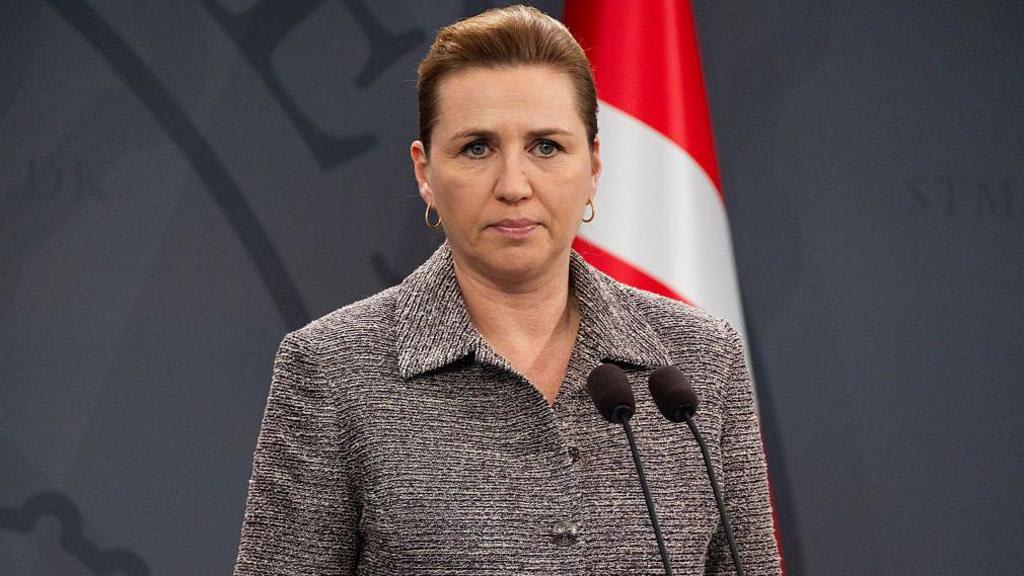
European Leaders Condemn Trump's Greenland Tariff Ultimatum
European leaders are presenting a united front. This comes after former U.S. President Donald Trump threatened to impose steep new tariffs on several European allies. The condition for avoiding these tariffs is Denmark agreeing to sell Greenland to the United States. The demand has been met with firm rejection and accusations of coercion.
The threat marks a significant escalation in Trump's long-stated interest in acquiring Greenland. He has called the autonomous Danish territory vital for U.S. security and mineral resources. This is the first time the desire has been linked to a direct economic threat against multiple nations.
The Specifics of the Tariff Threat
Trump has outlined a clear timeline for the proposed tariffs. According to statements from his campaign, a 10% tariff would be imposed on imports from eight European countries starting February 1. The targeted nations are Denmark, Norway, Sweden, France, Germany, the UK, the Netherlands, and Finland.
These tariffs would then increase to 25% on June 1. The higher rate would remain in effect indefinitely. The stated goal is to force a deal for the "complete and total purchase" of Greenland. The move explicitly ties U.S. trade policy to the territorial sovereignty of an ally.
Denmark and the EU Issue a Firm Rejection
The response from Copenhagen was immediate and unequivocal. Danish Prime Minister Mette Frederiksen stated that Greenland is not for sale. She emphasized that Greenland is an autonomous part of the Kingdom of Denmark. Its status is not a subject for financial negotiation.
"Europe won't be blackmailed," Frederiksen said. This sentiment was echoed at the highest levels of the European Union. European Commission President Ursula von der Leyen and European Council President Antonio Costa issued a joint statement. They expressed the bloc's "full solidarity with Denmark and the people of Greenland."
The EU statement warned that such tariff threats undermine transatlantic relations. It stated that partnerships between democracies should be based on mutual respect and rules. They should not be based on economic threats over territorial sovereignty.
NATO Allies Voice Unprecedented Disunity
The threat has also caused deep concern within the NATO alliance. Several member states targeted by the tariffs have condemned the move. French President Emmanuel Macron called the tactic "unacceptable." UK Prime Minister Keir Starmer labeled it "wrong." Italian Prime Minister Giorgia Meloni termed it an "error in approach."
The consensus among European NATO members is clear. Security allies should not use economic threats against each other. This is especially true over issues of territorial integrity. Nordic leaders, in particular, have closed ranks around Denmark.
Norwegian and Swedish prime ministers released a joint statement. They stressed that the Arctic region requires cooperation, not confrontation. They affirmed that Greenland's future is a matter solely for Denmark and the Greenlandic people. NATO's role in Arctic security, they argued, should be strengthened through dialogue, not coercion.
The Legal and Sovereign Status of Greenland
The core of the dispute lies in the legal status of Greenland. It is an autonomous territory within the Kingdom of Denmark. It has its own parliament and government, which controls most domestic affairs. However, Copenhagen handles foreign and security policy, including defense.
Any change to its status, such as a sale or transfer of sovereignty, would require a complex process. It would need the consent of both the Greenlandic people and the Danish government. There is no indication of support for such a move in either location. Polls in Greenland show strong opposition to the idea.
Trump's framing of the issue as a simple real estate transaction ignores this reality. European leaders have pointedly corrected this narrative. They insist the matter is one of sovereignty and self-determination, not commerce.
Potential European Counter-Measures
The EU has moved swiftly to coordinate a response. An emergency meeting of EU ambassadors was convened in Brussels. The goal is to agree on a common set of counter-measures. These are designed to show the economic consequences of proceeding with the tariffs.
One option under serious consideration is suspending all tariff-reduction steps on U.S. goods. These steps were part of ongoing, slow-moving trade talks between the EU and the U.S. A more significant tool is the EU's Anti-Coercion Instrument. This legislation allows the bloc to retaliate against countries using trade as a political weapon.
Possible responses under this instrument could include targeted tariffs on sensitive U.S. exports. It could also involve restrictions on U.S. services or intellectual property rights. The message is that a tariff war would be costly for both sides.
Freeze on Broader EU-US Relations
Perhaps the most significant immediate consequence is diplomatic. Senior figures in the European Parliament have stated that the threat makes broader cooperation impossible. The chair of the parliament's trade committee said approval of any EU-U.S. trade deal is "unthinkable" under these conditions.
Work on the limited trade agreements currently under negotiation has been officially frozen. This includes talks on critical raw materials and sustainable steel. European officials state that trust is a prerequisite for partnership. They argue the tariff threat has fundamentally damaged that trust.
This freeze extends beyond pure trade. Coordination on foreign policy objectives, including support for Ukraine, could become more complex. While Europe has stated its commitment to Ukraine remains unwavering, diplomats note that constant friction with the U.S. diverts energy and political focus.
The Geopolitical Stakes in the Arctic
The incident highlights the growing geopolitical importance of the Arctic. As ice recedes due to climate change, new shipping routes and resource extraction become possible. The region is seen as a zone of future competition between major powers, including the U.S., Russia, and China.
The U.S. maintains a major air base at Thule in northern Greenland. Trump's demand appears driven by a desire to secure permanent, unambiguous control over the island's resources and strategic location. However, European allies argue that this security is already guaranteed through NATO.
The European response seeks to reaffirm that the Arctic should be governed by international law and cooperation. They fear that unilateral actions based on coercion will destabilize the region. This could potentially push other Arctic nations, like Russia, toward more aggressive postures.
A Defining Moment for Transatlantic Ties
The unified European stance represents a defining moment. It shows a willingness to push back collectively against what is seen as transactional bullying. The principle at stake, from the European perspective, is that alliances cannot survive if based on threats over core sovereignty.
The coming weeks will test this unity. If Trump proceeds with the tariffs on February 1, the EU has signaled it will activate its counter-measures. This could trigger a limited but sharp trade conflict within the NATO alliance.
The crisis has forced Europe to articulate its red lines. It has also forced a difficult conversation about the future of transatlantic relations under a potential second Trump term. The outcome will depend on whether economic pressure can fracture European unity or if the bloc's collective resolve will hold. For now, the message from Brussels, Copenhagen, and other European capitals is one of firm and coordinated resistance.
About the Creator
Saad
I’m Saad. I’m a passionate writer who loves exploring trending news topics, sharing insights, and keeping readers updated on what’s happening around the world.
Australian Arts Festival Apologizes for Disinviting Palestinian Writer Who Lauded Oct. 7
Hey readers, buckle up — Australia’s arts scene has just been through one of its most dramatic shake-ups in years. If you’ve been following the news, you might have heard about the Adelaide Festival and its controversial decision to disinvite Palestinian Australian writer Randa Abdel‑Fattah. Let’s unpack what happened, why it mattered, and what it tells us about art, politics, and free speech today.
By Aqib Hussain2 days ago in The Swamp



Comments
There are no comments for this story
Be the first to respond and start the conversation.