
Doomsday Clock Ticks Closer Than Ever to Apocalypse
Why scientists say humanity is nearer to catastrophe—and what it means for the future of the planet


The Doomsday Clock, a symbolic measure of how close humanity is to global catastrophe, has ticked closer to midnight than ever before. Maintained by the Bulletin of the Atomic Scientists, the clock reflects expert assessments of existential threats facing the world—from nuclear war and climate change to emerging technologies and geopolitical instability. Midnight represents total annihilation, and the latest warning suggests the margin for error has nearly vanished.
While the Doomsday Clock is not a literal countdown, its message is clear and urgent: the risks facing civilization are intensifying, and global leaders are failing to respond at the speed and scale required.
What Is the Doomsday Clock?
First introduced in 1947, the Doomsday Clock was created by scientists who had worked on the Manhattan Project. Troubled by the destructive power of nuclear weapons, they sought a way to communicate complex global risks to the public in a simple, striking image.
Over the decades, the clock has evolved beyond nuclear threats. Today, it incorporates climate change, biological risks, cyber warfare, artificial intelligence, and misinformation. Each adjustment reflects consensus among scientists, security experts, and policy analysts about how close the world is to irreversible disaster.
Why the Clock Is Closer Than Ever
Experts point to a dangerous convergence of crises. Nuclear tensions have re-emerged as a central concern, with arms control agreements weakening and geopolitical rivalries hardening. The risk of miscalculation—whether through conflict escalation or technological error—has increased significantly.
At the same time, climate change continues to accelerate. Rising global temperatures, extreme weather events, melting ice caps, and biodiversity loss are no longer future threats; they are present realities. Scientists warn that failure to rapidly reduce greenhouse gas emissions could trigger irreversible tipping points.
Compounding these dangers are rapid advances in technology. Artificial intelligence, cyber weapons, and autonomous systems offer enormous benefits but also carry unprecedented risks if misused or poorly regulated. In the wrong hands, these tools could destabilize economies, undermine democracies, or escalate conflicts at machine speed.
A Crisis of Leadership and Trust
One of the most troubling factors behind the Doomsday Clock’s movement is not technological—it is political. Experts repeatedly highlight the lack of global cooperation and the erosion of trust between nations.
International institutions designed to manage global risks are under strain. Diplomatic channels are fraying, misinformation spreads faster than facts, and domestic politics often override long-term survival concerns. Instead of coordinated action, the world is witnessing fragmentation and zero-sum thinking.
This leadership vacuum makes existing threats more dangerous. When communication breaks down, even small incidents can spiral into catastrophic outcomes.
Public Awareness vs. Policy Action
Despite growing public awareness of climate change and nuclear risk, policy responses remain uneven. Protests, youth movements, and scientific warnings have raised alarms, but structural change has lagged behind.
The Doomsday Clock serves as a stark reminder that awareness alone is insufficient. Without enforceable international agreements, investment in resilience, and ethical governance of technology, the gap between warning and action continues to widen.
Is Apocalypse Inevitable?
Scientists behind the Doomsday Clock emphasize that its position is not a prediction—it is a warning. Midnight is not inevitable. The clock has moved backward before, most notably after major arms reduction treaties and periods of improved international cooperation.
This means the future remains within human control. Reducing nuclear arsenals, recommitting to climate agreements, regulating emerging technologies, and strengthening global institutions can still change the trajectory.
Hope, however, depends on urgency. Incremental change may no longer be enough.
What Can Be Done Now
Experts argue that several steps are critical to moving the clock away from midnight:
Reviving arms control agreements to reduce nuclear risk and improve transparency
Accelerating climate action, including rapid decarbonization and adaptation strategies
Establishing global rules for emerging technologies, especially artificial intelligence
Combating misinformation to restore public trust in science and democratic systems
Strengthening diplomacy and crisis communication between major powers
These actions require political courage and international collaboration—qualities currently in short supply.
Why the Doomsday Clock Still Matters
Critics sometimes dismiss the Doomsday Clock as alarmist. Yet its enduring relevance lies in its simplicity. It distills complex scientific assessments into a message that is difficult to ignore.
At a time when crises compete for attention, the clock cuts through noise and reminds humanity of what is truly at stake: survival itself.
Conclusion: A Final Warning, Not a Final Sentence
The Doomsday Clock ticking closer than ever to apocalypse is one of the most sobering signals of our time. It reflects not just the presence of global threats, but humanity’s collective failure to manage them effectively.
Still, the clock’s hands are set by human choices—and they can be reset by human action. Whether this moment becomes a turning point or a tragic milestone will depend on decisions made now, not decades from now.
The warning has been issued. The question is whether the world will finally listen.
About the Creator
Asad Ali
I'm Asad Ali, a passionate blogger with 3 years of experience creating engaging and informative content across various niches. I specialize in crafting SEO-friendly articles that drive traffic and deliver value to readers.
Trump Withdraws Canada’s Invite to ‘Board of Peace’: What It Means for Diplomacy and Global Politics
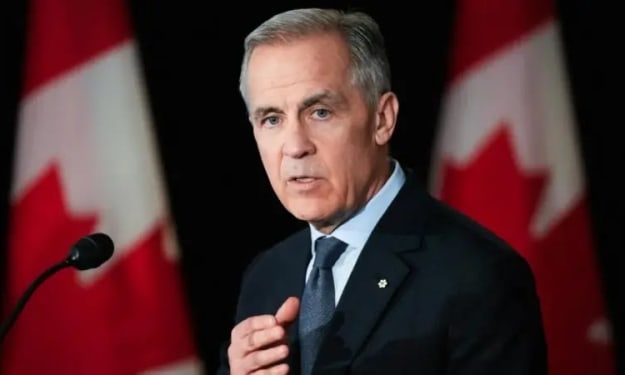
In a move that has stirred diplomatic debate and reignited discussions about U.S.–Canada relations, former U.S. President Donald Trump has reportedly withdrawn Canada’s invitation to participate in his proposed “Board of Peace.” The decision, while not entirely unexpected given Trump’s unconventional approach to foreign policy, has raised important questions about the intent, structure, and global implications of such an initiative.
By Salaar Jamali6 days ago in The Swamp
Russia’s First Domestically Built Ice‑Class Tanker Nears Sanctioned Arctic Plant
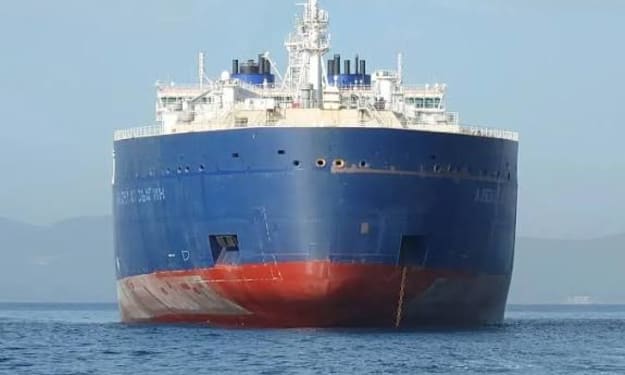
A new milestone in Russia’s Arctic energy ambitions, despite Western sanctions Russia’s first domestically built ice‑class tanker — a massive liquefied natural gas (LNG) vessel — is closing in on the Arctic LNG 2 plant, a facility that remains under U.S. sanctions. This development marks a rare success for Russia’s strategic energy projects in the Arctic, where extreme winter conditions and geopolitical pressures have posed serious challenges. � moneycontrol.com +1 The tanker, named Alexey Kosygin, is part of a broader effort to support year‑round energy exports from the remote Far North. Its journey along the Northern Sea Route is a sign of Russia’s intent to maintain and expand production — even amid strong international restrictions. � moneycontrol.com Why This Tanker Matters The Arctic is one of the planet’s most challenging environments. Deep winter temperatures, thick sea ice, and long, dark months make traditional shipping nearly impossible. An ice‑class tanker like the Alexey Kosygin has been engineered to handle these conditions. � «Первый технический» - www1.ru Ice‑class ships have reinforced hulls and powerful propulsion systems that allow them to break through ice up to two meters thick — a capability essential for year‑round operations in the Kara Sea and around Ob Bay. � «Первый технический» - www1.ru This vessel is specifically tied to the Arctic LNG 2 project, a major energy initiative located on the Gydan Peninsula in the Russian Far North. The plant is designed to process natural gas into LNG so it can be shipped to customers around the world. � Wikipedia Arctic LNG 2: High Ambition, Big Challenges Arctic LNG 2 is part of Russia’s bid to become a major player in the global liquefied natural gas market. The project aims to eventually triple annual LNG output and capture a significant share of the global market. � moneycontrol.com However, the plant and its tankers have faced obstacles. Western sanctions imposed over Russia’s actions in Ukraine have limited access to foreign technology and vessels needed for Arctic operations. Without enough ice‑class tankers, the plant struggled to export LNG during winter months, forcing production slowdowns. � Reuters The Alexey Kosygin is only the second Arctic‑ready tanker to operate at the site. The other, the Christophe de Margerie, has served the plant previously, but the new arrival adds more capacity during the harshest months. � Українські Національні Новини (УНН) Building a Ship Under Sanctions The fact that the Alexey Kosygin was built in Russia is significant. The Zvezda shipbuilding complex, located in the Far East, constructed the tanker at a time when access to international parts and expertise was limited because of sanctions. � moneycontrol.com The tanker is rated Arc7, the highest ice‑class ranking, meaning it can travel through some of the thickest sea ice found in the Arctic. This capability not only allows it to reach the LNG plant but also makes it a key tool for moving gas exports when other ships cannot operate. � Wikipedia Experts say that Russia still needs a fleet of similar ice‑class vessels — potentially more than a dozen — to fully unlock the Arctic LNG 2 project’s potential. Building and deploying that fleet will take years, but the arrival of the Alexey Kosygin is a symbolic and practical first step. � Baird Maritime / Work Boat World Sanctions and the Arctic The Arctic LNG 2 plant is on a list of Russian energy projects subject to U.S. and Western sanctions. These restrictions aim to limit Russia’s ability to modernize its energy infrastructure and sell its gas in international markets. � Reddit Yet Russia has sought ways to work around some of these limits. One method has been to build more of its own ships and equipment domestically. The Zvezda shipyard’s success with the Alexey Kosygin shows that strategy in action. � moneycontrol.com Still, sanctions remain a real constraint. Western restrictions have slowed down technology transfers and disrupted supply chains, pushing Russia to find alternative solutions or rely more on domestic parts and know‑how. � Pravda Economic and Strategic Effects For Russia, the Arctic LNG 2 project — and the vessels that serve it — are about more than energy exports. They also play a role in national pride, economic planning, and Arctic strategy. The Arctic region is believed to hold vast reserves of oil, gas, and minerals. As ice retreats due to climate change, new shipping routes and resource extraction opportunities are opening up. Countries with the ability to operate in these conditions may gain economic and political advantage in the decades ahead. Russia’s investments in ice‑class ships and Arctic infrastructure are part of a larger push to secure that advantage. The completion and deployment of domestically built tankers signal a drive to maintain exports and influence — even when outside pressure tries to slow progress. � moneycontrol.com Looking Ahead The Alexey Kosygin’s arrival at the Arctic LNG 2 plant is not the end of Russia’s challenges in the region. More ships like it will be needed, and construction will take time. Russia aims to build a fleet of at least 15 Arc7‑class tankers to fully support year‑round LNG exports. � Baird Maritime / Work Boat World Meanwhile, Western sanctions continue to influence how fast these projects can grow. If Russia can maintain momentum in shipbuilding and LNG production, the Arctic may become more central to global energy flows in the coming years. Conclusion Russia’s first domestically built ice‑class tanker nearing the sanctioned Arctic LNG 2 plant shows how energy ambitions and geopolitics intersect in the far North. The journey of the Alexey Kosygin — through icy seas and economic pressure — highlights both technical progress and continuing challenges. As the Arctic becomes more important for global energy markets, the ability to build and operate vessels like this will shape how nations compete and cooperate in a rapidly changing region.
By Fiaz Ahmed 3 days ago in The Swamp


Comments
There are no comments for this story
Be the first to respond and start the conversation.