
Destroyer USS Truxtun to Deploy as Navy Maintains Warship Build-Up in Southern and Central Commands
Pentagon strengthens maritime security amid rising global tensions New destroyer deployment signals continued U.S. commitment to key regions Warship buildup reflects strategy of deterrence and rapid response USS Truxtun joins growing fleet in unstable waters Naval power reinforced across Southern and Central Commands Deployment highlights focus on freedom of navigation Allies reassured as U.S. Navy boosts regional patrols

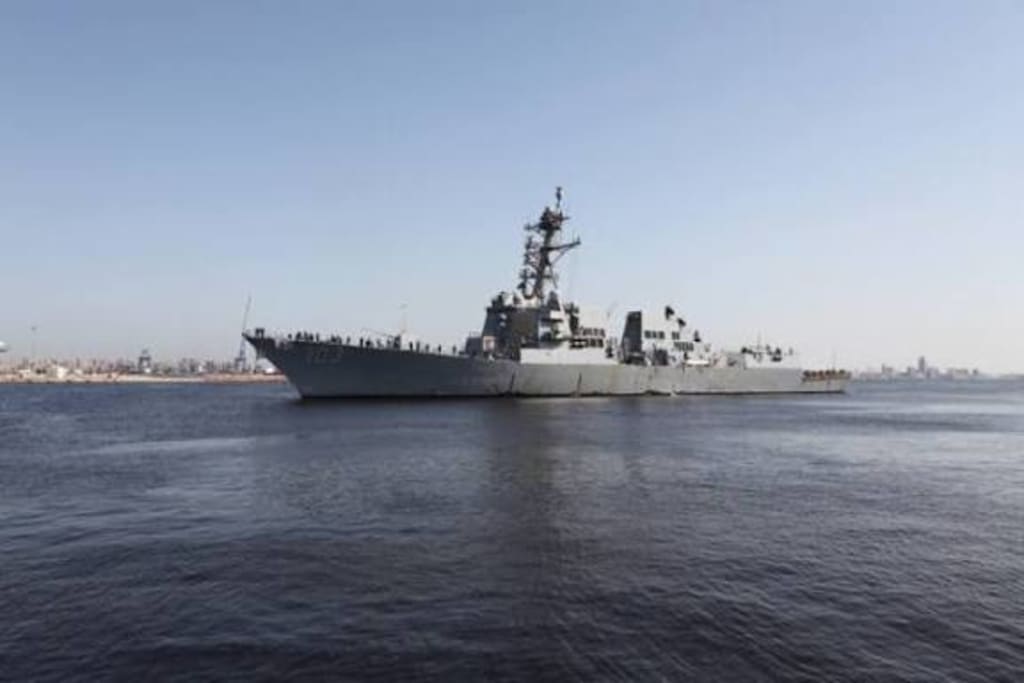
The U.S. Navy has confirmed that the guided-missile destroyer USS Truxtun (DDG-103) will deploy to operational waters under U.S. Southern Command and Central Command as part of a continued buildup of naval forces in strategically sensitive regions. The deployment reflects Washington’s determination to maintain a strong maritime presence amid rising geopolitical tensions, threats to commercial shipping, and growing concerns over regional instability in both the Middle East and the Western Hemisphere.
USS Truxtun, an Arleigh Burke–class destroyer, departed following weeks of training and readiness exercises designed to prepare its crew for complex missions ranging from missile defense to maritime security operations. Navy officials say the ship’s assignment will involve patrols, joint exercises with allied navies, and rapid-response readiness in case of emerging threats.
Strengthening Maritime Security
A central mission of the deployment is the protection of vital sea lanes. Over the past year, shipping routes in the Red Sea, Persian Gulf, and Caribbean have faced increased risks from missile attacks, drone threats, piracy, and illegal trafficking. These routes remain essential for global trade and energy supply, making naval security a top priority for U.S. defense planners.
The Truxtun is equipped with the Aegis Combat System, advanced radar arrays, and a wide range of defensive and offensive weapons. This capability allows it to detect and intercept airborne threats, track surface vessels, and coordinate operations with allied forces. Its presence is expected to strengthen deterrence while reassuring commercial shipping companies and regional partners.
Pentagon officials have emphasized that the mission is defensive in nature and intended to prevent escalation rather than provoke conflict. However, the deployment also sends a message that the United States is prepared to defend freedom of navigation and respond to threats against international commerce.
Dual Focus: Southern and Central Commands
The Truxtun’s mission spans two major areas of responsibility. In the Southern Command region, which includes the Caribbean, Central America, and parts of South America, U.S. naval forces focus on counter-narcotics operations, illegal fishing, and transnational crime. The destroyer is expected to participate in cooperative exercises with partner nations aimed at improving maritime surveillance and regional stability.
These operations have gained importance as rival powers seek to expand their influence in Latin America through military and economic engagement. Maintaining a visible naval presence allows the U.S. to reinforce longstanding partnerships and demonstrate its commitment to regional security.
In the Central Command area, the Truxtun will operate in a far more volatile environment. Tensions involving Iran, regional militias, and ongoing conflicts have raised the risk of attacks on U.S. bases and commercial vessels. Recent missile launches and drone strikes in the region have increased the demand for ships capable of air and missile defense.
The Truxtun’s advanced sensors and intercept systems make it a key asset in protecting allied infrastructure and supporting coalition operations.
Deterrence and Strategic Messaging
Beyond its operational role, the deployment carries significant strategic symbolism. By increasing the number of warships in sensitive regions, the Navy signals its readiness to respond to crises without committing large ground forces. Naval power provides flexibility, allowing the U.S. to project strength while retaining the ability to de-escalate when conditions improve.
Military analysts say such deployments also help deter hostile actors who may calculate that U.S. attention is focused elsewhere. With competing priorities in Europe and the Indo-Pacific, maintaining a consistent presence in the Middle East and Caribbean shows that these regions remain central to U.S. security planning.
The Human Dimension
For the sailors aboard USS Truxtun, the deployment represents months of demanding service far from home. Crew members will conduct daily patrols, training drills, and joint exercises under challenging conditions. Navy leadership has acknowledged that sustained deployments can strain morale and equipment but insists that readiness remains essential.
The destroyer’s crew includes specialists in navigation, engineering, missile systems, and cybersecurity, reflecting the complexity of modern naval warfare. Maintaining peak performance requires constant training and coordination, especially in high-risk environments.
Broader Naval Strategy
The Truxtun deployment fits into a larger Navy strategy of rotating ships through critical regions rather than maintaining permanent forward basing. This approach allows for flexibility and prevents adversaries from predicting U.S. movements too easily.
At the same time, the Navy faces challenges of aging ships, budget constraints, and growing global commitments. Balancing operations across Europe, Asia, and the Middle East has placed pressure on fleet resources. Officials argue that deployments like Truxtun’s are necessary to uphold stability even as modernization efforts continue.
Global Implications
International observers see the buildup as a response to a more uncertain world order. Disruptions to shipping lanes, energy markets, and regional security can have far-reaching economic consequences. By reinforcing its naval presence, the U.S. aims to limit these disruptions and maintain confidence among allies.
However, critics warn that increased militarization also carries risks of miscalculation. Close encounters between rival naval forces could escalate quickly if not carefully managed. Diplomacy and military restraint remain crucial alongside deterrence.
Conclusion
The deployment of USS Truxtun highlights the U.S. Navy’s commitment to maintaining stability across key maritime regions under Southern and Central Commands. With threats ranging from piracy and trafficking to missile and drone attacks, the destroyer’s mission underscores the continuing importance of naval power in global security.
As geopolitical tensions persist, the Truxtun’s presence will serve both as a shield for international commerce and as a symbol of U.S. resolve. Whether acting in defense, deterrence, or cooperation with allies, the destroyer’s deployment reflects a broader strategy aimed at preventing conflict while preserving freedom of the seas.
About the Creator
Fiaz Ahmed
I am Fiaz Ahmed. I am a passionate writer. I love covering trending topics and breaking news. With a sharp eye for what’s happening around the world, and crafts timely and engaging stories that keep readers informed and updated.
Keep reading
More stories from Fiaz Ahmed and writers in The Swamp and other communities.
How Thailand Became the ‘Sick Man’ of Asia
Once celebrated as one of Southeast Asia’s fastest-growing economies, Thailand is increasingly being described by analysts as the region’s “sick man” — a term historically used to describe nations struggling with stagnation, political instability, and structural weaknesses. While neighboring countries like Vietnam, Indonesia, and the Philippines surge ahead with growth and reform, Thailand finds itself weighed down by aging demographics, political uncertainty, and a faltering economic engine. The label does not reflect a single crisis but rather a convergence of long-term problems that have left the kingdom vulnerable in an era of rapid regional transformation. Economic Growth Slows to a Crawl Thailand’s economy once symbolized the “Asian miracle.” In the decades following the 1997 Asian financial crisis, it rebuilt itself through exports, manufacturing, and tourism. Yet in recent years, growth has lagged behind most of Southeast Asia. While Vietnam and Malaysia record annual GDP growth rates above 5 percent, Thailand struggles to reach even half that figure. Productivity has stagnated, and investment has slowed as global companies seek more dynamic markets with younger workforces and clearer policy direction. Tourism, long a pillar of the Thai economy, remains fragile after the pandemic. Although visitor numbers have improved, they have not fully returned to pre-COVID levels, and spending per tourist has dropped, leaving many businesses operating below capacity. Political Instability and Policy Paralysis Thailand’s repeated cycles of military coups, fragile coalitions, and contested elections have created an environment of uncertainty that discourages long-term planning. Since 2006, the country has experienced multiple changes in government through both elections and military intervention. Political polarization has made it difficult to pass meaningful reforms on taxation, education, and labor markets. Investors fear abrupt policy shifts, while domestic confidence weakens as households see little improvement in living standards. Even when reform-minded leaders emerge, their ability to govern effectively is constrained by constitutional rules and entrenched power structures. This has led to a sense of stagnation and public frustration, especially among younger generations. Demographics: An Aging Society Without Preparation Thailand is aging faster than almost any other country in Southeast Asia. Birth rates have fallen sharply, and the population is expected to shrink within the next decade. This creates a shrinking workforce and rising healthcare and pension costs. Unlike wealthier nations such as Japan or South Korea, Thailand lacks the fiscal resources to manage the transition smoothly. Many older citizens have limited savings and rely on informal family support systems that are themselves weakening. A smaller labor force also reduces Thailand’s appeal to multinational manufacturers seeking scale and productivity. Without immigration reform or major automation investment, economic momentum is likely to slow further. Education and Innovation Gaps Thailand’s education system has struggled to adapt to a digital and knowledge-based economy. While the country produces large numbers of graduates, employers frequently complain of skill mismatches, particularly in science, engineering, and technology fields. Innovation remains limited compared with regional competitors. Research spending is low, and start-up ecosystems remain underdeveloped. This leaves Thailand vulnerable to being stuck in the “middle-income trap,” unable to compete either on low wages or on high-tech sophistication. Meanwhile, neighboring Vietnam has aggressively invested in industrial parks, tech training, and foreign partnerships, positioning itself as a manufacturing and innovation hub. Household Debt and Inequality Another major burden is household debt, which has risen to among the highest levels in Asia relative to income. Millions of families rely on credit to cover basic living costs, making them highly sensitive to interest rate increases and economic shocks. Inequality between urban and rural regions has widened. Bangkok and tourist centers benefit from investment and infrastructure, while rural provinces face job shortages and declining services. This fuels migration to cities and deepens social divides. Economic vulnerability feeds political unrest, creating a cycle where instability undermines growth and weak growth worsens social tensions. Climate and Environmental Risks Thailand is also exposed to climate-related threats. Floods, droughts, and rising temperatures damage agriculture and infrastructure. Rice farmers, who form a large part of the rural economy, face unpredictable harvests and shrinking profits. Environmental stress further strains public finances and adds to the perception that Thailand’s development model is outdated and unsustainable. Regional Comparison: Falling Behind Neighbors The contrast with other Southeast Asian nations is striking. Vietnam attracts record foreign investment. Indonesia is developing its green energy and nickel processing industries. The Philippines benefits from a young population and booming services sector. Thailand, by comparison, appears cautious and inward-looking. Its heavy reliance on tourism and automobiles leaves it vulnerable to global downturns and technological disruption. International observers increasingly describe Thailand as the weakest link among Asia’s emerging economies — not because it lacks resources, but because it has failed to adapt quickly enough. Is Recovery Possible? Despite its problems, Thailand retains significant strengths: strategic location, strong infrastructure, cultural influence, and a skilled middle class. Analysts argue that decisive reforms could reverse the decline. Key priorities include: Education reform focused on technology and innovation Political stability and transparent governance Immigration and labor policy modernization Investment in green energy and advanced manufacturing Without these steps, Thailand risks long-term decline in regional influence and prosperity. Conclusion Thailand’s reputation as the “sick man of Asia” reflects deep structural challenges rather than temporary setbacks. Slowing growth, political uncertainty, demographic aging, and weak innovation have combined to erode its once-dynamic status. Whether the country can regain momentum depends on its willingness to confront difficult reforms and embrace modernization. The stakes are high: without change, Thailand may continue to fall behind its neighbors, transforming from a regional leader into a cautionary tale of missed opportunity.
By Fiaz Ahmed about 12 hours ago in The Swamp
Canadian Mining Company Confirms Mass Kidnapping of Employees in Concordia, Sinaloa
A Canadian mining company has confirmed the mass kidnapping of employees at one of its operations in Concordia, Sinaloa, Mexico, sending shockwaves through the mining industry and raising urgent questions about worker safety in high-risk regions. The company announced that multiple employees were abducted by armed individuals, prompting immediate coordination with local authorities and national security agencies to ensure the safe return of its personnel.
By Salaar Jamali2 days ago in The Swamp
Dead and Wearing Green
She was wearing that green dress when I first saw her, five years ago to the day. Flowing meadow fabric draped over long legs, thick auburn hair flowing down her back. That smile. Of course, she is still beautiful now. But now she is no longer alive.
By Karen Cave6 days ago in Fiction



Comments
There are no comments for this story
Be the first to respond and start the conversation.