
India Video Surveillance Market Size and Forecast 2026–2034
Rising Security Needs and Smart City Momentum Drive India’s Video Surveillance Boom

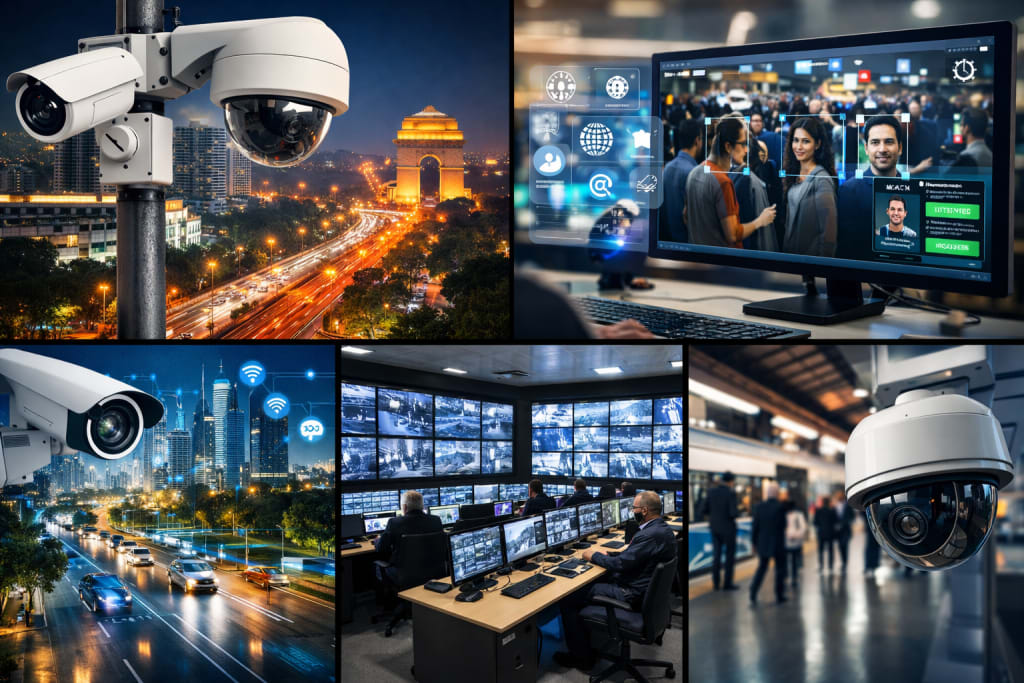
India Video Surveillance Market Overview
The India video surveillance market is undergoing a transformative phase, driven by growing security concerns, rapid urbanization, and strong government-backed infrastructure initiatives. Video surveillance refers to the deployment of cameras, recording systems, monitoring software, and analytics platforms to observe, record, and interpret activities in public and private environments. Traditionally centered around closed-circuit television (CCTV), modern surveillance systems now incorporate IP cameras, network video recorders, cloud storage, and artificial intelligence (AI)-based analytics.
According to Renub Research, the India Video Surveillance Market is expected to grow strongly, increasing from US$ 4.58 billion in 2025 to US$ 10.11 billion by 2034, registering a CAGR of 9.20% during the forecast period of 2026–2034. This growth reflects the expanding role of surveillance systems beyond passive monitoring to active, intelligence-driven security management.
Advanced features such as facial recognition, motion detection, license plate recognition, behavior analytics, and real-time alerts are redefining how surveillance is used across sectors. These capabilities are increasingly applied in crime prevention, traffic management, workplace safety, retail analytics, and large-scale infrastructure protection.
In India, the rising emphasis on public safety, protection of assets, and operational efficiency has led to widespread deployment of video surveillance solutions in metropolitan cities, transportation networks, commercial establishments, and residential complexes. Declining hardware costs, improved internet connectivity, and advancements in AI-powered analytics are further accelerating market adoption.
Growth Drivers in the India Video Surveillance Market
Government Initiatives Supporting Smart Cities and Public Safety
One of the most significant drivers of the Indian video surveillance market is the government’s focus on smart city development and public safety enhancement. Large-scale investments in urban infrastructure, intelligent traffic systems, and centralized command-and-control centers have positioned video surveillance as a core component of modern governance.
Surveillance cameras are increasingly deployed across roads, railway stations, airports, public buildings, educational institutions, and high-density urban zones. These systems support crime deterrence, traffic enforcement, crowd management, and rapid emergency response. State and local authorities are adopting video surveillance not only as a reactive tool but as a preventive mechanism to improve law enforcement efficiency.
Multiple public agencies—including central police organizations, state police forces, disaster management authorities, and transport departments—are collaborating with private technology providers to implement advanced surveillance solutions. Public–private partnerships have also helped accelerate deployment timelines while easing budgetary constraints.
Rising Security Awareness Across Commercial and Residential Sectors
Heightened awareness of safety risks, theft, vandalism, and workplace security is driving adoption of video surveillance across both commercial and residential segments. Commercial facilities such as shopping malls, offices, factories, hospitals, warehouses, and banks rely on surveillance systems to deter theft, monitor employee activity, ensure regulatory compliance, and improve operational transparency.
Residential demand is growing rapidly as apartment complexes, gated communities, and individual homeowners invest in affordable security cameras. Smartphone-enabled monitoring, cloud-based storage, and instant alert systems have made surveillance solutions accessible to middle-income households. Real estate developers are increasingly integrating surveillance infrastructure as a standard feature in new residential projects.
In December 2025, India’s leading video security brand CP PLUS partnered with Qualcomm Technologies to launch next-generation AI-powered video surveillance solutions tailored to evolving industrial and security requirements. The collaboration integrates Qualcomm Dragonwing™ chips and the Qualcomm® Insight Platform, highlighting the growing convergence of hardware innovation and AI-driven analytics in India’s surveillance ecosystem.
Technological Advancements in AI, Analytics, and IP-Based Systems
Technological innovation remains a core growth catalyst in the Indian video surveillance market. The shift from analog systems to IP-based surveillance enables higher-resolution imaging, remote accessibility, and seamless system integration. AI and video analytics have expanded surveillance capabilities to include facial recognition, intrusion detection, crowd analytics, object tracking, and predictive behavior analysis.
Cloud-based surveillance platforms are reducing storage costs and simplifying scalability for multi-site organizations. At the same time, declining prices of HD and AI-enabled cameras, coupled with improved broadband and 5G infrastructure, are making advanced systems more affordable.
In December 2025, IFSEC India showcased over 300 brands presenting AI- and IoT-enabled surveillance technologies, reflecting strong industry momentum. The event highlighted the growing demand for intelligent security systems capable of addressing India’s scale, complexity, and operational challenges.
India Video Surveillance Market – Key Challenges
Privacy Concerns and Regulatory Uncertainty
Despite strong growth prospects, privacy and data protection remain critical challenges. The widespread deployment of cameras in public and private spaces has raised concerns about data misuse, unauthorized access, and lack of consent. Ongoing developments in India’s data protection and privacy regulations create uncertainty for solution providers regarding data storage, retention, and access protocols.
Public resistance to facial recognition and continuous monitoring could slow adoption in certain regions. Balancing security objectives with ethical considerations and transparency remains a key challenge for both policymakers and industry stakeholders.
High Implementation and Infrastructure Costs
Although hardware prices are declining, the overall cost of deploying and maintaining advanced surveillance systems remains high—particularly in rural and semi-urban areas. Reliable power supply, high-speed internet connectivity, and skilled technical personnel are not uniformly available across India.
AI-enabled systems and large-scale deployments require significant upfront investment, making affordability a concern for small businesses and local government bodies. Ongoing costs related to maintenance, upgrades, and cybersecurity further increase the total cost of ownership.
India Video Surveillance Market by Segment
Indian Video Surveillance Software Market
The video surveillance software segment is witnessing rapid growth as organizations seek intelligent, centralized monitoring solutions. Advanced software platforms enable real-time camera management, analytics integration, and multi-site monitoring. AI-driven applications such as facial recognition, license plate recognition, motion detection, and anomaly detection are widely used in smart cities, airports, retail analytics, and industrial safety systems.
Cloud-based software solutions enhance remote accessibility and scalability, making them particularly attractive for large enterprises and government agencies.
India Video Surveillance Services Market
Surveillance services—including system design, installation, maintenance, and managed services—form a critical part of the market. As systems become more complex, organizations increasingly rely on professional service providers for deployment and ongoing support.
Managed services, including remote monitoring and cloud-based management, are gaining popularity among organizations lacking in-house technical expertise. This segment benefits from recurring revenue models and rising demand for analytics-driven insights.
India IP Video Surveillance Market
IP-based surveillance systems are rapidly replacing analog systems due to superior image quality, remote access capabilities, and advanced analytics integration. IP cameras are widely deployed in smart cities, corporate campuses, transportation infrastructure, and commercial facilities.
India’s digital transformation has ensured that most new installations are IP-based, and declining camera costs are further supporting adoption across sectors.
India Hybrid Surveillance Systems Market
Hybrid surveillance systems combine analog and IP technologies, offering a cost-effective migration path for organizations with existing analog infrastructure. These systems allow gradual digital upgrades without complete system replacement, making them ideal for small businesses, educational institutions, and local public bodies operating under budget constraints.
India Residential Video Surveillance Market
The residential segment is among the fastest-growing in India. Rapid urbanization, the rise of nuclear families, and growing security awareness are driving demand in apartment complexes and individual homes. Affordable cameras, easy installation, smartphone connectivity, and cloud storage options are making home surveillance accessible to a broader population.
India Military & Defense Video Surveillance Market
The military and defense sector relies on advanced surveillance systems for border security, critical infrastructure protection, and situational awareness. Integration with thermal imaging and night-vision technologies enhances threat detection in challenging environments. Ongoing defense modernization initiatives ensure sustained demand for high-security surveillance solutions.
Regional Insights
North India Video Surveillance Market
North India benefits from strong government presence and extensive infrastructure projects. Cities such as New Delhi, Chandigarh, Jaipur, Dehradun, and Shimla have widespread surveillance deployment in public spaces, transport hubs, and educational institutions. Smart city initiatives and enhanced law enforcement adoption support regional growth.
East India Video Surveillance Market
East India is witnessing steady adoption driven by urbanization, smart city projects, and industrial activity. Mining sites, industrial estates, and educational institutions are increasingly deploying surveillance systems. While connectivity challenges persist, government-led infrastructure improvements are expanding market opportunities.
South India Video Surveillance Market
South India leads in surveillance adoption due to strong IT infrastructure, technology hubs, and advanced commercial ecosystems. Cities aggressively deploy AI-enabled surveillance in business parks, residential complexes, and transportation networks.
As of June 2023, the Greater Chennai Police installed over 5,000 AI-powered CCTV cameras under the Safe City Project. Similarly, Bengaluru Police employ real-time AI analytics for monitoring high-density areas, reinforcing South India’s position as the most technologically advanced regional market.
Market Segmentation Overview
By Component:
Hardware
Software
Services
By System Type:
Analog Surveillance
IP Surveillance
Hybrid Surveillance
By Application:
Public Facilities
Commercial
Residential
Industrial
Military & Defense
Infrastructure
By Top States:
Maharashtra
Tamil Nadu
Karnataka
Uttar Pradesh
Gujarat
West Bengal
Rajasthan
Telangana
Andhra Pradesh
Madhya Pradesh
Other States
Competitive Landscape
The Indian video surveillance market is highly competitive, with global and domestic players focusing on innovation, AI integration, and strategic partnerships. Key companies profiled with five viewpoints—overview, key personnel, recent developments, SWOT analysis, and revenue analysis—include:
Honeywell International Inc.
Robert Bosch GmbH
Schneider Electric SE
Panasonic Holdings Corporation
Samsung Electronics Co Ltd
Videocon Industries Ltd.
Zicom Electronic Security Systems
D-Link India Limited
Final Thoughts
The India video surveillance market is poised for robust expansion through 2034, driven by smart city development, rising security awareness, and rapid technological innovation. While challenges related to privacy, regulation, and infrastructure persist, continuous advancements in AI, analytics, and IP-based systems are reshaping the market landscape.
As surveillance evolves from passive monitoring to proactive intelligence, India’s video surveillance ecosystem will play a critical role in enhancing public safety, operational efficiency, and urban governance. With strong government support and increasing private sector participation, the market is well-positioned for sustained long-term growth.
About the Creator
Trump Says Government Will ‘De‑escalate’ in Minnesota After Pretti Shooting
President Donald Trump has announced that his government will “de‑escalate a little bit” in Minneapolis following widespread criticism and public outcry after the fatal shooting of 37‑year‑old ICU nurse Alex Pretti by federal immigration enforcement officers. The remarks reflect a significant shift in messaging from the White House as tensions simmer between federal authorities, state leaders, local residents, and civil liberties advocates over immigration enforcement tactics in Minnesota.
By Ayesha Lashari7 days ago in The Swamp


Comments
There are no comments for this story
Be the first to respond and start the conversation.