
How Thailand Became the ‘Sick Man’ of Asia
From regional success story to struggling economy Why Thailand is falling behind its Southeast Asian neighbors A nation trapped between stagnation and reform Political paralysis and demographic decline fuel uncertainty The warning signs of a once-booming economy Can Thailand reverse its downward trajectory? Structural weaknesses expose fragile growth model

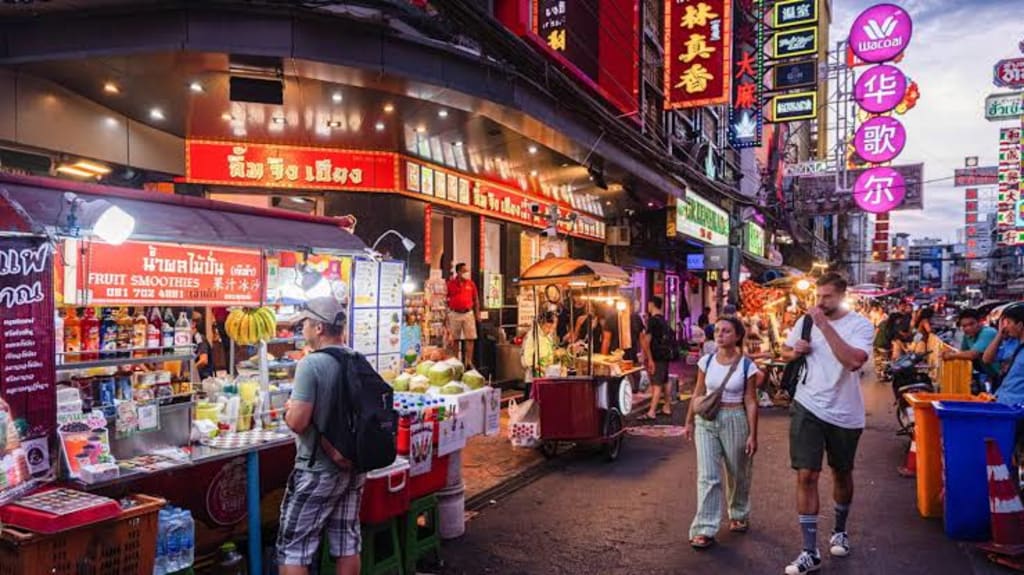
Once celebrated as one of Southeast Asia’s fastest-growing economies, Thailand is increasingly being described by analysts as the region’s “sick man” — a term historically used to describe nations struggling with stagnation, political instability, and structural weaknesses. While neighboring countries like Vietnam, Indonesia, and the Philippines surge ahead with growth and reform, Thailand finds itself weighed down by aging demographics, political uncertainty, and a faltering economic engine.
The label does not reflect a single crisis but rather a convergence of long-term problems that have left the kingdom vulnerable in an era of rapid regional transformation.
Economic Growth Slows to a Crawl
Thailand’s economy once symbolized the “Asian miracle.” In the decades following the 1997 Asian financial crisis, it rebuilt itself through exports, manufacturing, and tourism. Yet in recent years, growth has lagged behind most of Southeast Asia.
While Vietnam and Malaysia record annual GDP growth rates above 5 percent, Thailand struggles to reach even half that figure. Productivity has stagnated, and investment has slowed as global companies seek more dynamic markets with younger workforces and clearer policy direction.
Tourism, long a pillar of the Thai economy, remains fragile after the pandemic. Although visitor numbers have improved, they have not fully returned to pre-COVID levels, and spending per tourist has dropped, leaving many businesses operating below capacity.
Political Instability and Policy Paralysis
Thailand’s repeated cycles of military coups, fragile coalitions, and contested elections have created an environment of uncertainty that discourages long-term planning. Since 2006, the country has experienced multiple changes in government through both elections and military intervention.
Political polarization has made it difficult to pass meaningful reforms on taxation, education, and labor markets. Investors fear abrupt policy shifts, while domestic confidence weakens as households see little improvement in living standards.
Even when reform-minded leaders emerge, their ability to govern effectively is constrained by constitutional rules and entrenched power structures. This has led to a sense of stagnation and public frustration, especially among younger generations.
Demographics: An Aging Society Without Preparation
Thailand is aging faster than almost any other country in Southeast Asia. Birth rates have fallen sharply, and the population is expected to shrink within the next decade. This creates a shrinking workforce and rising healthcare and pension costs.
Unlike wealthier nations such as Japan or South Korea, Thailand lacks the fiscal resources to manage the transition smoothly. Many older citizens have limited savings and rely on informal family support systems that are themselves weakening.
A smaller labor force also reduces Thailand’s appeal to multinational manufacturers seeking scale and productivity. Without immigration reform or major automation investment, economic momentum is likely to slow further.
Education and Innovation Gaps
Thailand’s education system has struggled to adapt to a digital and knowledge-based economy. While the country produces large numbers of graduates, employers frequently complain of skill mismatches, particularly in science, engineering, and technology fields.
Innovation remains limited compared with regional competitors. Research spending is low, and start-up ecosystems remain underdeveloped. This leaves Thailand vulnerable to being stuck in the “middle-income trap,” unable to compete either on low wages or on high-tech sophistication.
Meanwhile, neighboring Vietnam has aggressively invested in industrial parks, tech training, and foreign partnerships, positioning itself as a manufacturing and innovation hub.
Household Debt and Inequality
Another major burden is household debt, which has risen to among the highest levels in Asia relative to income. Millions of families rely on credit to cover basic living costs, making them highly sensitive to interest rate increases and economic shocks.
Inequality between urban and rural regions has widened. Bangkok and tourist centers benefit from investment and infrastructure, while rural provinces face job shortages and declining services. This fuels migration to cities and deepens social divides.
Economic vulnerability feeds political unrest, creating a cycle where instability undermines growth and weak growth worsens social tensions.
Climate and Environmental Risks
Thailand is also exposed to climate-related threats. Floods, droughts, and rising temperatures damage agriculture and infrastructure. Rice farmers, who form a large part of the rural economy, face unpredictable harvests and shrinking profits.
Environmental stress further strains public finances and adds to the perception that Thailand’s development model is outdated and unsustainable.
Regional Comparison: Falling Behind Neighbors
The contrast with other Southeast Asian nations is striking. Vietnam attracts record foreign investment. Indonesia is developing its green energy and nickel processing industries. The Philippines benefits from a young population and booming services sector.
Thailand, by comparison, appears cautious and inward-looking. Its heavy reliance on tourism and automobiles leaves it vulnerable to global downturns and technological disruption.
International observers increasingly describe Thailand as the weakest link among Asia’s emerging economies — not because it lacks resources, but because it has failed to adapt quickly enough.
Is Recovery Possible?
Despite its problems, Thailand retains significant strengths: strategic location, strong infrastructure, cultural influence, and a skilled middle class. Analysts argue that decisive reforms could reverse the decline.
Key priorities include:
Education reform focused on technology and innovation
Political stability and transparent governance
Immigration and labor policy modernization
Investment in green energy and advanced manufacturing
Without these steps, Thailand risks long-term decline in regional influence and prosperity.
Conclusion
Thailand’s reputation as the “sick man of Asia” reflects deep structural challenges rather than temporary setbacks. Slowing growth, political uncertainty, demographic aging, and weak innovation have combined to erode its once-dynamic status.
Whether the country can regain momentum depends on its willingness to confront difficult reforms and embrace modernization. The stakes are high: without change, Thailand may continue to fall behind its neighbors, transforming from a regional leader into a cautionary tale of missed opportunity.
About the Creator
Fiaz Ahmed
I am Fiaz Ahmed. I am a passionate writer. I love covering trending topics and breaking news. With a sharp eye for what’s happening around the world, and crafts timely and engaging stories that keep readers informed and updated.
Keep reading
More stories from Fiaz Ahmed and writers in The Swamp and other communities.
Northern Command Tells N.C., Alaska Troops to Stand Down on Possible Minnesota Deployment
Northern Command has quietly ordered active-duty troops from North Carolina and Alaska to stand down from heightened alert for a possible deployment to Minnesota, signaling a shift in U.S. military posture as tensions over immigration enforcement and civil unrest have evolved. The decision comes after weeks of planning and preparation that had positioned more than 1,500 soldiers on standby for potential action in response to protests and federal law enforcement operations in Minneapolis. � Reddit +1 The move marks a notable de-escalation from a moment when the U.S. Army was preparing to send troops — including units of the 11th Airborne Division from Alaska and military police from North Carolina — amid threats by the Trump administration to invoke the 1807 Insurrection Act to respond to anti-immigration protests linked to federal enforcement actions in Minnesota. � https://www.wjhg.com +1 From Prepared to Stand Down In mid-January, Pentagon officials confirmed that approximately 1,500 active-duty soldiers had been placed on prepare-to-deploy orders should unrest in Minneapolis escalate beyond the capacity of local authorities. Two battalions of the 11th Airborne Division, based in Alaska, along with military police units stationed at Fort Bragg in North Carolina, were among those given orders to stage for possible deployment. � https://www.wjhg.com +1 These troops were being readied primarily as a contingency option. Defense officials emphasized that standby orders do not guarantee a deployment, noting that such preparations are a routine part of military planning when federal authorities consider expanding support to civil law enforcement. Still, critics flagged the decision as unusual given the domestic context and the risks of using active-duty forces in American cities. � kalw.org However, in early February, Northern Command — the U.S. military command responsible for domestic operations — ordered those troops to stand down, effectively rescinding the heightened alert status. The internal directive, confirmed by multiple personnel familiar with the matter, came as the public backlash over federal immigration operations in Minneapolis intensified and political pressure mounted from both local officials and national lawmakers. � Reddit What Triggered the Stand Down? The immediate catalyst for the stand down appears tied to developments in Minnesota, where protests have surged following the fatal shooting of Alex Pretti, a 37-year-old ICU nurse, by federal agents. � The incident, which occurred during immigration enforcement activity in Minneapolis, sparked passionate demonstrations and clashes with law enforcement, prompting tens of thousands of arrests and widespread criticism from Minnesota’s political leaders. � ABC News +1 ABC News Governor Tim Walz and local officials repeatedly urged federal authorities to de-escalate and criticized the use of force and the presence of out-of-state resources. Walz also mobilized the Minnesota National Guard to support local law enforcement and maintain order, a decision that underscored the state’s priority on handling unrest through coordinated civil-military cooperation. � Task & Purpose Opposition to the potential use of active-duty troops was not limited to Minnesota. Lawmakers and commentators across the country warned that deploying federal soldiers in domestic law enforcement roles could erode civil liberties, blur the constitutionally defined separation between military and police functions, and risk further inflaming tensions. � Reddit The Insurrection Act in Context The possibility of invoking the Insurrection Act — struck in 1807 and rarely used — became a central flashpoint in discussions about military involvement. Under the act, the president can deploy active-duty forces to enforce law and order in states under conditions of insurrection or obstruction of federal law when local authorities cannot maintain control. Trumpsatements suggested he was considering the act as an option in Minnesota if protests and resistance to federal immigration enforcement escalated. However, his advisers and defense officials also emphasized a preference for using state National Guard units and other non-military resources first.
By Fiaz Ahmed about 17 hours ago in The Swamp
Babar Azam: The Modern Icon of Pakistan Cricket
Babar Azam is not just a cricketer; he is a symbol of consistency, class, and modern-day brilliance in international cricket. Over the last decade, Babar has emerged as one of the finest batsmen in the world, earning respect from fans, critics, and fellow players alike. Representing Pakistan with pride, his elegant batting style and calm leadership have placed him among the elite of world cricket. This article explores Babar Azam’s journey, achievements, challenges, and lasting impact on Pakistan cricket.
By Ayesha Lashari6 days ago in The Swamp
U.S. Government Shutdown
A U.S. government shutdown is one of the most visible signs of political deadlock in Washington. When it happens, it disrupts federal services, sends hundreds of thousands of workers into uncertainty, and creates ripple effects across the economy. Although the term often trends during moments of crisis, shutdowns are not rare events—they are the result of a specific budget process failing to reach completion.
By Saboor Brohi 4 days ago in The Swamp



Comments
There are no comments for this story
Be the first to respond and start the conversation.