
Change is Inevitable’: What Is Next for Iran
“Facing economic collapse, social unrest, and international pressure, Iran stands at a crossroads — with change inevitable and its future uncertain.”

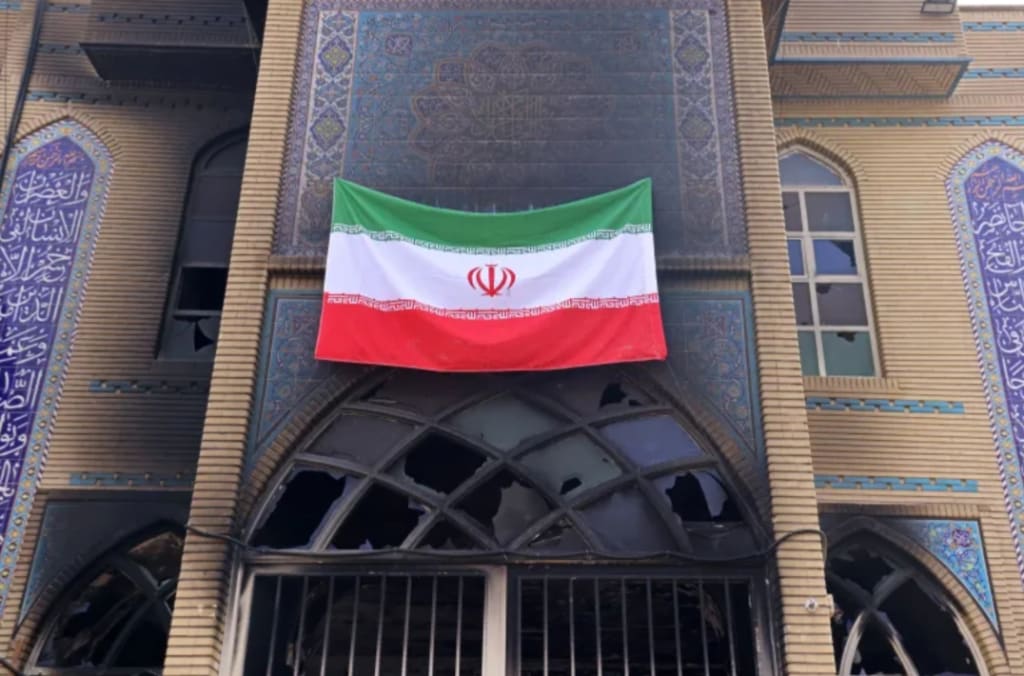
A Nation Under Strain
Iran, one of the Middle East’s most strategically important countries, is facing a moment of profound upheaval. After months of economic turmoil, civil unrest and a brutal government crackdown, political analysts, citizens and international leaders alike are asking what comes next. The old social contract — once defined by religious authority, revolutionary legitimacy, and economic stability — is unraveling. And many observers now argue that change in Iran is no longer just possible — it is inevitable.
The present crisis has multiple drivers. A deep economic crisis, marked by inflation, unemployment and the collapse of the Iranian rial, has pushed everyday life to breaking points. Basic necessities have become unaffordable and confidence in state institutions has eroded. Protests — which began as economic demonstrations — quickly evolved into widespread calls for political reform or even regime change.
---
The Protests That Shook the Country
Late 2025 and early 2026 saw the most intense wave of protest in Iran since the 1979 Islamic Revolution. Sparked by an economic breakdown, demonstrations spread quickly and broadly — from Tehran’s bustling streets to provincial cities and university campuses.
The government responded with harsh repression. Security forces mounted mass crackdowns, imposing internet blackouts, arresting hundreds of thousands, and deploying live ammunition in crowded streets. Independent estimates now place the death toll from the violence at thousands, with figures as high as 12,000 to 18,000 reported by activist groups; official figures remain far lower, but the scale of bloodshed has shocked observers worldwide.
This level of violence has fractured Iran’s political landscape and intensified fears among both protesters and regime loyalists that the country is on the brink of a fundamental transformation.
---
The Erosion of Legitimacy
One of the most striking aspects of this period has been the loss of legitimacy of the Islamic Republic’s leadership. The regime’s authority historically rested on a combination of religious doctrine and revolutionary credentials. Yet, as basic services have faltered, economic hardship has accelerated and the government has resorted to extreme force against its own people, many Iranians now question whether the system can endure.
Experts point out that the so‑called “social contract” — the implicit deal between the state and the population — has seriously weakened. The state’s promise to provide security and stability has been undermined by economic chaos and political strife, leaving many citizens disillusioned and distrustful.
This erosion of legitimacy did not happen overnight. Iran has experienced waves of protest in recent years, including those driven by water shortages in 2025 and earlier movements for women’s and civil rights. But the current unrest is notable for its scale, geographic breadth and intensity of public grievances.
---
Scenarios for Iran’s Future
So what comes next? While no outcome is certain, analysts identify several major paths Iran could take as it navigates this period of upheaval:
1. Gradual Reform from Within
Some experts suggest the regime may attempt to absorb pressure through selective reform. This could include political concessions, moderate economic restructuring, or limited shifts in leadership roles without dismantling the core of the Islamic Republic. Such changes might stabilize the country without wholesale revolution, but would likely still fall short of activists’ demands.
2. Regime Change and Political Transition
The most dramatic possibility is the fall of the current regime and the emergence of a new political order. Opposition figures — including advocates for secular democracy, human rights activists, and even proponents of a constitutional monarchy — are speaking openly about life after the Islamic Republic.
Iran’s exiled Crown Prince, Reza Pahlavi, has previously outlined a 100‑day transition plan for a post‑regime future, emphasizing democratic reforms and national unity if theocratic leadership collapses. Though contested and debated, this scenario reflects a very different model of governance being discussed both inside and outside Iran.
3. Hardline Consolidation
Alternatively, the regime could double down on security and ideological control. This path would involve deeper repression, tighter control of civil society, and further marginalization of dissent — possibly prolonging the religious leadership’s hold on power. However, this strategy risks deeper isolation, economic stagnation and potentially even civil conflict.
---
Regional and Global Dimensions
Iran’s internal dynamics do not exist in a vacuum. Regional tensions, especially with the United States, Israel and Gulf states, continue to influence Tehran’s strategic calculations. Diplomacy, sanctions, military postures and foreign pressure all intersect with domestic politics. In recent weeks, both U.S. and Iranian officials have issued stark warnings, adding to the overall uncertainty.
International actors vary in their outlooks. Some call for diplomatic engagement to ease sanctions and open dialogue, while others argue that only a fundamental change in Iran’s governance can bring stability.
---
What It Means for Citizens
For ordinary Iranians — young and old — the question of “what’s next” is deeply personal. Many have lost loved ones, seen cities burned and endured daily hardships. Many are exhausted but undeterred, driven by a powerful yearning for dignity, opportunity and a future they can believe in. Whether their vision materializes through reform, revolution, or some hybrid path depends on forces both within Iran and beyond its borders.
---
Conclusion: A Nation in Transition
Iran stands at a historic inflection point. The pressures of economic collapse, societal demand for change, and geopolitical complexity have created a landscape of profound uncertainty. What unfolds next — whether reform, revolution, or something unforeseen — will not only shape Iran’s destiny but potentially alter the political dynamics of the Middle East. What remains clear is that change is inevitable — and the world will be watching as Iran writes its next chapter.
About the Creator
Keep reading
More stories from Salaar Jamali and writers in The Swamp and other communities.
The Dollar Stays King Until 2046 — Crushing Bitcoin Dreams with $13 Trillion of IMF Data
Why the U.S. Dollar’s Reign Isn’t Ending Soon For years, Bitcoin advocates have imagined a world where the cryptocurrency dethrones the U.S. dollar as the global reserve currency — a symbolic seat of power usually reserved for the most trusted money on the planet. Yet recent International Monetary Fund (IMF) data showing roughly $12.94 trillion in total global foreign exchange reserves, with the dollar still commanding an overwhelming share, paints a far more grounded picture.
By Salaar Jamaliabout 5 hours ago in The Swamp
Five Graphics That Show Greenland’s Importance to Trump
When you think of Greenland, you probably imagine a frozen wasteland with more ice than people. But during Donald Trump’s presidency—and even in public discussions since—it has become a hot topic in geopolitics. From military strategy to rare minerals and climate change, Greenland’s importance goes far beyond its icy landscape. Let’s explore five graphics that help explain why Greenland matters to Trump.
By Aqib Hussain7 days ago in The Swamp
Zelensky Hopes First Ukraine, Russia, and US Talks Are ‘Step Towards Ending War’
Ukrainian President Volodymyr Zelensky has expressed cautious optimism following the first trilateral talks involving Ukraine, Russia, and the United States in Abu Dhabi. The discussions, aimed at exploring avenues for peace and conflict resolution, represent a significant development in the ongoing war in Ukraine.
By Aarif Lasharia day ago in The Swamp
Affection and Healing for Yourself
During the night of the last quarter moon, I gathered my ritual supplies. I carefully handled the chunk of black tourmaline that would protect me from your overall negative and narcissistic energy. I carefully walked the house with my stick of selenite in hand, asking the universe to cleanse our working space.
By Alisha Wilkins ✒️🦋🖋️5 days ago in Fiction


Comments
There are no comments for this story
Be the first to respond and start the conversation.