
ASUS Issues “Internal Review” After AMD Ryzen 7 9800X3D Failure Reports
“Motherboard manufacturer investigates reports of instability and failures linked to flagship AMD processor”
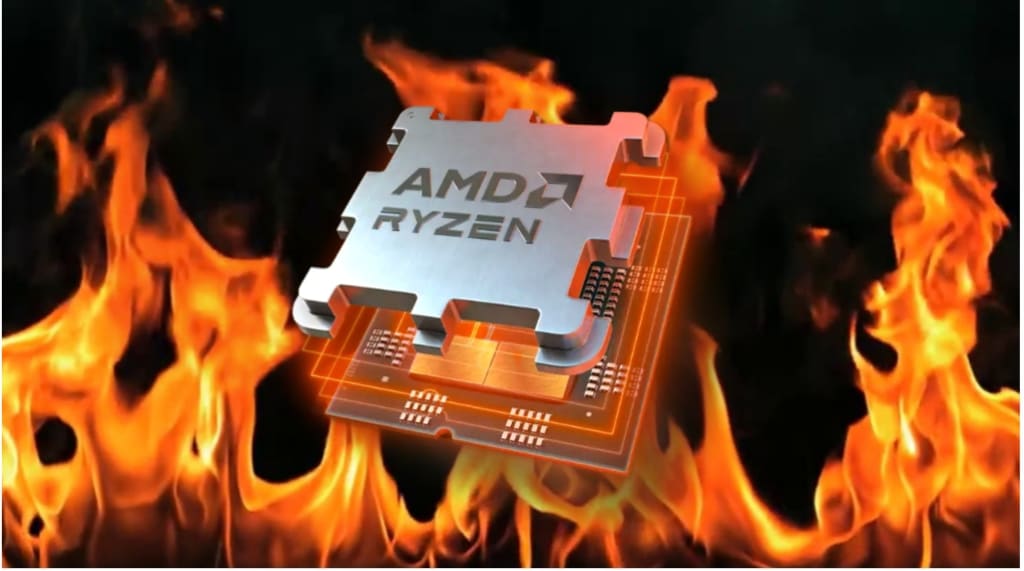
PC hardware manufacturer ASUS has announced an internal review following reports of failures involving systems powered by AMD’s highly anticipated Ryzen 7 9800X3D processor. The development has raised concerns among PC enthusiasts, system builders, and gamers, particularly given the chip’s positioning as a flagship processor optimized for performance-intensive workloads and gaming.
While the scope of the issue remains under investigation, the situation highlights the complex relationship between motherboard firmware, power delivery, and next-generation CPUs.
What Triggered the Review
Reports began surfacing online from users claiming that their Ryzen 7 9800X3D systems experienced sudden instability, boot failures, or complete shutdowns. In some cases, users suggested that the processors may have been damaged, prompting speculation about potential motherboard or BIOS-related issues.
ASUS confirmed that it is reviewing internal data, customer reports, and firmware configurations to determine whether any of its products could be contributing to the failures.
The company emphasized that the review is precautionary and part of its standard quality assurance process.
Understanding the Ryzen 7 9800X3D
The Ryzen 7 9800X3D is one of AMD’s most advanced desktop processors, featuring:
3D V-Cache technology
High core efficiency for gaming
Optimized performance for demanding applications
The chip has been widely praised in early benchmarks for delivering strong gaming performance while maintaining relatively efficient power consumption. However, its advanced design also makes it more sensitive to voltage and thermal conditions, especially when paired with aggressive motherboard settings.
Potential Causes Under Investigation
While no official cause has been confirmed, experts point to several possible factors:
BIOS and Firmware Settings
Modern motherboards often ship with performance-enhancing defaults that push CPUs close to their limits. Incorrect voltage settings or boosting behavior could lead to instability.
Power Delivery Configuration
High-end processors require precise power management. Even small deviations can cause long-term stress or immediate failure.
Thermal Management
Inadequate cooling or improper thermal limits could contribute to degradation, particularly during extended gaming or benchmarking sessions.
ASUS has not confirmed that its motherboards are at fault but acknowledged that compatibility and tuning are key focus areas of the review.
ASUS Responds to Customer Concerns
In a statement, ASUS said it is:
Collecting affected system data
Reviewing BIOS versions and default configurations
Working closely with AMD to identify any underlying issues
The company advised users to ensure their systems are running the latest stable BIOS and to avoid unnecessary overclocking while the investigation is ongoing.
ASUS also reassured customers that warranty coverage remains in place and that support teams are available to assist affected users.
AMD’s Role and Response
Although the internal review was initiated by ASUS, AMD is also monitoring the situation. CPU manufacturers and motherboard partners typically collaborate closely to ensure platform stability, especially during the early lifecycle of new processors.
AMD has not issued a public statement confirming a defect in the Ryzen 7 9800X3D. However, industry observers expect AMD to:
Share guidance on voltage and power limits
Release microcode updates if necessary
Coordinate with partners on BIOS updates
Such collaboration is standard practice in the PC hardware ecosystem.
Community Reaction
The PC enthusiast community has reacted with a mix of concern and caution. Online forums and social media platforms are filled with discussions analyzing:
Affected motherboard models
BIOS versions used by impacted systems
Whether failures are isolated or systemic
Many experienced builders have urged patience, noting that early platform issues are not uncommon with new hardware launches.
“Internal reviews are a good sign,” one user wrote. “It means ASUS is taking the reports seriously rather than ignoring them.”
What Users Should Do Now
For current Ryzen 7 9800X3D owners, experts recommend several precautions:
Update to the latest official BIOS
Avoid manual overclocking or aggressive tuning
Monitor temperatures and voltages using trusted tools
Contact ASUS support if any instability occurs
System builders assembling new PCs may choose to delay builds until more clarity emerges.
Broader Implications for the Industry
The situation underscores the increasing complexity of modern PC platforms. As CPUs become more advanced, the margin for error narrows, making coordination between chipmakers and motherboard vendors more critical than ever.
Similar issues in the past have often been resolved through:
BIOS updates
Firmware tuning
Improved documentation for users
Industry analysts believe the current issue is likely to follow a similar path.
Conclusion
ASUS’s decision to launch an internal review following Ryzen 7 9800X3D failure reports reflects a proactive approach to quality and customer trust. While the full details have yet to emerge, the investigation highlights the delicate balance between performance optimization and system stability.
For now, users are advised to stay informed, apply recommended updates, and avoid risky configurations. As ASUS and AMD continue their collaboration, the PC community awaits clearer guidance and potential fixes that will ensure the Ryzen 7 9800X3D delivers on its promise without compromising reliability.
About the Creator
Keep reading
More stories from Aarif Lashari and writers in The Swamp and other communities.
Poundland Shuts 149 Stores, Cuts 2,200 Jobs and Refocuses on £1 Items
Discount retailer Poundland has announced a major restructuring plan that will see 149 stores close, around 2,200 jobs cut, and a renewed focus on its original £1 price point. The move marks one of the most significant shake-ups in the company’s history as it attempts to adapt to changing consumer habits and rising operational costs.
By Aarif Lashariabout 22 hours ago in The Swamp
Change is Inevitable’: What Is Next for Iran
A Nation Under Strain Iran, one of the Middle East’s most strategically important countries, is facing a moment of profound upheaval. After months of economic turmoil, civil unrest and a brutal government crackdown, political analysts, citizens and international leaders alike are asking what comes next. The old social contract — once defined by religious authority, revolutionary legitimacy, and economic stability — is unraveling. And many observers now argue that change in Iran is no longer just possible — it is inevitable.
By Salaar Jamaliabout 10 hours ago in The Swamp
Rs15 Billion Assistance for Rice Exporters: Government Vows to Ensure There Is No Misuse
In a bold move aimed at bolstering Pakistan’s rice sector, the government has announced Rs15 billion in financial assistance for rice exporters. The initiative comes at a crucial time as global demand for rice fluctuates due to supply chain challenges, inflation, and geopolitical tensions affecting trade. Officials have also emphasized that strict measures will be in place to prevent misuse of the funds, ensuring that the aid reaches its intended recipients.
By Muhammad Hassanabout 13 hours ago in The Swamp




Comments
There are no comments for this story
Be the first to respond and start the conversation.