
Trump and Rubio’s Vision of War: The Art of Destroy and Deal
A hardline doctrine blending military pressure with strategic negotiation shapes a controversial foreign policy outlook

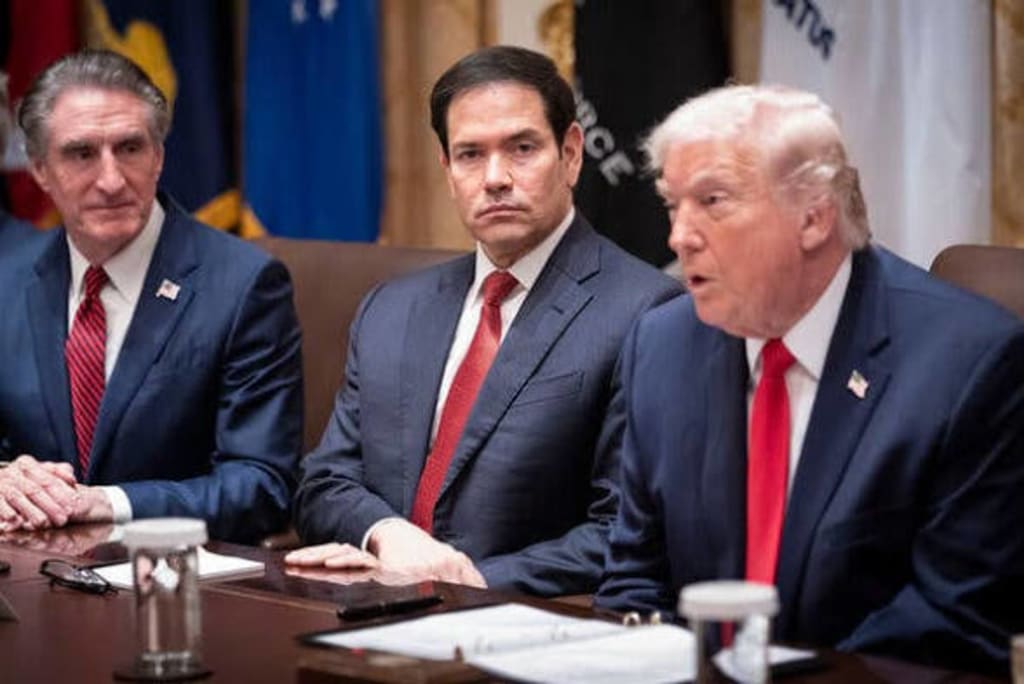
In the evolving landscape of American foreign policy debates, few ideas have generated as much discussion as the strategic vision sometimes described by critics and supporters alike as the “destroy and deal” approach. The concept is often associated with the rhetoric and policy preferences of prominent U.S. political figures such as Donald Trump and Marco Rubio, who have both argued that strong military leverage can be a powerful tool in forcing adversaries to negotiate.
Although the two leaders differ in tone and political background, their views on national security often intersect around the idea that diplomacy is most effective when backed by overwhelming power. Supporters describe the approach as pragmatic realism, while critics warn that it risks escalating conflicts before negotiations even begin.
The Core Idea Behind “Destroy and Deal”
At its core, the strategy emphasizes the use of decisive force or economic pressure to weaken an adversary’s position before engaging in negotiations. Advocates argue that demonstrating strength first forces opponents to recognize the costs of continued confrontation.
The approach draws inspiration from historical examples where military pressure preceded diplomatic agreements. In such cases, leaders have believed that demonstrating battlefield or economic dominance creates the conditions for favorable negotiations.
For Donald Trump, the concept aligns with his broader “America First” philosophy, which prioritizes national interests and direct negotiation with rivals. During his presidency, Trump frequently emphasized that strong sanctions, military readiness, and aggressive rhetoric could push adversaries toward diplomatic settlements.
Rubio’s Strategic Perspective
Marco Rubio, a long-time member of the United States Senate, has framed the strategy in terms of strategic deterrence and global power competition. Rubio has consistently argued that authoritarian rivals must believe the United States is willing to act decisively in order for diplomatic solutions to succeed.
His approach reflects concerns about geopolitical competition with countries such as China, Russia, and Iran, where policymakers in Washington believe strong deterrence is necessary to prevent regional aggression.
Rubio and like-minded lawmakers contend that negotiations without leverage often fail, especially when dealing with governments that see compromise as weakness. From this perspective, economic sanctions, military deployments, and strategic alliances are tools that create the leverage required for successful diplomacy.
Military Pressure and Negotiation
Critics describe the “destroy and deal” philosophy as a risky strategy that could escalate conflicts unnecessarily. They argue that relying on military pressure may provoke retaliation and increase instability in already fragile regions.
Foreign policy analysts often note that while coercive diplomacy has occasionally succeeded, it has also led to prolonged conflicts when adversaries refuse to back down. The balance between deterrence and escalation remains one of the central challenges of modern international relations.
Supporters counter that deterrence itself depends on credibility. If adversaries believe the United States lacks the will to use force, they argue, diplomatic negotiations lose much of their influence.
Influence on Global Strategy
The broader debate surrounding this strategy reflects a deeper shift in American foreign policy thinking. In recent years, policymakers across the political spectrum have become increasingly concerned about the return of great-power competition.
Conflicts and tensions involving the North Atlantic Treaty Organization, rising competition in the Indo-Pacific region, and ongoing confrontations in the Middle East have all contributed to a more assertive strategic environment.
Within this context, the idea of combining pressure with negotiation has gained traction among some policymakers who believe traditional diplomacy alone is insufficient to manage modern geopolitical rivalries.
The Critics’ View
Opponents argue that such strategies risk oversimplifying complex conflicts. They contend that international crises often require long-term diplomatic engagement, coalition-building, and economic cooperation rather than purely coercive tactics.
Some analysts warn that a doctrine centered too heavily on force could undermine international institutions and alliances that have historically played key roles in maintaining stability.
Human rights groups have also expressed concern that aggressive strategies may increase civilian suffering in conflict zones if military operations become the primary tool of foreign policy.
The Future of the Debate
The ongoing discussion surrounding the “destroy and deal” concept reflects broader disagreements about how the United States should navigate an increasingly competitive world. While some policymakers believe stronger military leverage is essential, others advocate for diplomacy and multilateral cooperation as the primary tools for resolving disputes.
Ultimately, the effectiveness of any strategy will depend on how it is applied in specific situations. Military strength, economic influence, and diplomatic engagement are all components of modern statecraft, and balancing them remains one of the most difficult tasks for policymakers.
As debates continue in Washington and beyond, the ideas associated with Donald Trump and Marco Rubio will likely remain part of the conversation about how the United States approaches war, negotiation, and the pursuit of national interests in an uncertain global landscape.
About the Creator
Fiaz Ahmed
I am Fiaz Ahmed. I am a passionate writer. I love covering trending topics and breaking news. With a sharp eye for what’s happening around the world, and crafts timely and engaging stories that keep readers informed and updated.
Keep reading
More stories from Fiaz Ahmed and writers in The Swamp and other communities.
Why Canada Is Helping Canadians Flee the Middle East — and What It Costs
As tensions and conflict escalate across parts of the Middle East, the government of Canada has launched emergency measures to help citizens leave the region. The operation, which includes charter flights, diplomatic coordination, and emergency consular assistance, reflects Ottawa’s responsibility to protect Canadians abroad — but it also carries significant logistical complexity and financial costs. In recent weeks, hundreds of Canadians living or traveling in the Middle East have sought assistance from embassies and consulates as security conditions deteriorated in several countries. The government responded by organizing evacuation routes and temporary transit arrangements to help citizens reach safer destinations. Emergency Evacuations Begin Officials at Global Affairs Canada confirmed that evacuation operations were initiated after rising regional tensions created concerns about civilian safety and the potential closure of commercial air routes. With flights disrupted and airspace restrictions affecting travel across the region, many Canadians found themselves unable to leave on their own. To address the situation, Canada coordinated charter aircraft, assisted travelers with documentation, and established emergency registration systems so citizens could report their locations and request support. In several cases, diplomatic staff also helped Canadians cross land borders to neighboring countries where commercial flights remained available. Canadian authorities emphasized that evacuation efforts are typically reserved for situations where normal travel options become unavailable or unsafe. The Financial Cost While such operations are essential for citizen safety, they are also expensive. Chartering aircraft, deploying diplomatic staff, and maintaining emergency response systems can cost millions of dollars, depending on the scale and duration of the crisis. Government officials say evacuation flights often involve complex logistics, including securing aircraft at short notice, coordinating with foreign governments, and ensuring safe transport routes. In many cases, aircraft must operate outside normal commercial schedules or travel through longer flight paths due to security concerns. Canadian taxpayers typically cover the upfront costs of these operations, though the government sometimes asks evacuees to repay part of the expense later. In previous crises, travelers were billed for a portion of their evacuation flight costs, often equivalent to a standard commercial airfare. However, officials acknowledge that collecting repayment can be difficult, particularly if evacuees face financial hardship after leaving the region. Diplomatic Coordination Evacuations require extensive international cooperation. Canadian diplomats often work closely with allied countries, including the United States, the United Kingdom, and European partners to share transportation resources and coordinate departure routes. In some situations, citizens from multiple countries are placed on the same evacuation flights. This cooperation helps reduce costs and ensures that limited aircraft capacity can be used as efficiently as possible. Diplomatic teams also coordinate with local authorities to secure airport access, travel permissions, and border crossings. In regions experiencing active conflict or instability, these negotiations can be particularly sensitive and time-consuming. Who Gets Help Canada’s evacuation operations primarily focus on citizens and permanent residents. However, officials often face difficult decisions when family members without Canadian citizenship request assistance. In past crises, Ottawa has sometimes allowed immediate family members to board evacuation flights, though these decisions are typically made on a case-by-case basis. Immigration documentation and security procedures must still be followed, which can delay departures. The government also encourages Canadians abroad to register with its Registration of Canadians Abroad system, which helps officials locate citizens quickly during emergencies. Lessons from Past Evacuations Canada has carried out similar evacuation missions in previous conflicts and crises. During political upheaval in the Middle East and North Africa over the past decade, Ottawa organized charter flights and naval evacuations to assist citizens leaving dangerous areas. One of the largest such efforts occurred during the 2006 Lebanon War, when Canada evacuated tens of thousands of citizens from Lebanon using ships and aircraft. That operation remains one of the most complex consular evacuations in Canadian history. Since then, Canada has refined its emergency response procedures, focusing on faster coordination and improved communication with citizens abroad. Balancing Responsibility and Risk Evacuation missions highlight the challenges governments face when protecting citizens overseas. While many Canadians travel or work abroad every year, crises can emerge suddenly and disrupt transportation networks with little warning. Officials stress that travelers should always monitor security conditions and follow government travel advisories before visiting high-risk regions. In some cases, citizens remain in affected areas despite warnings, making evacuation efforts more complicated. Despite the cost and logistical hurdles, the Canadian government says assisting citizens in times of danger remains a core responsibility. A Continuing Operation As the Middle East crisis continues, Canadian authorities say evacuation operations may remain active as long as security conditions require them. Diplomatic staff are monitoring developments closely and preparing additional assistance if needed. For Canadians seeking to leave the region, the government’s message is clear: register with consular services, stay informed about travel options, and be prepared to depart quickly if conditions worsen. The cost of these operations may be high, but officials say the priority remains ensuring that Canadians can return home safely during times of international crisis.
By Fiaz Ahmed 2 days ago in The Swamp
The Forsyth House Fire
Since 1851, Forsyth House has stood on the corner of Union Street and Gordon Street in the heart of Glasgow. Its iconic, or was... because on Sunday 8th of March, 2026, a fire broke out in a small, seemingly un-named shop in the building and tore all that history down. As I write, the rubble is still unsettled and the street is still blocked off. Central Station is quiet on the upper level, and around 30 small businesses have quite literally gone up in smoke.
By S. A. Crawford3 days ago in The Swamp
Microsoft's Purposeful Marketing Deception About AI's Ability To Beat Physicians In Diagnosis
When you look at the world of scientific research... If you are not careful... You will be fooled into believing things that are not actually supported by the data.
By Dr. Cody Dakota Wooten, DFM, DHM, DAS (hc)a day ago in Longevity



Comments
There are no comments for this story
Be the first to respond and start the conversation.