
A New Global Power Play: Trump Launches “Board of Peace” with Charter Signing in Davos
Former U.S. president unveils international initiative at World Economic Forum, promising cooperation with the United Nations

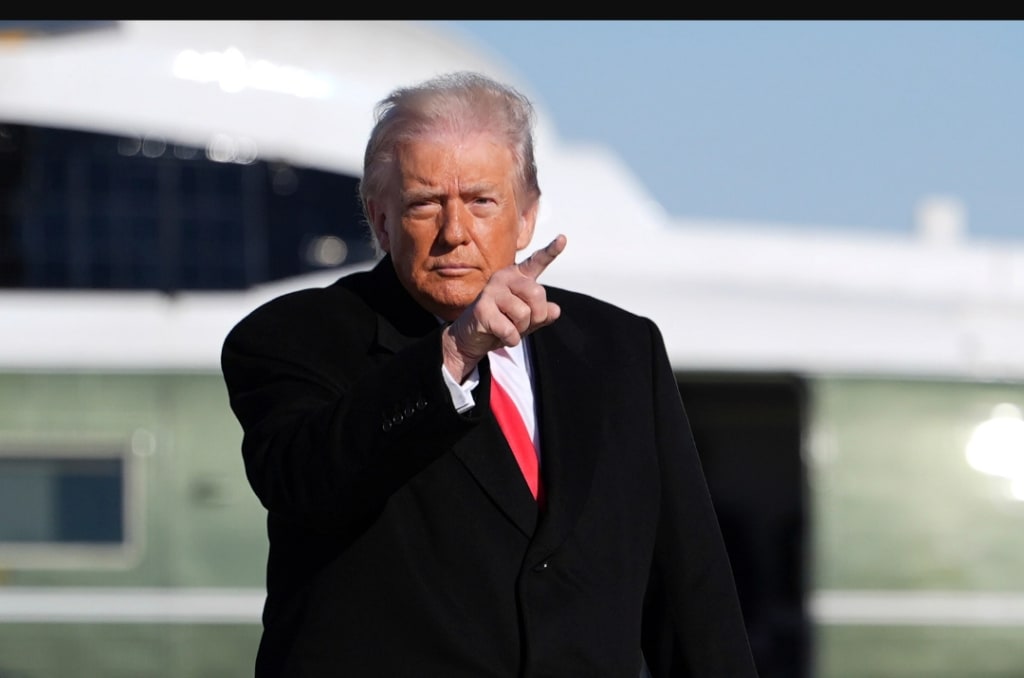
Start writing...In a surprise move on the global stage, former U.S. President Donald Trump and his international partners formally signed the founding charter of the so-called “Board of Peace” in Davos, signaling the launch of a new initiative that Trump says will work alongside the United Nations to address global conflicts and instability.
The announcement came during the annual World Economic Forum (WEF), a gathering traditionally associated with global elites, policymakers, and corporate leaders. Trump’s presence — and the unveiling of a new geopolitical body — immediately drew attention, debate, and skepticism in equal measure.
What Is the “Board of Peace”?
According to statements released at Davos, the Board of Peace is envisioned as an independent international group aimed at promoting conflict resolution, diplomatic dialogue, and post-war reconstruction. Trump described the initiative as a results-driven alternative to what he called “slow and ineffective global bureaucracy.”
The charter outlines broad goals, including:
Supporting diplomatic efforts in active conflict zones
Encouraging negotiations between rival states
Advising international organizations on peace frameworks
Coordinating humanitarian and reconstruction efforts
While the group is still in its early stages, Trump emphasized that it would not replace existing global institutions, but rather “work with them — including the United Nations — where cooperation is possible.”
Why Davos?
Choosing Davos as the launchpad was strategic. The World Economic Forum offers maximum global visibility, and Trump used the platform to position the Board of Peace as a high-level diplomatic initiative, rather than a purely political project.
Speaking to attendees, Trump framed the board as a response to what he described as a “world in permanent crisis,” pointing to ongoing wars, rising geopolitical tensions, and declining trust in international mediation.
Critics, however, argue that Davos is an unusual setting to promote grassroots peace efforts, noting that the forum often symbolizes elite influence rather than inclusive diplomacy.
Who Is Involved?
While a full list of board members has not yet been released, Trump confirmed that the charter was signed by former diplomats, business leaders, and political figures from multiple regions, including Europe, the Middle East, and Asia.
Supporters say this mix of political and economic influence could help unlock negotiations where traditional diplomacy has stalled. Detractors worry it could blur the line between private interests and public diplomacy.
The lack of immediate transparency around funding sources and governance structure has also raised questions, which organizers say will be addressed in the coming months.
Pledge to Work With the United Nations
One of the most notable aspects of Trump’s announcement was his explicit pledge to coordinate with the U.N., an institution he frequently criticized during his presidency.
Trump stated that global peace efforts require “multiple tracks” and argued that the Board of Peace could function as a bridge between governments, the private sector, and international bodies.
U.N. officials have not formally endorsed the initiative, but diplomatic observers say informal cooperation is possible if the group demonstrates credibility and neutrality.
Mixed Global Reaction
Reactions to the announcement have been sharply divided.
Supporters see the Board of Peace as:
A pragmatic approach to stalled peace processes
A platform that leverages influence outside traditional diplomacy
A potential catalyst for negotiations in frozen conflicts
Critics, however, argue:
The initiative risks politicizing peace-building
It lacks democratic oversight
Trump’s polarizing reputation could limit trust
Human rights organizations have also urged the group to prioritize civilian protection and accountability, warning that peace efforts without justice often fail.
Community and Global Implications
From a community perspective, the initiative raises important questions about who gets to shape peace efforts and how affected populations are represented. While high-level negotiations often dominate headlines, local communities bear the real cost of conflict — and their voices are frequently marginalized.
If the Board of Peace follows through on its promises, it could create new pathways for community-level engagement in reconstruction and reconciliation. If not, it risks becoming another symbolic body with limited impact.
What Comes Next
Organizers say the Board of Peace will soon:
Announce its full leadership structure
Identify priority conflict zones
Establish working relationships with international organizations
Release a roadmap for its first year of operations
Whether the initiative becomes a meaningful diplomatic force or fades into the background will depend largely on transparency, results, and international buy-in.
Conclusion
The signing of the Board of Peace charter in Davos marks an ambitious — and controversial — entry into global diplomacy by Donald Trump and his partners. By pledging cooperation with the United Nations, the group positions itself as a complementary force rather than a rival, though skepticism remains high.
In a world increasingly shaped by conflict and polarization, the success or failure of this initiative may hinge on one key question: Can peace-building driven by influence and negotiation deliver real results for the communities most affected by war?
About the Creator
Asad Ali
I'm Asad Ali, a passionate blogger with 3 years of experience creating engaging and informative content across various niches. I specialize in crafting SEO-friendly articles that drive traffic and deliver value to readers.
Defence Dreams: How Nations, Innovation, and Ambition Shape the Future of Security
Defence dreams are more than visions of powerful armies or cutting-edge weapons. They are reflections of how nations imagine their future security, sovereignty, and place in the world. From advanced fighter jets and autonomous drones to cyber shields and space surveillance, defence dreams reveal a blend of fear, ambition, technology, and national identity. In an era marked by shifting alliances and unpredictable threats, these dreams are shaping global politics and redefining what it means to be secure. At their core, defence dreams begin with a simple desire: survival. Every nation, regardless of size or wealth, seeks to protect its people, borders, and values. Historically, this meant fortresses, standing armies, and naval fleets. Today, it includes satellites orbiting Earth, algorithms detecting cyberattacks, and unmanned systems patrolling skies and seas. The dream has evolved from physical strength to technological superiority. For major powers, defence dreams often revolve around dominance and deterrence. Countries like the United States, China, and Russia invest billions in next-generation systems to ensure that no rival can challenge them. Hypersonic missiles, stealth aircraft, and artificial intelligence are not just tools of war; they are symbols of prestige. Possessing them signals power, innovation, and influence. In this sense, defence dreams are as much about psychology as they are about military capability. Smaller and developing nations have different defence dreams, but they are no less significant. For them, the focus is often on self-reliance. Building indigenous defence industries reduces dependence on foreign suppliers and strengthens national pride. India’s push for domestically produced fighter jets, Turkey’s rise as a drone exporter, and Pakistan’s development of the JF-17 are all examples of countries striving to turn defence dreams into reality. These efforts are driven not only by security needs but also by economic and technological aspirations. Technology lies at the heart of modern defence dreams. Artificial intelligence is transforming how militaries plan, decide, and fight. Autonomous drones can conduct surveillance or strike targets without risking pilots’ lives. Cyber capabilities allow states to disrupt enemies without firing a single shot. Space, once the realm of science fiction, has become a contested military domain. Satellites are now essential for communication, navigation, and intelligence, making them both valuable assets and potential targets. Yet defence dreams are not without controversy. As military budgets grow, critics question whether resources could be better spent on healthcare, education, or climate resilience. The pursuit of advanced weapons also raises ethical concerns. Autonomous systems challenge traditional ideas of accountability in warfare, while cyber tools blur the line between war and peace. When does a cyberattack become an act of war? Defence dreams force societies to confront these difficult questions. There is also the risk that defence dreams can become defence illusions. History shows that overconfidence in military strength can lead to miscalculation. Believing that technology alone guarantees victory ignores the human, political, and social dimensions of conflict. Wars are rarely won by hardware alone; morale, leadership, and legitimacy matter just as much. A nation obsessed with weapons may neglect diplomacy, which remains one of the most effective tools for preventing conflict. Interestingly, defence dreams are increasingly tied to collaboration rather than confrontation. Alliances such as NATO are investing in shared capabilities, joint exercises, and interoperability. Even rivals sometimes cooperate on issues like arms control or maritime safety. These efforts suggest that some defence dreams are about stability rather than supremacy. The dream, in this case, is not to fight wars but to prevent them. Public perception also plays a powerful role. Defence dreams are often shaped by popular culture, media, and national narratives. Films, parades, and military showcases create images of strength that resonate with citizens. While this can build unity and confidence, it can also simplify complex realities. True security is not just about military might; it includes economic stability, social cohesion, and trust in institutions. Looking ahead, defence dreams will continue to evolve as the world changes. Climate change, pandemics, and resource scarcity are emerging as security challenges alongside traditional military threats. Armed forces are being asked to respond to natural disasters, humanitarian crises, and hybrid warfare. The defence dream of the future may be less about conquering enemies and more about resilience and adaptability. Ultimately, defence dreams reflect how societies view themselves and their future. They can inspire innovation, strengthen sovereignty, and deter aggression. But they also demand responsibility, restraint, and wisdom. When guided by realism and cooperation, defence dreams can contribute to a safer world. When driven by fear or ambition alone, they risk becoming nightmares. The challenge for nations today is to dream wisely—and to remember that the strongest defence is often peace itself.
By Fiaz Ahmed Brohi4 days ago in The Swamp
Paramount Extends Deadline on Hostile Warner Bros. Bid to February 20
The battle for control in Hollywood has entered a new and uncertain phase. Paramount Global has officially extended the deadline related to a hostile takeover bid involving Warner Bros., pushing the decision date to February 20. The move has sparked fresh debate across the media industry, raising questions about strategy, shareholder pressure, and the long-term future of traditional entertainment giants in a rapidly changing digital landscape.
By Muhammad Hassanabout 8 hours ago in The Swamp
Autonomy Is The Real Privilege
Good morning, freedom-seekers! Today we’re gonna be looking at autonomy. A strange word, I know; one many would probably look at blankly and run away from on sight. We’re gonna figure out what it actually means, consider how it’s achieved, and decipher just how deeply most of us are tangled up in dependence without realising it.
By That ‘Freedom’ Guy2 days ago in Humans




Comments
There are no comments for this story
Be the first to respond and start the conversation.