Latest Stories
Most recently published stories in The Chain.
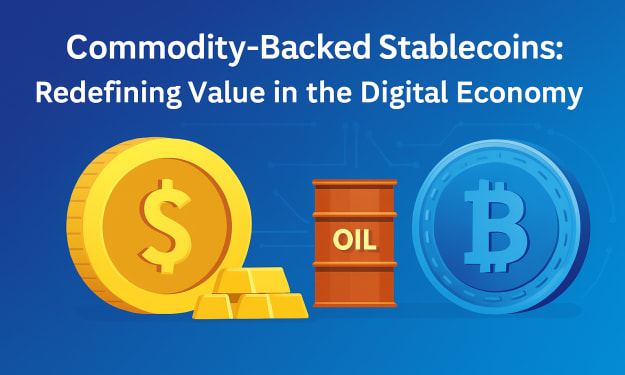
Commodity-Backed Stablecoins: Redefining Value in the Digital Economy
The cryptocurrency market has consistently evolved to address volatility, scalability, and trust. Among the innovations reshaping this ecosystem, commodity-backed stablecoins have emerged as a critical bridge between blockchain technology and traditional asset classes. Unlike purely algorithmic or fiat-backed models, these tokens derive value from tangible commodities such as gold, silver, oil, or even agricultural products. This asset-collateralized approach not only mitigates market instability but also offers institutional-grade trust for investors seeking transparency and sustainability in digital finance.
By Siddarth D2 days ago in The Chain
Cost to Create a Stablecoin: A Complete Guide for Businesses and Entrepreneurs
Stablecoins have become one of the most important innovations in blockchain technology. Unlike cryptocurrencies such as Bitcoin or Ethereum, which are often highly volatile, stablecoins are designed to maintain a steady value, usually pegged to fiat currencies like the US dollar or other assets. Their reliability makes them crucial for payments, remittances, trading, and decentralized finance (DeFi).
By Siddarth D2 days ago in The Chain
How Stablecoin Issuers Make Money: A Deep Dive
Stablecoins have rapidly emerged as a critical bridge between the world of cryptocurrencies and traditional finance. Unlike other digital assets, stablecoins are designed to maintain a steady value, typically pegged to fiat currencies such as the U.S. dollar. This unique positioning has fueled their adoption across global markets. But a question often arises: how stablecoin issuer make money? Behind the stability of these tokens lies a business model that generates sustainable revenue streams for issuers while keeping the ecosystem functional.
By Siddarth D2 days ago in The Chain
Advantages and Disadvantages of Stablecoin: A Complete Guide
The world of cryptocurrency has evolved far beyond the early days of Bitcoin and Ethereum. Among the many innovations that have emerged, stablecoins have gained massive attention. As the name suggests, stablecoins are designed to bring “stability” into the often-volatile crypto market. By pegging their value to assets like the US dollar, gold, or other fiat currencies, stablecoins attempt to provide a balance between traditional finance and the digital world.
By Siddarth D2 days ago in The Chain
The Global Race to Regulate Stablecoins: How Countries Are Shaping the Future of Digital Currency
The rapid rise of stablecoins marks a pivotal moment in the evolution of global finance. These digital assets—pegged to the value of fiat currencies like the US dollar or the euro—offer the promise of fast, low-cost transactions without the volatility associated with other cryptocurrencies. However, with their growing popularity, stablecoins have also triggered a regulatory dilemma that governments around the world are now racing to address.
By Siddarth D2 days ago in The Chain
How Stablecoins Are Created: A Deep Dive Into The Future of Digital Finance
The evolution of digital finance is reshaping how we think about money, and at the heart of this revolution lies a seemingly simple yet incredibly powerful innovation: the stablecoin. Designed to offer the best of both worlds—blockchain’s speed and decentralization with the stability of traditional currencies—stablecoins are quickly becoming integral to both individual transactions and global financial systems. But how are these digital assets actually brought to life? What lies beneath their perceived simplicity? Let’s take a deep dive into how stablecoins are created, and what it takes to build a currency that must remain stable in a volatile digital world.
By Siddarth D2 days ago in The Chain
How Stablecoin Issuers Make Money: 12 Proven Revenue Models
Stablecoins have become a cornerstone of the digital asset ecosystem, offering price stability in an otherwise volatile market. As demand surges—from retail traders hedging risk to large institutions conducting cross-border settlements—the question arises: How Stablecoin Issuers Make Money. Unlike pure speculative tokens, stablecoins must maintain a peg to fiat or another asset, which creates unique revenue opportunities. In this post, we unpack each model, illustrate with case studies, and outline strategic considerations for issuers aiming for both profitability and trust.
By Siddarth D2 days ago in The Chain
How Smart Founders Validate Blockchain Ideas in 4 Weeks - Before Spending Millions
Founders don’t lose money on blockchain because the technology fails — they lose money because they validate too late. By the time many startups build a full platform, they discover the market doesn’t need decentralization, regulators require changes, or integration costs explode. A fast Proof of Concept (PoC) flips that risk model. Instead of committing six months and a large budget, founders can validate feasibility, scalability, and stakeholder adoption in four weeks.
By Nia Higgins3 days ago in The Chain
Stock Trading - Entry 55
While spiritual, I ascribe neither to Christianity nor to Judaism. This article is all about a warning for investors such as myself. I am not dispensing investing advice, only reflections on my personal financial situation when it comes to investing...in blockchains.
By Richard Soulliere6 days ago in The Chain
What Problems Does Gold Tokenization Service Actually Solve?
Gold has long been recognized as a reliable store of value and a safeguard against economic uncertainty. For centuries, individuals, institutions, and governments have relied on gold to preserve wealth during inflationary periods, currency devaluation, and geopolitical instability. Despite its stability and historical importance, traditional gold ownership comes with multiple operational, financial, and logistical challenges.
By Michal steve6 days ago in The Chain