
How Stablecoins Are Created: A Deep Dive Into The Future of Digital Finance
Understanding the Technology, Strategy, and Compliance Behind Building a Stable Digital Currency
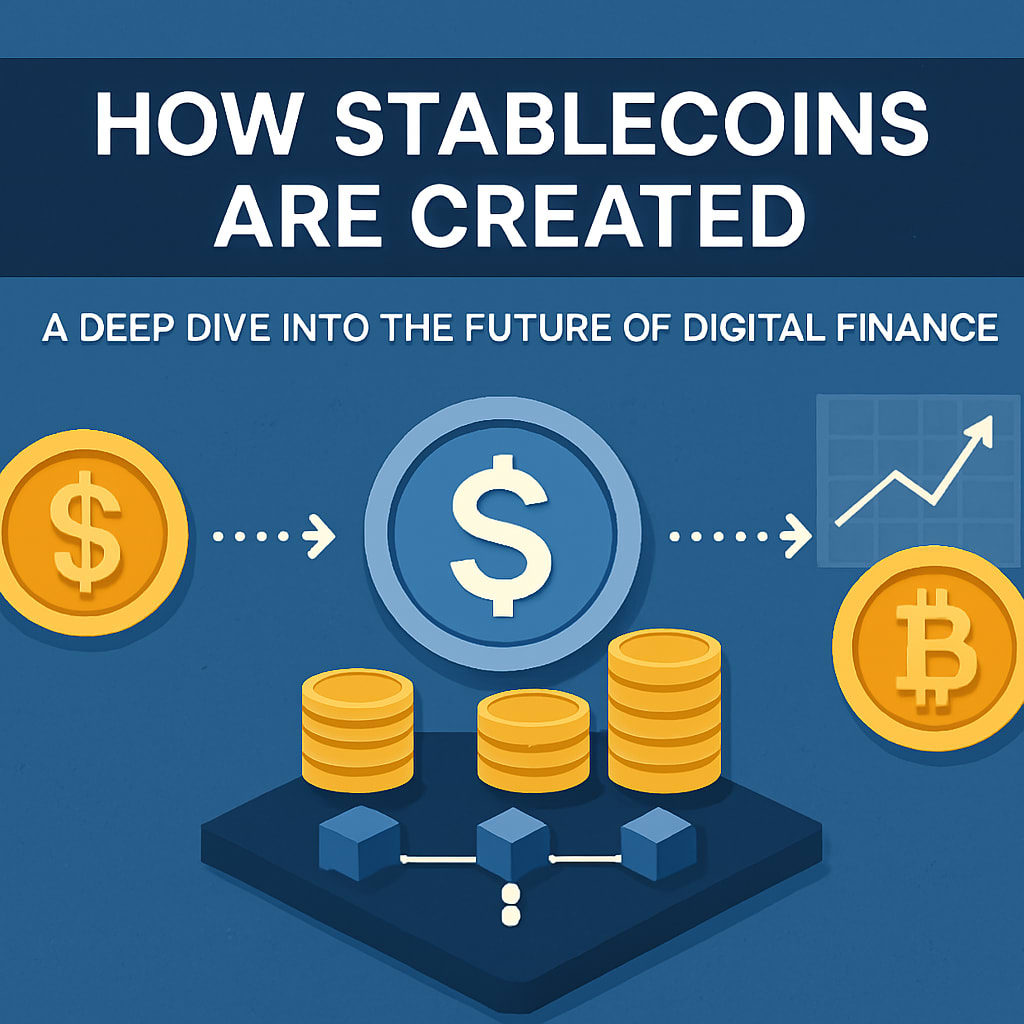
The evolution of digital finance is reshaping how we think about money, and at the heart of this revolution lies a seemingly simple yet incredibly powerful innovation: the stablecoin. Designed to offer the best of both worlds—blockchain’s speed and decentralization with the stability of traditional currencies—stablecoins are quickly becoming integral to both individual transactions and global financial systems. But how are these digital assets actually brought to life? What lies beneath their perceived simplicity? Let’s take a deep dive into how stablecoins are created, and what it takes to build a currency that must remain stable in a volatile digital world.
The Foundation of a Stablecoin
Creating a stablecoin isn't as straightforward as writing a few lines of code or minting a token on a blockchain. It’s a careful balancing act that blends economics, technology, regulatory compliance, and risk management. The purpose of a stablecoin is to maintain a fixed or relatively stable value, typically pegged to a real-world asset like the US Dollar, Euro, or even commodities such as gold.
But to understand how a stablecoin is created, we first need to understand what it is and what it is not.
A stablecoin is not a standalone cryptocurrency. Unlike Bitcoin or Ethereum, whose values fluctuate wildly based on supply and demand, stablecoins are designed to mirror the value of a fixed asset. This means that their creation involves not just the blockchain side of things, but also a robust framework for collateral management, auditing, and algorithmic control, depending on the model used.
Types of Stablecoins and Their Creation Process
There are three primary models used in stablecoin creation:
- Fiat-collateralized
- Crypto-collateralized
- Algorithmic
Each comes with its own methods of issuance and control.
1. Fiat-Collateralized Stablecoins
This is the most common and straightforward type. Here, every stablecoin issued is backed by an equivalent amount of fiat currency held in a reserve. For example, if 1 million stablecoins are issued, the issuer must hold $1 million in a verified bank account or custodial service.
Creation Process:
- Legal entity formation: Before issuing fiat-backed stablecoins, a company must first create a registered business and comply with financial regulations. This typically involves getting licenses in relevant jurisdictions, following anti-money laundering (AML) and know-your-customer (KYC) guidelines.
- Banking partnerships: To hold fiat reserves, the issuer must partner with banks or financial institutions that can safeguard the funds. This relationship is key, as it lends credibility to the stablecoin.
- Smart contract development: The technical side comes next. Smart contracts are written to manage issuance, redemption, and tracking of stablecoins on the blockchain. These contracts are often deployed on public blockchains like Ethereum or private blockchains depending on the use case.
- Auditing and transparency: Independent audits are conducted regularly to ensure that the fiat reserves match the number of stablecoins in circulation. This trust layer is crucial, especially in the eyes of regulators and users.
Popular examples: USDT (Tether), USDC (USD Coin)
2. Crypto-Collateralized Stablecoins
This model relies on other cryptocurrencies as collateral, which are locked in smart contracts to issue stablecoins. Since cryptocurrencies are volatile, these stablecoins are often overcollateralized—meaning for every $1 of stablecoin issued, $1.50 or more in crypto is held.
Creation Process:
- Smart contract design: Advanced smart contracts are required to handle collateral deposits, valuations, and liquidation mechanisms. These contracts are the backbone of the stablecoin protocol.
- Collateral lockup: Users lock their crypto assets (e.g., ETH) into a smart contract. In return, they receive a stablecoin pegged to a fiat value (e.g., $1).
- Liquidation system: If the value of the collateral drops below a threshold, the system automatically liquidates positions to maintain peg stability.
- Governance: Many of these stablecoins are governed by decentralized autonomous organizations (DAOs), which vote on parameters like collateralization ratios and liquidation penalties.
Popular examples: DAI by MakerDAO
3. Algorithmic Stablecoins
Unlike the previous two models, algorithmic stablecoins do not rely on collateral. Instead, they use software algorithms to control supply and demand dynamically.
Creation Process:
- Seigniorage-style systems: These systems mint or burn tokens based on price movements. If the stablecoin’s price goes above the peg, new coins are minted to bring the price down. If the price falls below the peg, coins are burned.
- Incentivized users: Users are incentivized through staking, bonds, or other economic incentives to act in ways that stabilize the price.
- Smart contracts as central banks: Essentially, these stablecoins function like a central bank in code, responding to market changes in real-time.
These are the most complex to create and maintain, and many have failed due to volatility or flawed incentive structures.
Example: UST (Terra), which failed due to its unsustainable model.
Behind the Scenes: Key Components in Stablecoin Creation
Let’s break down the foundational elements required in any stablecoin development journey:
1. Smart Contract Architecture
Every stablecoin relies on smart contracts to handle:
- Token issuance and burning
- Collateral management
- Transfers and redemptions
- Governance and upgrades
These contracts must be secure, tested, and often undergo third-party audits before going live.
2. Compliance and Regulation
Compliance is not optional. Issuers must consider:
- Jurisdictional licensing
- AML/KYC requirements
- Reporting obligations
- Consumer protection laws
Collaborating with a stablecoin development company that understands global regulatory landscapes can significantly simplify this part of the process.
3. Reserve Management
If your model involves collateral (fiat or crypto), managing that reserve transparently is vital. This includes:
- Real-time valuation systems
- Escrow mechanisms
- Third-party custodians
- Regular audits
- Poor reserve management is one of the leading causes of stablecoin failure.
4. Peg Maintenance Strategy
Stablecoins must hold their peg to maintain trust. This can be done via:
- Automated arbitrage incentives
- Interest rate adjustments
- Liquidity pool management
- Market-making strategies
- Your strategy here must match your stablecoin type and target market.
How to Create a Stablecoin That Actually Works
It’s tempting to think that minting a token on Ethereum and calling it a stablecoin is all it takes. But real-world stablecoin creation is far more complex, especially if you want it to scale, function legally, and gain user trust.
Here's a practical roadmap on how to create a stablecoin that is viable:
- Define the purpose: Is this stablecoin for trading, remittances, lending, or enterprise use?
- Choose the model: Fiat-backed, crypto-backed, or algorithmic?
- Design your legal framework: Engage legal counsel and register your entity properly.
- Partner with experts: A specialized stablecoin development company can assist with technical architecture, security, compliance, and go-to-market strategy.
- Develop your protocol: Write and test smart contracts extensively.
- Set up custody and reserves: Build trust by securing your backing assets with reputable institutions.
- Launch with transparency: Ensure audits and public reports are available from day one.
- Create a governance model: Whether centralized or DAO-based, a clear governance structure must exist.
- Plan for scalability: Think ahead—can your system handle increased volume?
Risks and Challenges in Stablecoin Creation
Stablecoins may seem simple to the end-user, but creators face significant challenges:
- Regulatory Uncertainty: Different countries have different rules, and these rules are evolving.
- Technical Complexity: Smart contract bugs or oracle manipulation can lead to massive failures.
- Market Trust: Gaining user trust requires transparency, branding, and long-term commitment.
- Collateral Volatility: Especially in crypto-backed models, price swings can threaten stability.
- Liquidity Risks: Without sufficient liquidity, stablecoins can depeg quickly during high-volume redemptions.
Why Stablecoins Matter in the Bigger Picture
Beyond speculation and trading, stablecoins are driving global innovation. They enable:
- Instant, low-cost cross-border payments
- DeFi applications like lending, staking, and yield farming
- Financial access in unstable economies
- Smart contracts tied to real-world value
As global financial institutions and governments explore central bank digital currencies (CBDCs), the foundational lessons from stablecoin development are proving essential.
Final Thoughts
Understanding how stablecoins are created is essential for anyone looking to enter the digital currency space, be it as a developer, investor, regulator, or user. These assets are far more than just "digital dollars"—they are programmable, transparent, and potentially transformative components of tomorrow's financial infrastructure.
Whether you’re exploring how to create a stablecoin for your business or looking to partner with a seasoned stablecoin development company, the journey is as complex as it is rewarding. The process demands attention to both technological detail and the larger financial ecosystem in which these coins must operate.
If done right, your stablecoin could play a role in shaping a more open, inclusive, and efficient financial future.
About the Creator
Keep reading
More stories from Siddarth D and writers in The Chain and other communities.
How Stablecoin Issuers Make Money: 12 Proven Revenue Models
Stablecoins have become a cornerstone of the digital asset ecosystem, offering price stability in an otherwise volatile market. As demand surges—from retail traders hedging risk to large institutions conducting cross-border settlements—the question arises: How Stablecoin Issuers Make Money. Unlike pure speculative tokens, stablecoins must maintain a peg to fiat or another asset, which creates unique revenue opportunities. In this post, we unpack each model, illustrate with case studies, and outline strategic considerations for issuers aiming for both profitability and trust.
By Siddarth D20 days ago in The Chain
Top 10 Blockchain Development Companies in USA in the 2026 for Enterprise Innovation
Blockchain technology has moved far beyond cryptocurrencies. By 2026, enterprises across finance, healthcare, logistics, supply chains, and digital identity are using blockchain to create transparent, secure, and automated systems. According to industry forecasts, the global blockchain market is expected to surpass $90 billion by 2030, with the United States leading enterprise adoption.
By Nia Higgins2 days ago in The Chain
How Bitcoin Mining Software Works: A Complete Step-by-Step Guide
Bitcoin has become one of the most widely recognized digital currencies in the world. Since its introduction, it has transformed the way people think about money, decentralization, and digital assets. Behind the Bitcoin network lies a powerful process known as mining, which keeps the system secure and operational. For beginners who want to explore this process, understanding Bitcoin mining software is an important first step.
By smithtaylor6 days ago in The Chain




Comments
There are no comments for this story
Be the first to respond and start the conversation.