
The Global Race to Regulate Stablecoins: How Countries Are Shaping the Future of Digital Currency
The Global Race to Regulate Stablecoins: How Countries Are Shaping the Future of Digital Currency
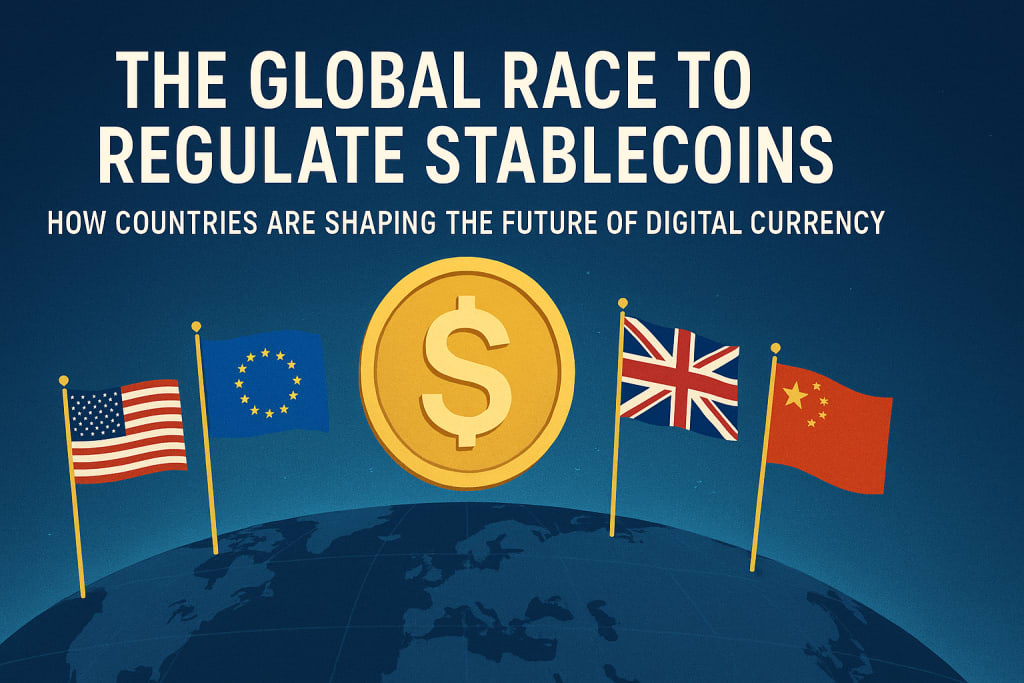
The rapid rise of stablecoins marks a pivotal moment in the evolution of global finance. These digital assets—pegged to the value of fiat currencies like the US dollar or the euro—offer the promise of fast, low-cost transactions without the volatility associated with other cryptocurrencies. However, with their growing popularity, stablecoins have also triggered a regulatory dilemma that governments around the world are now racing to address.
Stablecoin regulation has become a central issue for policymakers, technologists, and financial institutions. While the benefits of stablecoins are undeniable, they also present unique risks related to monetary policy, financial stability, and consumer protection. As different nations begin to craft their own regulatory frameworks, the world finds itself in a global contest: who will lead, and who will follow, in writing the rules for the digital money of tomorrow?
Why Stablecoin Regulation Matters
The call for stablecoin regulation is not just a theoretical debate among economists. It is a pressing concern with tangible implications. The 2022 collapse of TerraUSD, a so-called algorithmic stablecoin, highlighted the systemic risks these digital currencies can pose when left unregulated. Billions of dollars vanished from the market, shaking investor confidence and prompting urgent regulatory scrutiny.
At its core, regulation is about safeguarding trust. Stablecoins are often used in critical financial transactions—from daily commerce to international trade. Without a clear and unified regulatory framework, users are left vulnerable to fraud, cyber threats, and platform instability. Moreover, unregulated stablecoins can become conduits for illicit activity, including money laundering and tax evasion.
There is also the geopolitical dimension. Countries worry about losing control over their monetary policy if stablecoins become widely adopted. A dollar-backed stablecoin used globally could, for example, extend U.S. monetary influence far beyond its borders. Thus, nations have a vested interest in developing localized frameworks that strike a balance between innovation and sovereignty.
How Different Regions Are Approaching Regulation
United States
The United States, home to some of the largest stablecoin issuers like Circle (issuer of USDC) and Tether (USDT), has yet to establish a comprehensive regulatory regime. However, the momentum is building.
In 2023, U.S. lawmakers proposed several bipartisan bills focused on stablecoin regulation. These proposals aim to establish clear definitions, require reserves backed by cash or short-term treasuries, and impose oversight through existing federal agencies like the SEC or the CFTC. The Federal Reserve has also voiced interest in supervising stablecoin issuers that may pose systemic risks.
Yet, political gridlock remains a hurdle. While some regulators see stablecoins as a bridge between traditional finance and blockchain innovation, others worry about their potential to destabilize banking systems if left unchecked.
European Union
The EU is taking a more coordinated approach through its Markets in Crypto-Assets (MiCA) regulation, which is set to take full effect in 2025. MiCA establishes licensing requirements for crypto-asset service providers and sets strict rules for stablecoin issuers, especially those deemed “significant” in terms of scale or user base.
This framework is seen as a model of comprehensive stablecoin regulation, balancing innovation with consumer protection. It could also provide a competitive advantage by creating legal certainty for fintech companies operating within the union.
Asia
Asia offers a mixed regulatory landscape. In China, all crypto transactions, including stablecoins, are banned as part of the country’s broader clampdown on decentralized finance. Instead, China has focused on promoting its digital yuan.
On the other hand, Japan has introduced legislation that allows banks and trust companies to issue stablecoins, requiring them to be fully backed by yen reserves. Singapore is also pioneering thoughtful regulation by imposing capital and reserve requirements on stablecoin issuers under its Payment Services Act.
Such regulatory diversity across Asia reflects the region’s varying economic priorities and digital innovation goals.
Emerging Economies
In Latin America and Africa, where inflation and limited banking access persist, stablecoins are gaining traction as practical tools for everyday transactions. Yet, these regions often lack robust legal frameworks. Some governments have expressed interest in adopting stablecoin for cross-border payments, recognizing their utility in reducing remittance costs.
The challenge for emerging economies lies in developing policies that embrace the benefits of stablecoins without exposing themselves to external financial shocks or loss of monetary control.
Cross-Border Challenges and Innovations
- Stablecoins are inherently global. They exist on decentralized blockchains, can be transacted 24/7, and often move across jurisdictions with minimal friction. This creates both opportunity and regulatory complexity.
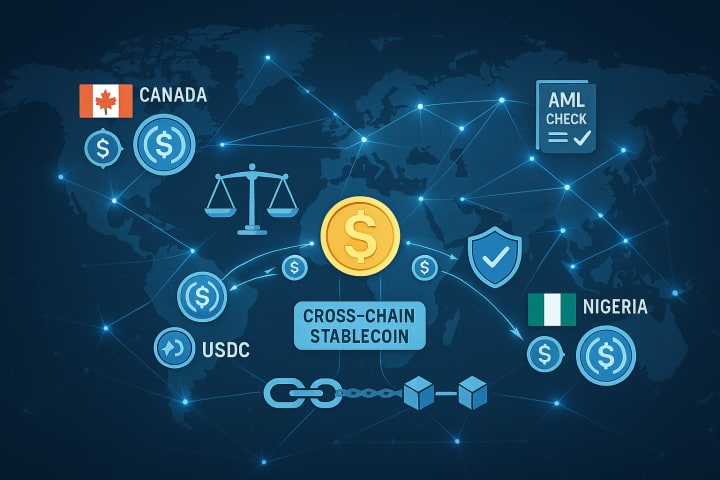
- One of the biggest challenges regulators face is how to address cross-border payments made with stablecoins. When a Nigerian freelancer receives USDC from a Canadian client, whose laws apply? How is anti-money laundering (AML) compliance enforced? These questions highlight the urgent need for international regulatory coordination.
- Technological solutions are emerging to address this gap. Cross-Chain Stablecoin infrastructure allows for the seamless transfer of assets across different blockchains, improving interoperability and reducing reliance on centralized exchanges. While promising, this also raises further questions around compliance and traceability.
- Some countries are working toward mutual recognition agreements to ensure that stablecoins used in cross-border payments meet shared standards. Still, progress is slow, and until harmonized frameworks are established, jurisdictional mismatches will continue to pose risks.
Industry Response and the Rise of Specialized Services
- As regulators catch up, the industry has taken proactive steps to build trust and transparency. Companies offering stablecoin development services now include features like smart contract audits, legal advisory, and KYC/AML compliance tools as standard offerings.
- These services are crucial for both startups and large financial institutions entering the stablecoin space. From issuing fully collateralized tokens to integrating real-time reserve disclosures, modern stablecoin solutions are designed with regulatory foresight.
- The rise of stablecoin development services also reflects a growing demand for infrastructure that aligns with varying legal environments. For instance, a firm creating a stablecoin for the European market must comply with MiCA, while one targeting U.S. users may need to register under multiple federal and state agencies.
- These providers not only accelerate time to market but also help navigate the complex web of global compliance, allowing innovators to focus on building useful applications rather than getting bogged down in legal ambiguity.
Stablecoins in Real-World Use Cases
- Stablecoins have already made their mark in the real world. Perhaps the most impactful use is in cross-border payments, where they are helping to solve longstanding problems related to cost, speed, and transparency.
- Traditionally, sending money internationally involves intermediaries, high fees, and long settlement times. With stablecoins, a merchant in India can receive USDC from a client in Europe in seconds, often at a fraction of the cost. This has transformative implications for global trade, freelancing, and even humanitarian aid.
- Furthermore, stablecoins empower people in hyperinflationary economies by giving them access to stable foreign currencies, without needing a bank account. In countries like Argentina or Venezuela, USDT has become an informal hedge against local currency collapse.
- Recognizing these benefits, even banks and remittance companies are beginning to explore stablecoin for cross-border payments as a complement to their existing services. However, widespread adoption still depends on regulatory clarity and infrastructure investment.
Looking Ahead: The Road to Global Standards
The future of stablecoin regulation lies in cooperation, not isolation. While countries are understandably trying to protect their own financial systems, the borderless nature of blockchain demands a collaborative approach.
Multilateral institutions like the Financial Stability Board (FSB) and the International Monetary Fund (IMF) are working toward global guidelines, but progress is gradual. In parallel, central banks are experimenting with digital currencies of their own, potentially offering state-backed alternatives to privately issued stablecoins.
Meanwhile, the role of Cross-Chain Stablecoin infrastructure will likely grow, making interoperability a key area of both innovation and oversight.
For now, the race continues—between nations, between public and private actors, and between regulation and innovation.
Conclusion
The global race to regulate stablecoins is far from over. What’s clear is that stablecoins are no longer fringe financial instruments—they are integral to the future of money. Governments, technologists, and financial institutions must work together to develop regulatory frameworks that preserve the utility of stablecoins while addressing systemic risks.
Stablecoin regulation is not about stifling innovation; it’s about setting the guardrails to ensure that innovation thrives responsibly. As the digital currency landscape continues to evolve, the world’s approach to stablecoins will shape the future of financial inclusion, trade, and economic sovereignty.
About the Creator
Keep reading
More stories from Siddarth D and writers in The Chain and other communities.
How to Master Crypto Trading Strategies Without Losing Your Mind
In the rapidly evolving world of digital finance, crypto trading has shifted from a niche hobby to a full-time career for many. But let’s be honest—most new traders dive in headfirst, guided more by hype than strategy. And the result? Losses, confusion, and often a quick exit.
By Siddarth D6 months ago in The Chain
Twitter Outage
Twitter is one of the most popular social media platforms in the world. Millions of people use it every day to share news, opinions, and updates. Because so many people depend on Twitter, even a short problem can affect users globally. A Twitter outage happens when the platform stops working properly, either for some users or for everyone. These outages often create confusion, frustration, and a lot of online discussion.
By Farhan Sayed3 days ago in The Chain
Bitcoin Dominance Explained: What It Is & Why It Matters for Crypto Traders
Introduction Bitcoin dominance is one of the most watched indicators in the crypto market. It shows how much of the total cryptocurrency market value belongs to Bitcoin compared to all other cryptocurrencies combined. Traders, long-term investors, and analysts track this metric because it helps explain capital rotation, market sentiment, and risk appetite across crypto cycles.
By saif ullah2 days ago in The Chain




Comments
There are no comments for this story
Be the first to respond and start the conversation.