
How MVPs Drive Innovation in Product Development
Testing Ideas with Minimal Investment
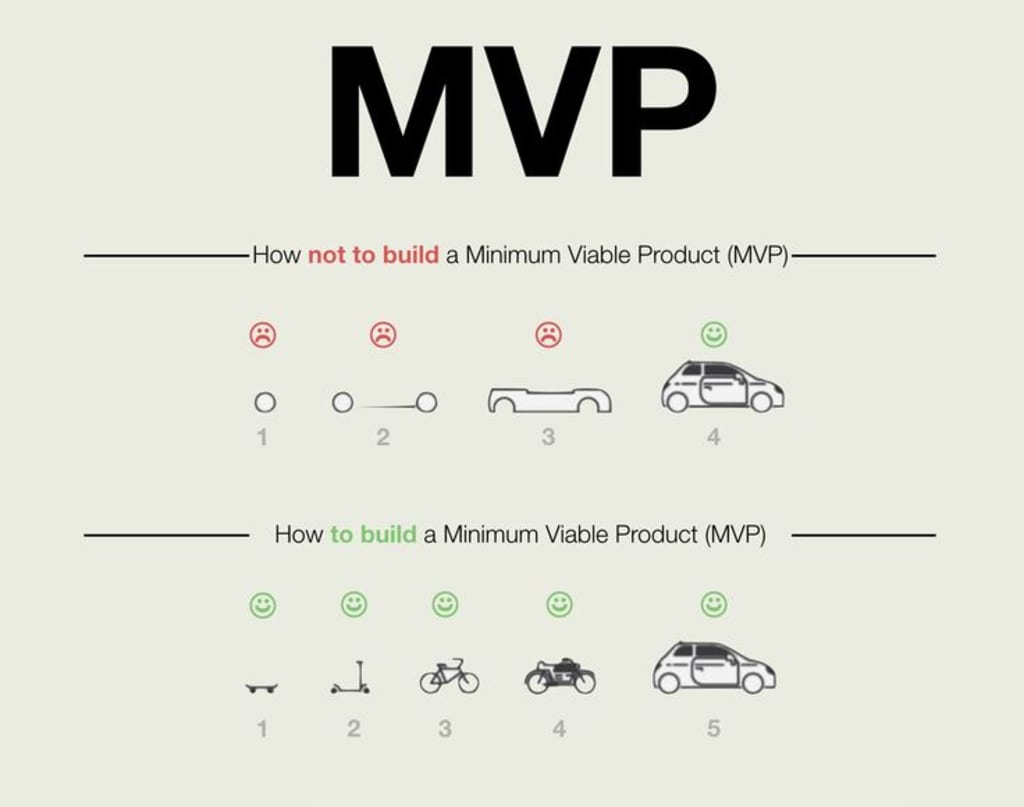
In today's competitive business world, innovation is key to staying ahead. One of the most powerful tools for fostering innovation in product development is the creation of a Minimum Viable Product (MVP). An MVP allows businesses to test their ideas with real users early in the development process, gather feedback, and make informed decisions about how to move forward. In this article, we will explore how MVPs drive innovation in product development and why this approach has become essential for startups and established companies alike.
What is an MVP?
A Minimum Viable Product (MVP) is a product with just enough features to meet the needs of early adopters and gather valuable feedback. Rather than building a fully-featured product from the start, companies create an MVP to test assumptions and validate the market demand for their idea. The goal is to minimize time, resources, and risks while learning as much as possible about user needs and preferences.
For example, if you're developing a new app, an MVP might focus on the core functionality, leaving out advanced features for future versions. The MVP allows you to get the product into the hands of real users quickly, helping you test your hypotheses and refine the product before investing heavily in its development.
How MVPs Drive Innovation in Product Development
Fosters Iterative Development
One of the primary ways MVPs drive innovation in product development is by promoting iterative development. Instead of spending months or years building a fully-featured product, the MVP approach focuses on getting a basic version of the product out quickly. Once the MVP is released, teams can iterate on it based on user feedback and data.
This iterative process is a key factor in innovation because it allows businesses to continuously improve and evolve the product. Instead of making big leaps without knowing whether the market will accept them, MVP development encourages small, manageable changes based on real-time feedback.
For example, after the initial release of an MVP, developers might notice that users are struggling with a particular feature. Based on this feedback, they can prioritize changes that will improve the user experience, leading to better product performance and more satisfied customers.
Minimizes Risk and Investment
Building a product from scratch involves significant time and financial investment. If the product fails to meet customer needs or struggles in the market, these resources are wasted. MVPs help mitigate this risk by allowing businesses to test their product concept with a smaller investment upfront.
By developing an MVP, companies can validate their ideas and ensure there's demand before scaling up. This approach reduces the chance of building a product that doesn't resonate with users, and it gives companies the flexibility to pivot or refine their ideas based on the results.
For instance, if an MVP is launched and users aren't interested in a specific feature, the company can pivot and adjust the product to better meet market demands. This reduces the financial risk and helps avoid unnecessary spending on features that won’t add value.
Enhances Collaboration and Feedback Loops
Innovation thrives on collaboration and feedback. An MVP allows teams to engage with stakeholders, potential customers, and even early adopters to gather valuable insights. By involving users in the development process, companies can ensure that their product evolves in the right direction.
With an MVP, feedback loops are created between developers, designers, and users, which leads to better decision-making. The ability to receive real-time feedback helps product teams identify pain points and areas for improvement, ultimately resulting in a product that better meets customer needs.
For example, when a company releases an MVP, users might highlight specific issues or suggest new features. Developers can prioritize these changes in future iterations, leading to more innovative solutions that align with what the customers truly want.
Accelerates Time to Market
MVPs drive innovation by accelerating the time it takes to bring a product to market. Instead of waiting for the product to be perfect, companies can launch an MVP with a limited set of features, allowing them to enter the market quickly. This speed allows businesses to gain early traction, attract users, and start generating feedback faster than if they had waited for the complete product.
The faster a company can get its product in front of users, the sooner it can start learning what works and what doesn’t. By gathering this data early, businesses can move faster in refining their product and adding features that will drive further innovation.
For example, a company developing a new mobile app can launch an MVP version with the most important features and then gradually roll out updates based on user demand. This approach allows for a quicker entry into the market and helps the company stay ahead of competitors.
Facilitates Focused Innovation
Focusing on core features during the MVP phase helps teams stay laser-focused on solving the most important problems for their users. Innovation can easily get lost in the complexity of a fully-featured product. By limiting the scope and focusing on core functionalities, companies can innovate more effectively, ensuring that each new feature added provides real value.
This focused approach encourages teams to be more creative in solving problems. When developing an MVP, teams often find innovative ways to deliver key functionalities in the simplest way possible. This helps create a product that is both efficient and highly user-centric.
For instance, in developing a financial app, the MVP might focus solely on secure transactions, leaving advanced analytics and budgeting tools for future versions. This approach allows the team to innovate and perfect the core feature before moving on to more complex functionalities.
Builds Customer-Centric Products
One of the greatest benefits of using MVPs in product development is that they help businesses build products that are truly customer-centric. Rather than relying on assumptions or internal expectations about what users want, MVPs enable companies to validate their ideas with actual users.
Customer feedback helps guide innovation by highlighting what users value most in a product. When companies listen to this feedback and incorporate it into their product development, they can create solutions that better meet user needs and solve real-world problems.
For example, a startup launching an MVP for an e-commerce platform might receive feedback about the need for better payment options. Based on this feedback, the development team can innovate by integrating additional payment methods in the next product iteration, improving the user experience.
Encourages Risk-Taking and Experimentation
Innovation often requires taking risks and trying new things. MVPs encourage this mindset by allowing businesses to experiment with new ideas without committing too many resources upfront. By launching an MVP, companies can explore different features, business models, or technologies without the fear of failure.
With MVP development, businesses can test out new concepts and pivot quickly if something doesn’t work. This flexibility fosters a culture of innovation, where teams are more willing to take risks and try new things in the pursuit of solving problems and creating value for users.
For instance, a company may experiment with integrating blockchain technology into their MVP as a way to enhance security. If it works, they can continue to innovate with more blockchain features; if it doesn’t, they can explore alternative solutions.
Improves Resource Allocation
With MVP software solutions, businesses can allocate resources more effectively. By focusing on the most critical features, teams avoid wasting resources on unnecessary functionalities or features that users may not even want. This approach allows businesses to focus their time, energy, and budget on developing what truly matters to users.
As feedback is collected and the product evolves, businesses can adjust their resource allocation to focus on the most valuable features. This ensures that resources are spent where they’ll have the greatest impact on innovation.
Conclusion: How MVPs Drive Innovation in Product Development
MVPs are powerful tools that drive innovation in product development by enabling businesses to test ideas, gather feedback, and iterate quickly. By launching an MVP, companies can validate their ideas, minimize risks, and accelerate the product development process.
Through iterative development, customer-centric feedback, and focused innovation, MVPs allow businesses to create products that are truly aligned with user needs. As a result, MVPs provide a solid foundation for driving continuous innovation and achieving long-term success in the marketplace.
Launch your MVP quickly, gather feedback, and start driving innovation in your product development process. Build your MVP today, and unlock the potential to create a product that will resonate with your customers and lead to business growth.
About the Creator
Keep reading
More stories from writers in The Chain and other communities.
Blockchain in Intellectual Property: How It’s Changing Ownership, Protection, and Licensing
Introduction Intellectual property (IP) is one of the most valuable assets in the modern economy. From music, films, and books to patents, trademarks, and software code, creators and businesses rely on IP laws to protect their work. However, traditional intellectual property systems are often slow, expensive, and difficult to enforce—especially in the digital age.
By saif ullaha day ago in The Chain
Is Bitcoin a Good Investment? A Clear, Honest Look
Introduction Is Bitcoin a good investment? This question has been asked by beginners, professionals, skeptics, and institutions alike. Some see Bitcoin as the future of money. Others see it as risky and unpredictable. The truth lies somewhere in between.
By saif ullah2 days ago in The Chain



Comments
There are no comments for this story
Be the first to respond and start the conversation.