
Blockchain in Intellectual Property: How It’s Changing Ownership, Protection, and Licensing
Using Blockchain Technology to Secure and Manage Intellectual Property Rights

Introduction
Intellectual property (IP) is one of the most valuable assets in the modern economy. From music, films, and books to patents, trademarks, and software code, creators and businesses rely on IP laws to protect their work. However, traditional intellectual property systems are often slow, expensive, and difficult to enforce—especially in the digital age.
This is where blockchain in intellectual property comes in.
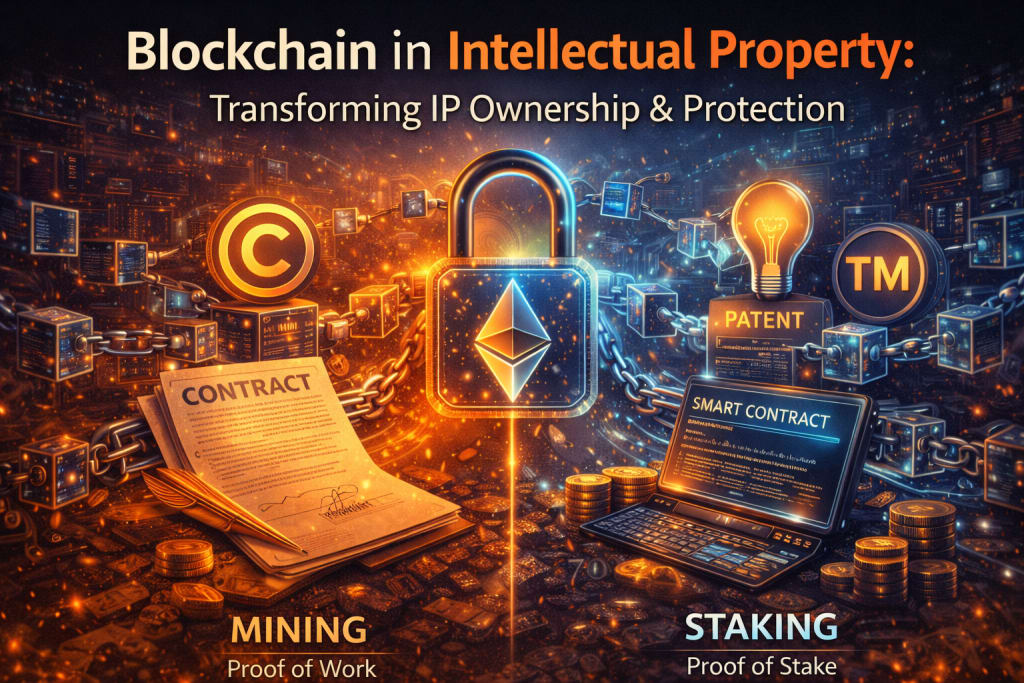
Blockchain technology introduces a new way to prove ownership, track usage, prevent infringement, and automate licensing. By creating transparent, tamper-resistant records, blockchain offers solutions to long-standing problems in copyright management, patent registration, and royalty distribution.
In this article, we explore how blockchain is being applied to intellectual property, what problems it solves, real-world use cases, benefits, challenges, and what the future may look like for creators, inventors, and rights holders.
What Is Intellectual Property? (Quick Overview)
Intellectual property refers to creations of the mind that are legally protected. Common IP categories include:
Copyright – music, art, books, videos, software
Patents – inventions and technical solutions
Trademarks – brand names, logos, slogans
Trade secrets – confidential business information
The goal of IP law is to ensure creators receive recognition and financial benefit from their work.
Why Traditional IP Systems Struggle
Before understanding blockchain’s role, it’s important to see where current IP systems fall short.
Key challenges:
Complex and slow registration processes
High legal and administrative costs
Difficulty proving original ownership
Limited global enforcement
Royalty tracking inefficiencies
Digital content can be copied instantly, making ownership disputes common and enforcement difficult.
What Is Blockchain and Why It Matters for IP?
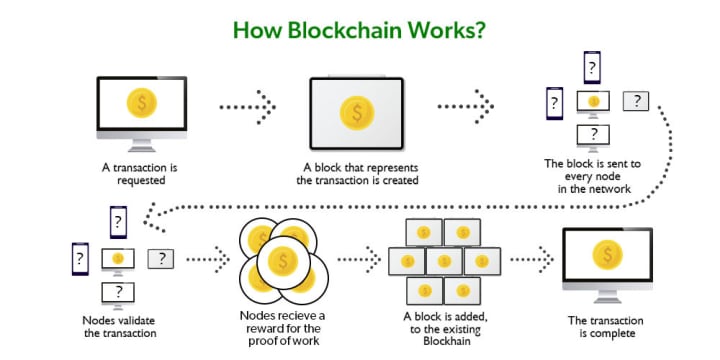
Blockchain is a distributed ledger technology that records data across a network of computers. Once information is recorded, it cannot be easily changed or deleted.
Key blockchain features relevant to intellectual property:
Immutability – records cannot be altered
Timestamping – proves when something was created
Transparency – public verification
Decentralization – no single authority controls data
These features align perfectly with the needs of IP protection.
How Blockchain Is Used in Intellectual Property
1. Proof of Ownership and Creation
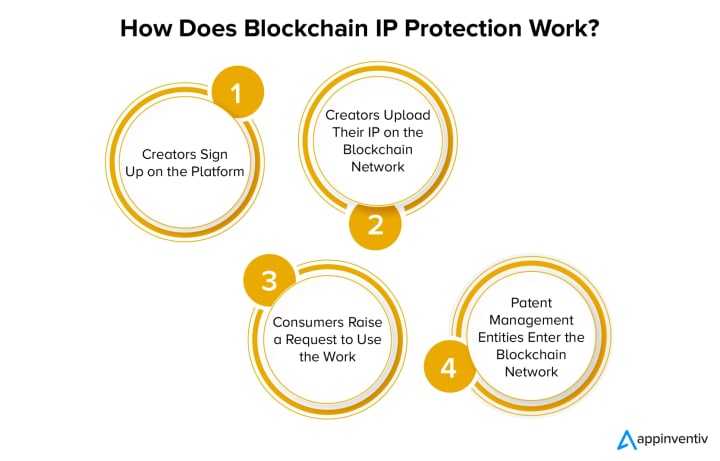
Blockchain can store a timestamped hash of a creative work. This acts as verifiable proof that a creator owned a specific piece of content at a certain time.
This is especially useful for:
Writers
Designers
Software developers
Musicians
It provides evidence without revealing the content itself.
2. Copyright Registration on Blockchain
Instead of relying only on centralized copyright offices, creators can register works on a blockchain-based system.
Benefits include:
Faster registration
Lower costs
Global timestamped proof
Reduced disputes
While blockchain does not replace legal copyright law, it strengthens proof and enforcement.
3. Smart Contracts for Licensing and Royalties
Smart contracts are self-executing programs stored on a blockchain.
In IP management, they can:
Automate licensing agreements
Instantly distribute royalties
Enforce usage terms
For example, a musician can receive automatic payment each time a song is streamed, without intermediaries.
4. Patent Protection and Prior Art Tracking
Blockchain can record:
Invention disclosures
Research timelines
Prior art
This helps inventors prove originality and defend against patent disputes by showing an immutable history of development.
5. Trademark Monitoring and Anti-Counterfeiting
Blockchain can be used to:
Track product authenticity
Verify brand ownership
Prevent counterfeit goods
Consumers and regulators can verify whether a product is genuine by checking blockchain records.
Benefits of Blockchain in Intellectual Property
Stronger proof of ownership
Reduced fraud and infringement
Faster licensing and payments
Lower administrative costs
Global accessibility
Increased transparency
For creators and companies, this means greater control and fewer intermediaries.
Limitations and Challenges
Despite its promise, blockchain in intellectual property has challenges:
Legal recognition varies by jurisdiction
Blockchain records do not automatically equal legal rights
Adoption requires education and infrastructure
Data privacy concerns
Scalability and cost issues
Blockchain works best when combined with existing IP laws—not as a replacement.
Real-World Use Cases
Musicians using blockchain to manage royalties
Artists minting digital works with provable ownership
Startups timestamping patents and designs
Brands tracking product authenticity
These applications are growing as awareness increases.
The Future of Blockchain in Intellectual Property
Blockchain is expected to play a major role in:
Global IP registries
Cross-border copyright enforcement
Creator economies
AI-generated content attribution
As digital creation expands, so does the need for trusted ownership systems.
Quick Takeaways
Blockchain strengthens IP ownership proof
It improves copyright, patent, and trademark management
Smart contracts automate licensing and royalties
Blockchain complements existing IP laws
Adoption is growing but still evolving
Conclusion
Blockchain in intellectual property represents a powerful shift in how creative and innovative works are protected and monetized. By combining transparency, immutability, and automation, blockchain addresses many weaknesses of traditional IP systems.
While legal frameworks still play a critical role, blockchain offers creators and rights holders a new layer of trust and efficiency. As adoption grows, it has the potential to reshape copyright enforcement, patent protection, and digital ownership on a global scale.
For creators, inventors, and businesses, understanding blockchain in intellectual property is no longer optional—it’s a strategic advantage.
FAQs
1. Can blockchain replace copyright law?
No. Blockchain supports copyright law but does not replace legal frameworks.
2. Is blockchain proof legally valid?
It strengthens evidence, but legal acceptance depends on jurisdiction.
3. Can blockchain prevent IP theft?
It helps prove ownership and deter disputes but cannot stop copying.
4. Are NFTs part of intellectual property?
NFTs can represent ownership or licensing, but IP rights still depend on contracts.
5. Who benefits most from blockchain IP systems?
Artists, musicians, inventors, startups, and digital creators.
💬 Engagement Question
Do you think blockchain should be integrated into official copyright and patent offices?
👉 Share this article with creators or innovators who care about protecting their work.
About the Creator
saif ullah
Content writer on different niches, specially on finance.
Keep reading
More stories from saif ullah and writers in The Chain and other communities.
Ethereum Mining: What It Was, Why It Ended, and What to Do Now
Introduction Ethereum mining was once one of the most popular ways Americans earned crypto. From home GPU rigs to large mining farms, thousands of people across the U.S. mined Ethereum as a side hustle, a business, or a long-term bet on crypto.
By saif ullaha day ago in The Chain
Top Crypto Recovery Company in the USA
The rapid adoption of cryptocurrency across the United States has reshaped how individuals and businesses interact with financial systems. Digital assets now play a role in investment portfolios, corporate treasury management, and cross-border transactions. Alongside these developments, however, has been a sharp rise in crypto-related fraud, wallet breaches, phishing attacks, and unauthorized transfers. As these incidents have grown more complex, so too has the need for specialized recovery services capable of operating within technical, legal, and regulatory boundaries.
By Sandra Lopez6 days ago in The Chain




Comments
There are no comments for this story
Be the first to respond and start the conversation.