
When You’re the “Mature One”: The Psychology of Parentified Brown Kids
How being your parents’ emotional anchor can quietly rob you of your own childhood

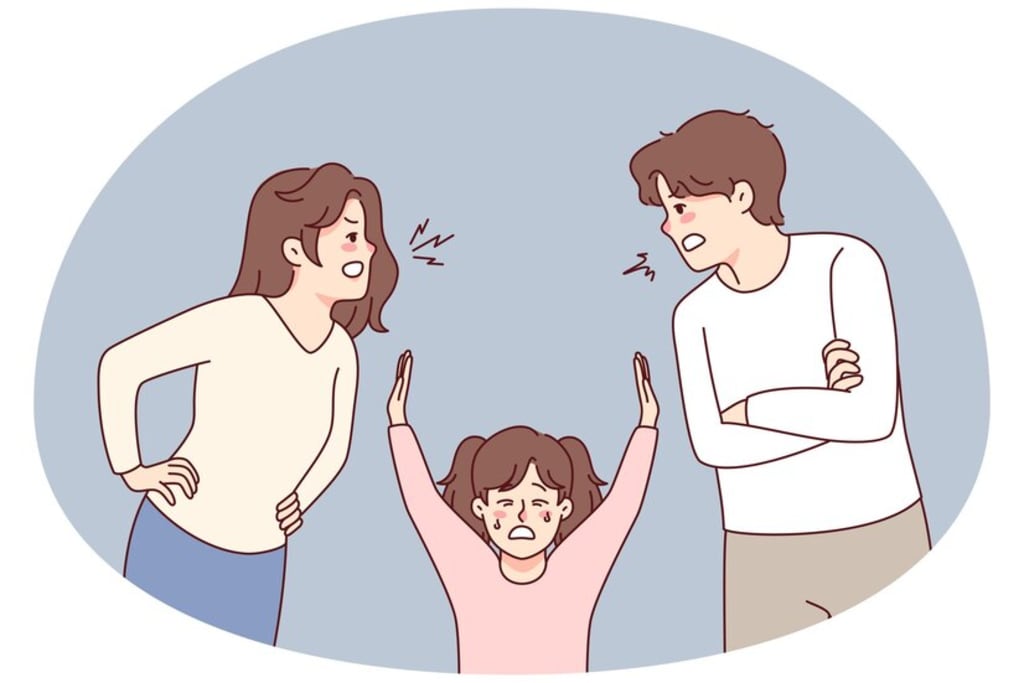
There’s a certain kind of praise that feels like a trap.
“You’re so mature for your age.”
“You’ve always been the strong one.”
“You understand things better than your siblings.”
If you grew up hearing these, chances are you weren’t just the “mature one” — you were emotionally parentified.
What is Emotional Parentification?
Emotional parentification happens when a child is expected to take on adult emotional responsibilities, usually for their parents. This isn’t about helping with groceries or caring for younger siblings. It’s when a child becomes a confidant, therapist, or peacekeeper, often in response to the parent’s emotional instability, marital issues, or personal trauma.
In brown households, this often goes unnoticed because it looks like respect. Quiet kids are praised. Kids who don’t “talk back” are seen as obedient. Children who listen to their parents vent about finances, family feuds, or their failing marriage are seen as “mature.” But really? They’re overwhelmed.
They’re carrying emotional weight far too heavy for their age.
The Brown Family Blueprint
In many brown cultures, emotions aren’t talked about openly — unless they’re your parents’ emotions. Vulnerability in kids is often brushed off as weakness, drama, or disobedience. But when an adult is upset, you must drop everything, listen patiently, and nod supportively. You learn early that your role is to be stable when others fall apart.
I remember times when my parent would be upset and say things like, “You’re the only one I can talk to” or “Don’t tell anyone, okay?” It felt like a compliment — like I was trusted, valued, and grown-up. But it also left me anxious, hyper-aware of every emotional shift at home, and constantly monitoring how everyone was feeling.
I didn’t realise that what I thought was maturity… was survival.
Signs You Were Emotionally Parentified
⤷ You were your parents’ emotional outlet or “best friend”
⤷ You mediated arguments between adults in the house
⤷ You kept secrets to protect your parents’ feelings
⤷ You felt guilty setting boundaries or saying no
⤷ You were praised for being “wise beyond your years”
⤷ You prioritise your parents’ wellbeing over your own
The Long-Term Impact
Being parentified doesn’t just shape your childhood — it shapes your identity. You grow up believing your needs are secondary, that love means overextending, and that being emotionally available is your primary worth.
You might become the friend who’s always there for others but struggles to ask for help. You might find yourself in relationships where you're the fixer, the caretaker, the listener. You might not even know what your needs are, because you were never allowed to explore them.
And often, these patterns show up without you even realising they’re connected to your childhood.
Why It’s So Hard to Call Out
In brown households, family loyalty runs deep. We’re taught not to “air dirty laundry,” not to question our parents, not to seem ungrateful. So we stay quiet. We suppress the resentment. We tell ourselves they did the best they could — and maybe they did.
But understanding why something happened doesn’t mean we can’t acknowledge that it hurt us.
Healing starts when we stop glorifying the “mature child” and start asking why that child had to grow up so fast.
Reparenting Yourself
You didn’t choose the role you were given. But now, you get to choose something different. Here are a few ways to start:
- Recognise your needs — they’re not selfish; they’re human.
- Allow yourself to set boundaries — even with people you love.
- Talk to someone — a therapist, a friend, even yourself in a journal.
- Give yourself what you missed — freedom, play, emotional space.
Being strong doesn’t mean holding everything together. Sometimes, it means finally letting go.
You were never meant to be your parents’ therapist. You were meant to be a child.
And it’s okay to start being one now — even if it’s just for a little while.
About the Creator
Tavleen Kaur
🧠 Psychology student decoding the human brain one blog at a time.
🎭 Into overthinking, under-sleeping, and asking “but why though?” way too often.
✨ Writing about healing, identity, and emotion
Keep reading
More stories from Tavleen Kaur and writers in Psyche and other communities.
Respect Your Elders (Even If They’re Toxic): Decoding the Unspoken Rules in Brown Families
"Don’t talk back." "Say sorry first, even if you didn’t start it." “Keep your head down." If you grew up in a brown household, you know these phrases like the back of your hand. You probably didn’t even need to hear them out loud — the look in your mom’s eyes, the slight shift in your dad’s tone, the awkward silence after a family argument — said it all.
By Tavleen Kaur8 months ago in Psyche
Why Our Brains Remember Negative Experiences More Than Positive Ones
Have you ever noticed that a single criticism can overshadow a dozen compliments? Or that a stressful incident lingers in your memory far longer than a joyful moment? This phenomenon is known as negativity bias, a cognitive tendency where the brain prioritizes negative experiences over positive ones. It’s not a flaw — it’s an evolutionary adaptation that has helped humans survive for thousands of years.
By Games Mode Onabout 20 hours ago in Psyche


Comments (1)
This article really hits home. I've seen this happen in families around me. When kids are made to be the emotional rock, it's tough on them. I remember a friend who always had to listen to her parents' problems. She thought it was normal, but it took a toll. How can we help kids break free from this emotional burden? And how do we change the mindset in these cultures?