
Respect Your Elders (Even If They’re Toxic): Decoding the Unspoken Rules in Brown Families
When silence is mistaken for respect, and obedience is confused with love

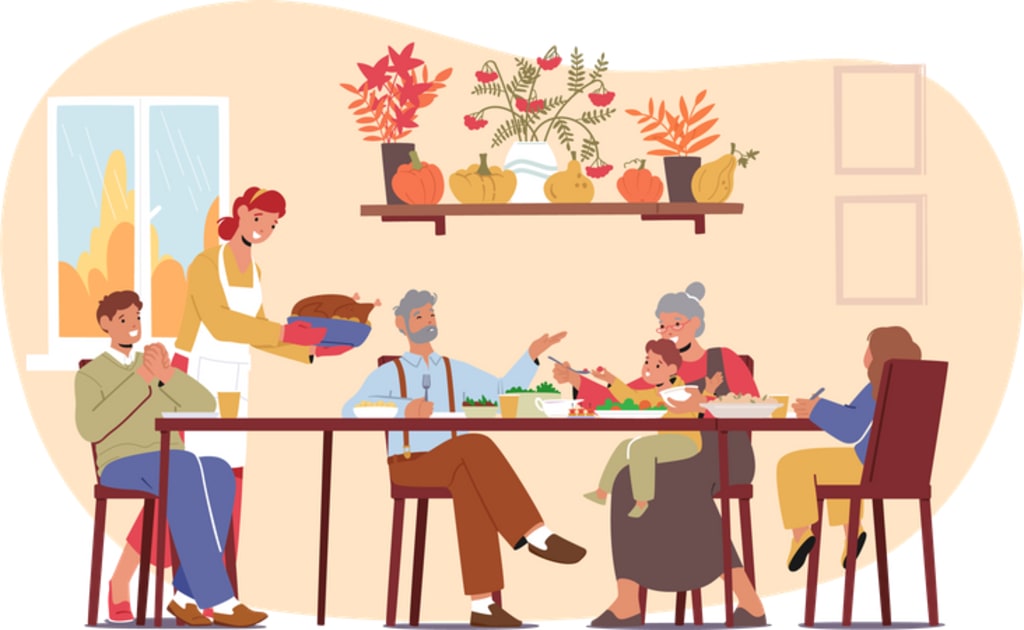
"Don’t talk back." "Say sorry first, even if you didn’t start it." “Keep your head down."
If you grew up in a brown household, you know these phrases like the back of your hand. You probably didn’t even need to hear them out loud — the look in your mom’s eyes, the slight shift in your dad’s tone, the awkward silence after a family argument — said it all.
In our culture, respect is often confused with obedience. Especially when it comes to elders. You’re not really taught how to be respectful. You’re just told that elders deserve it, always. Automatically. Even if they’re wrong. Even if they hurt you. Even if your inner child is screaming that something isn’t right.
The Invisible Rulebook
Growing up brown means living under a set of silent expectations:
1. Don't question your parents.
2. Don't set boundaries.
3. Don't ever make the adults uncomfortable.
Because making someone older than you uncomfortable? That’s somehow a bigger crime than how they made you feel.
We’re raised to think that maturity is about staying quiet. That letting things go is a virtue. That swallowing your feelings is just part of being a "good kid." But what happens when staying quiet starts to hurt?
When Respect Feels Like Fear
Let’s be real: not every elder is a wise old monk. Some are emotionally unavailable. Some are harsh. Some are so wrapped up in their own unhealed pain that they pass it down like a family recipe.
And when you try to speak up? You get hit with:
⤷ "You’ve become too Western."
⤷ "Why are you always so sensitive?"
⤷ "We never did this in our time."
Respect becomes a weapon. It’s used to silence you, not support you. It’s no longer about mutual care — it’s about control.
And the psychological toll is no joke:
- You feel guilty for having boundaries.
- You second-guess your emotions.
- You tolerate toxic dynamics in friendships, school, or work because it feels normal.
You’re stuck in this loop of wanting to protect your peace but being terrified of being labelled the "bad" child. Or worse — the disrespectful one.
Can You Still Be Brown and Set Boundaries?
Yes. You can.
You can honour your culture without enabling toxic patterns. You can love your family and still say, "That’s not okay."
Real respect is not blind obedience. It’s accountability. It’s communication. It’s being able to say, "I love you, but I need to protect my peace."
Here are a few things you’re absolutely allowed to say, even in a brown household:
✦ "I’m not comfortable with that comment."
✦ "Let’s talk when we’re both calm."
✦ "This topic is triggering for me — can we skip it?"
You might get pushback. You might get guilt-tripped. You might get hit with the classic, "So now you think you’re better than us?" But here’s the truth: boundaries aren’t betrayal. They’re survival. And in some cases, they’re the first real step toward healing generational trauma.
Rewriting the Script
Cultural respect doesn’t have to mean losing yourself. You can fold your hands and say ਸਤਿ ਸ੍ਰੀ ਅਕਾਲ (Sikh greeting) while also knowing that you deserve to feel safe in every room you walk into — even the ones with your elders.
And maybe, just maybe, when you start standing your ground, the silent rulebook begins to lose its grip.
Maybe younger cousins start noticing and feel empowered to speak up too. Maybe the cycle starts to shift, slowly but surely. Healing doesn’t always look like dramatic confrontations.
Sometimes, it looks like finally saying, "That hurt me," and not backing down when the room goes quiet. So no, you’re not being dramatic. You’re not being disrespectful. You’re just tired of pretending that being quiet is the same as being okay.
And that, in itself, is the most respectful thing you can do. For yourself. For your future. For the next generation of brown kids still trying to find their voice.
About the Creator
Tavleen Kaur
🧠 Psychology student decoding the human brain one blog at a time.
🎭 Into overthinking, under-sleeping, and asking “but why though?” way too often.
✨ Writing about healing, identity, and emotion
Keep reading
More stories from Tavleen Kaur and writers in Psyche and other communities.
Breaking the Cycle: A Brown Kid’s Guide to Healing Generational Trauma
"We didn’t talk about feelings at home — we swallowed them." If you grew up in a brown household, that might sound familiar. Emotional conversations were often replaced with silence and shame… But what if that silence wasn’t neglect?
By Tavleen Kaur8 months ago in Psyche
Do You have a Support Network?
Life is harder when you’re on your own. Human beings are social creatures, and we usually feel better when we have support from a strong social network around us. For most people, it’s our families that hold us together like glue.
By Elizabeth Woodsabout 9 hours ago in Psyche
Psychic Reading Online – Top 4 Best Live Chat Psychic Reading Sites
Uncertainty is something we all experience at different stages of life. Questions about love, career decisions, finances, family matters, or personal growth can sometimes leave us feeling overwhelmed or unsure about what direction to take next. Wanting answers and clarity during these moments is completely natural.
By Louie Bella day ago in Psyche



Comments
There are no comments for this story
Be the first to respond and start the conversation.