
The Subscription to Selfhood: How We Became Monthly Members of Our Own Identities
In a world where even our personalities are curated and delivered like streaming content, are we still the authors of our lives—or just consumers of ourselves?

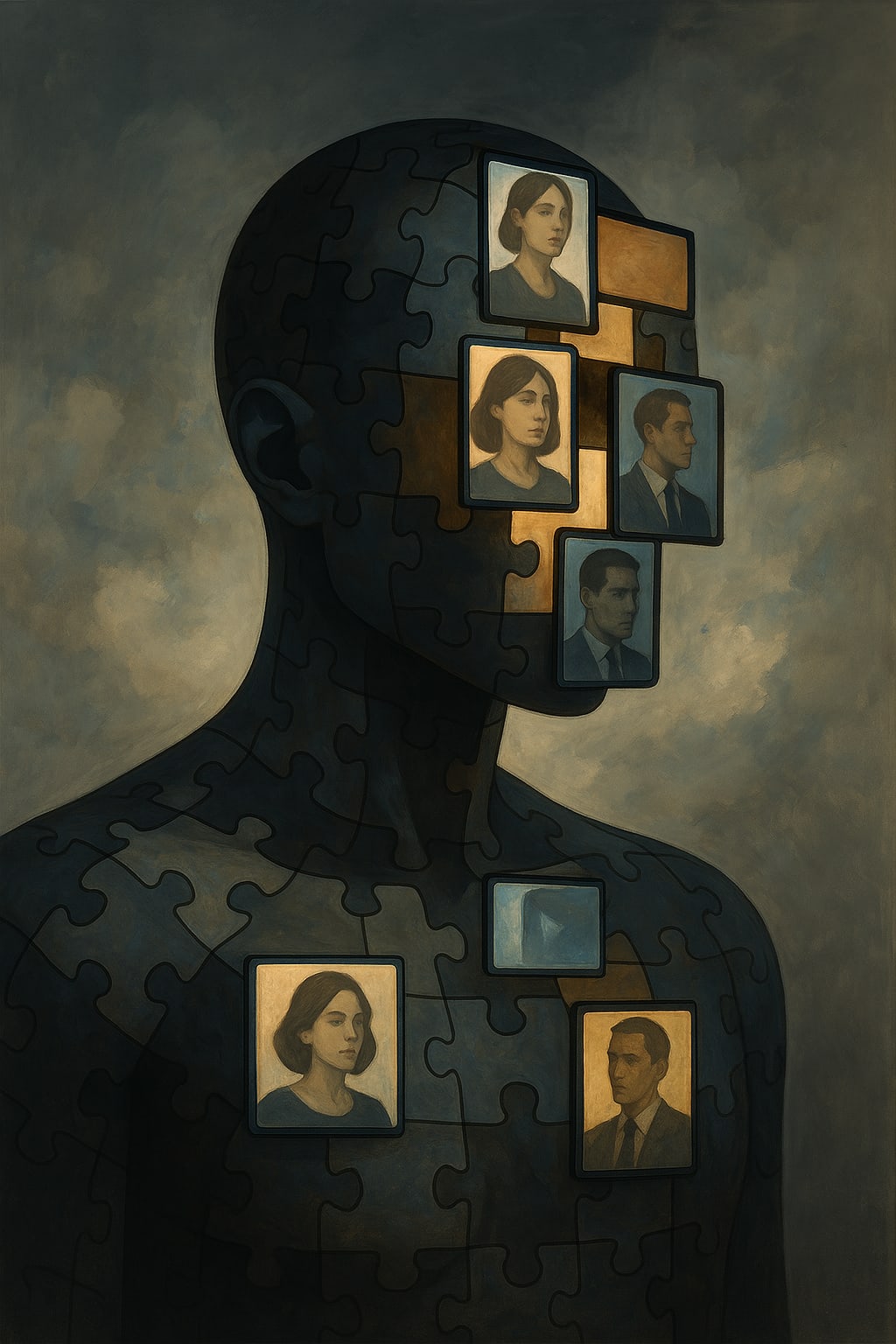
You can imagine it like this:
Every morning, before your coffee, before the mirror, before even remembering your own name, you scroll. A “mindfulness pack” tells you how to feel today. A “core identity” booster recommends what to believe. And an “aesthetic lifestyle box” arrives monthly, so you can photograph the life you're supposed to be living.
What if identity, that sacred sense of self, had quietly become a subscription service?
Welcome to the Subscription to Selfhood.
I. The Marketization of Me
Once upon a time, identity was something you found. A deeply personal, sometimes lifelong exploration. Now, identity is something you shop for. There’s a subscription for every version of yourself: anxious? Try a journaling kit. Ambitious? Here’s a productivity planner. Lost? Take an online course in “rediscovering your inner essence in 21 days.”
What used to be personal growth is now a business model. Spotify knows what you like before you do. Netflix recommends stories that align with your assumed personality traits. Instagram doesn’t just reflect your interests—it curates them, nudging you gently toward a marketable niche.
You are not merely a consumer. You are also the product—and increasingly, the brand.
You are “The Minimalist,” “The Bookish Introvert,” “The Girlboss,” “The Digital Nomad,” “The Conscious Creator.” Each identity arrives like a curated box set, complete with mood boards and affiliate links.
This isn’t just capitalism. It’s identity capitalism—the monetization of your inner life.
II. The Collapse of the Core Self
Psychology once believed in a “core self,” an internal compass of consistent traits, values, and beliefs. You were supposed to have a sense of coherence, even across time and roles.
But in the gig economy of identity, coherence is optional.
We now prefer modular selves—personality plug-ins we switch on and off. There’s the “work self,” fluent in KPIs and Slack emojis. The “weekend self,” all yoga mats and vintage cafés. The “Twitter self,” ironic and clever. The “LinkedIn self,” unironically insufferable.
We’re not being fake—we’re being flexible. But the cost of this flexibility is existential. If you play so many roles, wear so many skins, switch identities as casually as Spotify playlists, who are you really when the music stops?
We fear that there may be no true “I” behind the curated masks.
And so we subscribe to new ones. Monthly.
III. Identity as a Service
The subscription economy isn’t just about movies and meal kits. It’s about belonging, too.
Platforms like Headspace, Noom, MasterClass, and even Substack promise more than services—they promise better versions of you. Wiser. Fitter. More focused. More emotionally literate. And the subscription isn’t just to the content—it’s to the identity that content implies.
When you buy into Noom, you’re not just buying weight loss tips—you’re buying the identity of someone “in control.” When you subscribe to a productivity YouTuber’s Notion template, you’re not just organizing your life—you’re declaring yourself as someone who optimizes.
Each click, each purchase, each digital choice is a signal to yourself: This is who I am. Or who I want to be.
It’s comforting. Predictable. Scalable.
And often, hollow.
IV. The Performance of Realness
Here’s the paradox of our time: We perform authenticity more than ever before.
You can now buy vintage filters to make your selfies look like candid film shots. You can schedule tweets about how you’re taking a break from social media. You can post raw, vulnerable videos about your anxiety—edited with music, cuts, and subtitles for maximum reach.
Realness is now a brand aesthetic. We’ve even coined a phrase for it: “Instagram Casual.” It looks effortless—but it’s not.
Being authentic online is a full-time job. You have to look like you’re not trying, while trying very hard. Irony is currency. Vulnerability is content. And sincerity is often mistaken for naivety.
We are sincere—strategically.
V. The Rise of Identity Influencers
Once, influencers sold products. Now they sell ways of being.
These are not your typical beauty or travel influencers. They are lifestyle ideologists. They don’t just show you what to buy—they show you how to live. What to believe. How to think about trauma, relationships, ambition, even meaning itself.
They share morning routines, not because they’re special, but because they’re replicable. They are blueprints for selfhood.
And their followers? They mirror them. Not just in clothes or habits, but in thought patterns. The influencer becomes a prototype of the desirable human—curated, aesthetic, vaguely spiritual, and always “on a journey.”
You don’t just follow them. You become them.
But what happens when millions of people start living identical lives in search of individuality?
You guessed it: a crisis of authenticity. A surplus of identity content. A famine of actual selfhood.
VI. The Algorithm Knows Me Better Than I Do
Sometimes, the algorithm feels intimate. It predicts your desires with eerie accuracy. It suggests a song that unlocks an old memory. It recommends a meme that feels uncomfortably personal.
And it’s addictive.
Why explore yourself, when TikTok can tell you your Myers-Briggs, your attachment style, your enneagram type, and your soulmate zodiac match—all within five minutes?
We joke about these quizzes. But we also listen. Because being understood—even algorithmically—feels good. Feels real.
We’re outsourcing introspection to platforms optimized for engagement. We confuse pattern recognition with wisdom. But the algorithm isn’t trying to understand us. It’s trying to sell us to ourselves.
And we keep buying.
VII. Reclaiming the Self (Maybe)
So, where do we go from here?
Can we unsubscribe from selfhood? Or at least reframe it?
Maybe the first step is accepting that identity isn’t a product. It’s not something you arrive at after a seven-step plan. It’s messy. Fluid. Sometimes contradictory. And that’s okay.
Maybe the self isn’t a brand to refine, but a story to tell—one you write with doubt, failure, love, silence, and choices no one sees.
That means sometimes stepping away from the templates. Turning off the trackers. Resisting the urge to post your pain for applause. Letting yourself be complex, off-brand, unmarketable.
It’s scary. But it’s real.
Maybe selfhood isn’t what you subscribe to. It’s what you sit with. Quietly. Without a soundtrack. Without a caption.
Maybe that’s where we begin again.
About the Creator
Ahmet Kıvanç Demirkıran
As a technology and innovation enthusiast, I aim to bring fresh perspectives to my readers, drawing from my experience.
Keep reading
More stories from Ahmet Kıvanç Demirkıran and writers in Psyche and other communities.
🎯 The Nostalgia Paradox: Why We Keep Looking Back in a Forward-Moving World
"Nostalgia is a file that removes the rough edges from the good old days." — Doug Larson We live in a paradox. Every day, we wake up in a world that is accelerating forward—technologically, socially, and even existentially. We have artificial intelligence completing sentences, space tourism in development, and near-daily breakthroughs in science. Yet, amidst all this futuristic noise, our cultural compass points backwards.
By Ahmet Kıvanç Demirkıran10 months ago in Psyche
Whimsy as Gentle Rebellion
Whimsy isn’t escape — it’s a reminder that color, kindness, and imagination still have power. In a world that often values efficiency over wonder, seriousness over softness, whimsy is frequently misunderstood. It’s mistaken for immaturity, distraction, or avoidance. But for me, whimsy has never been about turning away from reality. It has been about meeting reality with an open heart — and refusing to let it harden me.
By Alicia Melnick 6 days ago in Psyche


Comments (2)
Thank you so much for being transparent about using AI 😊
I have read your all story very nice but these words you have best declare conclusion of all story I have very liked your,s these words We're not fake - we're flexible. But that flexibility comes at a price. If you play too many roles, wear too many skins, change identities randomly like Spotify playlists, who you really are when the music stops.