
The human brain creates a false memory just a few seconds after the event!
A recent study by scientists from the University of Amsterdam in the Netherlands found that human memory can fade even after a few seconds of certain events.


People may misremember events, often within seconds, and reshape memories to fit their expectations.
Previous studies have shown that people's perception of their surroundings can be shaped by their expectations, which can lead to delusions. People's long-term memories can also be shaped to fit their expectations, sometimes generating false memories.
However, it is generally assumed that short-term memories formed from perception just a second or two ago accurately represent the surrounding area, say scientists, including from the University of Amsterdam in the Netherlands.
In the new study, published in the journal PLOS , scientists found that people can make memory errors after just a few seconds, a phenomenon the team dubbed "short-term memory (STM) delusions."
The study revealed that within the short time frame of one or two seconds, people could go from reliably describing what was really there to incorrectly reporting what they expected instead.
The study indicated that when strong expectations are made about how the world should be, people's memories may begin to fade even within a few seconds and fill the fading information with their expectations.
Dr Mart Otten, first author of the study from the University of Amsterdam, said: 'Even in the short term, our memory may not be completely reliable. Especially when we have strong expectations about what the world should be like, that's when our memory starts to fade a bit, even after a second and a half. Two seconds, three seconds, and then we start filling in based on our predictions."
Previous research showed that when people were shown images of mirrored letters, Otten and his colleagues wrote in the journal PLOS, they more often reported seeing the letter in the correct orientation, which highlighted the 'illusion'. But the scientists suspected that this misleading memory occurred due to Participants do not see the shape correctly.
"We thought it was likely an effect on memory," Otten and colleagues explained. To investigate further, the scientists conducted four experiments.
Initially, participants were checked to ensure they could complete basic visual memory tasks before they were shown a circle with six or eight letters, one or two of which were mirrored shapes of the letters.
Seconds later, the participants were shown a second circle of letters and told to ignore them, which acted as a distraction.
Next, they had to select a target form from a list of options that were located at a specific location in the first circle, as well as rate how confident they were in that choice.
The scientists found that the participants reported with high confidence that they saw the true counterpart of the mirror image. The results of 23 participants who reported high confidence in their answers revealed that the most common mistake was choosing the inverse shape of the target shape.
The scientists said the error was driven by the participants' previous knowledge of the alphabet that made up their predictions, rather than by similarities in the shapes.
"These memory illusions appear to result from knowledge of the world rather than visual similarity," the team wrote.
Other experiments also showed that delusional memories from the pseudo-letter to the real were more prevalent than the delusional memories from the pseudo-realistic.
"Together, the results show that global knowledge can shape memory even when memories have just been formed," the scientists noted.
The results revealed that phantom memories can arise even when the visual stimulus is out of sight for very short periods of time, suggesting that people's recent memories are prone to phantom memories.
The human brain changes memories according to what it expects to see. Because the subjects in the study were very familiar with the Western alphabet, their brains expected it to see the letters in their actual orientation.
The number of errors rose with the delay, or distraction level, in the experiment — but only when the target was an inverted letter.
Scientists say this indicates that the errors are due not to how the participants perceive the shapes but to their short-term memory, since perception itself should not deteriorate over time.
They add that the high confidence with which participants reported their answers also rules out the possibility that the results were participants' guesses.
The team now hopes to investigate whether similar effects hold up in real-world situations and for other types of memory. Source: The Guardian
A "stark warning" of the possibility of programming chatbots to prepare young people to launch terrorist attacks!
An independent reviewer of terrorism law has warned that artificial intelligence chatbots could soon prepare extremists to launch terrorist attacks.
Jonathan Hall KC told The Mail on Sunday that bots like ChatGPT could easily be programmed, or even decide on their own, to spread terrorist ideologies to vulnerable extremists, adding that 'AI-powered attacks could be very close'.
Hall also warned that if an extremist is groomed by a chatbot to carry out terrorist atrocities, or if artificial intelligence is used to incite a crime, it may be difficult to prosecute anyone, given that Britain's counter-terrorism legislation is not in line with the new technology.
"I think it's entirely conceivable that AI chatbots could be programmed - or worse, decide - to spread violent extremist ideology," Hall said. "But when ChatGPT starts encouraging terrorism, who will be there to go after it?"
Hall fears that chatbots could become a 'blessing' for lonely people, as many individuals may have medical disorders, learning difficulties or other conditions.
He warns that "terrorism follows life," and thus "when we move online as a society, terrorism moves online." It also notes that terrorists are "early adopters of the technology," with recent examples including their "misuse of 3D-printed guns and cryptocurrency."
It is not known how companies running AI like ChatGPT monitor the millions of conversations that take place every day with their bots, Hall said, or whether they alert agencies such as the FBI or UK counter-terrorism police to anything suspicious.
Although no evidence has emerged so far that AI bots have prepared anyone for terrorism, there are stories that have caused serious damage. A Belgian father-of-two committed suicide after speaking to a robot, Elisa, for six weeks about his fears of climate change. A mayor in Australia has threatened to sue OpenAI, the maker of ChatGPT, after it falsely claimed the aforementioned had served time in prison for bribery.
And just this weekend, it emerged that Jonathan Turley of George Washington University in the US had been wrongly accused by ChatGPT of sexually harassing a female student during a trip to Alaska that he did not continue. This claim was made to an academic colleague who was researching ChatGPT at the same university.
Parliament's Science and Technology Committee is now conducting an inquiry into AI and governance. Source: Daily Mail
The "world's most advanced robot" goes global with a new video showcasing its language skills!
The developers of the Ameca robot have released a new video showcasing its language skills, in which it is asked what languages it speaks.
The robot replies that it can speak "many languages", before showing off its skills in Japanese, German, Chinese and French, as well as British and American English.
Ameca is the brainchild of Cornwall startup Engineered Arts, which describes it as "the world's most advanced robot".
The robot is undoubtedly lifelike and can perform a range of facial expressions including winking, pursed lips and scraping its nose - just like a real person.
In the latest video, posted to the Engineered Arts YouTube channel, Ameca is asked about his language skills.
One researcher says, "I heard that you can speak many languages, is that true?"
Ameca takes a moment to consider, before replying: "Yeah, that's right. I can speak many languages, including German, English, French, Japanese, Chinese, and more."
To put his skills to the test, the researcher asks Ameca several tricky questions, including a tongue twister in Japanese and what the weather is like in Berlin (in German) and Paris (in French).
The robot performs all the tests before reverting to its British English accent, adding: "It has been a pleasure speaking to you."
The new video comes shortly after Engineered Arts used ChatGPT-3 and ChatGPT-4 to see if they could make Ameca's facial expressions more realistic. Source: Daily Mail
About the Creator
News Correct
Information WorldWide MORE INFORMATION
Keep reading
More stories from News Correct and writers in Psyche and other communities.
Foods that cause migraines
In an interview with "Izvestia" newspaper, the doctor points out that if the cause of the headache is another disease, then nutrition should not affect the severity or duration of the attack. This happens, for example, in cases of influenza, ear infection and high blood pressure.
By News Correct3 years ago in Psyche
The Hidden Code of Human Psychology
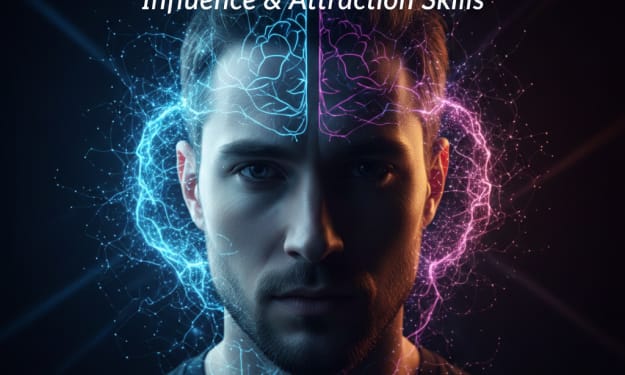
Human psychology is deep, powerful, and sometimes surprising. Every day, people influence each other through words, tone, body language, and emotions—often without realizing it. What many call “dark psychology” is actually the study of how influence works, but the real power lies in using this knowledge ethically and responsibly. True influence is not about manipulation or control; it is about understanding human nature, building trust, and creating positive connections. This documentary explores the hidden patterns of human behavior and the ethical techniques that help you attract attention, build strong relationships, and communicate in a way that people naturally respond to. The Secret: People Respond to Emotion More Than Logic One of the biggest secrets of human psychology is that people make decisions based on emotions, and then justify them with logic. Whether it is choosing a friend, trusting a teacher, or buying a product, feelings come first. If you want someone to pay attention to you: Speak calmly and confidently Show genuine interest in their feelings Avoid arguing aggressively Make them feel understood When people feel emotionally safe around you, they naturally become more open and attentive. The Power of First Impressions Research shows that people form an opinion about someone within seconds. Your posture, facial expression, tone, and energy matter more than your words at the beginning. Tips to create a strong first impression: Maintain eye contact (but don’t stare) Keep a relaxed posture Smile naturally Speak clearly and at a moderate pace Confidence combined with kindness creates a powerful presence that attracts others without forcing anything. The Principle of Attention: People Love to Feel Important One of the most effective psychological truths is simple: people are drawn to those who make them feel valued. You can apply this by: Listening more than you speak Remembering names Asking about their interests Appreciating their efforts When someone feels important around you, they will automatically give you more attention and respect. The Mirror Effect (Ethical Rapport Building) Humans naturally trust people who feel similar to them. This is called mirroring. You can use this ethically by: Matching the other person’s speaking speed Using similar body language naturally Adapting your tone to their energy level This should always be done subtly and respectfully. The goal is comfort and connection—not imitation or deception. The Psychology of Confidence and Silence Many people try to impress others by talking too much. However, psychologically, calm confidence and controlled silence create a stronger impact. Try this: Pause before responding Avoid interrupting Speak only when you have something meaningful to add Silence signals emotional control and maturity, which increases your influence. The Rule of Positive Energy People are naturally attracted to positive personalities. Constant complaining, negativity, or criticism pushes others away. To attract people: Focus on solutions, not problems Encourage others instead of judging Maintain a hopeful and calm attitude Positive energy makes people feel comfortable and safe around you. Ethical Influence vs. Manipulation There is a clear difference between healthy influence and harmful manipulation. Healthy influence: Respects others’ choices Builds trust Creates mutual benefit Manipulation: Uses deception Creates pressure or guilt Damages trust over time Long-term success in relationships, leadership, or business always comes from ethical influence. The Attraction Formula: Three Core Elements To naturally attract attention and respect, focus on these three psychological pillars: 1. Confidence – Believe in yourself without arrogance 2. Empathy – Understand others’ emotions and perspectives 3. Authenticity – Be genuine, not fake People can sense authenticity. When your words and actions match, your presence becomes powerful. Final Insight: The Real Secret of Human Psychology The true “dark psychology” secret is not control—it is self-control and emotional intelligence. When you manage your emotions, communicate respectfully, and understand how people feel, you gain natural influence without forcing anything. The most powerful people are not those who manipulate others, but those who: Listen deeply Speak thoughtfully Act with integrity Make others feel respected In the end, human psychology is not about tricks. It is about connection, trust, and emotional awareness. Master these, and attention, respect, and influence will follow you naturally.
By Sahar Rayyan4 days ago in Psyche



Comments
There are no comments for this story
Be the first to respond and start the conversation.