
The Hidden Power: How Architectural Design Informs Human Feeling
Why the height of your ceiling and the color of your walls are quietly rewriting your mental health.


Introduction: Places That Talk Without Words
We too often do not think about how a building impacts us. But every time we enter a building—our own house, an office complex, a school complex, or a public plaza—we're silently impacted by it. High ceilings can make us feel expansive, full of promise. Narrow passageways can make us tense up or focus. Natural light in a window can enhance the mood, but dull or harsh light can cause tiredness or agitation. The surfaces we touch, the hues we see, the interaction of walls and ceilings—these unseen communications shape our mood, our behavior, even changes in our bodies.
Architecture is not merely shelter; it is a quiet witness to human life. Architecture, knowingly or unknowingly, communicates. It tells us where we will be safe, where we can relax, where we have to focus, or even where we will feel threatened. The research on the psychological effects of built environments is a multidisciplinary field that brings together art, science, and human existence. By examining at this intersection, we can see how architects and designers—through centuries of trial and error, instinct, and now research—have designed environments that shape the human psyche.
This odyssey shows not only how design influences feeling now but how it will evolve in the future because emerging technologies make buildings responsive to human needs in real time.
Psychological Principles of Space and Perception
Human space experience is complex, involving vision, touch, hearing, and even proprioception, the sense of our body in space. The physical setting has been known to influence states of cognition and affect, psychologists say. Prospect and refuge theories describe why people prefer spaces that provide a vantage with the possibility of safety, while personal space theory explains discomfort in crowded or poorly proportioned spaces.
Light and color, however, also play an important role in mood. Warm colors such as amber or terracotta can create feelings of warmth or comfort, whereas cool blues and grays create feelings of calmness or detachment. Natural light helps to regulate circadian rhythm, supporting energy, wakefulness, and emotional well-being. Conversely, too little light or an unfavorable artificial light can cause stress, sleep disruption, and poorer intellectual functioning.
Ceiling height and volume of a room also influence thought and behavior. Studies show that high ceilings support abstraction and creativity, whereas low ceilings promote concentration and attention to detail. Even the design of a corridor or the placement of staircases can influence stress, traffic flow, and communication. Architects themselves operate intuitively with these premises in mind, but new research allows us to quantify and build further upon their influence.

Historic Architecture: Feeling Integrated into Stone
Over time, designers have specifically designed buildings to evoke particular emotions. Gothic European cathedrals, for example, used vaulting arches, colored glass windows, and spires of great height to catch awe and religious elevation. Colored glass letting in light, resonating footsteps in great halls, and towering verticality were all meant to move the human mind from the mundane to the lofty.
Palaces and monumental architecture also convey power and hierarchy. The expansive gardens and hall of mirrors at Versailles, France, were meant to awe visitors and emphasize the king's power. Medieval hospitals, by contrast, employed smaller rooms that were enclosed in an attempt to foster rest and contemplation, reconciling the practical necessity for order with the psychological comfort of patients.
Even cities themselves have always been designed to the emotions of human beings. The wide boulevards of Paris, which were brought in by Baron Haussmann, were beautiful and utilitarian, promoting air, movement, and social interaction as well as symbolically representing civic grandeur. In such cases, architecture is both defense and implicit storyteller, shaping behavior, perception, and social hierarchy.
Modern Research: Light, Color, Proportions, and Materials
Today, the psychological impact of architecture is investigated more empirically with exact precision. Neuroscientists and environmental psychologists evaluate responses to different spatial configurations, color, and material, numerically measuring what centuries of architects have always understood instinctively.
Lighting, once the sole province of sunbeams or candles, is now a mood engineering device. Daylight-color LEDs in offices reduce eye fatigue and improve productivity. Programmable lighting in hospitals has also been shown to assist in recovery and worker performance. Color psychology governs the design of classrooms and retail space: red will stimulate and stimulate appetite, blue will relax and concentrate, and green will promote relaxation and balance.
Materials matter too. Natural wood, stone, and fabrics naturally create warmth, grounding, and comfort, while glass and steel create a sleek, modern but unfeeling effect. Texture elements—smooth counters, gritty brick walls, textured rugs—are not only affecting physical contact but emotional response as well.
Proportions matter too. Height of the ceiling, width of corridors, and scale of rooms influence perception of safety, openness, and intimacy. Open-office workplaces, initially hailed as egalitarian and collaborative, have turned out to have drawbacks: noise, less privacy, and overstimulation. Recent studies show hybrid configurations—combining communal spaces with private nooks—are more effective for creative thinking, focus, and emotional well-being.
Biophilic Design: Nature Indoors
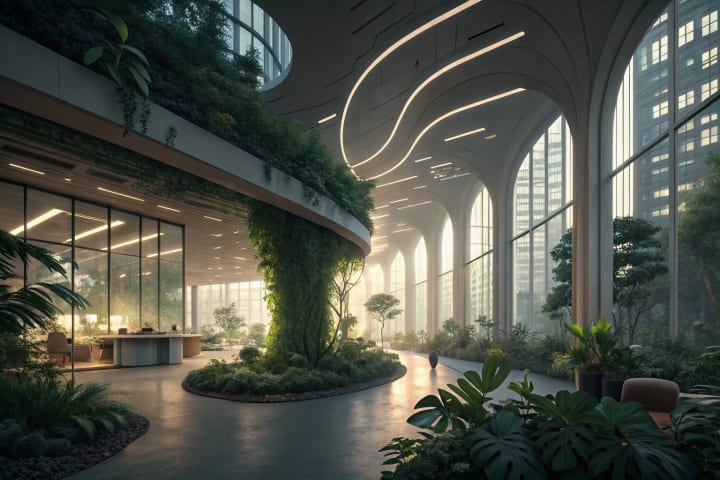
One of the most widespread modern design philosophies is biophilic design, in which elements of nature are integrated into built environments. Water features, daylight, and nature views are not luxuries; they increase cognitive function, reduce stress, and improve mood. Even simulations of nature, such as natural patterns in wallpaper or virtual nature on screens, have quantifiable psychological benefits.
Offices with garden areas, hospitals with green courtyards, and schools with outdoor classrooms are reporting breathtaking outcomes. Patients recover faster, kids concentrate better, and workers are happier. The availability of nature, even second-hand, provides a feeling of well-being that conventional architecture usually neglects.
Biophilic design also ensures sustainability. With daylighting, natural ventilation, and plant systems, architects reduce energy use while, simultaneously, creating spaces that encourage the well-being of the human psyche. Emotionally intelligent design and ecologic responsibility thereby meet on equal footing.
Architecture and Social Behavior
Structures have an impact on more than individual sentiment—they impact social interaction and community building. Open plazas encourage collectivity, dialogue, and accidental meeting. Restricted, narrow streets might hinder interaction or tension. Community centers, libraries, and markets are optimal when the structure allows for passage and congregation.
Workplaces are social design microcosms, too. Access to natural light, quiet spaces, and communal areas affect collaboration, conflict resolution, and creativity. Thoughtfully designed classrooms in schools foster engagement and peer-to-peer interaction. Even home design affects family dynamics, privacy, and comfort.
Increasingly, architects view spaces as behavior tools, realizing that even the smallest details—like the incline of a bench or the placement of a door—can assist in empathy, cooperation, and human connection.
The Future: Smarter, Feeling Buildings
Technology is advancing, and architecture will soon be adaptive. Adaptive buildings with sensors, intelligence, and responsive systems can control lighting, temperature, and sound based on real-time emotional and physiological input. Imagine a school whose light adjusts to help the students concentrate while taking exams, or an office whose levels of noise adjust automatically to ease pressure.
These developments promise much. Emotionally intelligent design may pre-emptively reduce mental strain, enhance mental well-being, and raise productivity levels. It may personalize to individual requirements within shared spaces, fostering inclusiveness and empathy. Its task will be to reconcile personalization and privacy, automation and human agency, and technological complexity with cultural and aesthetic integrity.
Already, pilot projects across the world are testing such concepts. Offices in Japan with sensors monitor light, temperature, and occupancy to optimize staff comfort. Hospitals in Europe employ AI to adjust room conditions based on patient stress levels. Urban planning is intelligent in that it uses people-centered data to design parks, streets, and public spaces that improve wellbeing naturally.
Expert Insights
Architects and psychologists agree: the built world is inseparable from human emotion. Environmental psychologist Dr. Anjali Kumar explains that "we are constantly reading cues from our surroundings. The ceiling, the windows, the material beneath our feet—all communicate information that affects stress, focus, and creativity."
Award-winning designer Bjarke Ingels places design's social responsibility front and center: "Buildings are not passive objects. They brokering the way we live, work, and interact. Designing from a psychological perspective is not a choice—it's a moral imperative."
These perspectives affirm a growing awareness: architecture is not merely form or function—it is human experience.

Case Study: The WELL Building Standard
WELL Building Standard is one of the best examples of science in action. Focused on physical and mental health, WELL-certified spaces place emphasis on natural light, air, ergonomics, acoustics, and psychological comfort. WELL-compliant offices experience higher levels of employee satisfaction, lower absenteeism, and higher productivity.
This case demonstrates the tough return on investment of taking emotion and cognition into account in design. What was once intangible—the idea that walls and windows affect mood—can now be measured and optimized.
Conclusion: Conscious Architecture for a Healthier Life
The places we live and work are silent but potent designers of emotion, thinking, and behavior. From sweeping cathedrals to biophilic offices, architecture has long had an impact on us—whether we realized it or not.
Modern research allows us to understand these influences in a scientific sense, and new technology can be used to create buildings that adapt based on our emotional and intellectual states. Using light, color, material, proportion, and nature, architects can design wellbeing, creativity, and social cohesion. Through the use of psychological knowledge in design, cities, offices, schools, and homes can become more than just shelters—they can be a friend to human flourishing.
As we navigate the exigencies of modern life, surrounded on all fronts by stress, distraction, and hyperstimulation, the quiet authority of architecture is revealed. Thoughtful design is not a luxury; it is a necessity. Deliberative architecture can enhance mental health, stimulate creativity, and create more empathetic, resilient communities. To this degree, the buildings we pass through are not empty containers for human action—they are co-conspirators in the production of the human experience itself.
About the Creator
The Chaos Cabinet
A collection of fragments—stories, essays, and ideas stitched together like constellations. A little of everything, for the curious mind.
Keep reading
More stories from The Chaos Cabinet and writers in Psyche and other communities.
The Age of Solitude: Why More People Are Choosing to Be Alone—and What It Means for Society
Introduction: The Quiet Revolution of Being Alone Being alone has never been easy. Throughout history, solitude has been conceived as loneliness—something to be pitied or feared, a condition of the rejected or unwanted. It was the opposite of belonging, an shadow cast by human failure to connect.
By The Chaos Cabinet13 days ago in Psyche



Comments
There are no comments for this story
Be the first to respond and start the conversation.