
The Age of Solitude: Why More People Are Choosing to Be Alone—and What It Means for Society
Beyond the stigma: How intentional silence is becoming a modern survival strategy for the soul.

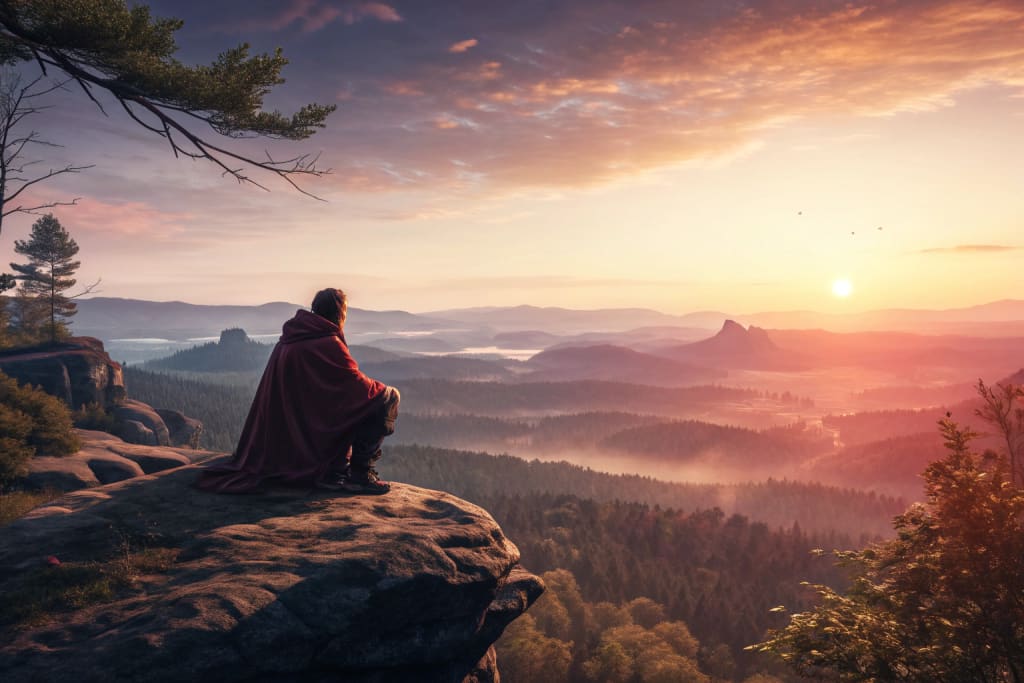
Introduction: The Quiet Revolution of Being Alone
Being alone has never been easy. Throughout history, solitude has been conceived as loneliness—something to be pitied or feared, a condition of the rejected or unwanted. It was the opposite of belonging, an shadow cast by human failure to connect.
And yet, solitude is being repackaged today. In the calm of a corner café, on solitary walks of many miles, or in nights without screens, increasingly people are discovering that solitude can be an act of empowerment, even liberation. No longer connoting loneliness, solitude is increasingly being redefined as a decision: a conscious taking of time and space for reflection, renewal, and focus.
This isn't a fleeting lifestyle phenomenon—it's a fundamental shift in culture. In an age that's both hyperconnected and overstimulated, loneliness is increasingly becoming a survival strategy and a declaration of what it is to live well.
Solitude Throughout Time: From Sacred Practice to Suspicion
The irony of solitude is that even though it has sometimes been demonized, it has at other times been sanctified throughout history.
In spiritual cultures, isolation was a path to transcendence. Christian desert monks of the 3rd and 4th centuries withdrew from the turmoil of the Roman Empire to live in caves, believing silence brought them closer to God. Buddhist monks sat in mountain caves to eliminate illusions. Sufi mystics withdrew to practice khalwa—spiritual solitude.
For artists and philosophers, solitude has always been fertile ground. Thoreau's Walden was a paean of individualism and union with nature. Nietzsche warned that art required distance from "the herd." The Romantic poets, wandering singly through wood and meadow, found in solitude a spiritual affinity with nature.
And yet, there remained suspicion. In most cultures, the lone person was considered strange, even threatening. The 20th century tended to value extroversion—being social was seen as the sign of sanity and achievement. In post-war America, suburban living centered on suburban block parties and corporate collaboration. Loneliness, on the other hand, had the scent of deviance.
This ambivalence still exists today, but it is beginning to shift.
Why Solitude Now? The Modern Drivers of a Movement
Different forces are converging to make loneliness not only more common, but even more appealing.
1. Technology Fatigue.
Our phones make us always available. From Slack notifications, WhatsApp conversations, and Instagram tales, we are rarely alone even when physically remote. The majority now crave solitude as a cure for the fatigue of being always on. A 2023 Pew survey found that nearly 60% of young adults actually schedule "offline time" per week.
2. City Overstimulation.
From cacophonous traffic to bright billboards, modern cities overstimulate our senses. Noise pollution alone has been linked to heightened stress and cardiovascular disease. Aloneness—especially in nature—grants sensory relief.
3. Mental Health and Self-Care.
As burnout speeds up, solitude is increasingly offered as therapy. Loneliness is quoted by psychologists as reducing stress, improving concentration, and maintaining emotions in check. What was once viewed as antisocial now carries the guise of self-care.
4. Generational Shifts.
Millennials and Gen Z are remaking the social playbook. Marriage, children, and group-based living are not the norm anymore. Autonomy, independence, and adaptive lifestyles are coveted by most—solitude snugly fits into these.
5. The Pandemic Reset.
COVID-19, traumatic as it was, rendered solitude the norm. Lockdowns forced individuals to confront solitude. For others, it revealed nice surprises: freedom from the commute, room for hobbies, reflection. Many chose to maintain solitude in the life after the pandemic.
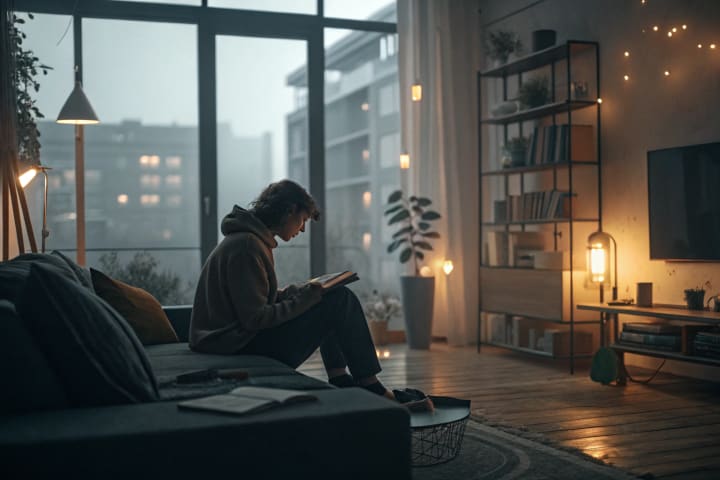
The Psychology of Solitude: Benefits and Threats
The Bright Side.
When voted into office, solitude provides remarkable benefits:
• Creativity. Excellent ideas often come not from brainstorming in groups, but from quiet contemplation alone. Neuroscientists find that "default mode network" brain activity—correlated with creativity—is strongest in quiet, introspective time.
• Self-Reflection. Solitude enables us to think about our own lives without other people's pressure. Journaling, meditating, or daydreaming quietly can bring clarity.
• Restoration. Solitude reduces mental fatigue, lowers cortisol levels, and replenishes emotional reservoirs.
• Autonomy. Alone time enhances agency, offering relief from social expectation.
The Shadow Side.
When solitude turns to isolation, however, risks are incurred:
• Loneliness. Persistent lack of connection is associated with depression and premature death. The U.S. Surgeon General has even labeled loneliness a public health epidemic.
• Social Atrophy. Over-withdrawal can blunt social skills, with re-entry becoming more difficult.
• Stigma. In extroverted societies, alone people can be misunderstood or suspect.
Finally, the distinction is in choice. Solitude is uplifting when voluntary, but damaging when involuntary.

Solitude vs. Isolation: Fasting vs. Starvation
The line between solitude and isolation can be drawn by analogy: solitude is like fasting, while isolation is like starvation. Both are abstentions, but one of them is voluntary and potentially enriching, while the other is coerced and debilitating.
This is significant. The dominance of voluntary solitude today signals empowerment, not abandonment.
Cultural Attitudes: East and West Diverge—Then Converge
Cultural attitudes towards solitude vary extensively.
Extroversion has been idealized in America and much of Western Europe for decades. "Team players" are what employers desire. Children are pressured to have friends and be involved in activities. The solitary student is typically branded "shy" or "troubled.".
Conversely, solitude is widely accepted in many Asian cultures. Sabi—the stillness of solitude—has been cherished by Japanese culture for centuries. Retreat into nature is rejoiced in by the Daoist philosophers in China. Sages who retreat to contemplate are venerated figures in India.
But globalization and technology are eroding these frontiers. In Tokyo, as in New York, people hunger for private escapes from crowded metros and from screen life. A 2021 cross-cultural survey found that teens on the two sides of the Pacific both highly valued solitude as essential to well-being.
How Solitude Is Reshaping Relationships, Community, and Work
The impacts of solitude extend far beyond individual psychology.
1. Relationships.
Solitude is transforming the way that people envision intimacy. Increasing numbers of couples live apart in close relationships—so-called "LAT" (Living Apart Together) partnerships. Friends might get together less frequently, but have richer exchanges when they do. Solitude reimagines closeness not as continuous presence, but as purposeful presence.
2. Communities.
Willful solitude allows for a shift towards less structured, more fluid modes of affiliation. Instead of close but obligatory communities, people are forming interest-based communities, often on-line, where one joins voluntarily. Solitude does not kill off community—it remakes it in more independent forms.
3. Work.
The office is undergoing a revolution of solitude. Remote work, hybrid calendars, and philosophies of "deep work" all recognize that uninterrupted alone time is necessary to productivity. Companies like Basecamp and GitLab explicitly encourage solitude to foster concentration.
Real-World Stories: Solitude in Practice
• Maya, a programmer in Berlin, teleworks three days a week. She spends afternoons alone walking in parks without headphones. "It's the only time I feel I can hear myself think," she says. It keeps her isolated as much as anything but makes her more energetic in team meetings.
• Carlos, a writer in Mexico City, rents a tiny cabin outside the city twice a year for a week of complete solitude. No internet, no phone. “It’s my creative reset,” he explains. “Every big project I’ve finished started in those silent weeks.”
• Ayumi, a nurse in Tokyo, began eating lunch alone during the pandemic. Necessity became preference. "I used to feel ashamed having lunch alone. Now I value it. It's my little act of recovery."
These stories remind us of loneliness not as social withdrawal but as the way for refueling so that connection can be deeper.
Expert Views
Psychologist Dr. Thuy-vy Nguyen noted that loneliness is a learned skill: "People feel uncomfortable at first. But after practicing, solitude proves to be a good tool for emotional regulation."
Philosopher Paul Tillich described solitude as "the glory of being alone," in contrast with loneliness as "the pain of being alone."
MIT sociologist Sherry Turkle warns in Alone Together that without the ability to be alone, true intimacy is eclipsed: "If we don't learn to be alone, we will only know how to be lonely."
Solitude in the Digital Age: Resistance or Adaptation?
Is the modern welcome to solitude a resistance—or an adaptation?
On the one hand, it resists the hyperconnected consumerist and social media ethos. To be alone is to reject constant productivity and attention-seeking. Solitude is a rebellion in silence.
On the other hand, it's adaptation. In a time of overstimulation, solitude is balance. Like noise-canceling headphones on a loud train, it's a survival technique.
Perhaps it is both. Solitude in our era is rebellion and accommodation: denial of noise, accommodation to overloading.
The Future: A New Culture of Solitude
As solitude becomes more accepted, society itself may alter in unanticipated ways. Offices may designate "solitude zones." Schools may teach the value of quiet reflection as well as collaboration. Relationships may thrive not through constant contact but through respected boundaries of solitude.
Loneliness may even revolutionize politics and culture. A culture comfortable with loneliness may be immune to polarization fueled by digital echo chambers, as individuals rooted in contemplation may be less likely to react.
Conclusion: The Paradox of Solitude and Belonging
The era of solitude does not portend the demise of community. Instead, it may prophesy its resurgence. Solitude, when self-chosen, allows human beings to recharge and return to society better grounded, truer to themselves, and more capable of relating.
To learn to be alone, we paradoxically expand our capacity for belonging. Solitude is not absence—it is presence. It is presence with oneself, with nature, with mind, and, lastly, with others.
The ascendance of voluntary solitude is not an opting out of society but a rebalancing of it. Perhaps the future will not be about how we connect but how judiciously we oscillate between isolation and people.
In a seething world, solitude is the new frontier of liberty.
About the Creator
The Chaos Cabinet
A collection of fragments—stories, essays, and ideas stitched together like constellations. A little of everything, for the curious mind.
Keep reading
More stories from The Chaos Cabinet and writers in Psyche and other communities.
The Digital Divide: How Access to Technology Is Redefining Social Inequality
Introduction: The Promise of Technology vs. the Reality of Access In the 21st century, technology promises to bring people together, bridge distances, open doors to opportunity, and enable us to be more connected, better-informed lives. But while technology has really transformed much of modern life, the reality is that access to the digital machinery and the web remains unequal, creating a broad gap between those who are connected and those who are not. The "digital divide" is not an issue of technology—it is social, and it most heavily impacts marginalized populations and widens existing disparities.
By The Chaos Cabinet26 days ago in Psyche
Miss Persephone's Manual to a Seemingly Ordinary Life
Miss Persephone was found at the dining table, her blue eyes swollen, her tears arriving and retreating like the tides of the ocean. Earlier that day, her family had visited her in the retirement home where she had lived for eight years. It was her eightieth birthday.
By Imola Tóth4 days ago in Fiction



Comments
There are no comments for this story
Be the first to respond and start the conversation.