humanity
Mental health is a fundamental right; the future of humanity depends on it.
Why Do We Sabotage Our Own Goals?
Every year, millions of people around the world set goals—personal, professional, financial, or health-related—with the best of intentions. Yet despite motivation and planning, many find themselves backsliding, procrastinating, or outright abandoning their goals. This phenomenon, often called self-sabotage, can be perplexing and frustrating. Why would anyone consciously or unconsciously work against something they genuinely desire?
By Siria De Simone7 months ago in Psyche
Born At 28. Content Warning.
Never in my life had I imagined a day where I could wake up, stretching my arms to the sky as the goose bumps danced along my skin....without that feeling. That deep rooted anguish that floods in after that painfully short second of nothingness. That second when you wake up and for a moment you are unaware of the pain. A second of mercy before reality sets in, overpowered by that pit in your stomach and that growing hole in your chest.
By The Darkest Sunrise7 months ago in Psyche
10 Simple Things That Instantly Make You Feel Better (Without Changing Your Life)
We all chase happiness like it’s some distant goal. But what if the real magic lies in the small things? The everyday moments that don’t require money, success, or approval — just your presence.
By SHADOW-WRITES7 months ago in Psyche
How to Improve Emotional Intelligence
In a world where academic success and technical expertise often dominate the conversation, it's easy to overlook the quieter, more personal form of intelligence that governs how we relate to ourselves and others: emotional intelligence. Coined by psychologists and made popular by Daniel Goleman, emotional intelligence (EQ) is the ability to understand and manage our emotions, as well as recognize and influence the emotions of those around us. While IQ might get your foot in the door, it is EQ that often determines how far you go.
By Siria De Simone7 months ago in Psyche
The Body Language of Relationships
In every relationship—romantic, platonic, professional, or familial—communication is key. But not all communication happens through words. In fact, research suggests that over 60% of human communication is nonverbal, conveyed through body posture, facial expressions, gestures, eye contact, and tone of voice. This silent dialogue is especially powerful in intimate and emotionally charged relationships, where our bodies often speak before our minds can form a sentence.
By Siria De Simone8 months ago in Psyche
10 Things That Instantly Make Your Life More Peaceful
Peace isn’t found in a faraway place. It’s built in small decisions, quiet choices, and daily habits. We chase happiness, success, love — and in the process, we forget the one thing that truly sustains us: peace.
By SHADOW-WRITES8 months ago in Psyche
What is psychology?introduction to psychology
Introduction to pyschology Psychology is a science of behaviour including a person,s behaviour and his mental processes. As a science psychology share goals and scientific method with others sciences such as biology, chemistry etc. Psychologist begin with a body of knowledge and then proceed to they use a variety of methods for this purpose. These research methods allow them to reach the goals of description, explanation, prediction and control. Description Understanding human behaviour must begin with careful description of how people think, feel and act in specific situation. Description is important in any science. It helps psychologist to understand basic pattern of behaviour. Yes collect this descriptive data as objectively as they can. Description of behaviour allows them to develop theories are assumptions about behaviour. Explanation Describing human behaviour is not enough. We also want to know why it happens that is we want to explain. Psychologist conduct studies to explain different aspects of behaviour. Prediction Psychologist often make predictions about behaviour. These are based on description and explanation of behaviour they have obtained. For example psychologist have described many solutions where people exhibit certain behaviour in order to receive rewards. After observing that rewards encoverage people to modify they are behaviour, you might develop a theory predicting that people would increase a particular behaviour if rewarded. Then you could test this prediction by making further observation. After verifying prediction, psychologist can control to certain extent. Once you conclude that the frequency of a given behaviour increases after rewards, you are a position to control behaviour.
By Real content8 months ago in Psyche
The Power of Small Steps: My Journey to Healing. AI-Generated.
I didn’t wake up one day and realize I was broken. It was quieter than that — more like a slow, invisible unraveling. Days bled into nights, and somewhere in between, I stopped recognizing myself. I laughed at the right times, said “I’m fine” too often, and smiled just enough to keep anyone from asking real questions. But inside, I was exhausted. I wasn’t okay. And the worst part? I didn’t know how to fix it.
By Muhammad asif8 months ago in Psyche
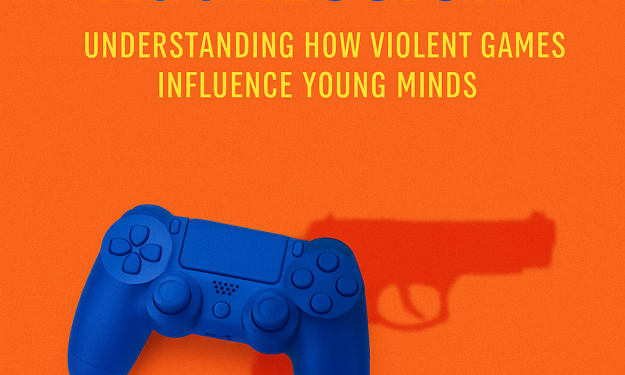
Pixels of Aggression: Understanding How Violent Games Influence Young Minds
In the digital age, video games have evolved into one of the most popular forms of entertainment for children and adolescents. From intricate storylines and high-definition graphics to interactive multiplayer experiences, gaming has become deeply embedded in youth culture. But alongside its rising popularity, a longstanding debate continues to stir concern: do violent video games influence aggressive behavior in young people?
By Siria De Simone8 months ago in Psyche