
Pixels of Aggression: Understanding How Violent Games Influence Young Minds
Inside the Virtual Battlefield: What Science Reveals About Gaming, Youth, and Real-World Aggression
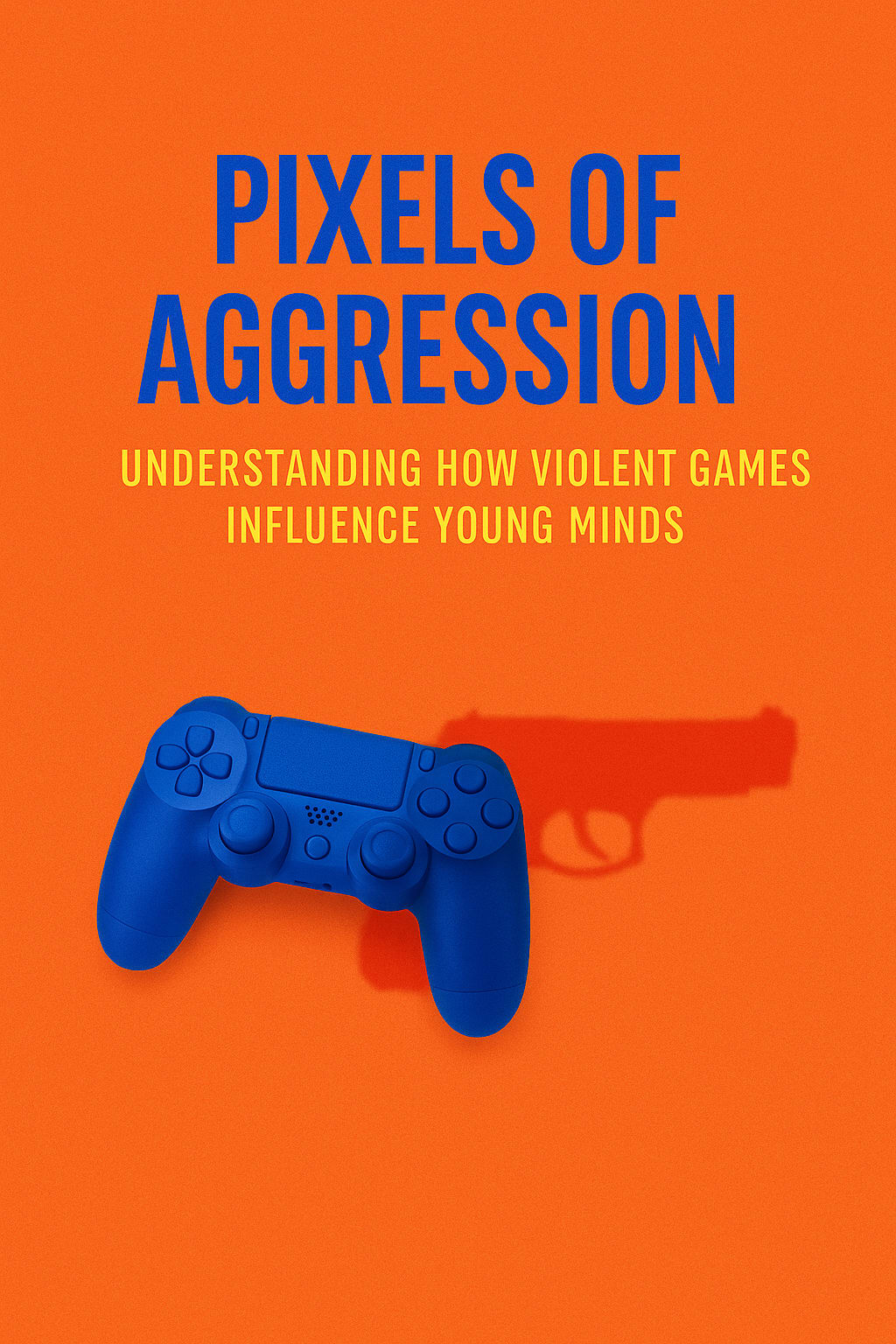
In the digital age, video games have evolved into one of the most popular forms of entertainment for children and adolescents. From intricate storylines and high-definition graphics to interactive multiplayer experiences, gaming has become deeply embedded in youth culture. But alongside its rising popularity, a longstanding debate continues to stir concern: do violent video games influence aggressive behavior in young people?
The question is more than academic—it has implications for parenting, education, and public policy. As psychological research advances, our understanding of the link between gaming and aggression grows more nuanced. This article explores the psychological mechanisms, developmental implications, and current research surrounding violent video games and their impact on young, impressionable minds.
The Rise of Violent Video Games
Games featuring graphic violence—such are widely accessible to youth, despite many carrying age restrictions. These games often reward aggressive behavior, normalize the use of weapons, and blur the line between fantasy and reality through immersive graphics and first-person perspectives.
It’s estimated that by the age of 18, the average American child will have spent tens of thousands of hours playing video games, many of which contain violent content. This sheer exposure prompts an important question in developmental psychology: what happens when a still-developing brain is repeatedly exposed to virtual violence?
The Developing Brain: Why It Matters
Children and adolescents are not simply “small adults.” Their brains are still forming, particularly in the areas responsible for impulse control, empathy, and moral reasoning—namely the prefrontal cortex. The prefrontal cortex doesn’t fully mature until the mid-20s, making young individuals more susceptible to external influences.
This is a critical window during which repeated exposure to certain stimuli can shape cognitive and emotional patterns. The concern, therefore, is not simply that a game contains violence, but how frequently, intensely, and emotionally engaging that violence is—and how those factors interact with a child’s developmental stage.
Psychological Mechanisms: How Games May Influence Behavior
Psychologists have proposed several mechanisms through which violent video games may influence behavior in children and adolescents:
1. Desensitization to Violence
Repeated exposure to virtual violence may reduce emotional responsiveness to real-world violence. Over time, this desensitization can lead to decreased empathy and diminished sensitivity to others' suffering. Children who frequently play violent games may perceive aggressive responses as normal or even acceptable.
2. Social Learning and Modeling
According to Bandura’s Social Learning Theory, children learn behaviors through observation and imitation. In video games, players actively take on the role of violent characters, often receiving rewards or progressing in the game by engaging in aggression. This role-playing component can make the learned behavior more internalized and potent than passive observation (e.g., watching a violent film).
3. Cognitive Priming
Exposure to violent cues can temporarily prime aggressive thoughts and associations. For example, after playing a combat-heavy game, a child may interpret ambiguous situations as hostile, leading to more reactive behavior. This phenomenon, known as cognitive priming, can subtly influence real-world interactions, especially in already emotionally reactive individuals.
4. Emotional Dysregulation
Violent games can evoke intense emotions—frustration, anger, or adrenaline-fueled excitement—that young players may struggle to regulate. Over time, repeated emotional arousal without proper regulation strategies may result in impulsivity or irritability.
What Does the Research Say?
The scientific community remains divided, though the majority of peer-reviewed studies suggest at least a modest link between violent video games and increased aggression in youth.
A meta-analysis by Anderson and Bushman (2001) concluded that playing violent video games significantly increases aggressive thoughts, feelings, and behaviors while decreasing prosocial behaviors like empathy.
A 2015 American Psychological Association (APA) task force review found that violent video game use is associated with heightened aggression but emphasized that this does not equate to criminal violence or delinquency.
On the other hand, some longitudinal studies have failed to find significant long-term effects, especially when controlling for confounding variables such as family environment, peer influence, and preexisting personality traits.
It’s crucial to note that correlation does not imply causation. Many children who play violent games do not become aggressive, and other contextual factors—such as parental involvement, emotional intelligence, and social support—play significant moderating roles.
Not All Games Are Equal
The psychological impact of a game doesn’t depend solely on its violent content. Other factors include:
- Context of the violence (e.g., justified vs. senseless)
- Level of realism
- Player perspective (first-person vs. third-person)
- Time spent playing
- Player’s intention and emotional state
For example, games that include narratives about moral consequences may encourage critical thinking, whereas games that glorify violence without repercussions may normalize it.
Moreover, individual differences—such as temperament, trauma history, or existing behavioral problems—can significantly affect how a child internalizes violent content. A highly empathetic child with strong parental guidance may be far less affected than one lacking emotional support and impulse control.
The Role of Parents and Educators
Rather than issuing blanket condemnations, professionals recommend balanced, informed approaches:
1. Monitor Content
Use ratings systems like ESRB (Entertainment Software Rating Board) and take the time to review gameplay before allowing access. Avoid assuming a game is “safe” simply because it’s popular.
2. Limit Screen Time
Excessive gaming—regardless of content—can interfere with sleep, academics, and social development. Setting healthy time boundaries is essential.
3. Encourage Reflection
Discuss the difference between real and virtual violence. Encourage children to reflect on how a game makes them feel and whether it aligns with their values.
4. Model Healthy Behavior
Children learn more from what adults do than what they say. Modeling calm conflict resolution and emotional regulation provides a living example that counters in-game messages.
5. Promote Alternative Activities
Balance gaming with outdoor play, creative hobbies, and face-to-face social interaction. These experiences strengthen empathy, patience, and cooperation—skills that games may not always nurture.
The Gray Area: Can Violent Games Offer Any Benefits?
Interestingly, some studies suggest that violent games can also offer certain cognitive and emotional benefits when used in controlled contexts. For instance:
- Improved hand-eye coordination
- Strategic thinking and problem-solving
- Emotional release (catharsis) in safe environments
- Social bonding through online cooperative play
The key lies in how, why, and how often the games are played—not simply in the presence of violence.
Conclusion: A Call for Awareness, Not Alarm
The conversation about violent video games and youth aggression is complex. While evidence suggests a link—especially when games are consumed excessively or without guidance—it is not a simple cause-and-effect scenario. The child’s environment, mental health, and support system play pivotal roles in how gaming influences behavior.
Rather than vilifying video games, we must foster media literacy, psychological awareness, and responsible use. With the right boundaries and discussions in place, gaming can remain a safe, enriching part of childhood and adolescence—without fueling pixels of aggression.
Would you like a custom header image for this article as well, perhaps something symbolic (e.g., a game controller casting a shadow in the shape of a weapon, or a brain with pixelated areas)?
References
Anderson, C. A., & Bushman, B. J. (2001). Effects of violent video games on aggressive behavior, aggressive cognition, aggressive affect, physiological arousal, and prosocial behavior: A meta-analytic review of the scientific literature. Psychological Science, 12(5), 353–359. https://doi.org/10.1111/1467-9280.00366
American Psychological Association. (2015). Technical report on the review of the violent video game literature. APA Task Force on Violent Media. Retrieved from: https://www.apa.org/news/press/releases/2015/08/violent-video-games-summary.pdf
Bandura, A. (1977). Social Learning Theory. Englewood Cliffs, NJ: Prentice-Hall.
Gentile, D. A., Lynch, P. J., Linder, J. R., & Walsh, D. A. (2004). The effects of violent video game habits on adolescent hostility, aggressive behaviors, and school performance. Journal of Adolescence, 27(1), 5–22. https://doi.org/10.1016/j.adolescence.2003.10.002
Ferguson, C. J. (2015). Do Angry Birds Make for Angry Children? A Meta-Analysis of Video Game Influences on Children’s and Adolescents’ Aggression, Mental Health, Prosocial Behavior, and Academic Performance. Perspectives on Psychological Science, 10(5), 646–666. https://doi.org/10.1177/1745691615592234
Granic, I., Lobel, A., & Engels, R. C. M. E. (2014). The benefits of playing video games. American Psychologist, 69(1), 66–78. https://doi.org/10.1037/a0034857
About the Creator
Siria De Simone
Psychology graduate & writer passionate about mental wellness.
Visit my website to learn more about the topics covered in my articles and discover my publications
https://siriadesimonepsychology.wordpress.com
Keep reading
More stories from Siria De Simone and writers in Psyche and other communities.
The Secret to a Meaningful Life: Unlocking the Power of Ikigai
In today’s fast-paced, hyper-connected world, it’s easy to feel lost, burned out, or unsure of our place in life. We chase productivity, success, and validation, often without pausing to ask a simple yet profound question: Why am I doing this? That’s where Ikigai comes in—a centuries-old Japanese philosophy that offers a refreshing and grounded path to fulfillment. More than just a trendy buzzword, Ikigai is a deeply personal journey of discovering what makes life worth living.
By Siria De Simone9 months ago in Psyche
How Ancient Spiritual Teachings helped me
The way we look at things and feel about certain situations can change as soon as we take the time to reconnect with our true Self, with our Soul. That is the part of our being that is eternal and can help us heal more than many know. From this higher perspective, in alignment with higher Divine Consciousness, we receive a new understanding. We receive the necessary divine support to heal emotional pain.
By Jeanne Jess 2 days ago in Psyche
📢 Raise Your Voice Thread: 03/05/2026
Our “Raise Your Voice Threads” are hosted most alternating Thursdays at 12PM ET to offer creators more avenues to uncover exceptional stories on Vocal. As we are continuously searching for fresh creators and inspiring stories, this thread provides an opportunity to exchange and discuss the stories that have moved and motivated us on Vocal.
By Raise Your Voice by Vocalabout 3 hours ago in Resources



Comments
There are no comments for this story
Be the first to respond and start the conversation.