humanity
Mental health is a fundamental right; the future of humanity depends on it.
Start Again
Every day is a challenge for me. Six months ago I lost my job due to downsizing to improve profits for the company. There were no redundancy payments for me or the others, we were sacked for "not doing our jobs" but they wouldn't tell us what we hadn't done.
By Mike Singleton 💜 Mikeydred about a year ago in Psyche
Small Act Of Kindness
The day had started like any other—gray, drizzly, and full of the mundane routines that kept my life in its monotonous cycle. I was on my way to work, trudging through the same crowded streets, past the same indifferent faces. The rain had just begun to fall in a light mist, the kind that left you damp and chilled without really noticing until it was too late.
By Arfa Rajputabout a year ago in Psyche
A Bowl of Soup a Day. Runner-up in Small Kindness Challenge.
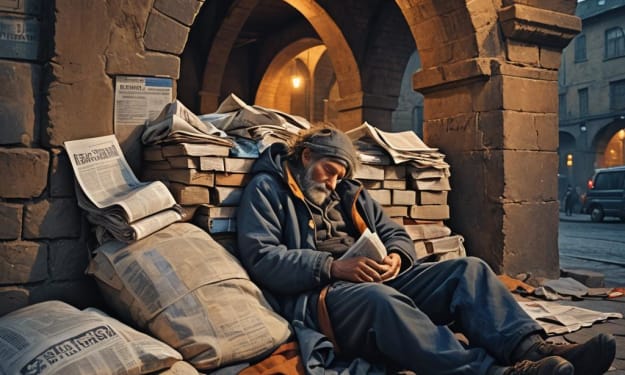
There was no way that I would have seen a future for myself without my wife. She was the peace that gave me hope; she made our house a home. When we learned of her diagnosis, I didn't ever think that it would end with her buried in the plots we had bought together, a mountain of debt, and a home on the concrete as I moved about the city on crutches. I had spent my life working as hard as I could to give my wife the life that she deserved, and now, it takes me half an hour to shuffle down a single block. There is no home without her.
By Autumn Stewabout a year ago in Psyche
Are There Stages of Healing from Narcissistic Abuse?
Narcissistic abuse is a subtle, insidious form of psychological manipulation that can leave deep, often invisible scars on its victims. Perpetrated by individuals with Narcissistic Personality Disorder (NPD), this abuse systematically erodes self-esteem, autonomy, and emotional stability. Recovering from such profound trauma is not merely about healing but embarking on a transformative journey toward self-discovery and empowerment. Understanding the stages of healing is crucial for anyone navigating this complex process, as each phase brings its unique challenges and opportunities for growth.
By The Seraphic Society about a year ago in Psyche
Exploration of the psychological underpinnings of Dark Empaths
Getting Through the Dark: Narcissists vs. Dark Empaths: Understanding, Identifying, and Liberating I have always been fascinated and intrigued by the limitless potential humans hold, which propels us on the path of progression. The odyssey of transforming primitiveness into a touch of modernism is the beauty of the prowess of the human mind. In the vast and complex tapestry that constitutes human relationships, the delicate interplay between these contrasting forces often presents itself as an enigma. Have you ever experienced the captivating yet perplexing dynamics between light and shadow, empathy and narcissism? Within this intricate landscape, dark empaths and narcissists stand out as compelling and enigmatic figures, each characterized by a distinct array of traits and behaviours. On the other hand, susceptible people (HSP), recognized for their deep emotional awareness and sensitivity to the feelings of others, often find themselves traversing the challenging terrain of relationships with these fascinating, yet sometimes troubling, personalities. This journey can be both enlightening and bewildering, as HSPs strive to understand and navigate the emotional landscapes shaped by the contrasting influences of empathy and narcissism.
By Hridya Sharmaabout a year ago in Psyche
Hey Kiddo, Can You Help Me Water My Patience Tree?
Why Can't We Just Be Born With Patience? My 6-year-old has the patience of an energetic old lady who acts much younger than she is and has NO time to spare. Her impatience spews out in huffs and teenage-level attitude. My 4-year-old has the patience of a 4-year-old, and her impatience comes out as hurt feelings and bursts of tears. I don't even want to talk about the toddler, whose frustration and impatiences comes out as flopping backward on the ground in Shakespearean drama, usually resulting in a solid THUD from his head connecting to the hardwood floor. I had to buy a protective pillow for him, for fear of his brain cells.
By Hope Martinabout a year ago in Psyche
DEMENTIA. Content Warning.
Dementia is a deteriorating cognitive disease which causes a significant decline in ones memory, comprehension, analytical and problem solving skills, and linguistic abilities. It causes a dysfunction in an individual’s ability to function, and has adverse effects on their mental, physical, social, and emotional wellbeing. Once diagnosed, it is imperative that caregivers immediately take on the responsibility for their loved one through legal guardianship. If the diagnosis is detected at the early onset, treatments are more effective and vital to slow down the impediments and cognitive deterioration. Oftentimes, it is crucial and vital for the caregiver, if they do not have extended family members or relatives, to seek assistance and support from specialists, doctors, personal care workers, nurses, programs, treatment centres, and support networks dedicated to fostering a safe open space to educate and learn about treatments, assistance available, and proven methods to help your loved one navigate this debilitating disease.
By ELISABETH BABARCI about a year ago in Psyche