coping
Life presents variables; learning how to cope in order to master, minimize, or tolerate what has come to pass.
What Is Task Paralysis?
ADHD: What is it, and how does it manifest? Attention Deficit Hyperactivity Disorder [ADHD] is a neurodevelopmental disorder characterized by symptoms of inattention, hyperactivity, impulsivity, and emotional dysregulation. The disorder leads to a range of impairments stemming such as struggles with time management, cognitive inhibition, and task initiation. In addition, those with ADHD may find it difficult to connect with others and/or follow through with daily tasks and responsibilities. Although it's often diagnosed in childhood, many individuals learn of their ADHD in later adulthood, or even go their entire lives without a formal diagnosis. I was diagnosed in my mid-twenties, and still struggle to manage my ADHD symptoms on a daily basis.
By choreomania7 months ago in Psyche
The Hustle Culture Nearly Killed Me
I don’t remember the exact moment I stopped recognizing myself. Maybe it was the third night in a row I fell asleep in my car with my laptop still glowing on my thighs. Or maybe it was the morning I coughed up blood into a paper napkin, wiped it clean, and just… kept typing. Like a machine. Like a woman possessed.
By Ava Writes Truth7 months ago in Psyche
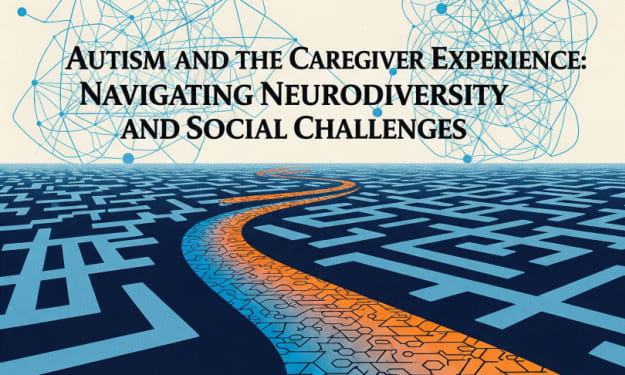
Autism and the Caregiver Experience: Navigating Neurodiversity and Social Challenges
Introduction Autism Spectrum Disorder (ASD) is a complex neurodevelopmental condition characterized by persistent challenges in social interaction, communication, and behavior. As the prevalence of ASD continues to rise globally, awareness of the condition has increased. However, less attention is given to the caregivers of individuals with autism—those who navigate daily responsibilities that often involve emotional, financial, and social strain. This article explores not only the neuropsychological aspects of ASD but also the social dynamics and mental health consequences experienced by caregivers. By understanding both perspectives, we aim to shed light on the full ecosystem surrounding autism.
By Siria De Simone7 months ago in Psyche
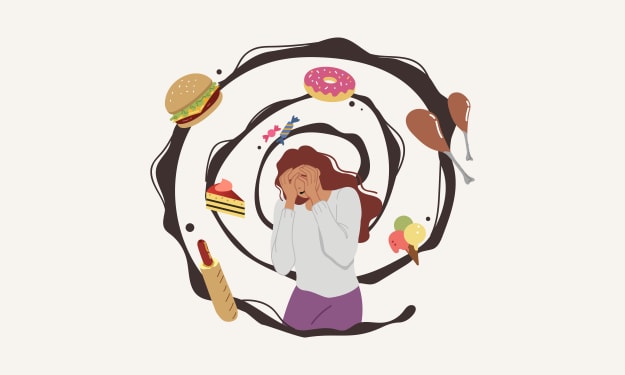
Eating to Fill the Void: When Mental Health Feeds the Mindless Hunger
Lately, I’ve been in a dip. The kind where brushing your teeth feels like too much. The kind where everything is overstimulating and silent at the same time. The kind where your body’s still moving, but your mind is somewhere under the blankets. Still. Fading. Cold.
By Briana Feliciano7 months ago in Psyche
Sensory Toys and Spaces
As more awareness about neurodiversity becomes available, so too does understanding and acceptance of places and things to accommodate it. As an autistic person, I have watched places grow and develop new programs and services for the neurodivergent community as I have grown up. They were rare to unheard of when I was growing up in rural California. Particularly libraries were pioneers in creating these spaces or allowing check-outs of fidget and sensory toys. But as time progresses and I'm seeing more and more acceptance, I have started to see such spaces pop up in festivals and conventions as well. There will, in these cases, usually be a quiet room filled with sensory toys and/or weighted blankets.
By Minte Stara7 months ago in Psyche
Targeted
We proceeded to my office for our session, and she immediately noticed the new art on my wall. Over the years, I've created numerous abstract pieces of trauma art that represent the work I do with my clients, and I like to hang them on my walls for inspiration.
By Carrie Principe7 months ago in Psyche
The Productivity Paradox: Working Less to Achieve More
Introduction In a society that often glorifies hustle culture and equates busyness with success, the notion of working less to achieve more seems counterintuitive. However, a growing body of psychological and neuroscientific research supports what some might call a radical idea: reducing work hours, implementing rest periods, and respecting personal boundaries can actually enhance productivity, creativity, and long-term well-being.
By Siria De Simone7 months ago in Psyche
I Tried to Meditate and Accidentally Summoned a Panic Attack
The Great Meditation Experiment (Or: How I Learned to Stop Worrying and Love the Chaos) Let me set the scene: It’s 3 AM. I’ve just watched a YouTube video titled "10 Minutes to Inner Peace!" featuring a man who looks like he’s never once stressed-eaten an entire pizza while crying over a spreadsheet. Inspired, I sit cross-legged on my floor, close my eyes, and prepare to ascend to a higher plane of existence.
By Just One of Those Things7 months ago in Psyche
She Grew Anyway - part 2
Before starting...... Missed Part 1? Click Here So Now Priscilla was one year old left all alone. Her grandmother came forward to take care of her. After her mother's death, her grandfather stopped drinking alcohol, and by that time he almost wasted all his wealth on drinking alcohol and gambling. Both grandparents loved her very much as they saw their daughter in her. When she was nine years old, they celebrated her birthday in very grand manner. Priscilla did not know how her mother look like and she did not have any memory of her. In those days photos also were very uncommon, so she really knew nothing about her mother. She considered her grandparents were her own parents. She was enjoying life happily ignoring her past. She thought she was really blessed having that life.
By ann prasanna gogireddy7 months ago in Psyche