
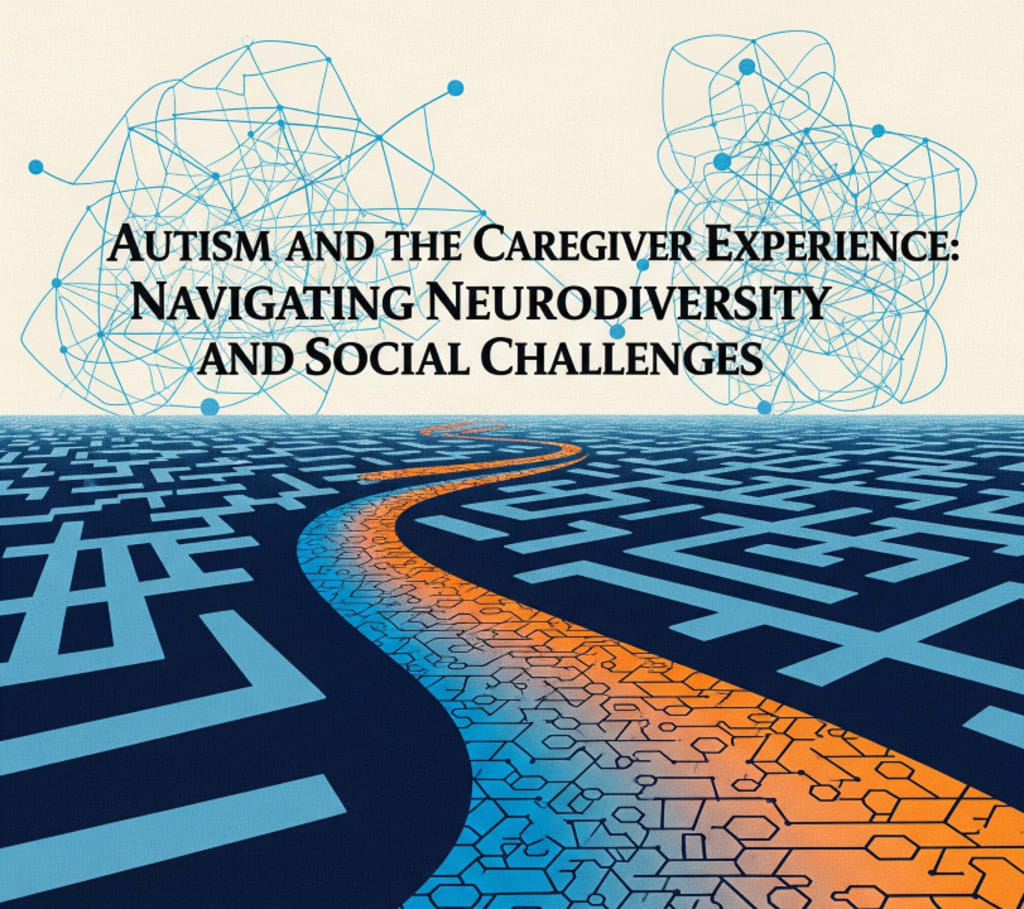
Autism and the Caregiver Experience: Navigating Neurodiversity and Social Challenges
A Psychological and Social Insight into Autism Spectrum Disorder and the Hidden Burden of Those Who Care
Introduction
Autism Spectrum Disorder (ASD) is a complex neurodevelopmental condition characterized by persistent challenges in social interaction, communication, and behavior. As the prevalence of ASD continues to rise globally, awareness of the condition has increased. However, less attention is given to the caregivers of individuals with autism—those who navigate daily responsibilities that often involve emotional, financial, and social strain. This article explores not only the neuropsychological aspects of ASD but also the social dynamics and mental health consequences experienced by caregivers. By understanding both perspectives, we aim to shed light on the full ecosystem surrounding autism.
Understanding Autism Spectrum Disorder
ASD encompasses a broad range of conditions that vary in severity and manifestation. According to the DSM-5 (Diagnostic and Statistical Manual of Mental Disorders, Fifth Edition), autism is characterized by:
- Deficits in social communication and social interaction
- Restricted, repetitive patterns of behavior, interests, or activities
People with ASD may experience sensory sensitivities, intense focus on specific topics, difficulty with changes in routine, and differences in motor coordination. These traits are not inherently negative; rather, they reflect neurodiversity—a concept that views variations in brain functioning as part of natural human diversity.
Neuroscientific research has shown that autism is associated with atypical brain connectivity and differences in areas such as the prefrontal cortex, amygdala, and mirror neuron systems, which may affect social cognition and emotional regulation. Importantly, early intervention and personalized therapies can significantly improve quality of life.
The Role of Caregivers: More Than Support
Caregivers are often parents, siblings, grandparents, or professionals who provide sustained assistance to individuals with autism. Their role is multifaceted, encompassing physical care, emotional support, educational advocacy, and behavioral guidance. While fulfilling, caregiving can also become an all-consuming responsibility.
Emotional and Psychological Strain
Research indicates that caregivers of autistic individuals report significantly higher levels of stress, anxiety, and depression compared to caregivers of neurotypical children. Factors contributing to this include:
- Lack of sleep due to the child’s irregular sleep patterns
- Behavioral challenges such as aggression, self-harm, or meltdowns
- Difficulty accessing appropriate educational or therapeutic services
- Social isolation due to stigma or misunderstanding
Over time, this emotional labor can lead to caregiver burnout—a state of chronic physical and emotional exhaustion that affects one’s health, relationships, and capacity to provide care.
The Silent Sacrifices
Often, caregivers must put aside their personal aspirations, careers, and social lives. Mothers, in particular, are more likely to reduce work hours or quit their jobs entirely to become full-time caregivers. This dynamic can lead to financial strain, reduced autonomy, and a compromised sense of identity.
A longitudinal study by Estes et al. (2013) found that parental stress levels remained consistently high over a 10-year period, highlighting the persistent and long-term demands of caregiving for a child with ASD.
The Social Dimension: Stigma and Isolation
Caregivers frequently navigate a society that misunderstands autism. Public meltdowns, unusual behaviors, or communication difficulties may provoke judgment from others, leading families to withdraw from social activities to avoid embarrassment or criticism.
Cultural Perspectives
Cultural beliefs play a significant role in shaping how autism is perceived and how caregiving is experienced. In some cultures, disability is viewed through a lens of shame or spiritual consequence, making it harder for families to seek help or speak openly. In others, there may be greater communal support and acceptance.
Understanding these cultural nuances is essential for creating inclusive support systems that respect the diverse experiences of caregivers.
Psychological Resilience and Coping Mechanisms
Despite these challenges, many caregivers develop strong resilience over time. Psychological flexibility, a supportive social network, and meaning-making are key factors that buffer against stress.
Strategies for Emotional Wellbeing
- Psychoeducation: Learning about autism helps caregivers set realistic expectations and reduces feelings of helplessness.
- Mindfulness-Based Stress Reduction (MBSR): Evidence shows that MBSR can reduce anxiety and improve emotional regulation in caregivers.
- Support Groups: Sharing experiences with others who understand the journey fosters connection and reduces isolation.
- Professional Counseling: Therapy provides a space to process emotions and develop coping strategies.
Engaging in self-care practices is not selfish; it is essential. A well-supported caregiver is better equipped to provide consistent, compassionate care.
The Need for Structural Support
Caregiving should not rely solely on individual resilience. Structural and policy-level interventions are critical for creating sustainable support for caregivers.
Accessible Services and Financial Assistance
Access to affordable therapy, respite care, and educational support can significantly alleviate caregiver burden. Some countries offer government stipends or tax benefits, but access and adequacy vary widely.
Inclusive Workplaces
Flexible work arrangements, caregiver leave policies, and understanding employers can help caregivers balance their responsibilities and maintain employment.
Education and Awareness Campaigns
Public awareness initiatives can reduce stigma, promote empathy, and encourage inclusive practices in schools, workplaces, and communities.
Toward a More Compassionate Society
Ultimately, the way we treat caregivers reflects our societal values. A compassionate society recognizes the vital role caregivers play and actively works to support them. This includes:
- Investing in early intervention programs
- Ensuring equitable access to mental health care
- Promoting research on caregiver wellbeing
- Encouraging policies that protect work-life balance for families
The journey of caregiving is not linear. It involves moments of joy, frustration, growth, and grief. But it also offers profound insights into human connection, empathy, and resilience.
Conclusion: A Dual Narrative
Autism is not just a condition experienced by individuals; it is a shared reality lived by families and caregivers. Understanding autism requires us to listen not only to those diagnosed but also to those who stand beside them every day. By embracing both narratives—that of the autistic person and their caregiver—we foster a more holistic and humane understanding of neurodiversity.
Supporting caregivers is not just a personal or familial concern; it is a public health and social justice issue. When caregivers thrive, so do the individuals in their care. As awareness of autism continues to grow, let us not forget those who walk this path in quiet strength and unwavering love.
References
American Psychiatric Association. (2013). Diagnostic and statistical manual of mental disorders (5th ed.). Arlington, VA: American Psychiatric Publishing.
Estes, A., Munson, J., Dawson, G., Koehler, E., Zhou, X. H., & Abbott, R. (2013). Parenting stress and psychological functioning among mothers of preschool children with autism and developmental delay. Autism, 17(4), 377-387. https://doi.org/10.1177/1362361312437418
Hayes, S. C., Luoma, J. B., Bond, F. W., Masuda, A., & Lillis, J. (2006). Acceptance and commitment therapy: Model, processes and outcomes. Behaviour Research and Therapy, 44(1), 1-25. https://doi.org/10.1016/j.brat.2005.06.006
Neff, K. D., & Germer, C. K. (2009). A pilot study and randomized controlled trial of the mindful self-compassion program. Journal of Clinical Psychology, 65(6), 613-626. https://doi.org/10.1002/jclp.20543
About the Creator
Siria De Simone
Psychology graduate & writer passionate about mental wellness.
Visit my website to learn more about the topics covered in my articles and discover my publications
https://siriadesimonepsychology.wordpress.com
Keep reading
More stories from Siria De Simone and writers in Psyche and other communities.
ADHD Unmasked: What Science Tells Us About the Distracted Mind
Introduction In recent decades, Attention Deficit Hyperactivity Disorder (ADHD) has moved from the periphery of clinical discussions to the forefront of psychological research, media conversations, and social awareness. Once regarded as a childhood issue characterized mainly by hyperactivity, ADHD is now understood as a complex neurodevelopmental condition that affects individuals across the lifespan. Yet, despite its growing recognition, ADHD remains widely misunderstood. This article delves into the psychological and neuroscientific foundations of ADHD, explores how it manifests in everyday life, and addresses common myths and misconceptions.
By Siria De Simone9 months ago in Psyche
Top tipple tricks
Been thinking a lot about drinking, lately. Not least because of a recent episode of over-indulgence and the inevitable after effects. Some readers may recall the earlier articles I wrote about beating the booze. Here I set out an experiment in techniques for cutting down on my alcohol intake. The experiment was successful, the techniques worked, and I have armed myself with an arsenal of weapons in the war against the demon drink. I have yet to fire the first round however. It's all a question of timing (perhaps procrastination).
By Raymond G. Taylor4 days ago in Psyche
The 6 Hardest Life Truths You Already Know But Refuse to Face
Life has a strange way of teaching lessons we wish were not true. Deep down, most people already know some uncomfortable truths about life. Yet, instead of facing them directly, we distract ourselves with routines, entertainment, or false hopes. These truths are not meant to discourage you. In fact, accepting them can be incredibly freeing. When you stop denying reality, you gain clarity, resilience, and control over your life. Here are six of the hardest life truths most people already know—but often refuse to face.
By Shahid Zaman4 days ago in Psyche



Comments
There are no comments for this story
Be the first to respond and start the conversation.