celebrities
Stars are just like us; all about the celebrities opening out about their experiences with mental illness and overcoming personal struggles.
The Second Floor Needs to Be Submerged
In a world where we often think about rising above challenges, what if sometimes the solution lies beneath the surface—literally? The phrase “The second floor needs to be submerged” may sound like a strange directive, but it can be unpacked on multiple levels—literal, metaphorical, and even philosophical. Whether taken as a literal architectural challenge or as a symbol for transformation, submerging the second floor invites us to rethink stability, change, and adaptation.
By Anees Kaleem7 months ago in Psyche
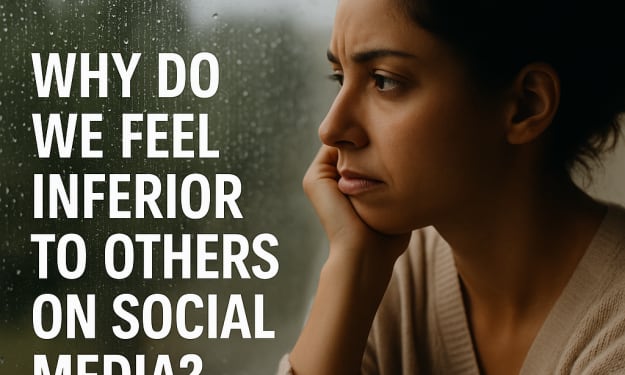
Why Do We Feel Inferior to Others on Social Media?
Introduction Have you ever scrolled through Instagram, TikTok, or Facebook and suddenly felt like your life isn’t good enough? Maybe someone posted about their new car, perfect relationship, fancy vacation, or successful job — and you instantly felt small, less important, or even jealous.
By Umar Khattak8 months ago in Psyche
The Invisible Chains: How Politics Divides Us Through Us vs Them Narratives
Introduction: The Oldest Trick in the Book Since the dawn of civilization, humans have naturally formed groups — families, tribes, nations. What was once a survival mechanism has evolved into dangerous divides, often weaponized by political systems. The classic us vs them strategy — splitting people based on caste, religion, color, or creed — has always been a tool for control.
By Umar Khattak8 months ago in Psyche
The Silent Room
The Silent Room Dr. Maya Ellis had spent the better part of her career studying memory—how it worked, how it failed, and how it could deceive. But nothing in the textbooks prepared her for the moment she stood in front of Room 212, the locked chamber at Evermore Psychiatric Institute. They called it the Silent Room.
By Asia khanom8 months ago in Psyche
"The Gentle Path to Healing"
It sounds like you've shared a really thoughtful piece about healing and self-care. Here are a few ways to reword it, focusing on slightly different angles: Option 1 (Focus on the Turning Point): > Her presence was a turning point. She didn't judge or try to solve my problems; she simply offered support when I needed it most. Shortly after, I started therapy, which felt daunting at first. Expressing my inner turmoil was a challenge, but with consistent effort, I began to understand myself better. Healing wasn't a quick fix, but reaching out for help was the crucial first step in rediscovering my true self. > > Learning to set boundaries became an act of self-love. I used to say "yes" to everything, fearing I'd disappoint others or appear difficult. I mistakenly believed I was being helpful, but in reality, I was neglecting my own needs. Each time I agreed to something that didn't align with my well-being, I was denying myself the chance to nurture my own happiness. Saying "no" wasn't about becoming cold; it was about valuing my own capacity and limits. Surprisingly, establishing these boundaries didn't disrupt things – instead, it felt like an act of self-care. > > The path to healing isn't a straight line. Some days bring lightness and hope, while others feel heavy with old stresses. I used to think feeling down meant I was failing, that healing was a final destination. But the truth is, healing is a winding, uneven journey with forward steps, backward steps, and sideways moments. The important thing is to keep returning to yourself, to keep making choices that support your healing, even when it feels impossible. Now, when darkness returns, I can meet it with calm and acceptance, knowing it's part of the process. > > In conclusion, remember that whatever you're facing, you are not broken – you are human. It's perfectly okay to step back, rest, or seek support. It takes courage to acknowledge your limits and ask for help. Sometimes, our lowest points can lead to profound personal growth, as they did for me. When I felt like I had hit rock bottom, I was actually beginning a slower, more authentic life, one I can finally be proud of. As you navigate your own journey, remember that the light will return. It comes in moments, big and small, reminding you that you are here, and that you matter. > Option 2 (Focus on Self-Compassion): > The simple presence of a supportive person, who offered understanding without judgment, encouraged me to seek therapy soon after. Initially, therapy felt intimidating, as I struggled to articulate my inner world. However, with time and persistence, I began to gain clarity about my experiences. Healing wasn't instantaneous; it was the act of asking for help that initiated my journey back to my authentic self. > > Learning to establish boundaries became an essential act of self-compassion. My tendency to always say "yes" stemmed from a fear of disappointing others or appearing selfish. I mistakenly believed I was doing the right thing by agreeing to everything, even when it conflicted with my own needs. In reality, I was betraying myself. Each time I overextended myself, I was denying myself the opportunity to nurture my own well-being and happiness. Saying "no" wasn't about becoming unkind; it was about recognizing and honoring my own limits. I was surprised to find that setting boundaries didn't create chaos; instead, it felt like a profound act of self-love. > > The journey of healing is rarely linear. There will be days filled with lightness and hope, and others when old feelings resurface. I used to interpret these low points as setbacks, believing that healing meant reaching a permanent state of well-being. However, healing is a fluid process, characterized by progress that isn't always consistent. There will be forward steps, backward steps, and detours. The crucial element is to continually return to yourself, to keep making choices that support your healing, even when it feels incredibly challenging. Now, when difficult feelings arise, I can approach them with a sense of calm, allowing myself to feel them and remembering that they are a natural part of the journey. > > Ultimately, please remember that whatever you are experiencing, you are not flawed; you are human. It is perfectly acceptable to need to withdraw, take a break, or seek support. It requires courage to acknowledge your limits and ask for help. Often, our most challenging moments can pave the way for significant personal transformation, as they did for me. When I felt like I had lost everything, I was actually beginning to embrace a more intentional and genuine way of living, a life I now value deeply. As you navigate your own path, hold onto the understanding that the light will return. It finds you in moments, both big and small, reminding you of your presence. You are here, and that is significant. > Option 3 (More Concise): > Her non-judgmental support led me to therapy, which was initially scary as I didn't know how to express myself. Over time, I began to understand my inner world. Healing wasn't immediate; asking for help was the start of my journey back to myself. > > Setting boundaries became an act of self-love. My "yes-saying" came from a fear of disappointing others, but it was a betrayal of my own needs. Saying "no" wasn't cold; it was valuing my limits and surprisingly kept things running smoothly. > > Healing isn't linear, with good days and bad days. I used to think feeling low was a failure, but healing is an uneven process. The key is to keep returning to yourself and making choices that aid healing, even when it's hard. Now, I meet darkness with calm, knowing it's part of the journey. > > Remember, you're not broken, just human. Needing breaks or support is normal and takes courage. Breakdowns can lead to growth, as mine did. When I felt I'd lost everything, I began a slower, more real life I'm proud of. Know that the light returns in moments, big and small, reminding you that you are here and that you matter. > Let me know if you'd like me to try rephrasing it in a different way or focusing on a specific aspect!
By Nasir Khan8 months ago in Psyche
Sciotism: The Forgotten Philosophy of Shadows and Reality
In a world obsessed with facts, figures, and hard evidence, what if everything you believed in was just a shadow of something else? Welcome to the eerie, mysterious, and often overlooked world of Sciotism — a philosophy rooted in the belief that reality is nothing but shadows of a higher, unseen truth.
By Umar Khattak8 months ago in Psyche
Why Do People Like Music?
The Enduring Allure of Music: A Universal Language Music, an art form as ancient as humanity itself, transcends borders, languages, and eras to unite people in a shared experience of joy, sorrow, and connection. From the gentle lullabies soothing infants to the vibrant anthems echoing through stadiums, music weaves itself into the fabric of human existence. Its profound impact stems from a remarkable interplay of science, psychology, culture, and emotion, making it one of the most cherished forms of expression. But what is it about music that captivates us so deeply? The answer lies in its multifaceted ability to engage the mind, stir the heart, and foster unity.
By MAROOF KHAN8 months ago in Psyche
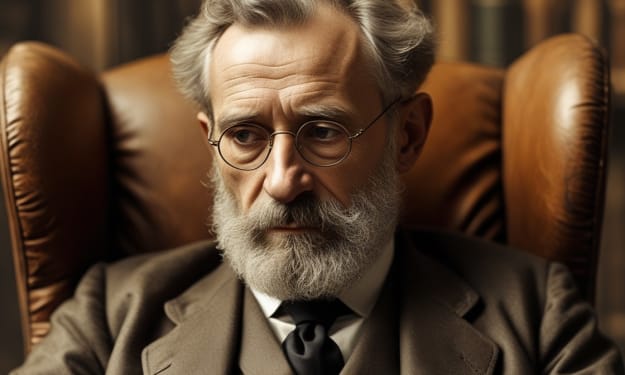
Sigmund Freud: The Father of Psychoanalysis and His Impact on Psychology
Sigmund Freud, an Austrian neurologist born in 1856, is widely recognized as one of the most influential and controversial figures in the history of psychology. As the founder of psychoanalysis, Freud revolutionized how we think about the human mind, behavior, and mental health. His theories have had a profound and lasting impact not only on psychology but also on art, literature, and popular culture.
By Bobi Dutch8 months ago in Psyche