celebrities
Stars are just like us; all about the celebrities opening out about their experiences with mental illness and overcoming personal struggles.
Why Vulnerability is My Greatest Strength
By Nadeem Shah For most of my life, I wore armor. Not the kind made of steel and iron, but the invisible kind—woven from silence, guarded smiles, and perfectly rehearsed “I’m fine” responses. I convinced myself that strength meant never letting anyone see the cracks. If people didn’t see my pain, they couldn’t use it against me. If they didn’t know my fears, they couldn’t hurt me.
By Nadeem Shah 5 months ago in Psyche
The Invisible Weight of Anxiety
By: Nadeem Shah Anxiety isn’t always loud. Sometimes it’s not the shaking hands, the racing heart, or the heavy breathing you see in movies. Sometimes it’s a quiet, constant hum in the back of your mind—a relentless narrator that never shuts up.
By Nadeem Shah 5 months ago in Psyche
Unlocking the Power of the Psyche
Unlocking the Power of the Psyche Exploring the Hidden Depths of the Human Mind for Growth, Healing, and Transformation The human psyche is like a vast, uncharted landscape—part wilderness, part library, part sanctuary. It holds within it our thoughts, emotions, memories, dreams, and instincts. Yet, despite its central role in our lives, many of us go through life barely scratching the surface of our own inner world. When Maya turned thirty-five, she felt a strange unease. On the outside, her life looked “successful”—a stable job, a good partner, a comfortable home. But inside, something felt off. Her energy was low, her dreams had become vivid and strange, and her once-clear sense of purpose was clouded with uncertainty. She began to read about psychology—not the surface-level advice she had seen online, but deeper works by Carl Jung, Viktor Frankl, and modern neuroscientists. One word kept appearing: psyche. She had heard the word before, of course. But now she paused to truly consider it. Psyche, in ancient Greek, means “soul” or “spirit,” and in modern psychology, it refers to the totality of the human mind—conscious and unconscious. The more she read, the more she realized that the psyche is not just something we “have,” but something we are. Curious and quietly determined, Maya began to explore her own psyche. She started journaling, not just to vent but to listen—to the deeper voice beneath her everyday thoughts. She practiced mindfulness to notice patterns in her emotions. She even revisited old memories that still echoed in her reactions and fears. One day, she came across a quote by Jung: “Until you make the unconscious conscious, it will direct your life and you will call it fate.” That hit her like lightning. She began to see that many of her daily struggles weren’t just “bad moods” or “stress,” but signals—messages from deeper parts of her psyche trying to get her attention. The vivid dreams, once annoying, now became fascinating. She kept a dream journal and discovered recurring symbols: a locked door, a quiet child, a forest. Maya decided to work with a Jungian therapist who helped her interpret the symbolic language of her unconscious. The door, she realized, represented a part of herself she had long ignored—her creativity. The quiet child was her younger self, still waiting to be heard. The forest was both mystery and potential—the unknown parts of herself yet to be explored. As weeks turned into months, Maya experienced something she hadn’t expected: joy. Not the fleeting kind from external success, but a grounded sense of connection to herself. She began painting again, something she had abandoned in college. She made space for silence in her life, and with it came insight. The more she connected with her inner world, the more alive and authentic her outer life became. But it wasn’t always easy. Facing the psyche means facing pain too—old wounds, limiting beliefs, buried fears. Yet Maya learned that healing doesn’t come from avoiding these parts, but from integrating them. She realized that her anxiety was not an enemy but a messenger, alerting her to deeper misalignments in how she was living. Through this process, Maya began to see others differently too. She became more compassionate, recognizing that everyone carries an inner world as complex as her own. Her relationships deepened. Her creativity flourished. Most importantly, she felt whole—no longer divided between who she was and who she thought she “should” be. The psyche, she understood, was not something to be fixed but honored. Like a garden, it needed tending. Like a forest, it needed space. Like a temple, it needed reverence. In today’s fast-paced world, many of us live from the neck up—disconnected from our emotional depths, avoiding silence, chasing achievement. But Maya’s story is a reminder that true transformation begins within. By turning inward, we can unlock not only our potential but our peace. The psyche is not a dark maze to fear but a living mystery to explore. It holds the wisdom of our past and the seeds of our future. And when we learn to listen, it can lead us—not into confusion, but into clarity; not into isolation, but into connection; not into despair, but into meaning. Maya’s journey is not unique. It is available to anyone willing to pause, reflect, and gently turn inward. Because within each of us lies a vast, untapped power—a deeper self waiting patiently to be seen, heard, and embraced.
By Muhammad Saad 5 months ago in Psyche
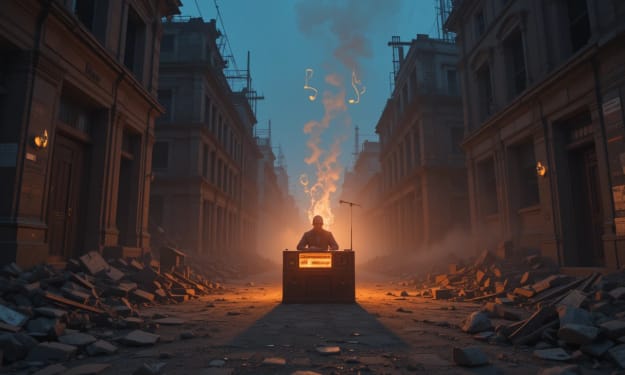
The Power of the Psyche: Unlocking the Mind's Hidden Strengths
The Power of the Psyche: Unlocking the Mind's Hidden Strengths For most of her adult life, Maya believed that she was simply "wired" to be anxious. She was the kind of person who always overthought things — whether it was a comment someone made at work, a decision she had to make, or even something as simple as sending a text. She carried the weight of worry like a backpack filled with invisible stones. One day, after a particularly rough week, Maya sat quietly in a small park near her home. As the breeze rustled through the trees, she noticed a little girl laughing as she tried to catch a butterfly. For a moment, Maya felt a strange sense of peace. It was brief, but it was something. That moment led her to seek therapy. She wasn’t sure what she expected — maybe just someone to vent to. But over time, she discovered something far more powerful: the inner workings of her own psyche, and the immense strength it held. Her therapist introduced her to the concept of neuroplasticity — the brain’s ability to change and adapt through experience. “Your thoughts aren’t fixed,” her therapist said one day. “They’re just patterns you’ve practiced. And just like learning a new skill, you can learn to think differently.” At first, Maya was skeptical. But as weeks turned into months, she began to notice subtle changes. She practiced mindfulness, journaling, and positive reframing. She learned to question her anxious thoughts instead of accepting them as truth. Slowly, the backpack of worry began to feel lighter. One powerful breakthrough came when she learned about self-compassion. Instead of judging herself for feeling anxious, she started speaking to herself the way she would speak to a close friend — gently, kindly, and with understanding. She realized that much of her mental struggle wasn’t just the anxiety itself, but the guilt and shame that came with it. As Maya’s understanding of her psyche deepened, so did her sense of self. She began reading more about psychology — not just to fix her problems, but to understand the extraordinary potential of the human mind. She learned how trauma, upbringing, and environment shape the way we think and feel — but also how healing, connection, and conscious effort can reshape that landscape. She was particularly inspired by stories of people who had faced unimaginable hardships — loss, abuse, war — and still found a way to rise, rebuild, and thrive. Their strength wasn’t in never breaking down; it was in their ability to rebuild after breaking. Their power came from within — from the psyche’s quiet, often overlooked ability to transform pain into wisdom. Maya began volunteering at a community center, sharing her story with young adults struggling with anxiety and self-doubt. She wasn’t a licensed professional, but she had something just as valuable: lived experience, and the desire to give hope. She spoke to them about the power of thoughts — how they shape emotions, choices, and ultimately, lives. She reminded them that the mind isn’t a prison; it’s a garden. What you feed grows. With care and patience, even the most tangled inner world can be brought into bloom. What Maya discovered — and now helped others see — was that the psyche isn’t something to fear or fight against. It’s not broken. It’s complex, yes — full of shadows and light — but it’s also flexible, resilient, and profoundly intelligent. The real power of the psyche lies not just in intellect, but in self-awareness, emotional honesty, and the courage to grow. It lies in our ability to pause, reflect, and choose differently. Every moment offers that chance. Today, Maya still has anxious days. But now, she greets them with curiosity rather than judgment. She sees them as part of her inner weather — not permanent, not defining. She knows that her mind, like the sky, is vast enough to hold storms and still return to calm. --- Maya’s story is a reminder to us all: the human psyche is not a fixed blueprint. It’s a living, changing force. Within it lies not only our deepest fears but also our greatest capacity for healing, learning, and transformation. When we begin to understand it — and work with it rather than against it — we unlock a strength we never knew we had. And that strength? It’s not about becoming someone else. It’s about becoming more fully who we already are — with clarity, compassion, and courage.
By Muhammad Saad 5 months ago in Psyche