
A new gadget translates stroke victims' silent speech
A listening collar

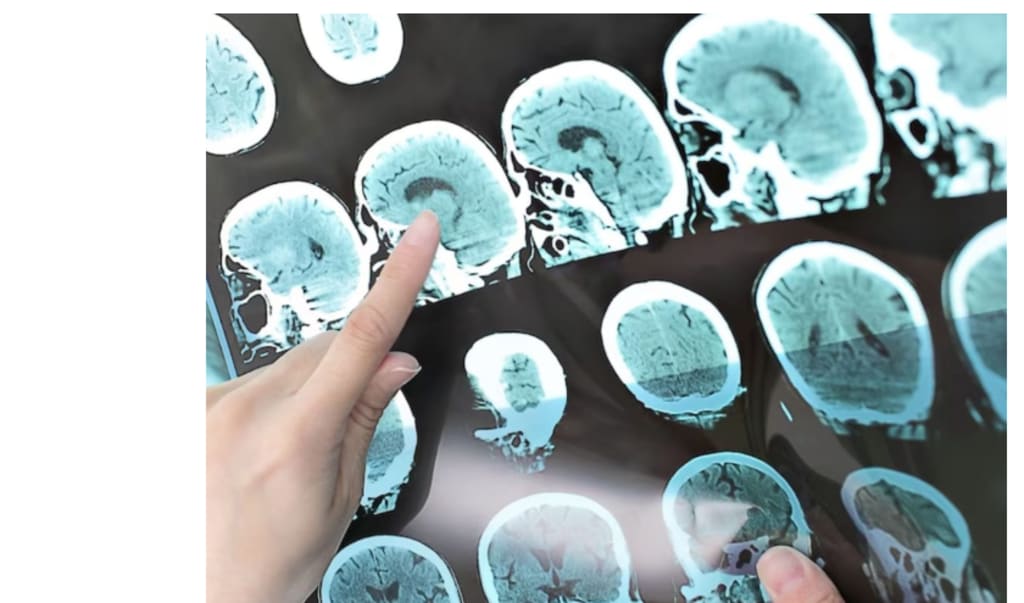
Some stroke victims are still able to move their lips and form words, but their speech is no longer understandable to others. With the promise to facilitate daily communication and restore some degree of independence in daily care, a soft, neck-worn gadget now seeks to translate those silent, laborious attempts into clear spoken utterances.
Wearable around the neck, Revoice is a flexible, soft choker that picks up physiological signals that would not typically be heard. The University of Cambridge engineers created the gadget with everyday use, comfort, and washability in mind.
Dr. Luigi Occhipinti, whose lab specialises in wearable sensors that convert tiny body signals into significant outputs, oversaw the study. Broader studies will determine whether the experience is sustainable, but preliminary tests indicated that the concept may produce fluent speech.
When the muscles used for speaking malfunction
Due to weak or uncoordinated muscles, many stroke patients suffer from dysarthria, which is slurred or sluggish speech.
Even when the appropriate words are prepared, speech can sound hurried, quiet, or fragmented. According to a recent survey, patients become quite frustrated when their clear thoughts are met with an uncooperative throat.
"It can be very frustrating for people who have dysarthria after a stroke because they know exactly what they want to say, but they physically struggle to say it because the signals between their brain and their throat have been scrambled by the stroke," Dr. Occhipinti explained.
Throat and pulse signals
In controlled sessions, participants in the clinical research silently formed brief phrases while wearing the collar. To provide context, sensors monitor both the carotid pulse, which is the heartbeat wave in a neck artery, and minute throat vibrations.
The collar remained soft against skin by using textile strain sensors, which are strips of fabric that alter resistance when stretched. Separating speech patterns from background noise becomes a crucial engineering limit since swallowing and twisting both generate neck motion.
Interpreting silent facial expressions
Revoice uses muscular activation to understand silent speech—mouthed words uttered without audible voice—instead of listening for sound. As the throat pattern developed in real time, software inferred word fragments by cutting the signal into quick temporal slices.
Forced pauses between words, a common issue when systems rely on set windows for recognition, were avoided by continuous decoding. Because each person produced slightly varied motion signals as tiredness and recovery changed over days, training was still important.
When the gaps are filled by context
Since such fragments never have sufficient meaning for everyday conversation, the system performed more than just translating gestures into words. In order to steer expansion, a model labelled basic emotion based on pulse timing and paired it with weather or time.
A vast language model was steered by the signals, transforming a few mouthed words into a complete sentence. Users used a straightforward nod cue to initiate expansion, but any automatic rewriting must adhere to the speaker's intended.
Real talk is rarely matched by therapy.
Repetitive practice is the mainstay of speech therapy for dysarthria in most clinics. With the help of a therapist, patients may learn scripted words, but regular communication necessitates rapid timing, controlled breathing, and a consistent voice volume.
After some experience, patients can typically do repetitive drills, but they frequently have trouble answering open-ended questions and engaging in casual conversation. Although it still requires daily practice and training, a wearable device that communicates in real time could facilitate practice in casual conversation.
What the initial trial revealed
The word mistake rate—the percentage of correctly identified words—reached 4.2% in tests involving ten healthy individuals and five patients. Only 2.9% of full phrases misfired, and participants' happiness increased by 55%.
These figures cannot yet forecast performance in a variety of contexts because they were derived from a small lexicon and a small cohort. Even with that restriction, persons could practise conversational rhythm while receiving speech therapy concurrently with quick feedback.
Why outdated equipment feels sluggish
Many assistive technologies are augmentative and alternative communication techniques that use other inputs in place of voice. Spelling with switches or eye tracking can be accurate, but when a conversation is moving quickly, messages come in slowly.
Although they are uncommon due to surgery and clinical assistance, brain implants can help certain individuals who are completely immobile. Although a neck device meets a different intermediate category, it may still be ruled out by severe paralysis or inadequate head control.
Giving stroke victims a voice
Practical communication tools are in high demand since impairment following a stroke is still frequent in the United States. Larger trials will be required to examine chaotic real-life situations that can cause sensor distortion, such as coughing, laughing, and changing position.
Future iterations that operate offline and in several languages, minimising data sharing and expanding its user base, have been suggested by the researchers. Until those actions are taken, the collar will remain a promise tool rather than a ready purchase for the majority of families.
Revoice demonstrated how speech can be produced in real time from quiet mouth motions by integrating soft sensors with language software. The gadget may let people employ clinic drills in real discussion if more extensive studies verify its dependability and protect privacy.
About the Creator
Keep reading
More stories from Francis Dami and writers in Psyche and other communities.



Comments
There are no comments for this story
Be the first to respond and start the conversation.