
Caught With Drugs While Driving in Germany: What Happens Next? Legal Process, License Impact, and the MPU
From the roadside control to the courtroom – here’s what really happens when you're caught driving under the influence of drugs in Germany.
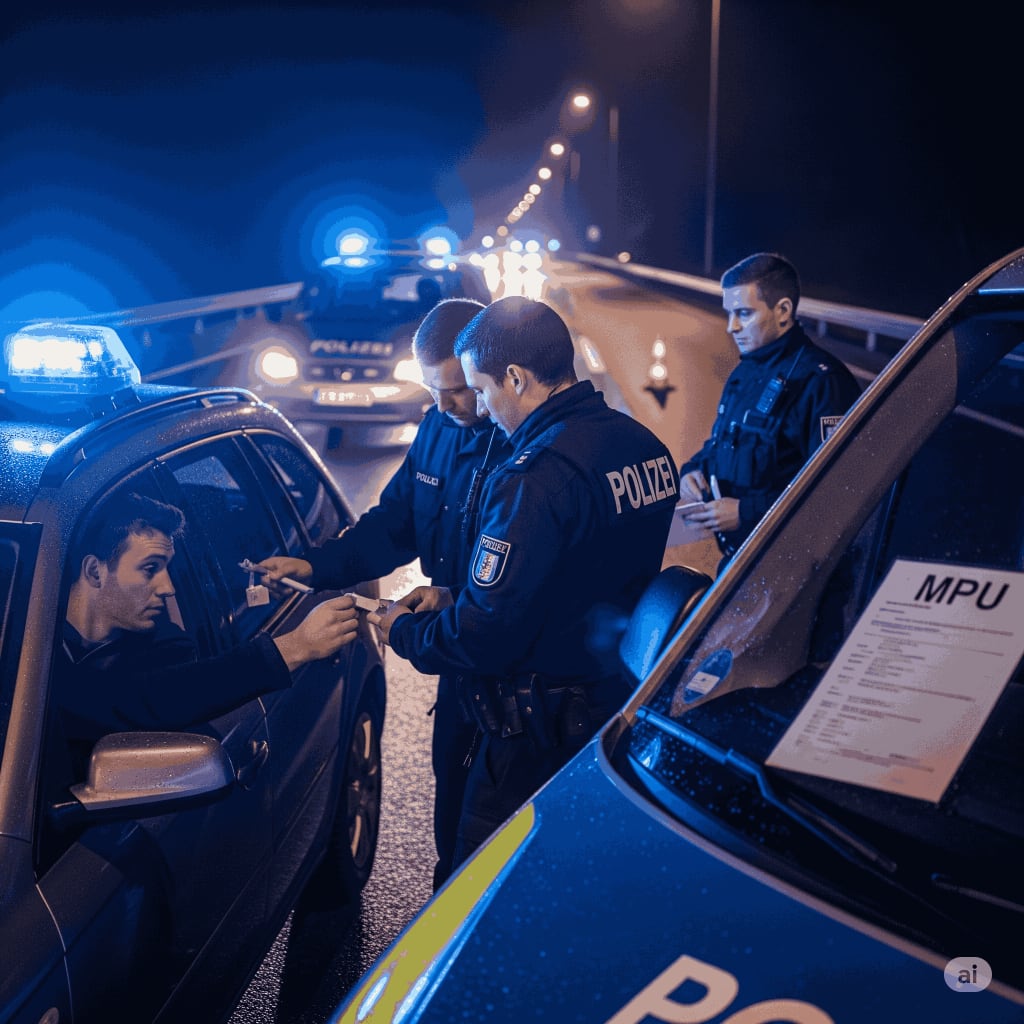
Introduction: A Moment That Changes Everything
Getting caught with drugs while driving in Germany isn't just an embarrassing moment — it's a serious legal event that may change your life for years. One traffic stop can trigger a cascading process: blood tests, criminal complaints, license withdrawal, MPU orders, and long periods of abstinence proof. Whether it's THC, Kokain (cocaine), Amphetamin, or even Cannabis auf Rezept (prescribed cannabis), German law takes no chances.
For drivers, even gelegentlicher Konsum (occasional use) leads to harsh consequences — because the assumption is: if drugs are in your system, you're a risk to road safety.
What Exactly Happens After You're Stopped?
Imagine this: you’re pulled over in a routine traffic check, and the officer suspects something unusual — maybe your eyes are red, your reaction is slow, or you simply seem nervous. That alone can be grounds for a drug influence suspicion.
From there, the process unfolds fast:
- Preliminary field sobriety checks (walking, talking, eye movement)
- Saliva drug test (Schnelltest)
- If positive: blood test at a medical facility
- Immediate Meldung an die Führerscheinstelle (license authority notification)
- Police may initiate a BTMG-Anzeige (criminal drug offense report)
At this point, even if you didn’t cause an accident, the situation becomes serious.
The Role of THC, Cocaine, and Other Substances
Each drug has different nachweisbarkeit (detectability periods), but the law treats their presence severely — especially when mixed with driving.
THC
Cannabis is one of the most commonly detected drugs during traffic stops. The legal limit in Germany is 1.0 ng/ml THC in blood. Cross that, and you're legally considered not fit to drive.
Many people are shocked to discover that even 1–3 days after smoking, their levels remain detectable. This is especially true for gelegentliche Nutzer (occasional users), where the body clears THC slowly.
Kokain Nachweisbarkeit
Cocaine is detected more quickly but also metabolized faster. However, even small traces in blood or urine indicate a BTMG-relevant consumption, often leading to a criminal charge and MPU Anordnung.
Prescription Drugs
Driving under the influence of strong medications (e.g., opioids, benzos, antidepressants) is not exempt. If they impair your ability to drive, the same rules apply. Rechtsanwalt führerschein (license attorneys) often deal with these grey zones, especially when prescriptions are involved.
What Penalties Can You Expect?
The penalties vary based on the drug, the blood levels, and whether it’s your first offense.
You may face:
- Fines from €500–€1500
- 1–3 months license suspension
- 2–3 penalty points in Flensburg
- Mandatory MPU
- BTMG charges (especially for cocaine or unprescribed pills)
If you were carrying an extra dose or additional substances, police may assume intent to distribute — leading to severe criminal prosecution under the Betäubungsmittelgesetz (BtMG).
The Administrative Fallout: License Withdrawal and MPU
One of the most immediate consequences is a Fahrerlaubnisentzug (revocation of driving privileges). This can happen before you’re even convicted. The administrative side operates independently of the criminal case — under Ordnungsrecht (regulatory law).
The Führerscheinstelle may declare:
- Doubt in driving fitness
- License suspension pending medical/psychological evaluation
- A letter ordering you to complete an MPU
You’ll now enter the infamous MPU process — a psychological assessment that tests your behavior, awareness, and abstinence. It’s especially rigorous if drugs are involved.
What Is the MPU and Why Is It Required?
The Medizinisch-Psychologische Untersuchung (MPU) evaluates whether you’re safe to return to the road. When drug use is involved, the assumption is you may pose a continued risk, unless proven otherwise.
You’ll be assessed on:
- Your insight into past drug use
- Your behavioral change since the incident
- Evidence of abstinence (6–12 months, often with urine testing)
- Your understanding of traffic responsibility
- Personal interview with a psychologist
Fail once, and you start again. That's why MPU Vorbereitung is critical.
MPU Drogen: Why It's So Difficult
The MPU becomes significantly harder if you were caught with drugs while driving — especially if you showed signs of impaired behavior, or it wasn’t your first time.
You’ll need:
- Consistent abstinenznachweis
- Multiple screenings by certified labs
- A detailed Verhaltenanalyse (behavioral change documentation)
- Often, proof of therapy or counseling
Without proper guidance, most people fail.
Professional Support Makes the Difference: Kanzlei Nattermann
In drug-related driving cases, legal help is not optional — it’s essential.
Kanzlei Nattermann, one of the leading legal practices in Verkehrsrecht (traffic law), offers:
- Clear, strategic legal advice after drug-related traffic stops
- Defense against BtMG charges
- Help with MPU Vorbereitung and abstinence planning
- Direct coordination with Führerscheinstellen and expert labs
- Representation in Verwaltungsrecht (administrative law) procedures
They understand the difference between a careless mistake and a systemic accusation — and help restore your Fahrberechtigung (right to drive) in the shortest path possible.
How Long Before You Can Drive Again?
The timeframe depends on:
Severity of Offense & Recovery Timeline
First offense, THC only - 6–9 months (with abstinence)
Cocaine or amphetamines - 12–18 months
Multiple offenses - 18–24+ months
Legal dispute pending - Case-by-case basis
Remember: the license doesn’t come back automatically — you must apply for reinstatement, usually with a positive MPU result.
Important Secondary Risks You Should Know
Being caught with drugs while driving can lead to:
- Insurance termination (especially if damage was caused)
- Loss of job licenses (e.g., for truck/taxi drivers)
- Reputational damage
- Zentralregister-Eintrag (criminal record entry)
- Driving bans in neighboring EU countries
If you're a foreigner, the consequences might affect your visa or residency, particularly if criminal intent (possession or trafficking) is assumed.
The Role of a Verkehrsrecht Anwalt
A verkehrsrecht anwalt (traffic law attorney) can:
- Challenge the accuracy or legality of drug tests
- Negotiate for reduced charges or alternate penalties
- Delay or prevent license revocation until MPU is completed
- Arrange alternative evidence instead of full abstinence time
- Represent you at Verwaltungsgericht (administrative court) if needed
Especially when multiple substances or procedural errors are involved, your chances improve significantly with legal help.
Final Reflection: This Doesn’t Have to End Your Driving Career
Getting caught with drugs while driving in Germany feels like hitting rock bottom. But thousands go through this — and come back. The key is to respond proactively, not emotionally. Start preparing, seek professional help, and demonstrate that you’ve learned and changed.
Whether it’s THC, Kokain, or even Cannabis auf Rezept, it doesn’t have to define your future. With the right legal and psychological guidance, the road back to driving is open — but only if you take the right steps today.
About the Creator
Healing Your Inner Child: A Gentle Path to Wholeness
Healing your inner child is a tender journey toward self-discovery and peace. The inner child represents the part of you that holds memories, feelings, and experiences from childhood. Often, this part carries wounds or unmet needs that influence your adult life. When you gently connect with and nurture your inner child, you begin to heal those old hurts and bring more joy and freedom into your life.
By Marina Gomez3 days ago in Proof




Comments
There are no comments for this story
Be the first to respond and start the conversation.