For Fun
Poetry in Education: Integrating Poetry into Curriculum to Enhance Literacy and Creativity. Content Warning.
In the hallowed halls of learning, where minds awaken and imaginations ignite, poetry stands as a beacon of creativity, expression, and discovery. Integrating poetry into the curriculum offers educators a powerful tool for enhancing literacy, fostering creativity, and nurturing a lifelong love of language and literature in students of all ages. In this exploration of poetry in education, we delve into the myriad ways in which verse enriches the educational experience, transforming classrooms into vibrant hubs of imagination, insight, and inspiration.
By JOSIAH NWOKO2 years ago in Poets
The Intersection of Poetry and Social Justice: Exploring the Role of Poetry in Advocacy and Activism. Content Warning.
In the tumultuous arena of social justice, where the echoes of injustice reverberate through the corridors of power and the streets of protest, poetry stands as a powerful tool for advocacy and activism. Through the artful weaving of words and emotions, poets raise their voices in solidarity with the marginalized, the oppressed, and the disenfranchised, shedding light on issues of inequality, discrimination, and systemic injustice. In this exploration of the intersection of poetry and social justice, we delve into the transformative role that poetry plays in advocating for change and inspiring collective action.
By JOSIAH NWOKO2 years ago in Poets
The Role of Poetry in Cultural Preservation and Heritage. Content Warning.
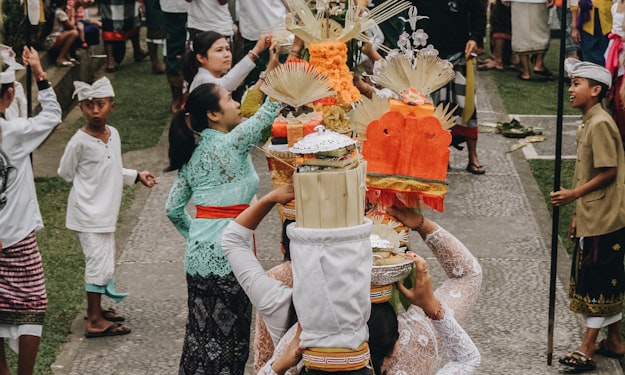
In the tapestry of human civilization, poetry stands as a vibrant thread woven with the colors of culture, tradition, and heritage. Through the ages, poets have served as custodians of the collective memory, preserving the stories, beliefs, and values of their ancestors in verse. In this exploration of the role of poetry in cultural preservation and heritage, we embark on a journey through time and space, tracing the echoes of heritage that reverberate in the poetic traditions of diverse cultures around the world.
By JOSIAH NWOKO2 years ago in Poets
Poetry in the Digital Age. Content Warning.
In the digital age, where bytes of data traverse cyberspace and virtual communities thrive, poetry has found a new canvas for expression on online platforms and social media networks. As poets navigate this digital landscape, they embark on a journey of discovery, exploring the possibilities and challenges of sharing their verse with audiences across the globe. In this exploration of poetry in the digital age, we delve into the nuances of navigating online platforms and social media for poetic expression.
By JOSIAH NWOKO2 years ago in Poets
Analogy Does Not Recapitulate Reality
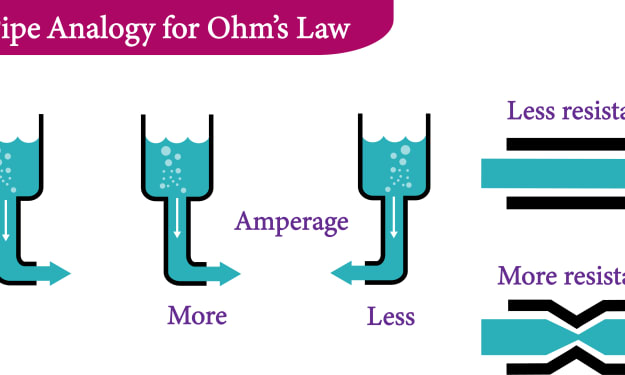
The Possibility of Analogy Does Not Necessarily Correlate with the Probability of Reality I take a hard line against the currently (and formerly) in vogue position of equating human beings, particularly their brains, with computers. To me it is obvious that no such equivalence exists despite decades of suggestions otherwise. The number of analogies between various structures/functions of the human brain and those of a computer/computer system are as large as the number of neurons estimated to comprise said brain. The prevalence of these analogies often makes us forget that they are only that, analogies. They are not based in scientific fact, but instead are based in the imaginative capacities of the organ which is the topic of these comparisons. The possibility of analogy is however often confused with the probability of reality. Those things for which we can analogize more are thought to be more accurate representations of the real relationships of the things being compared. Therefore, because there are so many analogies possible between how (we hypothesize) a human brain works and how a computer works, it must be true that a human brain is very similar to, or exactly like, a computer. The point of analogies is (or should be) to help clarify/deepen our understanding of a thing through a comparison of that thing and/or it’s attributes with another (usually similar but not always) thing. We suggest that the first thing is like the other because of x, y, and z and the comparison allows us to see the thing we are trying to clarify our understanding of in a different way. To ‘see’ it anew. In no way however is the analogy an argument (it is not an argument and should not be viewed as such) as to the actual similarity (in point of fact/reality) of the two things. It is for illustrative purposes only and carries no truth value or “reality bestowing” power. Analogies are powerful, but they are not all powerful. They can clarify but they can also mislead. We must not confuse our ability to create analogies with our ability to clearly see, study, and understand reality.
By Everyday Junglist2 years ago in Poets