Acrostic
The Poetic Mind: How Modern Poetry Shapes and Reflects Human Psychology
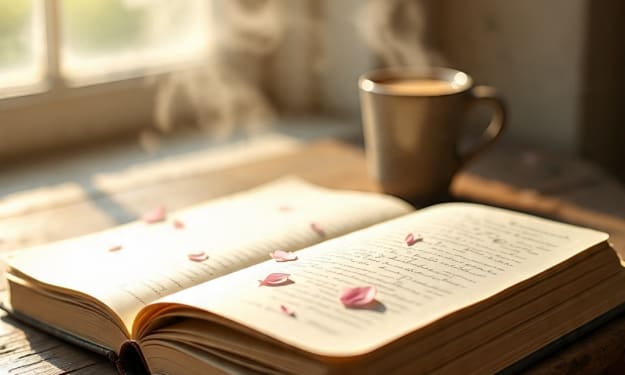
In a quiet café tucked away from the city noise, Maya sat by the window, flipping through the pages of a small, linen-covered poetry book. The words weren’t old-fashioned or hard to grasp. They spoke directly to her — raw, rhythmic, and real. A poem about anxiety hit her like a mirror; another, about hope, wrapped her like a soft scarf. For Maya, and millions like her, modern poetry has become more than literature — it's a psychological lifeline. In recent years, poetry has undergone a vibrant renaissance, not just in form, but in function. Short, impactful verses now flood social media feeds. From Instagram’s square images to TikTok’s spoken-word snippets, poetry has found a digital pulse. But why has it become so magnetic — especially now? Psychologists say it’s because poetry speaks directly to how the human brain processes emotion. Unlike long prose, poetry distills feeling into fragments — a format perfectly tailored to how we actually experience thoughts. According to Dr. Lena Hirsch, a cognitive psychologist and poetry researcher, "Our minds work in snapshots. We remember moments, not monologues. Poetry matches this memory style — it compresses insight into something instantly felt." Recent neuroscience backs this up. In a 2022 study from the University of Exeter, participants reading emotionally powerful poetry showed increased activity in brain regions linked to introspection, empathy, and self-awareness. Intriguingly, some of the strongest reactions came from reading modern, confessional poetry — the kind that speaks of mental health, identity, and everyday vulnerability. Poetry’s effect is also physical. Reading or listening to a resonant poem can trigger a physiological response: goosebumps, tears, even slowed heart rates. "It’s not magic, it’s resonance," says Dr. Hirsch. "When someone puts your emotion into words you couldn’t find yourself, it creates a psychological release — a form of emotional validation that’s deeply soothing." That’s part of why poetry has found new life among younger generations. The rise of poet-influencers like Rupi Kaur, Nikita Gill, and Atticus has shown that minimalist, emotionally direct poetry has power — not just on pages, but in pixels. These poets strip away the grandiose to make space for real feelings: heartbreak, anxiety, resilience. They're not trying to be mysterious; they’re trying to be human. Maya, a 24-year-old art student, explains: "I used to think poetry was something only academics understood. But reading a poem on Instagram about feeling lost — that hit home. It made me feel seen." Her experience isn’t unique. Mental health professionals are now integrating poetry into therapy, a growing field called poetry therapy. Clients are encouraged to write or reflect on poems as a way to process trauma, clarify emotion, and build self-compassion. Beyond therapy, poetry helps people connect. In a world that often moves too fast for reflection, poetry slows us down. It invites stillness, something psychology increasingly links to mental well-being. Reading a poem forces the mind to pause, focus, and interpret — gently engaging both the emotional and logical centers of the brain. It also boosts empathy. In 2023, a Yale study found that regular poetry readers scored significantly higher in empathic reasoning tests. Why? Because poetry, by design, places the reader in someone else’s shoes. It collapses distance — between writer and reader, emotion and understanding. "It makes the abstract personal," explains Dr. Hirsch. "And that, psychologically, is one of the fastest ways to build empathy." What’s most exciting, though, is poetry’s expanding accessibility. It’s not locked in ivory towers anymore. Workshops happen online. Open mic nights stream live on YouTube. AI-generated poetry even sparks discussion about what makes expression human. This democratization means more people are reading, writing, and sharing poetry than ever before — often without even labeling it as such. Poetry is no longer just an art form. It’s becoming a psychological tool — one that’s both ancient and newly vital. Whether in quiet cafés or scrolling before bed, people are turning to it for understanding, healing, and hope. Maya closes her poetry book and looks out the window. The city moves as it always has, fast and loud. But in her mind, there’s a new kind of quiet — the calm that comes when someone else’s words help you find your own.
By Muhammad Saad 6 months ago in Poets
"From Quills to Hashtags: The Ever-Evolving Voice of Poetry"
In a dimly lit cave, long before paper or ink, a human dipped fingers into ochre and scrawled the first marks of thought onto stone. Some of those symbols would evolve into language, and from that language, eventually, poetry—humanity’s earliest way of capturing the soul’s voice. Thousands of years later, in the bustling agora of Athens or the quiet groves of ancient India, poetry found its form in spoken verse, passed from mouth to mouth, heart to heart. Poets were keepers of memory and myth, their verses carrying the weight of gods, love, war, and the mysteries of existence. They sang to lyres and recited by firelight, their words stitched into the collective consciousness of civilizations. With the invention of writing came the first great transformation. The Epic of Gilgamesh, the Rigveda, Homer’s Iliad—these were no longer fleeting sounds but ink-bound voices, preserved through time. Poetry entered scrolls and codices, transforming from a transient song to something more permanent. The quill replaced the lyre, and the poet became a scribe of the soul. During the medieval and Renaissance eras, poetry flourished behind monastery walls and in royal courts. Sonnets bloomed like pressed flowers in the hands of Petrarch and Shakespeare, capturing the nuance of human emotion in fourteen measured lines. The printed press exploded poetry into public reach, and suddenly, the voice of the poet belonged not only to the elite but to the common reader. By the 19th century, Romantic poets walked into wild landscapes and inner storms. Blake, Wordsworth, Dickinson—they gave voice to the individual, the mystical, the deeply personal. Poetry was now a mirror to the inner self, not just a hymn to gods or kings. The quill gave way to the steel nib, and with it, the poet’s role shifted from bard to rebel, from scholar to seer. The 20th century shattered forms once thought sacred. Free verse broke loose from meter and rhyme. The horrors of war, the grit of city life, the rise of new identities—these found their place in the stark lines of T.S. Eliot, the jazz-infused rhythm of Langston Hughes, and the raw intimacy of Sylvia Plath. The typewriter ticked a new tempo. Poetry became a battleground of voices, and with that chaos came liberation. Then, quietly but insistently, a new age crept in. At first, the internet seemed like the poet’s death knell. Attention spans shrank; books gathered dust. But poetry, ever resilient, found its next breath not in silence, but in the scroll. On blogs and forums, young poets began to share verses anonymously, shyly, freely. The spoken word movement surged alongside, bringing poetry back to its roots—performance. From underground slams in New York basements to viral videos from South African schoolyards, poetry was suddenly loud again. It shouted, wept, whispered—and people listened. Then came social media, and with it, a renaissance like none before. Instagram became a canvas for minimalist poems—bite-sized truths dressed in Helvetica. TikTok birthed a new generation of poet-performers, where metaphors were paired with music and movement. Hashtags like #poetsofinstagram and #micropoetry connected global communities, unbound by geography or gatekeeping. In 280 characters or less, Twitter poets distilled heartbreak, justice, joy, and rage into modern haikus of the soul. Purists balked. “Is this real poetry?” they asked. But history had heard the same question before. When the printing press democratized literature. When free verse broke the sonnet’s stranglehold. When slam poets filled stadiums. Each time, the answer remained the same: Poetry evolves because it must. Today, a teen in Manila can share a verse that reaches someone in Nairobi within seconds. A spoken word artist in Toronto might ignite a movement in São Paulo. A queer poet in Tehran can find kinship in the words of a stranger oceans away. Technology, once feared as poetry’s rival, became its amplifier. But amid the new, the old still breathes. Poets still scribble lines into notebooks at midnight. They still gather under trees, in cafés, in classrooms. The quill may be gone, but the spirit of the craft—its ability to distill human experience into rhythm and resonance—remains unchanged. From cave walls to screens, from epics to hashtags, poetry continues its metamorphosis. It remembers its roots while blooming toward the light of the future. It has always been our voice when no other voice would do. And it always will be.
By Muhammad Saad 6 months ago in Poets
"Verses of a Life: The Journey of a Modern Poet"
Verses of a Life: The Journey of a Modern Poet In a world that rushes forward with the speed of algorithms and breaking news, a quiet voice lingers in the margins—writing, rewriting, and whispering thoughts into the spaces between seconds. That voice belongs to people like Maya, a modern poet whose life, though seemingly simple, is shaped by layers of emotion, resilience, and a deep yearning to connect. Maya wasn’t born into poetry. Her world growing up was filled with noise—city traffic, late-night news, the hum of daily survival. But inside her, there was always something quieter waiting to speak. As a child, she scribbled thoughts on the backs of receipts and school notebooks, not realizing that these little sentences were poems. “It didn’t feel like art,” she once said. “It just felt like breathing.” Poetry came to Maya the way rain comes to dry earth: slowly, then all at once. In her teenage years, faced with heartbreak, anxiety, and the pressure to conform, she found comfort not in explanations but in metaphors. Her first poem that gained attention was written in the corner of a café napkin—about a sunflower that bloomed through a crack in concrete. She didn’t expect anyone to care, but after sharing it online, thousands did. What followed wasn’t instant fame. Instead, it was a gradual unfolding. Maya kept writing while working part-time jobs—tutoring kids, managing bookstore shelves, making coffee. Her poems became a record of small moments: losing a friend, watching strangers dance, the sound of rain on a tin roof. She believed poetry wasn’t just for ivory towers or dusty libraries—it was for real life. “There’s poetry in forgotten things,” Maya said during her first public reading. “In the bruise on a banana peel, in the old man feeding pigeons alone. If you pay attention, everything is a line waiting to be written.” The life of a poet isn’t always romantic. For every poem that touched someone, Maya faced a dozen rejections. Literary journals often turned her down. Some publishers said her work was too emotional, too raw. Others told her to write in a more “marketable” voice. But Maya refused to compromise her truth for trends. Instead, she carved her own path. She published her first collection independently, titled The Weight of Whispered Things. It wasn’t flashy, but it was honest. Her poems explored mental health, self-discovery, womanhood, and healing. Slowly, readers found her—people who didn’t usually read poetry, who said her words felt like a letter from a friend. One of her most well-known poems begins: “You do not need to roar to be strong. You only need to keep speaking, even if your voice trembles like a candle.” Those lines became a mantra for many. Teachers hung them in classrooms. Therapists shared them with patients. People tattooed them on skin. Maya was humbled, but never boastful. “I don’t write to be famous,” she said. “I write because I’m trying to understand the world—and myself—in the process.” Her days remained quiet. She started mornings with tea, long walks, and journals filled with half-finished ideas. Her favorite places were still the old bookstore on the corner and the local park bench with the crooked armrest. She taught poetry workshops for young writers and donated books to shelters. She believed in giving poetry back to the people, where it belonged. As her influence grew, Maya began to blend advocacy into her art. She wrote about climate grief, cultural identity, and digital exhaustion. But always through the lens of humanity—never shouting, always inviting. She said the role of a poet isn’t to preach, but to open a window and let people look deeper into themselves. Looking back, Maya often reflected on how poetry had saved her—not from the world, but from becoming numb to it. Through the act of writing, she stayed present. Through sharing her words, she found a quiet kind of community—one built not on perfection, but on vulnerability. Her story is not one of overnight success or viral trends. It’s the story of someone who kept showing up—for the blank page, for herself, and for others who needed to know they weren’t alone. In a world often too loud to hear soft things, Maya reminds us that poetry still matters. That behind every poem is a person who dared to feel deeply. And in doing so, gave the rest of us permission to do the same.
By Muhammad Saad 6 months ago in Poets
Poetically Unstable (But in a Good Way)
There was nothing objectively “wrong” with Jamie. They just talked to their houseplant like it was their therapist. “Gerald,” Jamie whispered to the fern perched on the windowsill, “do you think it’s possible to fall in love with a metaphor?” The fern, true to form, offered no response. Jamie was a new poet. Not the beret-wearing, smoky café stereotype (though the beret had been considered). No, Jamie was the modern kind—the type who wrote 3 a.m. poems in their notes app, cried about semicolons, and considered a line break a life decision. Psychologically speaking, Jamie was doing what many new poets unknowingly do: turning chaos into coherence. You see, writing poetry is not just about pretty words or deep thoughts—it's actually a clever brain trick to process emotions without directly saying, “I’m overwhelmed, please help.” Instead, Jamie wrote lines like: “The void and I are on speaking terms again. We discussed rent and unresolved trauma.” Research shows that metaphorical writing helps people make sense of complex feelings. When poets like Jamie turn anxiety into metaphors about screaming pigeons or heartbreak into ocean storms, their brain is actually reorganizing emotional experiences into manageable narratives. So yes, it might look weird to anyone watching Jamie dramatically edit a stanza while whispering sweet affirmations to a potted plant. But beneath the surface? Neuroscience-approved self-therapy. Jamie’s creative process was—how to put this—unpredictable. Inspiration would strike at inconvenient times: in the shower, during Zoom meetings, and once mid-bite of a burrito, leading to salsa-stained verses. And don’t get them started on “flow.” The psychological state of flow is when someone becomes so absorbed in a task that time disappears. For Jamie, that usually meant going from “I’ll just tweak one line” at 9 p.m. to waking up at 2 a.m. with a Google Doc full of poems and a forehead stuck to the keyboard. Still, something beautiful was happening in that chaos. According to psychologists, poets often experience heightened emotional sensitivity—a double-edged sword that makes them both insightful and slightly feral at social events. Jamie had learned this the hard way when they cried during a commercial for recycled paper. (“The trees deserved better,” they whispered.) But this sensitivity also gave Jamie superpowers. They could notice the rhythm in traffic sounds, find metaphors in spilled coffee, and detect heartbreak in a single emoji. Poetry, for them, wasn’t just a hobby—it was a full-time sensory experience. Naturally, they started sharing their poems online. At first, it was terrifying. Every poem posted felt like handing a stranger their diary and saying, “Please don’t judge me… but if you love it, tell me in all caps.” To Jamie’s surprise, people responded. A haiku about loneliness got hundreds of likes. A weird little poem about feeling like expired yogurt was reposted with the caption: “This poet is in my brain.” That’s when Jamie had a realization: poetry wasn’t just self-expression—it was connection. Their emotional whirlwind could be someone else’s mirror. Science backed it up too. Studies have found that reading or writing poetry increases empathy and activates areas of the brain tied to emotion and memory. In short, Jamie wasn’t being overly dramatic—they were building bridges between brains. Of course, not every poem was a masterpiece. Jamie had entire folders titled “Nope,” “Too weird,” and “What was I even saying here?” But even those misfires had a purpose. The act of writing, even poorly, was therapeutic. It helped Jamie process life with humor, heart, and occasional alliteration. One evening, after hours of battling a particularly stubborn poem about existential dread and discount toothpaste, Jamie looked up at Gerald the fern. “I think I’m getting better at this,” they said. Gerald, as usual, remained quietly supportive. Jamie smiled and scribbled one last line: “The plant doesn’t talk back, but it listens better than most people.” And that was enough. Because at the end of the day, Jamie wasn’t trying to be the next famous poet. They just wanted to feel seen. Understood. Maybe even healed. And if a few people laughed, cried, or talked to their plants because of a poem—they’d call that a win. So yes, Jamie might be a little poetically unstable. But honestly? It’s kind of beautiful.
By Muhammad Saad 6 months ago in Poets
The Mind Behind the Metaphor
No one really knew where Kira’s poems came from—not even Kira. By day, she was a soft-spoken literature student at a quiet university in the city. By night, she wrote furiously in a weathered leather notebook, often stopping mid-sentence to stare into space, chasing a feeling she couldn’t name. Her poems weren’t just words; they were echoes of something deeper, something that even she was still trying to understand. Kira had only recently begun calling herself a poet. Before that, she just “wrote stuff”—scribbles, fragments, unfinished lines about feelings she couldn’t explain to anyone else. What changed wasn’t the quality of her writing, but her realization that poetry wasn’t about answers. It was about the process of asking. Psychologically, Kira’s journey into poetry mirrored what many modern psychologists have begun to study more deeply: the intersection of creativity and self-exploration. Poetry, it turns out, isn’t just an art form—it’s a form of cognitive and emotional processing. When Kira wrote, she often found herself slipping into a mental state psychologists call “flow.” It’s a trance-like focus where the world blurs and time seems to pause. The flow state is common in athletes, artists, and yes—poets. For Kira, it felt like stepping into a quiet room inside her mind, where language was not just a tool, but a mirror. But getting to that place wasn’t always easy. Some nights, she felt nothing but frustration. She’d sit for hours, blank page in front of her, heart full but unreachable. This internal tension—the desire to express and the fear of exposing too much—is something psychologists link to the vulnerability inherent in creative work. According to Dr. Julia Harrison, a psychologist specializing in the creative brain, “Artists often confront their shadow self through their work. For poets especially, the page becomes both a confessional and a battlefield.” Kira knew this well. Some of her most powerful poems came after breakdowns, or dreams she couldn’t shake, or long walks where her mind wandered into uncomfortable territory. Writing helped her name things she hadn’t been able to speak of before—childhood memories, heartbreaks, hopes so fragile she feared saying them aloud. Through poetry, Kira began to map her inner world. She wasn’t alone in this. Studies show that writing about personal experiences—especially in poetic or metaphorical form—can significantly improve emotional resilience and self-understanding. For young poets like Kira, this practice becomes both a creative act and a psychological one. Her notebook became a kind of second self—one she trusted more than she trusted most people. It wasn’t about rhyming or sounding profound. It was about honesty. One poem read: “I do not write to be heard. I write to hear myself echo through silence.” And in that silence, Kira found growth. She began to share her work at open mic nights. Her hands trembled the first time. She couldn’t look up from the page. But when she finally finished reading, something unexpected happened. People clapped. Not out of politeness, but connection. Afterward, a girl in the audience told her, “That poem felt like you were inside my head.” That’s when Kira began to understand something vital: poetry doesn’t just reveal the poet—it reflects the reader. Each metaphor is a bridge between minds, an emotional shorthand that skips past logic and speaks directly to feeling. The psychology of poetry is deeply relational. It builds empathy, invites introspection, and allows for a kind of emotional mirroring rarely found in ordinary conversation. Kira’s growth as a poet was also her growth as a person. She became more curious, more open to ambiguity. Her identity was no longer rigid but fluid, like her verses—changing with each poem. Now, a year since she wrote her first “real” poem, Kira sits by her window as dawn spills light across her notebook. She writes a single line: “I am not what I feel—I am the space between the feeling and the word.” She smiles, closes the notebook, and breathes deeply. In that moment, she doesn’t need to understand everything. She just needs to keep writing. Because for Kira, poetry is not about clarity—it’s about courage. The courage to look inward. The courage to speak softly, even when no one is listening. And the courage to trust that somewhere, someone will read her words and whisper, “Me too.”
By Muhammad Saad 6 months ago in Poets
Whispers of the Page
Whispers of the Page Discovering the Power, Purpose, and Beauty of Poetry in Everyday Life For most of her life, Maya never paid much attention to poetry. In school, it felt like a code she couldn’t crack—full of metaphors, old-fashioned language, and strange line breaks that made her feel small and out of place. While others dissected the meaning of frost and roadways or brooks and nightingales, she quietly stared out the window, waiting for the bell to ring. Years later, Maya found herself in a quiet bookstore on a rainy afternoon, hiding from the world. It was the kind of day where the sky felt close, the air carried a hush, and everything seemed to slow down. She wandered through the aisles with no purpose until she found a small section labeled “Poetry.” Almost instinctively, she reached for a slim book with a green cloth cover. It was a collection of poems by Mary Oliver. She flipped it open and read the first lines: > “Tell me, what is it you plan to do with your one wild and precious life?” The words struck her—not because they were complicated, but because they weren’t. They were simple, honest, and spoke directly to the quiet ache she hadn’t realized she was carrying. She bought the book. Over the next few weeks, Maya returned to those pages again and again. She read poems during her morning coffee, in between emails at work, before bed. Some poems made her smile; others made her pause, breathe, or cry. Each poem seemed to offer a little doorway into a world both new and familiar. She began to realize something: poetry wasn’t about decoding. It wasn’t a puzzle to solve, but a language of emotion, imagery, and rhythm—a way of seeing the world. It could be about nature, love, grief, joy, or even just the feel of rain on a window. Poetry, she discovered, didn’t live in classrooms or textbooks. It lived in everyday moments—in the way her cat stretched toward the sun, in the memory of her grandmother’s hands, in the sound of wind through leaves. Maya started writing her own poems—not to be published, but to understand herself. She wrote about loneliness, hope, and the smell of bread baking. She scribbled lines on napkins and phone notes. She learned that poetry was not about being perfect; it was about being honest. Curious, she joined a local poetry workshop. There, she met people from all walks of life: a retired nurse, a high school student, a barista, and even a software engineer. Each had a story to tell, a voice to share. In that circle of folding chairs and scribbled notebooks, Maya found something rare: connection. The kind that doesn’t depend on age, job title, or background—but on truth, and the courage to express it. As she read more, Maya began to notice how poetry had shaped the world. From protest chants to love letters, from spiritual hymns to rap lyrics—poetry had always been a way for people to say what mattered, to remember, to resist, to celebrate. It had fueled revolutions, preserved cultures, and consoled the grieving. One evening, after months of reading and writing, Maya decided to share one of her own poems at an open mic night. Her heart pounded as she stepped up to the mic, hands trembling. She read a short piece about her father, who had passed away five years earlier. When she finished, there was a moment of silence—and then soft, heartfelt applause. Afterward, a woman came up to her and whispered, “That poem... it reminded me of my own dad. Thank you.” That’s when Maya understood: poetry wasn’t just about the self. It was a gift. A bridge. A mirror. It helped people see themselves, and each other, more clearly. --- Today, Maya still writes poetry—some days more than others. She keeps a small notebook in her bag, a habit she now treasures. Sometimes the poems come easily; sometimes they don’t. But that’s okay. Because for her, poetry is no longer a mystery or a task—it’s a companion. Poetry taught her to pay attention, to listen to the world’s quiet whispers. It taught her that beauty can be found in small things. And perhaps most importantly, it reminded her that every voice matters—and every story, even the softest one, deserves to be heard.
By Muhammad Saad 6 months ago in Poets