
How to train your dog to be quiet when you leave
Your dog isn’t giving you a hard time — they’re having a hard time. Barking, whining, scratching at the door... it’s not rebellion, it’s panic. Training your dog to stay quiet when you leave isn’t about silencing noise, it’s about building trust and calm. This guide gives you simple steps, clear structure, and honest tools that actually work — no gimmicks, no guilt, no baby talk. Just real training for real life. Because a peaceful home starts with a peaceful dog — even when you’re not in it.

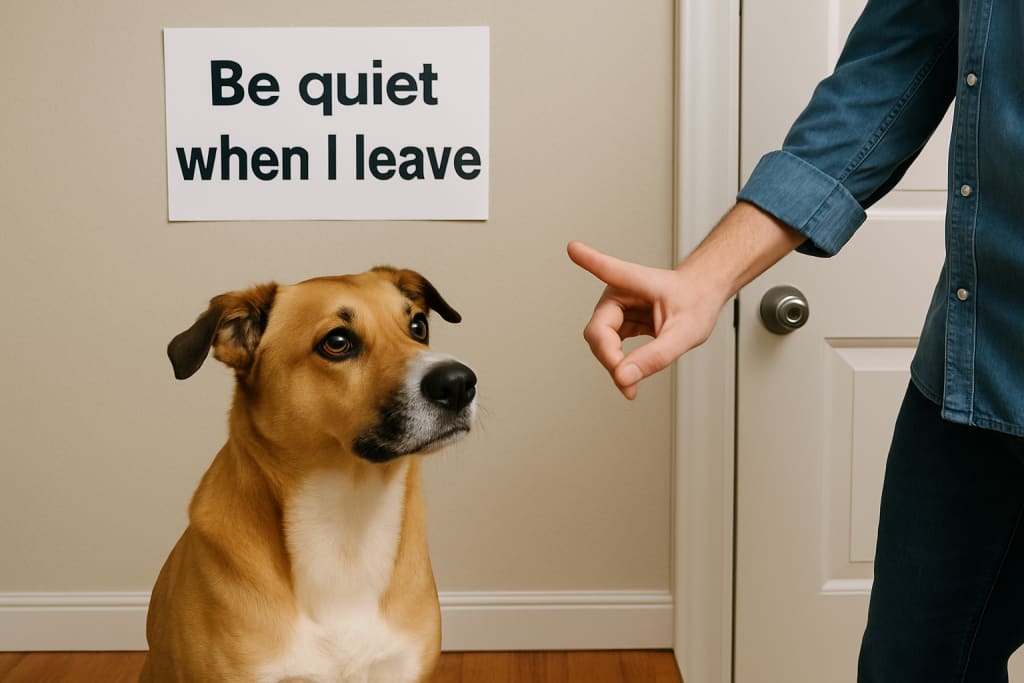
The Barking Isn’t the Problem
Let’s get one thing straight: your dog barking when you leave the house isn’t a “bad behavior.”
It’s a symptom.
A symptom of anxiety, lack of structure, or too much attachment. Or sometimes? Just boredom.
A lot of people try to “fix” barking by shouting, bribing, or sneaking out the door like they’re in a Mission Impossible movie. That’s not training. That’s avoiding.
Your dog doesn’t need magic. They need clarity. They need calm.
Let’s build that.
First, Understand Why Your Dog Is Freaking Out
Dogs don’t bark just to be annoying. There’s usually a reason.
Here are the common ones:
- Separation anxiety: “My person is gone. I’m dying.”
- Boredom: “Nothing to do. Guess I’ll start yelling.”
- Territorial alert: “You left me in charge. I’m guarding now.”
- Over-attachment: “I can’t function without you. At all.”
- No clear routine: “Every day feels like a wild guess.”
Understanding which one applies to your dog gives you the edge. Because training isn't about shouting louder — it’s about showing up with strategy.
Don’t Start at the Door — Start with Presence
Most people train the moment they leave.
Wrong place to start.
Training starts when you're home. Because dogs learn emotional stability from your energy before they ever learn it from your commands.
If your dog follows you from room to room like a furry little stalker — it’s not cute. It’s a red flag.
Do this:
- Practice independence while home: Leave your dog in a crate, playpen, or calm corner for 10–20 minutes while you do your thing. No fanfare. No guilt. Just space.
- Ignore the drama: Whining? Scratching? Barking? Don’t react. The more you fuss, the more they think it works.
- Reward calm, not clingy: Only give attention when your dog is calm. You’re training a state of mind — not just behavior.
This is where the real work starts. Calm dogs don’t panic. They feel you, not just follow you.
Create a Leaving Routine — But Make It Boring
Dogs are masters at reading patterns. You grab keys, put on shoes, and boom — cortisol party in their brain.
So, change the meaning of those patterns.
Here's what you do:
Desensitize the cues:
Pick up your keys and… sit on the couch. Put on your shoes… and go to the bathroom. Break the association. Repeat this randomly until it’s just background noise.
Stop the goodbye drama:
Don’t say “Mommy will be back soon!” in your Disney princess voice. It doesn’t soothe them — it ramps them up.
Leave like it’s no big deal:
Walk out. No eye contact. No baby talk. You want them thinking, “Oh, she’s gone. Whatever.”
The Crate Is Your Friend — Not a Jail Cell
I’ve seen people try to train a dog while giving them full access to the house.
That’s like trying to teach a kid discipline while letting them live in a candy store.
Your dog needs a space where calm lives. Where they know they can relax. That’s what a crate is for.
Crate basics:
- Make it comfortable (no luxury suite needed, just safe and cozy)
- Feed your dog in the crate — builds positive association
- Start short: 5–10 mins. Work your way up.
- Never use it as punishment
Dogs are den animals. They don’t crave space — they crave security.
Burn That Energy — Daily
A tired dog is a quiet dog. This isn’t a secret. It’s physics.
Mental energy + physical energy = a barking mess if not used properly.
Your daily checklist:
- Structured walk: Not a sniff party. Walk with purpose. 20–30 minutes.
- Obedience work: 10–15 minutes of simple commands. Keeps the brain sharp.
- Puzzle toys or food-dispensing toys: Keeps the brain busy while you’re away.
- No free feeding: Food is currency. Use it with intention.
A dog who is fulfilled won’t panic when you leave. They’ll nap.
Technology Can Help — But Don’t Rely On It
Dog cameras. Soothing music. Scent shirts. Treat dispensers.
Cool gadgets. I’ve used them. But they’re tools — not trainers.
Use tech to support your training, not replace it.
- Camera helps you check if your dog is escalating
- Calming music (like Through a Dog’s Ear) may help mask outside noises
- Treat dispensers can reinforce quiet behavior after you’ve trained it
But if your dog’s panicking, throwing a treat at them from a robot doesn’t solve it. It just gives you a false sense of control.
What NOT to Do
Here’s where most people make it worse:
Yelling at barking
Dogs hear your anger. But they don’t connect it to their behavior. Now they’re scared and confused.
Sneaking out the door
Now your dog is paranoid 24/7. “Will you vanish again when I blink?”
Comforting the panic
Petting them while they bark or whine just teaches them: “Ah, noise gets me love.”
Leaving too soon in training
You can’t leave a dog for 6 hours cold turkey and expect silence. Build it up. 10 mins, 30 mins, 1 hour, etc.
Training is about consistency, not crisis management.
Real Stories, Real Dogs
I’ve worked with dogs who chewed drywall, destroyed crates, barked for 5 hours straight.
Now? They nap like monks when left alone.
What changed? The owners stopped reacting emotionally and started training with clarity.
One example:
Lucy, a 2-year-old doodle, barked so much when her owner left that neighbors left notes on the door. We did:
- Crate training
- Departure desensitization
- Scheduled structure: walk, train, feed, rest
- No more baby talk or guilt-driven cuddles before leaving
Two weeks later? Silence.
How Long Does This Take?
Depends on the dog.
- Some respond in days
- Some need 3–4 weeks of consistent work
- Some anxious rescues may take longer, but they do get better
The key? Don’t change the plan every three days.
Stick with it. Dogs crave predictability more than anything.
When to Call a Professional
You don’t have to do this alone. If your dog is:
- Hurting themselves
- Escalating every day
- Not improving after weeks of training
Bring in a balanced trainer who understands both behavior and structure. Avoid anyone who tells you to “just give more love.” That’s not training — that’s fantasy.
Summary: Calm Is a Skill
Training your dog to be quiet when you leave isn’t about controlling their voice. It’s about changing their mindset.
You’re teaching calm. Neutrality. Trust.
No magic. No shortcuts.
Just you showing up — daily — with structure, confidence, and a little patience.
Because when your dog knows what to expect, they stop barking at the unknown.
And that silence?
That’s the sound of a dog who finally feels safe.
Thanks for your reading.
About the Creator
Authenticity and Presence: What Animals Can Teach Actors About Emotional Truth
Actors spend years searching for authenticity. Acting schools teach technique, rehearsal methods focus on emotional preparation, and directors guide performers toward believable moments on screen. Yet sometimes the most meaningful lessons about authenticity come from unexpected places.
By Andreas Szakacs2 days ago in Petlife
The Gourmet Grumble: Navigating Life with Dog Breeds That Are Picky Eaters
We’ve all seen the commercials: a happy Golden Retriever hears a kibble bag crinkle from three rooms away, skids across the hardwood floor, and inhales a bowl of dry food in approximately four seconds. It’s the universal image of canine appetite.
By MINNIE PEARL’S LIVER LEAVIN’S2 days ago in Petlife
Why Didn't Anyone Tell Us
Men, move along. This is not for you. This is for the women. I was forty-five when I began menopause. It is pretty young for that to be going on in a woman’s life, but I had undiagnosed PCOS, my entire life. Thank you to all the gynecologists I had seen my entire life. That in itself should encourage women to keep seeking second opinions, especially when you are not getting correct answers or any at all.
By Alexandra Grant5 days ago in Humans


Comments
There are no comments for this story
Be the first to respond and start the conversation.