
How to train a dog to ignore the doorbell
If the sound of the doorbell sends your dog into a frenzy of barking and jumping, you're not alone. Many dogs react with excitement, territorial instincts, or a combination of both. But with patience and consistency, you can train your dog to stay calm and composed when the doorbell rings. In this guide, we’ll walk you through the steps to teach your dog to move away from the door, go to a designated spot, or remain seated, making every doorbell ring an opportunity for calm behavior instead of chaos. Ready to transform your dog’s reaction? Let’s dive in!

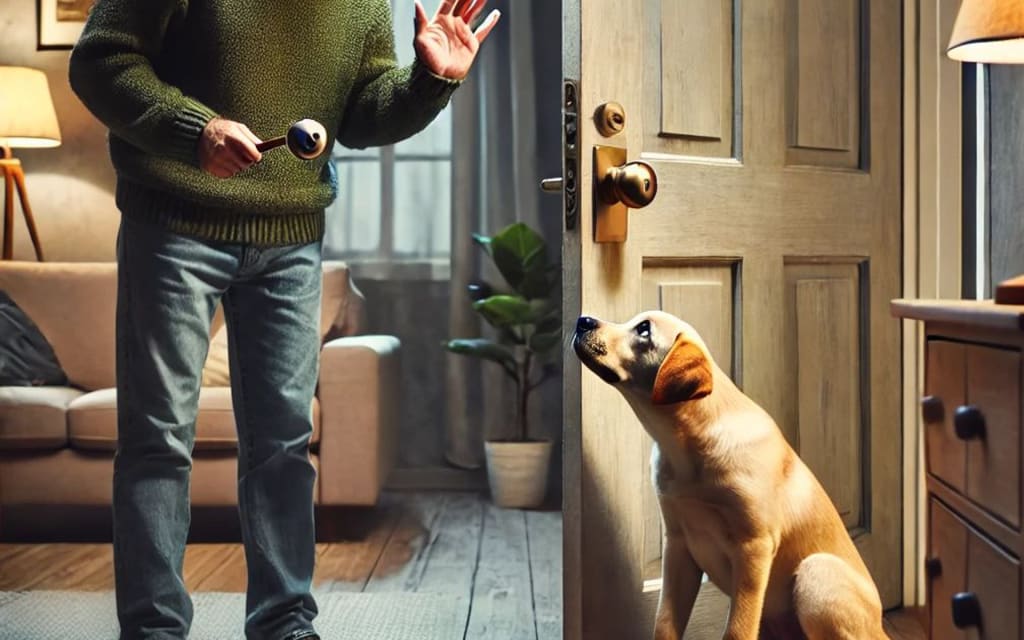
Teaching Your Dog How to Calm Down When the Doorbell Rings
If you're a suburban woman (or man), juggling the responsibilities of life while also trying to keep your furry friend from turning your home into a circus every time the doorbell rings, you're not alone. Whether it’s a delivery driver, a neighbor, or the pizza guy, the moment that doorbell chimes, your dog transforms into a furry whirlwind of excitement. They bark, jump, and try to greet (or perhaps "greet and eat") the person at the door. You might find yourself playing tug-of-war with your dog just to get a moment of peace. But what if I told you that with a bit of patience, consistency, and a few treats, you could train your dog to actually move away from the door when that dreaded doorbell rings?
Imagine this: You reach for the doorknob, and instead of your dog charging ahead, knocking you over in their excitement, they calmly go to their designated spot, sit down, or even run to another room, leaving you free to answer the door without the chaos. It might sound like a dream, but with the right training, this is totally achievable.
Step 1: Understand Your Dog’s Behavior
Before jumping into the actual training, let’s first take a look at why your dog reacts the way they do. For some dogs, the doorbell rings and it's pure excitement—who’s at the door? Is it a stranger? A friend? A potential playmate? These dogs often bark or jump as a way to express their anticipation or to alert you to the "intruder." Other dogs may feel territorial, seeing the doorbell as a signal that someone is approaching their home, and bark to protect their turf.
Regardless of the cause, your mission is to change the way your dog reacts to the doorbell. Instead of associating it with chaos and excitement, we’re going to reframe it as a signal for calmness and good behavior. And let’s face it, if you can get your dog to chill out, you're basically a superhero in your neighborhood.
Step 2: Set Realistic Goals
Before you dive into the training, decide what you want your dog to do when the doorbell rings. Some dogs may need a place to go, like another room, a crate, or outside (depending on their behavior). If your dog is just a bit too eager and tends to bark or push you out of the way, training a “sit” or “down” command after the doorbell rings could be a great option. Whatever your goal is, make sure it’s realistic. If your dog has a history of running away or nipping at strangers, expecting them to sit calmly as guests walk in might be a bit too much too soon. So, start with something manageable and work from there.
Step 3: Create a Calm Environment
Training should always take place in a calm and quiet environment. You’ll need to dedicate at least 10-15 minutes of uninterrupted time for each session, so your dog has a chance to fully absorb what’s happening. Be patient—it may take several days or even weeks to achieve the desired behavior. And make sure you’re training in small, digestible chunks. Dogs can only focus for so long, so don’t push it.
Step 4: Get the Right Tools
To make your training more effective, you’ll need a few key tools:
- A hungry dog (don’t train on a full belly)
- High-value treats (the good stuff your dog will do anything for)
- A clicker (to mark the behavior you want to reinforce)
- A treat pouch (so you can grab the treats quickly)
You’ll also need a “guest” (or a family member) to eventually ring the doorbell, but not until your dog has mastered the basics.
Step 5: Start with the Basics—Touching the Doorknob
The first thing you need to do is teach your dog to calm down when you approach the door. For many dogs, simply reaching for the doorknob can send them into a frenzy. But before you even think about ringing the bell, start by getting your dog used to the idea of you going to the door. Walk up to the door and touch the doorknob without opening it. Watch your dog carefully. The goal is to reward them for moving away from the door.
Click and treat when your dog moves even a little bit away from the door. Don’t expect them to sit or stay just yet—at this stage, you’re simply teaching them to give you some space. Practice this 8-10 times, walking to the door from different places in the house, and reward any movement away from the door.
Step 6: Address Problem Behaviors
Now, let’s talk about what to do when your dog gets too excited or tries to push through you. If they try to rush toward the door, step into their space calmly but firmly to block their movement. Don’t make eye contact or speak to them—it’s tempting, but this can just excite them further. Instead, calmly walk away from the door and drop some treats to help them calm down. The goal is to show them that good things happen when they move away from the door.
Step 7: Introduce the "Just a Minute" Cue
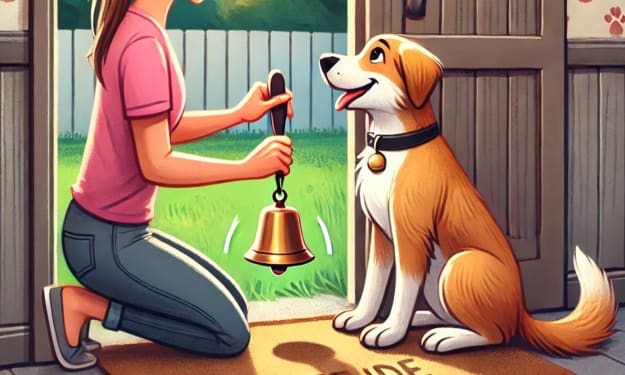
Once your dog is consistently moving away from the door when you touch the doorknob, it’s time to add a verbal cue. Use something like “just a minute” to let your dog know that the doorbell is about to ring and they need to move away. At first, use a lower-value treat to encourage them to move away from the door. Once they’ve figured out that they need to move away from the door, use high-value treats to encourage them to go to their designated station or confinement area.
Step 8: Train the "Sit" or "Down" Command
If you’re aiming to get your dog to stay in a particular spot, like a mat or rug near the door, now is the time to work on the “sit” or “down” command. Once your dog is consistently moving away from the door, lead them to the mat, and ask for the sit or down position. Start small, taking one step back at a time, then increase the distance as your dog becomes more reliable in staying in place.
Step 9: Opening the Door
At this stage, you can start opening the door while your dog remains in position. Begin by opening the door a little, closing it, and returning to your dog to reward them for staying in place. Gradually work up to opening the door fully. If your dog gets up, don’t reward them. Simply return them to their spot, smile, and continue the training until they get the hang of it.
Step 10: Add the Doorbell
Now we’re getting to the exciting part—the doorbell! You’re going to introduce the sound of the doorbell while continuing to practice your steps. Start by having your helper ring the doorbell, and then touch the doorknob. At this point, your dog should already know to move away when you touch the doorknob, so all you’re doing is adding the doorbell noise into the mix. Use your “just a minute” cue and direct them to their station. Reward them when they move away from the door. If they start barking, that’s okay—it’s part of the process.
Step 11: Practice, Practice, Practice
Training your dog to stay calm when the doorbell rings is a process that takes time. You’ll need to practice these steps over and over, reinforcing the calm behavior every time. And remember—don’t punish your dog for barking. Instead, use positive reinforcement to reward calm behavior. Your goal is to make the doorbell a cue for calmness, not chaos.
Final Thoughts
By associating the doorbell with good behavior, you’re teaching your dog that the best way to get attention when someone rings the bell is to remain calm. This process takes time, patience, and consistency, but the payoff is huge. Imagine the joy of answering the door without the whirlwind of barking and jumping, all while having a dog that knows how to stay put and wait for permission to greet guests.
With these training steps, you can transform your doorbell from a signal of chaos into a cue for calm. And the best part? Your guests will be impressed, your dog will be happy, and you’ll be able to answer the door without the stress. It’s a win-win for everyone involved! So, get started today and show your dog how to be the calm, collected companion you’ve always wanted.
Thanks for your reading.
About the Creator
A Dart at Dusk
Seconds ago, the sullen sun set on the two of us… my exuberant furry companion and me. A fresh breeze embraces us, delivering welcome relief from the day’s oppressive heat. His typical stumbling and staggering along — apace with a sloth — has turned into trip-trapping, high-stepping, almost skipping along.
By Angie the Archivist 📚🪶4 days ago in Petlife
Miss Persephone's Manual to a Seemingly Ordinary Life
Miss Persephone was found at the dining table, her blue eyes swollen, her tears arriving and retreating like the tides of the ocean. Earlier that day, her family had visited her in the retirement home where she had lived for eight years. It was her eightieth birthday.
By Imola Tóth3 days ago in Fiction


Comments
There are no comments for this story
Be the first to respond and start the conversation.