
How to stop a dog from being anxious in public - A guide from a dog trainer who's seen It all
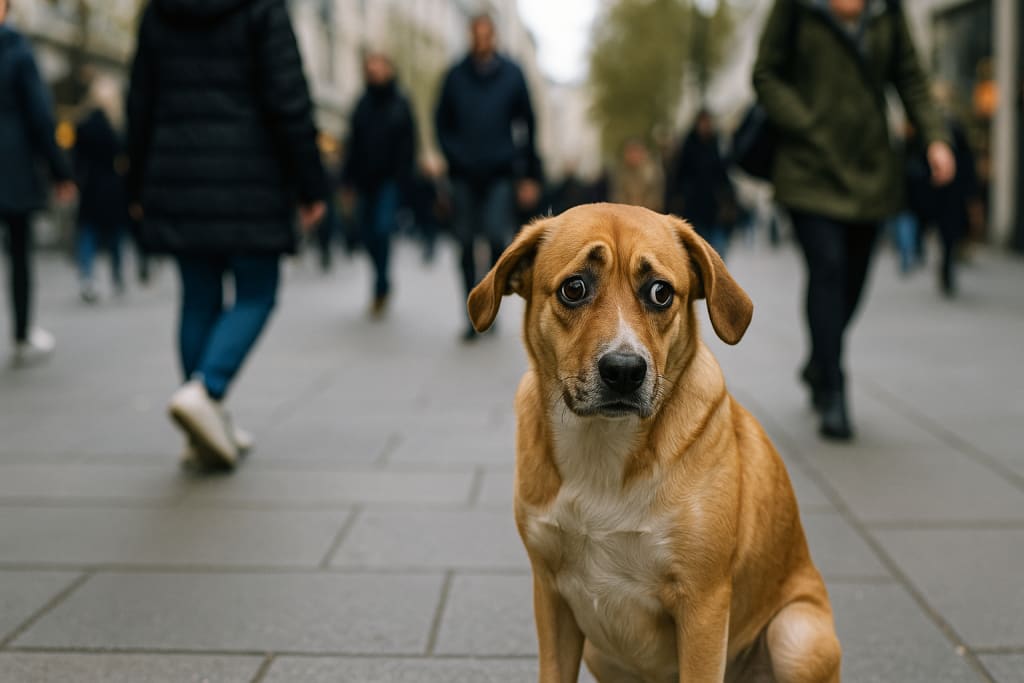
Some dogs walk into the world like they own it. Others? They tremble at a passing stroller or break down at the sound of a skateboard. If you’re reading this, odds are your dog is in the second group — tail low, eyes wide, ears back. And you're stuck between loving them and wondering what went wrong. You’re not alone. Anxiety in public is one of the most common behavioral challenges dog owners face. It’s not because your dog is “bad” or “broken.” It’s because they’re overwhelmed — and no one ever taught them how to handle the big, noisy world.
First, Understand the Root of Your Dog's Anxiety
An anxious dog isn’t being dramatic. They’re being honest. Dogs are creatures of habit, scent, sound. Public spaces — loud cars, unfamiliar dogs, crowds, screaming kids — mess with all of that. What feels “normal” to you is chaos to them.
They’re not trying to embarrass you. They’re trying to survive.
Some dogs are genetically more sensitive — especially herding breeds like Border Collies or Shelties. Others were never properly socialized as puppies. And some had a bad experience: a dog park scuffle, a car backfiring, a stranger leaning in too fast.
It builds. Fear becomes a pattern. Then it becomes a behavior.
So, rule number one: your dog isn’t giving you a hard time; your dog is having a hard time. You don’t punish fear. You train through it.
Signs Your Dog is Anxious in Public
Let’s list them. Because not all anxiety looks like shaking or hiding.
- Pulling hard on the leash to get away
- Sudden freezing or refusal to move
- Excessive sniffing (a common stress signal)
- Whining, barking, or growling
- Pacing or spinning
- Panting (especially when it’s not hot)
- Lip licking, yawning, tail tucked
Even if your dog is quiet, don’t assume they’re fine. A still dog can be a scared dog.
Step One — Safe Distance First, Not Full Exposure
This is the part most owners get wrong. You want to help your dog, so you take them into the chaos. Farmer’s market. Outdoor café. Downtown sidewalk. You’re trying to “get them used to it.”
But dogs don’t get better by being flooded with stress. That’s not training. That’s trauma.
Start far away.
Let your dog observe the world from a place they feel safe. A park bench near traffic, not beside it. A quiet corner of a pet store parking lot. Let them watch life happen without forcing interaction.
When they look calm, mark it — say “yes” or use a clicker — and give a treat. You're building association: the world is loud, but treats happen. Good things happen.
Over time, you decrease the distance. Slowly. No faster than your dog can handle.
Step Two — Reward Calm, Not Just Obedience
A common mistake? Asking too much, too soon. Sit. Down. Stay. Heel. All the obedience cues in the book. But anxious dogs don’t need more control — they need more confidence.
What are you actually rewarding?
Look for emotional shifts, not just perfect commands. A dog that glances at a bike and doesn’t flinch? That’s gold. Reward it. A dog that looks at you instead of lunging? Treat it like a win.
Focus on your dog’s mental state, not just their position.
Step Three — Teach a “Check-In” Behavior
One of the most powerful things you can train is a simple check-in. Dog sees a trigger → looks at you → gets rewarded.
It creates a loop of trust. You’re the anchor. You’re the answer.
How to teach it:
- At home, reward every time your dog looks at you.
- Add a cue like “watch me” or “look.”
- Practice in calm environments before moving to harder ones.
This becomes your superpower in public. Instead of panicking, your dog looks to you for guidance.
Step Four — Use the Right Tools (Not Just Treats)
Gear matters. A flat collar on a nervous puller? Bad idea. A prong collar on a scared dog? Worse. That’s like shocking someone mid-panic attack.
Use a well-fitted harness or head halter to give control without pain. Keep treats high-value (chicken beats kibble every time). And carry a calm tone — your energy travels down the leash.
Some trainers swear by thunder shirts, calming sprays, or CBD. These can help — but they’re not a fix. They’re support tools, not solutions. Training is still the core.
Step Five — Don’t Rush the Timeline
This part sucks, but it’s true: progress is slow. Some dogs take weeks. Some take months. And some need a lifetime of management.
You will backslide. Your dog will have bad days.
The key is consistency. Keep sessions short. Quit while they’re still successful. Ten minutes of calm beats an hour of meltdown.
You're not aiming for perfection. You're aiming for trust.
What to Avoid — Because You Might Be Making It Worse
Let’s be blunt. Here are the most common owner mistakes that increase anxiety:
- Dragging the dog forward when they freeze
- Getting frustrated or yelling
- Forcing interactions with strangers or dogs
- Thinking they’ll “just get over it”
- Overloading them with new places in one day
The world already feels loud to your dog. Don’t add your frustration to it.
Real-World Practice Plans
Here’s what a weekly confidence plan might look like for an anxious dog:
Week 1:
- Drive to a quiet street. Sit in the car. Reward calm.
- Walk along the sidewalk 50 yards from traffic.
Week 2:
- Visit a park during low-traffic hours.
- Let your dog observe joggers, dogs, kids — from a distance.
Week 3:
- Add 1-2 obedience cues during the outing (sit, look).
- Increase duration slowly (15 minutes → 25 minutes).
Week 4:
- Go to a café but stay outside the seating area.
- Let them relax, sniff, watch. Reward often.
Build from there. But always adjust to your dog’s pace, not your calendar.
When to Call a Professional
If your dog is shutting down, growling at strangers, or panicking in every outing, don’t white-knuckle it alone. Call a certified dog trainer or behaviorist — one who uses positive reinforcement, not fear-based methods.
Good trainers don’t just train dogs. They coach you on how to lead with clarity and compassion.
Conclusion: Your Dog Doesn’t Need to Be Perfect — Just Supported
Not every dog will be a therapy dog. Not every dog will enjoy a downtown brunch. But every dog can feel safer — with time, patience, and training.
Anxiety isn’t a sign of failure. It’s a sign that your dog is feeling. And when you meet that feeling with understanding instead of punishment, you build trust.
That’s what fixes it. Not dominance. Not force. Trust. Repetition. Patience.
You’re not just training a behavior. You’re rebuilding your dog’s belief in the world.
And that? That matters more than any sit-stay ever will.
Thanks for your reading.
About the Creator
A Dart at Dusk
Seconds ago, the sullen sun set on the two of us… my exuberant furry companion and me. A fresh breeze embraces us, delivering welcome relief from the day’s oppressive heat. His typical stumbling and staggering along — apace with a sloth — has turned into trip-trapping, high-stepping, almost skipping along.
By Angie the Archivist 📚🪶6 days ago in Petlife
“Ting Ting” The Duck
Quna, Funa, and Sona were three friends. They were small ducks who lived in a shallow pond. Quna was a white duck. Her beak was golden yellow, and her feet were the same bright color, which made her look very beautiful. She was well aware of her beauty. She would swim a little and then flick her tail proudly. When she drank water, she dipped her beak into the pond, filled her mouth, and then lifted her head toward the sky. The water could be seen sliding down her white neck. Everyone in the pond thought Quna was extremely beautiful.
By Sudais Zakwanabout 5 hours ago in Petlife


Comments
There are no comments for this story
Be the first to respond and start the conversation.