
Why We Love People Who Hurt Us
The Man She Kept Forgiving

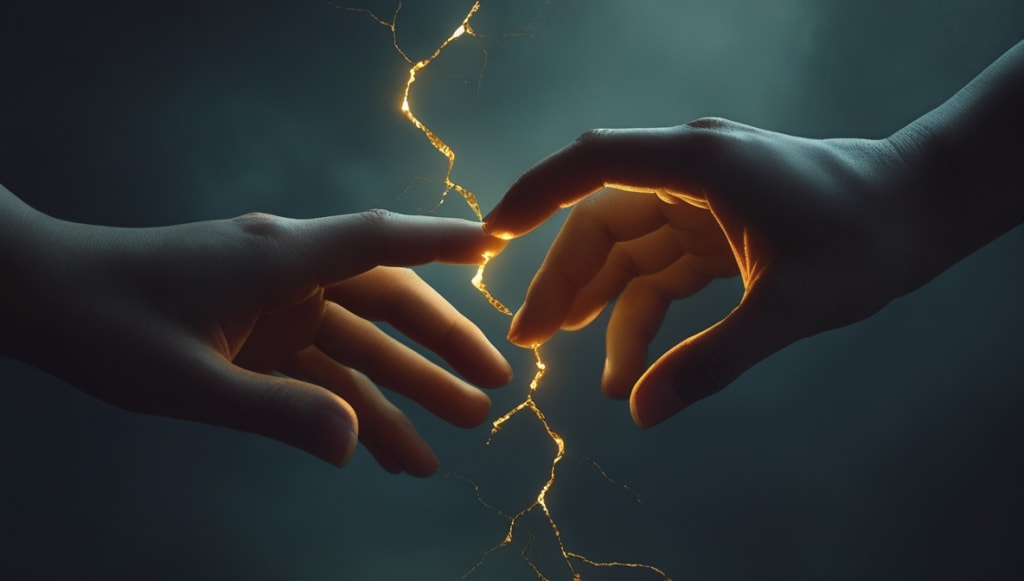
Maya's phone lit up at 2:47 a.m. with a text from Daniel: "I miss you. I'm sorry. Can we talk?"
She should have deleted it. Should have blocked his number months ago. Should have learned after the third time he'd disappeared without explanation, only to return with apologies and promises.
Instead, her heart leaped. Relief flooded through her. He came back. He still wants me.
By 3:15 a.m., she'd responded. By morning, they'd be back together. Again. And Maya would tell herself this time would be different, even though some part of her—some quiet, exhausted part she kept trying to silence—knew it wouldn't be.
Daniel would be loving for a week, maybe two. Attentive, affectionate, everything Maya had been craving. Then slowly, he'd start pulling away. Texts would go unanswered. Plans would be canceled. He'd become cold, distant, critical of small things.
Maya would panic. Try harder. Become smaller, more agreeable, desperate to bring back the version of Daniel who'd made her feel so wanted. She'd apologize for things that weren't her fault. Change herself to accommodate his shifting moods. Walk on eggshells trying not to trigger his withdrawal.
And eventually, he'd leave again. Ghost her for weeks. Then return with another 2 a.m. text. And the cycle would repeat.
Maya's friends couldn't understand it. "Why do you keep going back to him? He treats you terribly. You deserve better."
Maya knew they were right. She knew Daniel was hurting her. Knew the relationship was toxic. Knew she should walk away and never look back.
But she couldn't. Because as much as Daniel hurt her, she loved him. Desperately, painfully, irrationally loved him.
And she had no idea why she couldn't stop.
The Neuroscience of Trauma Bonding
Here's what Maya's friends didn't understand: she wasn't staying because she was weak or stupid. She was staying because Daniel had accidentally—or perhaps intentionally—triggered one of the most powerful bonding mechanisms in the human brain: intermittent reinforcement.
Dr. Joe Carver, who has studied trauma bonding extensively, explains that inconsistent treatment—alternating between affection and cruelty, presence and absence, warmth and coldness—creates a neurological addiction stronger than consistent kindness ever could.
When Daniel was loving, Maya's brain released dopamine, oxytocin, and serotonin—the neurochemicals of pleasure, bonding, and reward. When he withdrew, those chemicals plummeted, sending her into a state similar to drug withdrawal. Anxiety, desperation, physical discomfort.
Then when he returned, the neurochemical flood was even more intense than before because her brain had been deprived. The relief was so powerful it felt like love. And Maya's brain learned: Daniel's return is the best feeling in the world. I need him.
This is the same mechanism that makes gambling addictive. Slot machines don't pay out consistently—they're unpredictable. And that unpredictability creates a compulsive need to keep pulling the lever, convinced the next pull will bring the reward.
Daniel was Maya's slot machine. Most pulls gave her nothing or took something away. But occasionally, he gave her the jackpot—affection, attention, the feeling of being chosen—and that occasional reward kept her hooked far more effectively than consistent love ever could.
Research by Dr. Helen Fisher using fMRI scans shows that the brain regions activated during romantic rejection are the same ones involved in cocaine addiction. Maya wasn't just heartbroken when Daniel left—she was experiencing neurological withdrawal. And like any addict, she'd do almost anything to get her fix.
Her love wasn't a choice. It was a hijacked reward system convincing her that the person causing her pain was also her only source of relief.
The Childhood Blueprint
Maya's trauma bond with Daniel wasn't random. It was a pattern her brain had been prepared for since childhood.
Her father had been unpredictable. Some days, he was warm, playful, the dad every kid wanted. Other days, he was cold, critical, emotionally absent. Young Maya never knew which version she'd get.
She learned to be hypervigilant to his moods. Learned that love was something you earned through perfect behavior. Learned that affection was scarce and precious and could be withdrawn without warning.
When her father was warm, Maya felt like she'd won the lottery. She'd cling to those moments, analyze what she'd done right, try desperately to replicate the conditions that had made him loving.
When he was cold, she blamed herself. What did I do wrong? How can I fix this? If I'm just better, he'll love me again.
By the time Maya was eight, she'd internalized a blueprint for love: Love is inconsistent. Love must be earned. Love comes from people who hurt you. The harder you work for it, the more valuable it is.
Dr. Bessel van der Kolk's research on developmental trauma reveals that children who grow up with inconsistent caregiving often develop what's called "anxious attachment"—a pattern where they crave intimacy but never feel secure in it. They're always waiting for the other shoe to drop, always trying to earn love they believe is conditional.
When Maya met Daniel twenty years later, her nervous system recognized him immediately: This feels like home. This feels like love.
Not because he treated her well. But because he treated her exactly the way her father had—unpredictably, withholding affection, making her work desperately for scraps of validation.
Maya's adult brain knew this was unhealthy. But her nervous system—shaped by childhood experiences—was convinced this was what love felt like. Consistent, stable affection from kind partners felt boring, wrong, not real. She'd dated men who treated her well and felt nothing.
Only the ones who hurt her felt like love. Because her brain had been wired to associate love with pain, uncertainty, and the desperate quest for validation from someone withholding it.
The Chemistry of Pain and Pleasure
Three weeks into their latest reconciliation, Daniel said something that destroyed Maya: "You're too needy. You're suffocating me. I need space."
Maya felt like she'd been punched. She'd been trying so hard to be the perfect girlfriend—agreeable, low-maintenance, never demanding too much. And still, it wasn't enough.
She spent that night crying. The next day barely functional. The emotional pain was so intense it felt physical—her chest ached, her stomach churned, she couldn't eat.
Then Daniel texted: "I'm sorry. I didn't mean it. You're not needy. I'm just stressed. I love you."
And just like that, the pain evaporated. Relief so intense it felt euphoric. Maya's brain flooded with dopamine and oxytocin. She went from devastated to elated in seconds.
This, more than anything, is why Maya couldn't leave.
Dr. Patrick Carnes, who pioneered research on betrayal bonds, discovered that relationships that cycle between pain and relief create a unique neurological pattern. The pain primes your system for the relief that follows. The worse the pain, the more powerful the relief. And your brain becomes addicted to that cycle.
It's similar to why people with chronic pain sometimes become addicted to pain medication. The medication doesn't just relieve pain—it creates a high that wouldn't exist without the pain preceding it. The contrast between suffering and relief becomes neurologically addictive.
Daniel's cruelty made his kindness feel like the most profound love Maya had ever experienced. When he was mean, she felt worthless. When he was nice after being mean, she felt chosen, special, incredibly loved.
If Daniel had been consistently kind, Maya would have felt... fine. Comfortable. But not the intense, all-consuming feeling she'd learned to identify as love.
She was addicted not to Daniel, but to the neurochemical rollercoaster he put her on. The pain of his rejection made the pleasure of his acceptance unbearably intense.
Research shows that this pattern literally changes brain structure over time. The amygdala—the threat detection center—becomes hyperactive, constantly monitoring for signs of rejection. The prefrontal cortex—responsible for rational decision-making—becomes less active, making it harder to leave despite knowing you should.
Maya's brain had been hijacked. And the more the cycle repeated, the deeper the neural pathways became, making leaving feel impossible even when staying was destroying her.
The Identity Built on Being Chosen
Six months into the cycle, Maya's friend Jenna finally confronted her: "Why do you keep doing this to yourself? You're smart, successful, beautiful. You could have any guy. Why him?"
Maya started crying. "Because when he chooses me, I feel like I finally matter. Like I'm finally enough."
And there it was. The core wound underneath everything.
Maya's sense of worth had become completely dependent on Daniel's validation. When he wanted her, she felt valuable. When he didn't, she felt worthless. She'd handed him complete power over her identity.
Dr. Erich Fromm's research on love and identity reveals that people often confuse love with validation. They don't actually love the person—they love the feeling of being chosen by the person. And when that person is inconsistent in their choosing, being selected feels like winning a competition you've been losing.
For Maya, Daniel's approval had become the measuring stick of her worth. Not her job, her friends, her own self-perception. Just: does Daniel want me or not?
When he came back after ghosting her, Maya felt like she'd won. Like she'd proven she was worthy. Like the universe had confirmed her value. The pain of his rejection made the triumph of his return feel even more significant.
She'd become addicted to the feeling of being chosen by someone who usually didn't choose her. It felt like achievement, like vindication, like proof she was enough.
What Maya couldn't see: this wasn't love. It was her trying to resolve childhood wounds through adult relationships. Trying to finally get her father to choose her consistently by getting Daniel to choose her. Trying to prove she was worth loving by earning love from someone who withheld it.
Dr. Harville Hendrix calls this "repetition compulsion"—the unconscious drive to recreate childhood wounds in adult relationships, hoping to finally resolve them. Maya kept choosing men like her father because some part of her believed: If I can make this one love me consistently, it will retroactively heal what my father couldn't give me.
But it never worked. Because you can't heal childhood wounds through adult relationships that replicate the original wound. You just deepen the trauma.
The Moment She Saw the Pattern
Maya was in therapy—her friends had finally convinced her to go—when her therapist asked a simple question that broke everything open:
"What do you think would happen if Daniel loved you consistently? If he never left, never withdrew, never made you work for his affection?"
Maya thought about it. And realized with horror: "I'd probably get bored. Or feel trapped. Or find something wrong with him and leave."
"Why?"
"Because..." Maya felt tears coming. "Because consistent love doesn't feel real to me. It feels fake. Like they don't really know me and once they do, they'll leave anyway. So I'd rather be with someone whose inconsistency confirms what I already believe: that I'm not really lovable."
Her therapist nodded gently. "So Daniel isn't making you feel unlovable. You already felt unlovable. Daniel just confirms that belief, which feels more comfortable than someone challenging it."
Maya sobbed. Because it was true. She didn't love Daniel—she loved that he treated her the way she'd been taught love looks. Unpredictable. Withholding. Making her prove her worth over and over.
Men who treated her well felt threatening because they contradicted her core belief about herself. If she accepted their consistent love, she'd have to question everything she'd believed about her own worth.
It was easier to stay with Daniel. To keep trying to earn love from someone who barely gave it. To confirm what she'd always known: I'm not enough, but if I try hard enough, maybe I can be.
Dr. Pete Walker's work on complex PTSD explains this pattern: people with childhood trauma often experience "repetition compulsion"—they unconsciously recreate familiar patterns of hurt because familiar pain feels safer than unfamiliar love.
Maya had been choosing pain over love her entire adult life. Not because she wanted to suffer, but because suffering felt like home.
The Withdrawal That Felt Like Dying
When Maya finally decided to end things with Daniel—really end them, no more reconciliations—she experienced something that terrified her: it felt like dying.
The first week without contact, Maya was physically ill. She couldn't eat. Couldn't sleep. Her chest ached constantly. She checked her phone compulsively, desperate for a text from him.
The second week, she broke down and texted him. He didn't respond. The rejection sent her into a panic attack so severe she thought she was having a heart attack.
The third week, he responded: "I miss you too. Let's talk."
And Maya almost caved. Almost responded. The relief of his attention, even brief attention, felt like oxygen after suffocating.
But she didn't respond. And that night, she cried harder than she'd ever cried in her life.
Dr. Lucy Brown's neuroscience research on romantic rejection explains why: Maya was literally experiencing withdrawal. Her brain had become dependent on the neurochemical pattern Daniel provided. Without him, she was in dopamine and oxytocin withdrawal—a state that creates the same physical symptoms as drug withdrawal.
The pain wasn't emotional weakness. It was neurological reality. Her brain had been rewired by the trauma bond, and breaking it felt like breaking an addiction.
Which, in a very real sense, it was.
Maya's therapist warned her: "The first three months will be the hardest. Your brain will try to convince you that you need him, that you can't survive without him. But that's the addiction talking, not truth. If you can get through the withdrawal, your brain will start healing."
Maya barely made it. There were nights she almost called him. Days she was convinced she'd made a mistake, that she was throwing away the love of her life.
But slowly—painfully slowly—the intensity faded. The desperate need for him became manageable. The withdrawal symptoms decreased.
Her brain was healing. Rewiring itself. Learning that she could survive without the pain-pleasure cycle she'd been addicted to.
The Love She's Learning to Recognize
Eight months after leaving Daniel, Maya went on a date with someone named Alex. He was kind. Consistent. When he said he'd call, he called. When he made plans, he kept them. He asked about her feelings and actually listened to the answers.
And Maya felt... nothing. Bored. Uncomfortable. Wrong.
She told her therapist: "There's no spark. No intensity. It just feels flat."
"That's because you're experiencing consistent kindness, and your nervous system doesn't recognize it as love. Your brain was trained to equate intensity with love. Calm feels wrong."
"So I'm broken? I can't even recognize healthy love?"
"Not broken. Rewired. And you can rewire again. But it takes time. Right now, your brain is looking for the pain-pleasure cycle it got addicted to. When it doesn't find it, it interprets that as 'not love.' You have to teach it a new pattern."
Maya kept seeing Alex. It felt like work. Like acting. She had to consciously remind herself: This is what healthy looks like. This is what I deserve.
Slowly, almost imperceptibly, something shifted. The calm stopped feeling boring and started feeling safe. The consistency stopped feeling fake and started feeling reliable. The kindness stopped feeling suspicious and started feeling... good.
Maya's brain was learning a new pattern. One where love didn't require suffering. Where being chosen didn't require working desperately for scraps of validation. Where relationships could be steady, predictable, and still meaningful.
It didn't have the addictive intensity of her relationship with Daniel. But it had something better: peace. The absence of anxiety. The security of knowing someone wouldn't disappear without warning.
Dr. Stan Tatkin's research on secure attachment reveals that people can develop new attachment patterns through consistent, healthy relationships. Maya's brain, accustomed to chaos, was slowly learning to find safety rewarding.
The Truth She Finally Accepted
A year after leaving Daniel, Maya saw him at a mutual friend's party. Her stomach clenched. Her heart raced. Some part of her still responded to him.
He approached her, that familiar smile. "It's good to see you. I've missed you. I've been thinking maybe we—"
"No," Maya interrupted. "I'm with someone. And even if I wasn't, the answer would still be no."
"Come on, Maya. What we had was special."
And Maya realized: what they had wasn't special. It was trauma masquerading as passion. It was pain she'd confused with love. It was an addiction her nervous system had mistaken for connection.
"What we had was toxic," Maya said calmly. "You hurt me over and over, and I stayed because my brain was wired to think that's what love looks like. But I'm learning different now."
She walked away. And for the first time since meeting Daniel, she didn't look back.
Maya finally understood: we don't love people who hurt us because we're broken or stupid. We love them because our brains are doing exactly what they were trained to do—seeking out the familiar, finding comfort in the known, trying to resolve old wounds through new relationships.
We love them because intermittent reinforcement is neurologically addictive. Because childhood patterns wire us to associate love with pain. Because being chosen by someone who usually doesn't choose us feels like winning.
But understanding why doesn't mean accepting it. Maya's brain had been wired by childhood and rewired by Daniel. Now she was wiring it again—consciously, deliberately, toward patterns that didn't hurt.
She looks at Alex now and feels something she never felt with Daniel: safe. Not intensely, addictively, painfully loved. Just steadily, consistently, healthily loved.
It's not the high of trauma bonding. But it's better. Because it's real. Because it doesn't require her to suffer to feel chosen. Because she's finally learning what her friends tried to tell her all along:
Love shouldn't hurt. And if it does, it's not love—it's just familiar pain wearing love's mask.
Maya loved a man who hurt her for years. But she's finally learning to love someone who doesn't.
And her brain, slowly but surely, is learning that safe love can be just as real as painful love.
Maybe even more so.
---------------------------------------------------
Thanks For Reading !
About the Creator
Keep reading
More stories from Ameer Moavia and writers in Motivation and other communities.
Why We Feel Invisible in a Room Full of People
The Party Where No One Saw Her Vanessa had been at the party for forty-three minutes, and she had become a ghost. Not literally, of course. She was standing right there—by the kitchen island, holding a glass of wine she wasn't drinking, wearing the emerald dress her sister said made her look confident. She was physically present in a room with thirty-seven other people, all of them laughing and talking and *connecting* in ways that seemed to come so naturally to everyone but her.
By Ameer Moavia3 months ago in Motivation


Comments
There are no comments for this story
Be the first to respond and start the conversation.