
Top Features of Running Shoes: What Every Runner Should Know
Features of Running Shoes

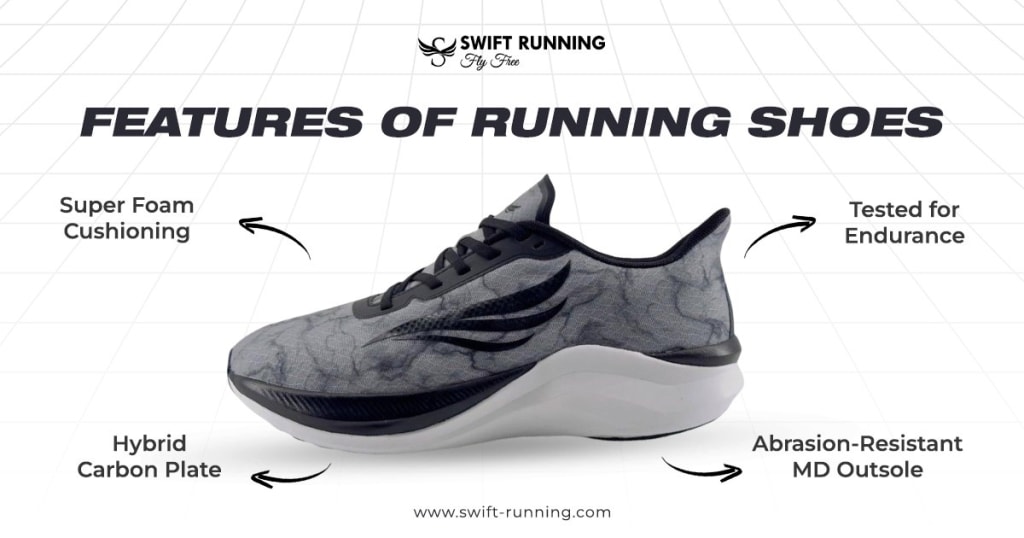
If you run regularly, then you probably already know what features of running shoes are the most essential. Mornings are the perfect time to go for a run. Whether you can be a marathon runner or simply completing your daily dose of physical activity, a good pair of running shoes will make you feel the difference.
Style and comfort are not the only two things that matter in a good pair of shoes. A good running shoe keeps support, stability and performance in mind with its design. Now, there are many good running shoes available in the market. And that’s why it can get complicated. This blog will walk you through all the main features, materials, and technology of running shoes and help you understand what makes a good pair of running shoes. Let’s lace up and dive in!
Important Features of Running Shoes
When it comes to features of running shoes, the most qualified ones are adept with performance; they specialize in protecting your body from the high impact of physical activity. Here's what sets a good running shoe apart from a great one:
1. Cushioning
The cushioning is one of the most imperative attributes. This affects the joints on the landing site of the foot-strike ground, as it carries out impact absorption. There are three kinds:
For those who strike the heel, there is heel cushioning;
For those who apply pressure on the ball of the foot are forefoot cushioning;
And full-length cushioning for balanced support.
2. Arch Support
People have different types of arches—high, medium, or flat. Properly constructed arch support will protect your feet so that you don't run the risk of flat feet or overpronation.
3. Outsole Grip
Outsoles made of rubber or a rubber compound will give the best traction. These outsoles provide the best stability for running or walking, even on uneven surfaces.
4. Breathability
There is a lot of sweating from the feet while running. Shoes with upper mesh are breathable for the feet and keep it cooler and drier with fewer blisters and discomfort.
5. Heel-to-Toe Drop
It is the difference in height from the rear to the front of the foot. High drop is good for heel strikers, whereas low drop works for a more natural running motion.
6. Durability
The high-quality materials ensure that the shoe withstands hundreds of miles. Most of those long-lasting shoes have reinforced outsoles, and also provide high-wear overlays on upper portions.
What to Look for in Running Shoes
Don’t just grab the trendiest pair of running shoes that you see. Find what features of running shoes work for your foot shape, arch, your walking style and type of physical activity you will be doing.
1. Fit and Comfort
Look for a snug fit not tight. There should be toe wiggle room and your heel should stay in place properly.
2. Weight
Shoes should be lightweight. These are best for higher speed and racing, while heavier models offer more cushioning and durability—ideal for long-distance training or recovery runs.
3. Type of Running
Road Running Shoes: Smooth soles, lightweight, designed for pavement
Trail Running Shoes: Extra grip and stability, built for uneven terrain
Track Shoes: Spikes or ultra-light models made for racing
4. Gait Analysis
Evaluate your gait. It will help you to know which direction your feet move in: inwards or outwards. After figuring that out, you can choose a shoe that will protect your feet from harm.
5. Injury Prevention Features
Find running shoes that will prevent injuries to your knee, hip, or ankles. Some models come with medial posts or guide rails to reduce strain and misalignment.
How to Choose Running Shoes
Choosing based on features of running shoes is a personal journey, but here’s a simple guide for you.
Step 1: Know Your Foot Type
Do this test at home: wet your feet then step on some plain paper. It will show the arch of your feet and you can get running shoes based on how much support your arch needs.
Step 2: Understand Your Gait
A gait analysis (either professional or app-based) will show if you’re a neutral runner, overpronator, or underpronator. The result dictates the kind of stability you’ll need.
Step 3: Try Them On Late in the Day
There’s a reason behind this. By evening your feet will have swollen a little due to working all day. That is why, you should try on your running shoes in the evening, it will give you a proper estimate of what size shoe you need to wear.
Step 4: Bring Your Running Socks and Insoles
Use the socks and orthotics you typically wear while running. This gives you the most accurate sense of fit.
Step 5: Test Them Out
Most stores will let you jog around in the shoes. Don’t be shy—get a feel for how they respond to movement, not just how they look in the mirror.
Running Shoe Materials and Technology
Most running shoes that promise high quality are made with the most advanced technology. These features of running shoes are not marketing gimmicks; these are innovations that enhance the running performance.
1. Midsole Foams
This is the core cushioning layer. It protects your feet against shock from high impact activities and provides support. It is made of EVA (Ethylene Vinyl Acetate) and foam materials.
2. Upper Materials
Most running shoes feature engineered mesh uppers, offering breathability and a sock-like fit. Some newer models use knit uppers for a snug feel or synthetic overlays for added durability.
3. Carbon Fiber Plates
Found in many elite racing shoes, carbon fiber plates increase propulsion, helping you run faster with less effort. Ideal for competitive runners and race days.
4. Energy Return Technologies
Some shoes are designed to “give back” energy with every stride. These include:
Pebax foam compounds
TPU beads and pellets
Full-length carbon or nylon plates
5. Stability and Guidance Systems
These systems—like Brooks’ GuideRails or Saucony’s Medial Posts—assist with motion control and help correct imbalances during your stride.
Best Running Shoes Features in the Market Today
With constant innovation, today's running shoes come packed with features that go beyond the basics. Here are the standout features of running shoes from Swift Running:
1. Swift Running APUS
Swift Running APUS is designed for many different kinds of activities. It can especially be used for 5K marathon runs or tempo runs. It is made of breathable materials like woven Jacquard mesh and has a hybrid carbon plated midsole of Carbon Fiber and TPU (Thermoplastic Polyurethane).
2. Swift Running HORUS
Swift Running HORUS is made for long distance runs like 5K or 10K runs. HORUS can be used by anyone, despite differing calibres. Though lightweight, HORUS promises strength and durability. It comes with a special reflective tech to provide a safety aspect, especially for night runs.
3. Swift Running EQUUS
Swift Running EQUUS is perfect for you if you wish to soar like the wind. The special carbon plate technology of EQUUS gives you speed and stability. It focuses on returning the energy of each step and takes you forward.
4. Swift Running CELER
Swift Running CELER is great for walking or running. It is built to keep you comfortable for long durations and protect you from pain. CELER is ideal for various activities. Its arch support will prevent flat feet.
Conclusion
Now that you know what features of running shoes matter, you will have an easier time searching for what you need. Though finding the right running shoe will take patience. You will need to try plenty of different pairs before finding the right one. Think about comfort and performance when looking for shoes for running. The right running shoes will keep you injury free, improve efficiency, and make the sport all the more pleasurable, whether you are training for a marathon or going for a daily jog.
Always remember: Fit and comfort come first. Know your feet—arch, gait, stride. Test before you invest. And don’t buy based on looks alone. Running is a journey, and the right shoes are your most important gear. So take the time to find what works best for you and enjoy the road ahead!
Frequently Asked Questions
Q1. What are the benefits of running shoes?
Running shoes have benefits related to the shock-absorption features and cushioning. With its mesh material, it breathes well and improves performance.
Q2. What features should a shoe have?
Fit, cushioning, arch support, breathability, grip, and durability should be the most important features of running shoes, depending on how active you are.
Q3. What makes a running shoe special?
A running shoe will be unique if it is light, possesses sufficient cushioning, and has a healthy balance of stability features for the absorption of impacts.
Q4. Is it OK to wear running shoes daily?
Definitely. You can wear it daily because running shoes are tough and very comfortable for a long time.
Q5. Can I use running shoes for walking?
Of course! With the running shoes, your walking will exceed that of an average walking shoe.
Q6. Which shoes are good for running?
You can choose anything from the Swift Running Collection: APUS, HORUS, EQUUS, and CELER—each one offers different types of specialized support and comfort for different needs.
About the Creator
Swift Running
Swift Running is a premier brand specializing in high-performance footwear, with a strong focus on carbon plate running shoes. Designed for both beginners and experienced runners, the brand ensures top-tier comfort, speed, and durability.
Keep reading
More stories from Swift Running and writers in Motivation and other communities.
Best Carbon Plated Orange Running Shoes For Men USA | 2025
Best Carbon Plated Orange Running Shoes For Men USA | 2025 Need a new pair of carbon plated orange running shoes for men to kickstart your marathon training? “I want performance and style.” This thought might be circling in your head.
By Swift Running8 months ago in Humans
A Journey of Angelic Healing
We are going to enter into a gentle, healing atmosphere filled with the intention of calming our minds, calming our bodies, and calming our souls. When we experience crisis, stress hormones are vital. They are necessary. Our bodies make them to keep us safe and allow us to meet stressful circumstances with alertness and action. Over time they build up in our bodies, making it difficult to fully relax and embrace wellness. Today we are going to thank them for their help and gently let them go with gratitude. We are going to embrace calm and let our nervous system delight in relaxation.
By Karen LaRueabout 9 hours ago in Motivation
Smart phones, Humans and Aliens.
WARNING. I will be tapping into one of your favorite creative tensions: The absurdity of humans worshipping their glowing rectangles as if they were tiny oracles. There’s something deliciously poetic about that contradiction, and it lends itself beautifully to an instructive proviso.
By Novel Allen5 days ago in Poets




Comments
There are no comments for this story
Be the first to respond and start the conversation.