
The Wild, Romantic, and Slightly Morbid History of Valentine’s Day
Happy Valentine's Day

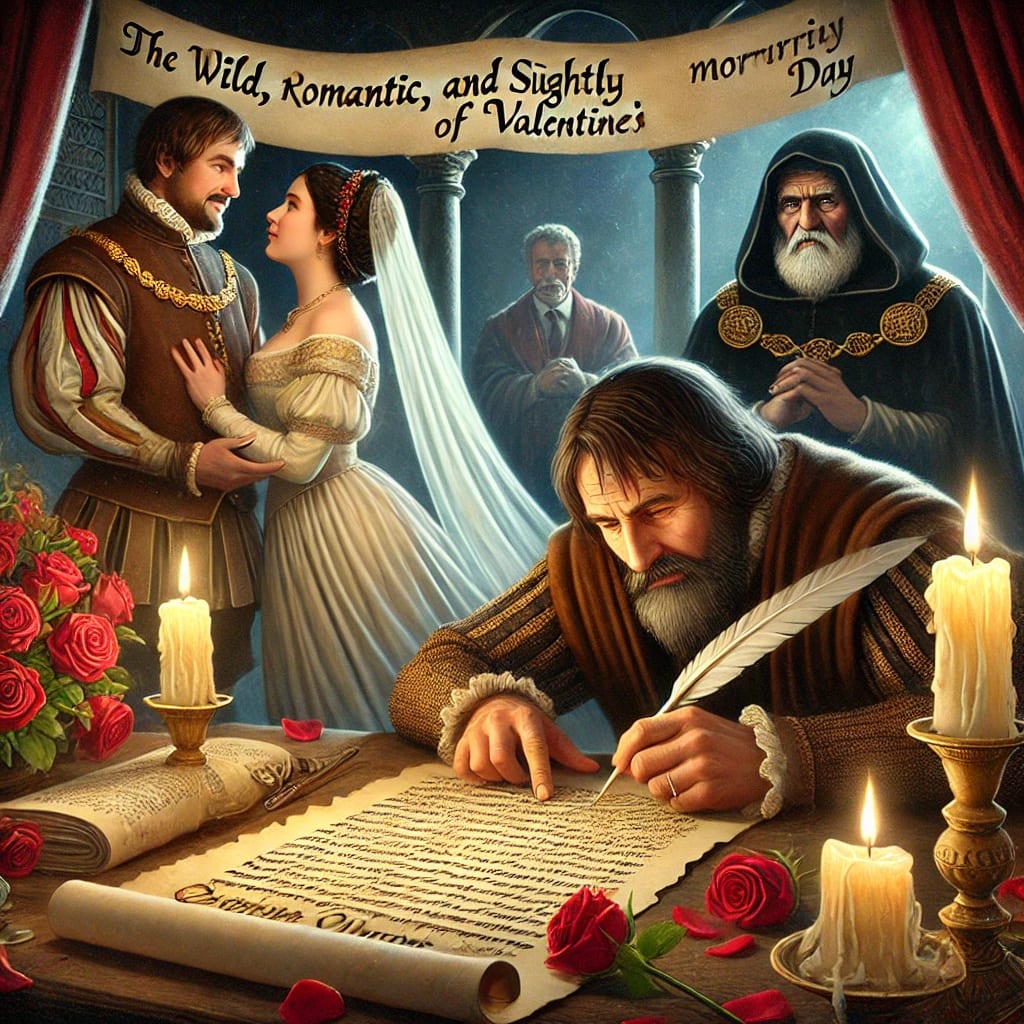
Every year on February 14, millions of people exchange chocolates, flowers, and sweet words, all in the name of love. But have you ever stopped to wonder why? How did a single day become the universal symbol of romance?
Well, buckle up because the history of Valentine’s Day is a wild ride—full of mystery, executions, ancient fertility rituals, and one very persistent greeting card industry.
The Mysterious Saint (or Saints) Valentine
First things first: Who was Saint Valentine?
This is where things get complicated. The Catholic Church recognizes at least three different Valentines, all of whom were martyred. Yep, you read that right—Valentine’s Day is, at its core, a holiday that started with people getting executed. Romantic, right?
Valentine #1: The Secret Wedding Officiant
One of the most popular legends suggests that Valentine was a priest in ancient Rome during the 3rd century. At the time, Emperor Claudius II (also known as Claudius the Cruel—big red flag) decided that single men made better soldiers. So, he banned young men from getting married.
Enter Valentine. He saw the injustice of this and, like the ultimate wingman, started secretly marrying young couples. Love conquers all, right?
Wrong. When the emperor found out, he was furious. Valentine was arrested and thrown into prison. But even behind bars, he kept up the romance.
According to legend, while waiting for his execution, Valentine fell in love with the jailer’s daughter. Before he was taken to his death, he left her a note signed “From your Valentine.” Sound familiar? That little phrase has been used for centuries on Valentine’s cards.
On February 14, around the year 269 AD, Valentine was executed. And thus, the legend of a love-defending martyr was born.
Valentine #2: The Christian Rescuer
Another version of the story claims that Valentine was a bishop who helped persecuted Christians escape Roman prisons. He was caught and executed—again, on February 14.
Valentine #3: The Healer with a Big Heart
A third account suggests Valentine was a kind-hearted priest who healed a blind girl (possibly the jailer’s daughter) through prayer. When his prayers worked, the entire jailer’s family converted to Christianity. The Roman authorities, however, weren’t too happy about this and—you guessed it—executed him.
So, whether it was one Valentine or multiple, one thing is clear: Love and sacrifice have always gone hand in hand.
From Executions to Love Letters: The Transformation of Valentine’s Day
If you’re wondering how we went from brutal executions to candlelit dinners, we have medieval poets and some ancient fertility rituals to thank
Lupercalia: The Really Weird Precursor to Valentine’s Day
Long before Saint Valentine’s martyrdom, the Romans had a mid-February festival called Lupercalia, which was… well, let’s just say it was not PG-rated.
This festival, held on February 15, was dedicated to fertility and purification. Here’s what happened:
Roman priests would sacrifice a goat (symbolizing fertility) and a dog (symbolizing purification).
They would then take the freshly skinned hides, dip them in the sacrificial blood, and run through the streets whipping women with them. Why? Because it was believed to make them more fertile. (Ah, romance.)
Later, all the single ladies would put their names in a big jar, and bachelors would randomly pick a name. The two would be paired together for the rest of the festival—or longer if the match worked out.
Honestly, compared to this, blind dating sounds a lot less terrifying.
How Valentine’s Day Became About Love
Fast forward a few centuries to the Middle Ages. By this time, Lupercalia had been outlawed, but February was still associated with love and fertility. Enter Geoffrey Chaucer, the famous poet best known for The Canterbury Tales.
In his 14th-century poem Parliament of Fowls, Chaucer wrote about February 14 being the day birds choose their mates. The idea of Valentine’s Day as a romantic holiday took flight (pun intended).
From there, the tradition of sending love notes on Valentine’s Day began. By the 1700s, handwritten love letters were all the rage, and by the 1800s, mass-produced Valentine’s cards became a thing.
Modern Valentine’s Day: A Billion-Dollar Love Affair
Today, Valentine’s Day is a global celebration of love, but opinions are divided.
For some, it’s a day of romance, candlelit dinners, and heartfelt gestures. For others, it’s an overpriced, commercialized mess that pressures people into proving their love with expensive gifts.
Some fun facts about modern Valentine’s Day:
Over 145 million Valentine’s cards are exchanged each year, making it the second most popular card-sending holiday after Christmas.
Americans alone spend over $25 billion on Valentine’s gifts.
Approximately 6 million people propose on Valentine’s Day. (No pressure.)
The most popular gifts are chocolates, flowers, jewelry, and… pet gifts! (Because nothing says “I love you” like a heart-shaped treat for your dog.)
And for those who aren’t fans of the holiday, there’s Singles Awareness Day (S.A.D.), which is celebrated on February 15. Though let’s be real—who came up with that name? It’s an invitation to feel even more single.
Final Thoughts: Love, Laughter, and a Little Madness
So there you have it—the crazy, romantic, and slightly ridiculous history of Valentine’s Day. Whether you’re in a relationship, celebrating with friends, or enjoying your own company with a giant tub of ice cream, just remember:
Love isn’t about expensive gifts or fancy dinners. It’s about connection, kindness, and, apparently, a little bit of historical chaos.
Now tell me—what’s the funniest or weirdest Valentine’s gift you’ve ever received? Let’s hear some stories!
About the Creator
Pure Crown
I am a storyteller blending creativity with analytical thinking to craft compelling narratives. I write about personal development, motivation, science, and technology to inspire, educate, and entertain.
Keep reading
More stories from Pure Crown and writers in Motivation and other communities.
The Psychology of Spring: Why Renewal Feels So Good
Ah, spring! The season when the world wakes up from its winter nap, birds start their morning concerts, and suddenly, everyone remembers they own a pair of sneakers. But have you ever wondered why spring makes us feel so refreshed, optimistic, and full of energy?
By Pure Crown11 months ago in Motivation


Comments (1)
I learned lots thank you♦️♦️♦️♦️✍️✍️✍️✍️