
The Weight of the Sky
How Two Brothers Rose from Grief to Greatness After Their Father’s Death
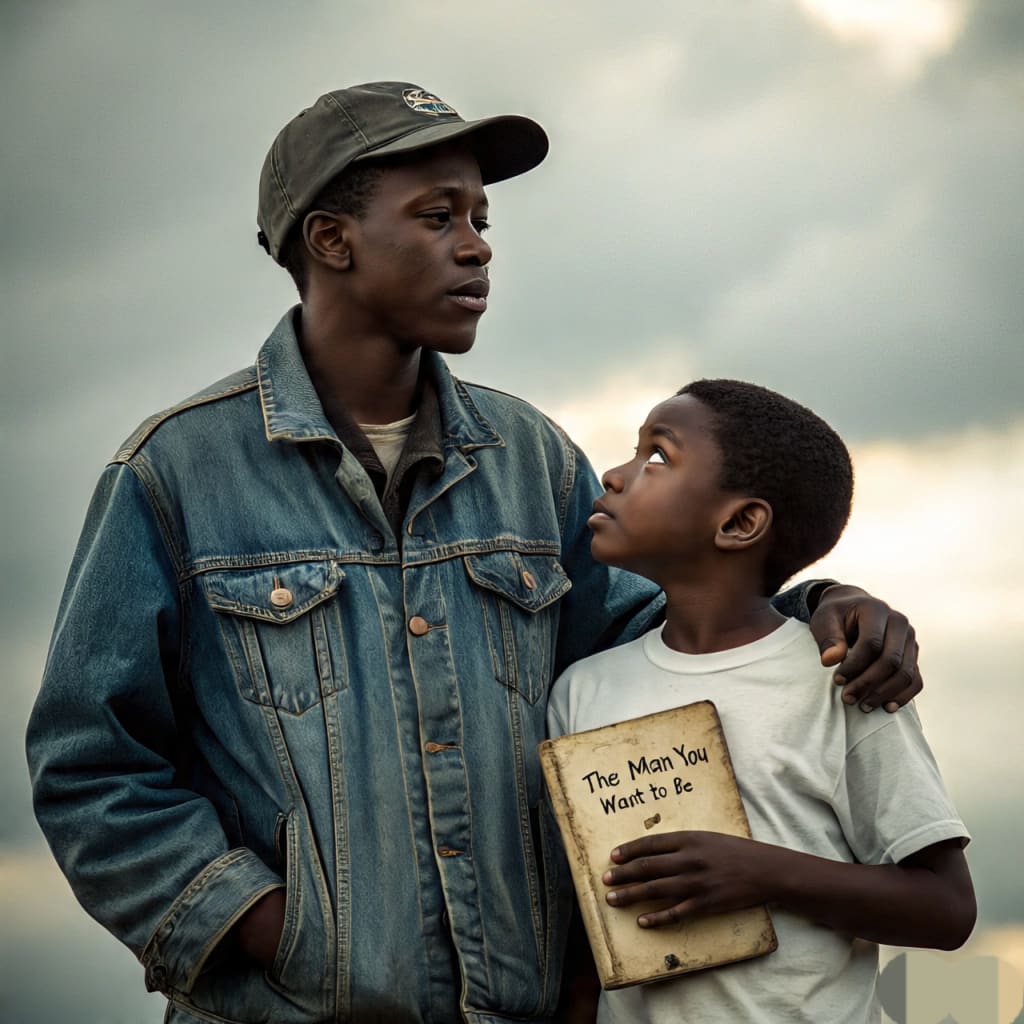
The rain didn’t stop the day their father died. It had been pouring since dawn, as if the sky itself couldn’t hold back its tears. For brothers Arjun and Veer, that day marked the end of their childhood, though they were only 19 and 14.
Their father, Ravi Malhotra, was not a rich man, but he was a giant in their eyes—kind, unbreakable, and always present. He worked two jobs, fixed everything with his hands, and somehow still managed to be home in time for dinner. He wasn’t just a provider; he was the glue that held the fragile pieces of their small family together.
That morning, Ravi had left for work as usual, kissing their mother on the forehead and waving at the boys with his signature grin. By noon, a phone call shattered everything. A truck had lost control on the highway. He was gone before the ambulance arrived.
Their mother collapsed. Veer screamed. Arjun stood frozen, unable to process the words, the silence that followed, or the storm that raged outside and within.
The weeks that followed were cruel. Bills piled up. Friends grew distant. Their mother drifted into depression, barely speaking, barely eating. The world didn’t pause for their grief. It never does.
Arjun, just out of school and about to enter college, made a choice: he wouldn’t go. He tore up his admission letter and took up work at a local mechanic’s garage. Veer noticed the quiet determination in his brother’s eyes. There were no complaints, no tears—just an iron-willed decision to carry the weight their father once bore.
“I’m not him,” Arjun once told Veer late at night. “But I’ll try to be.”
Veer, devastated and confused, struggled with school. His grades fell, and the spark in his eyes dimmed. Arjun noticed, but didn’t push. Instead, he showed up—every evening, no matter how tired, to help with homework, make dinner, or just sit in silence.
One night, Veer broke down.
“I miss him every day. Why are you pretending to be okay?”
Arjun looked at him for a long time before answering.
“Because I don’t have the luxury to fall apart.”
That night changed something in Veer. He realized that grief was not only personal—it was shared. And his brother had been carrying not just his pain, but Veer’s, and their mother’s too.
Veer started waking up early, helping with chores, studying harder. He began writing in a journal their father had once gifted him, titled “The Man You Want to Be.” It became his therapy and his motivation.
Years passed. Arjun saved enough to start his own garage. It wasn’t much—a shed, a few tools, and a lot of hope. Veer aced his board exams and got a scholarship to study engineering. He promised Arjun he’d build machines that changed lives. “One day, I’ll build something with your name on it,” he said.
Their mother, with slow steps, came back to life. The laughter in the house returned, soft at first, then strong.
The grief never left. It hid in the corners, resurfacing in small moments—a forgotten scent, a song, the way Arjun held a wrench the same way their father once did. But they carried it like a scar, not a wound.
On the fifth anniversary of Ravi’s death, Veer stood on stage at his university, receiving an award for innovation in mechanical design. He looked at the crowd and then straight at Arjun in the front row.
“My brother gave up his dreams so I could live mine,” he said. “Everything I achieve, I owe to him—and to the man who taught us what strength really is.”
Arjun, teary-eyed, nodded. He finally allowed himself to cry, not from pain, but from pride.
The weight of the sky hadn’t crushed them. It had shaped them—into pillars, into men, into living legacies of the father they lost but never forgot.
About the Creator
Keep reading
More stories from Jibran Khan and writers in Motivation and other communities.
The Last Mile
The wind whispered through the quiet countryside as 12-year-old Arjun pedaled alongside his father, Raghav, on their old bicycles. It was a ritual they had kept since Arjun was six—weekend morning rides through the hills, followed by tea at their favorite roadside stall. But this morning felt different. Raghav was slower than usual, pausing more frequently, though he tried to hide it behind his warm, ever-encouraging smile.
By Jibran Khan6 months ago in Motivation
BE HAPPY
Almost everyone have heard the hit single 'Don't Worry, Be Happy' by Bobby McFerrin. The song has a very catchy way of conveying its message of being happy to everyone. Bobby McFerrin’s simple message surely made a lot of people by telling them not to worry.
By Junaid Shahid about 6 hours ago in Motivation



Comments (1)
Appreciate your stories ❤️