
The Touch That Kills: How One Woman Stopped Ebola by Redesigning Death
When the 2014 Ebola outbreak hit West Africa, the world sent doctors and soldiers. They failed. It took an anthropologist to realize that to save the living, we had to change how we treated the dead

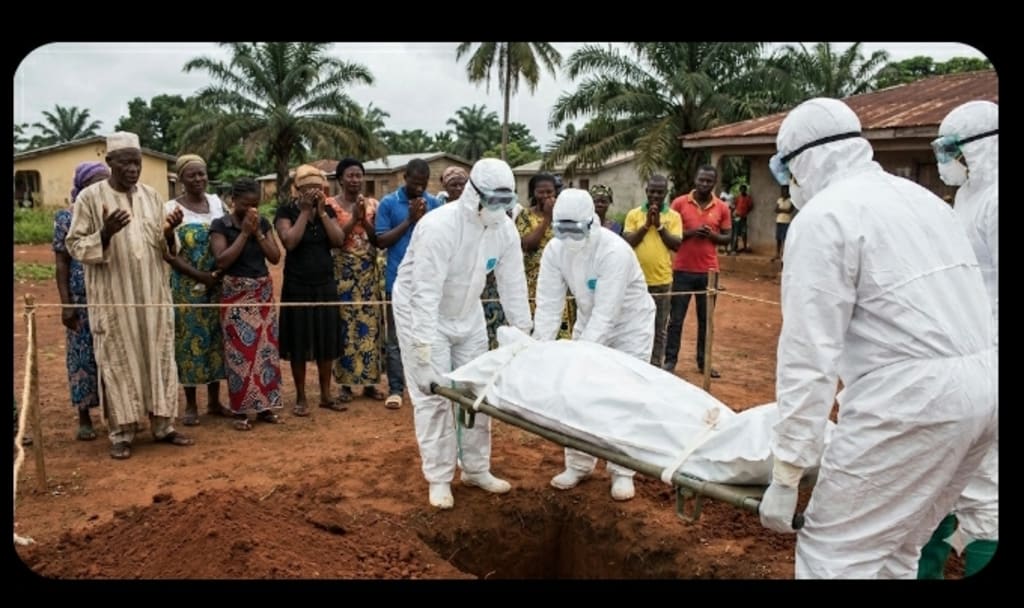
The untold story of how anthropologists like Yamina Bangura revolutionized the fight against Ebola by replacing forced cremations with safe, dignified burials.
In 2014, the forests of Guinea, Liberia, and Sierra Leone became the epicenter of a horror movie that was all too real. Ebola is not a subtle killer. It is violent. It is messy. It dismantles the human body from the inside out, causing bleeding, vomiting, and organ failure. It is a virus that thrives on intimacy. It travels through sweat, through blood, through vomit, and through tears. But most of all, it travels through love.
When the outbreak exploded, the international community responded with the logic of war. They sent virologists. They sent epidemiologists. They sent soldiers. The images beamed back to the West were terrifying: men in white, alien-looking biohazard suits descending on villages, snatching bodies, spraying chlorine, and vanishing. To the villagers, these weren't saviors. They were monsters. They looked like stormtroopers. They took loved ones away to "treatment centers," and those loved ones never came back. They just disappeared into plastic bags and mass graves.
The strategy was medically sound but sociologically disastrous. The doctors knew that an Ebola victim is most contagious at the moment of death. The viral load in a corpse is astronomical. A single touch—a single brush against the skin of the deceased—is enough to sign your own death warrant. So, the medical mandate was absolute: Isolate the patient. Burn the body. Do it immediately. Do not let the family near it.
But in West Africa, death is not a medical event. It is a spiritual transition. It is the most important moment in a person's existence. The traditions of the region dictate that the body must be washed, oiled, dressed, and touched by the family. A mother must kiss her child goodbye. A husband must wash his wife. To not do these things is to condemn the soul of the deceased to eternal wandering. It is an act of supreme disrespect. It is considered worse than death itself.
So, when the "spacemen" in the white suits came to take the bodies, the families fought back. They hid the corpses. They put them in taxis and drove them to secret villages. They washed them in the middle of the night. They buried them in secret. And with every secret funeral, the virus exploded. One dead body would infect ten mourners. Those ten would go home and infect their families. The curve wasn't flattening; it was vertical.
The doctors were baffled. They had the science. They had the suits. They had the chlorine. Why wasn't it working? They blamed the villagers. They called them "ignorant," "stubborn," and "superstitious." They thought the solution was more force, more police, more roadblocks.
Into this collision of science and spirit stepped Yamina Bangura. She wasn’t a virologist. She wasn't a general. She was an anthropologist. She looked at the data, and she looked at the people, and she realized the experts were fighting the wrong enemy. They were fighting the virus, but they were ignoring the culture. And culture, she knew, will always win. You cannot arrest grief. You cannot quarantine love.
Bangura and a team of social scientists realized that the "medical-only" approach was creating a resistance movement. By stripping the people of their dignity in death, the international response was driving the disease underground. The problem wasn't that the people didn't understand the virus; the problem was that the virus response didn't understand the people.
Bangura proposed a radical shift. The goal shouldn't be to stop the rituals. The goal should be to hack them.
She went to the community leaders, the imams, the secret society elders, and the chiefs. She didn't come with a lecture. She came with a question: "How can we honor your dead without killing your living?"
It was a delicate, dangerous negotiation. The elders were suspicious. They had been treated like criminals for months. But Bangura listened. She understood that the washing of the body was non-negotiable for them. So, she proposed a compromise. What if the family could watch? What if the "spacemen" took off their terrifying masks for a moment to show they were human? What if the washing was done by a protected team, but the imam stood two meters away and recited the prayers?
They developed a new protocol called "Safe and Dignified Burials." It was a masterpiece of cultural engineering. Instead of snatching the body, the burial teams would arrive and introduce themselves. They would ask the family for a specific set of clothes to dress the deceased in. They would allow the family to dig the grave.
Crucially, they replaced the touch with the gaze. Since the family could not touch the body, they were encouraged to stand at a safe distance and witness every step. The body bag, previously a symbol of horror, was modified. They started using white bags instead of black ones, because white is the color of mourning in many local cultures. They allowed the family to place flowers on the bag before it was lowered. They allowed the final prayer to be spoken.
Bangura and her colleagues found theological loopholes, too. They worked with Muslim scholars to issue fatwas stating that in times of plague, "dry ablution" (wiping with sand or stone over a barrier) or symbolic washing was acceptable in the eyes of God. They turned religion from an obstacle into a tool for survival.
The most poignant innovation was the "protective touch." Since the family couldn't touch the skin, the burial teams would offer a pair of surgical gloves to the chief mourner. The mourner would put them on, touch the body bag one last time, and then the gloves would be buried with the deceased. It was a sterile connection, a plastic barrier, but it bridged the emotional gap. It allowed for the goodbye.
The effect was almost immediate. When the communities felt respected, the resistance evaporated. They stopped hiding the bodies. They started calling the burial teams. The secret funerals stopped. And when the secret funerals stopped, the transmission chains broke.
The curve began to bend. The villages that had once thrown rocks at ambulances began to welcome the burial teams. They saw them not as body snatchers, but as undertakers helping them navigate a tragedy. The virus, deprived of its primary method of transmission—the funeral touch—began to starve.
It wasn't a new vaccine that turned the tide in those critical months. It wasn't a new drug. It was a conversation. It was the realization that public health is not just about biology; it is about sociology. Yamina Bangura and the anthropologists proved that you cannot save a population by humiliating them. You cannot fight a plague with arrogance.
The lesson of West Africa is a lesson for every crisis, whether it’s a pandemic, a political divide, or a corporate collapse. When you try to force people to change by telling them they are wrong, they will dig in. They will hide. They will resist, even if it kills them. But if you honor their values, if you respect their dignity, and if you work with their culture rather than against it, they will move mountains.
The doctors saved the patients inside the treatment centers. But the anthropologists saved the populations outside of them. They did it by understanding a fundamental truth about human nature: We can survive almost anything, even a hemorrhagic fever, as long as we are allowed to keep our humanity intact. The revolution wasn't in the microscope. It was in the funeral. And it started the day someone finally decided to ask the mourners what they needed, instead of telling them what to do.
About the Creator
Frank Massey
Tech, AI, and social media writer with a passion for storytelling. I turn complex trends into engaging, relatable content. Exploring the future, one story at a time
Keep reading
More stories from Frank Massey and writers in Motivation and other communities.
The Bureaucrat of Rome: How One Man’s "Incompetence" Saved the Eternal City
The incredible true story of Major Gerhard Wolf, the German officer who quietly sabotaged Nazi plans to destroy Rome by using delays, bureaucracy, and "incompetence" as a weapon.
By Frank Massey about a month ago in Motivation
How Sustainable Water Systems Strengthen Rural Communities
Clean and reliable water remains one of the strongest drivers of rural development. When communities gain access to sustainable water systems, daily life improves in visible and lasting ways. Health outcomes rise, economic activity expands, and social stability grows. Sustainable water infrastructure does more than deliver water. It supports empowerment, resilience, and long-term progress for rural communities.
By Baitulmaal7 days ago in Motivation



Comments
There are no comments for this story
Be the first to respond and start the conversation.