
The science behind meditation
Understanding the impact on the brain
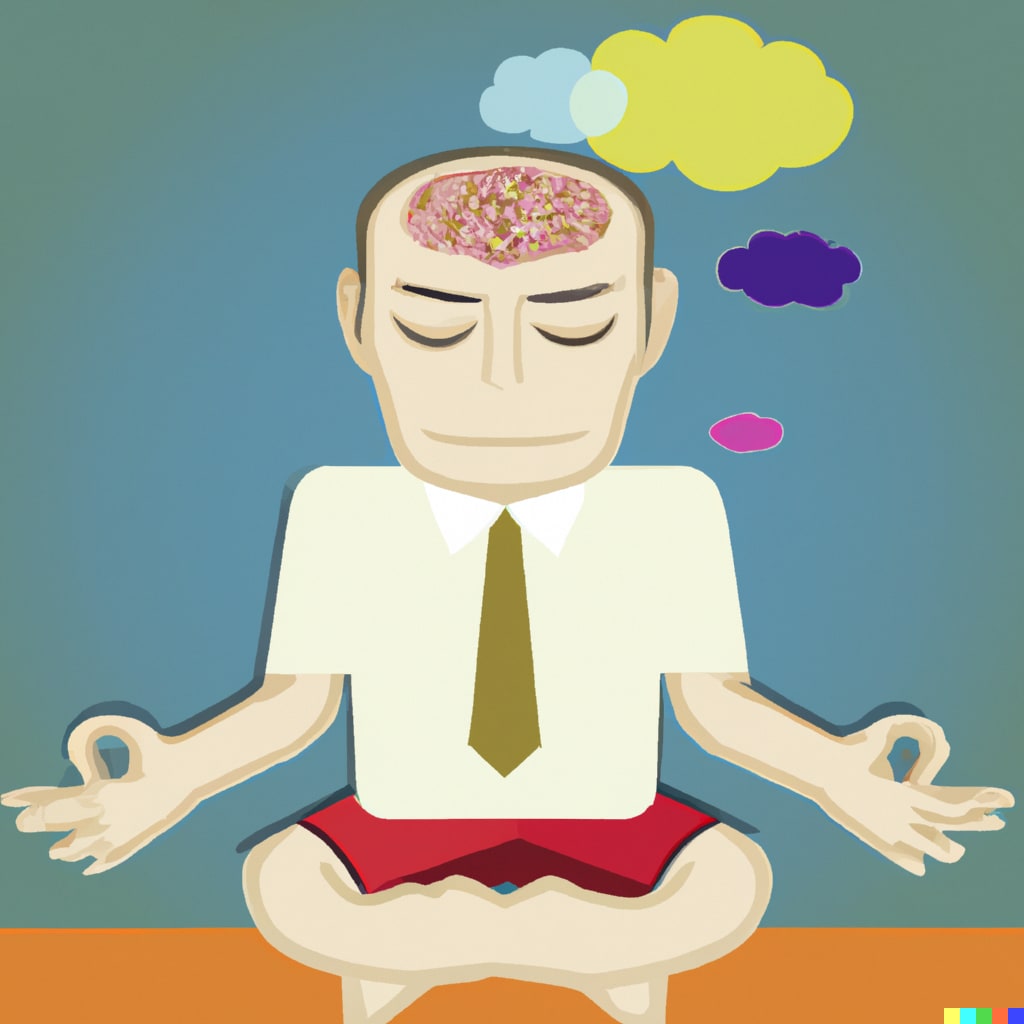
I. Introduction
A. Explanation of what meditation is
B. Overview of the growing interest in the scientific study of meditation
C. Thesis statement: The science behind meditation provides insight into the impact on the brain and how it can improve overall well-being.
II. The impact of meditation on the brain
A. Explanation of how meditation changes brain function
B. Research on the effects of meditation on the brain structure
C. Discussion of the benefits of meditation on cognitive function
D. The role of meditation in reducing stress and anxiety
III. Different types of meditation and their effects on the brain
A. Mindfulness meditation
B. Transcendental meditation
C. Yoga meditation
D. Zen meditation
V. Conclusion
I. Introduction
A. Explanation of what meditation is
Meditation is a practice that involves training the mind to focus and achieve a mentally clear and emotionally calm state. It can involve different techniques such as mindfulness, visualization, breathing exercises and mantras among others. Meditation can be done while sitting, standing, lying down, walking, or even while going about one's daily activities. It can be done alone or in groups, and can be practiced for a few minutes or for several hours. The goal of meditation is to develop the ability to focus the mind, increase self-awareness, and reduce stress and anxiety. It is a practice that has been used for thousands of years in various spiritual and religious traditions, but is now being studied and used for its potential health benefits in modern times.
B. Overview of the growing interest in the scientific study of meditation
In recent years, there has been a growing interest in the scientific study of meditation. This is due to the increasing awareness of the potential benefits of meditation on mental and physical health, as well as its use in treating various conditions such as anxiety, depression, chronic pain and insomnia.
Research on meditation has found that it can change brain function and structure, and it can produce a variety of benefits including reducing stress, improving focus, and increasing emotional regulation.
As a result, meditation is being increasingly adopted by healthcare professionals and institutions as a complementary or alternative therapy for a variety of conditions. It is also being taught in schools, workplaces, and communities as a tool for promoting well-being and resilience.
This growing interest in the scientific study of meditation is also reflected in the number of studies being conducted on the topic. The National Institutes of Health's National Center for Complementary and Integrative Health (NCCIH) has reported that the number of studies on meditation has increased dramatically over the past decade.
Overall, the growing interest in the scientific study of meditation is a reflection of the increasing recognition of the potential benefits of meditation on physical and mental health, as well as the increasing demand for evidence-based approaches to improving well-being.
C. Thesis statement: The science behind meditation provides insight into the impact on the brain and how it can improve overall well-being.
The science behind meditation is a rapidly growing field of research that is providing new insights into the impact of meditation on the brain and how it can improve overall well-being. Studies have shown that meditation can change brain function and structure, leading to a variety of benefits such as reducing stress, improving focus, and increasing emotional regulation.
Research has found that meditation can lead to changes in brain activity, specifically in areas of the brain associated with attention, emotion regulation, and self-referential processing. It has been shown to increase the thickness of the prefrontal cortex, which is responsible for attention, decision making and emotional regulation.
Meditation has also been shown to increase the activity in the default mode network (DMN), which is responsible for self-referential thoughts and mind-wandering. This suggests that meditation can help individuals to break the cycle of negative thoughts, which can lead to reduced stress and improved mental well-being.
In addition to changes in brain function, meditation has also been found to increase the production of certain neurotransmitters and hormones, such as serotonin and melatonin, which are associated with improved mood and reduced stress.
Overall, the science behind meditation is providing insight into the specific mechanisms by which meditation can improve overall well-being, and is helping to establish meditation as an effective complementary or alternative therapy for a variety of conditions.
II. The impact of meditation on the brain
A. Explanation of how meditation changes brain function
Meditation has been found to change brain function in a number of ways. One of the most well-established effects of meditation is an increase in activity in the prefrontal cortex, which is the part of the brain that is responsible for attention, decision making and emotional regulation. This increased activity in the prefrontal cortex is thought to be responsible for the improved attention and emotional regulation that is often reported by individuals who meditate regularly.
Another way in which meditation changes brain function is by altering the activity in the default mode network (DMN), which is the network of brain regions that is active when the mind is at rest and not focused on the external environment. Research has found that regular meditation can lead to decreased activity in the DMN, which is associated with improved focus and attention.
Meditation has also been found to increase the production of certain neurotransmitters and hormones, such as serotonin and melatonin, which are associated with improved mood and reduced stress. Additionally, brain imaging studies have found that meditation leads to changes in brain structure, such as increased gray matter in the hippocampus, which is important for learning and memory, and the prefrontal cortex, which is involved in attention and emotion regulation.
Overall, meditation is thought to change brain function by altering neural activity and connectivity in specific brain regions, leading to improved attention, emotional regulation, and overall well-being.
B. Research on the effects of meditation on the brain structure
Research on the effects of meditation on brain structure has found that regular meditation practice can lead to changes in the size and density of certain brain regions. Studies using brain imaging techniques such as magnetic resonance imaging (MRI) have found that regular meditation practice is associated with increased gray matter in the hippocampus, which is important for learning and memory, and the prefrontal cortex, which is involved in attention and emotion regulation.
One study that used MRI to compare the brain structure of experienced meditators to non-meditators found that meditators had increased gray matter in the hippocampus and areas of the prefrontal cortex that are associated with attention and emotional regulation. Another study found that a 8-week meditation program led to an increase in gray matter density in the hippocampus.
Additionally, meditation has been found to increase the thickness of the prefrontal cortex, which is responsible for attention, decision making and emotional regulation. This suggests that meditation can have a positive impact on cognitive function, leading to better attention, decision-making and emotional regulation.
Research has also found that meditation can lead to changes in the way brain regions communicate with each other, known as functional connectivity. For example, studies have found that meditation is associated with increased connectivity between the default mode network (DMN) and the executive control network, which is associated with attention and decision making. This increased connectivity may contribute to the improved attention and focus that is often reported by meditators.
Overall, research on the effects of meditation on brain structure has found that regular meditation practice can lead to changes in the size and density of certain brain regions, particularly those involved in learning, memory, attention, and emotional regulation.
C. Discussion of the benefits of meditation on cognitive function
Meditation has been found to have a variety of benefits on cognitive function, including improved attention, memory, and executive function.
One of the most well-established benefits of meditation is improved attention. Studies have found that regular meditation practice can lead to increased attentional control and cognitive flexibility, which refers to the ability to switch between tasks or adapt to changing situations. This is thought to be due to the increased activity in the prefrontal cortex, which is responsible for attentional control and cognitive flexibility.
Meditation has also been found to have a positive impact on memory. Studies have found that regular meditation practice is associated with increased activity in the hippocampus, which is important for learning and memory, and increased gray matter in the hippocampus. Additionally, meditation has been found to improve working memory, which refers to the ability to hold and manipulate information in the mind for a short period of time.
Executive function, which refers to the ability to plan, organize, and make decisions, is also thought to be improved by meditation. Studies have found that regular meditation practice is associated with increased activity in the prefrontal cortex, which is important for executive function.
Overall, the research suggests that meditation can have a positive impact on cognitive function by improving attention, memory and executive function. These benefits may be related to the changes in brain function and structure that are associated with regular meditation practice.
D. The role of meditation in reducing stress and anxiety
Meditation has been found to play a significant role in reducing stress and anxiety. Studies have found that regular meditation practice can lead to decreased activity in the amygdala, which is the part of the brain that is responsible for the stress response. This reduction in activity in the amygdala is associated with decreased cortisol, a hormone that is released in response to stress, which can lead to reduced stress and anxiety.
Research has also found that meditation can lead to increased activity in the prefrontal cortex, which is responsible for regulating emotions, and the default mode network (DMN), which is responsible for self-referential thoughts and mind-wandering. This increased activity in these brain regions is thought to contribute to the reduced stress and anxiety that is often reported by individuals who meditate regularly.
Meditation has been found to be particularly effective in reducing symptoms of anxiety disorders such as general anxiety disorder, panic disorder, and post-traumatic stress disorder (PTSD). Studies have found that individuals with these disorders who engage in regular meditation practice experience reductions in symptoms such as worry, nervousness, and fear.
Mindfulness meditation, a specific type of meditation that involves paying attention to the present moment, has been found to be particularly effective in reducing stress and anxiety. This type of meditation has been found to increase activity in the ventromedial prefrontal cortex, which is responsible for regulating emotions, and to decrease activity in the amygdala, which is responsible for the stress response.
Overall, the research suggests that meditation can play a significant role in reducing stress and anxiety by altering activity in brain regions that are responsible for the stress response and emotional regulation. This can lead to reduced stress and anxiety symptoms, particularly in individuals with anxiety disorders.
III. Different types of meditation and their effects on the brain
A. Mindfulness meditation
Mindfulness meditation is a type of meditation that involves bringing attention to the present moment and becoming aware of one's thoughts, feelings, and surroundings. The goal of mindfulness meditation is to develop a non-judgmental awareness of one's experience and to increase the ability to focus and concentrate.
During mindfulness meditation, individuals are typically instructed to focus their attention on their breath, a bodily sensation, or a specific object, and to bring their attention back to the chosen focus when their mind wanders. This can be done while sitting, standing, lying down, walking, or even while going about one's daily activities.
Mindfulness meditation has been found to have a variety of benefits on mental and physical health. Research has found that regular practice of mindfulness meditation is associated with reduced stress, anxiety, and depression, as well as improved emotional regulation, cognitive function and overall well-being.
It has been found to be effective in treating a variety of mental health conditions such as general anxiety disorder, panic disorder, and post-traumatic stress disorder (PTSD), as well as improving the quality of life for individuals with chronic pain, cancer, and cardiovascular disease.
Mindfulness meditation can be practiced by anyone regardless of their religious or spiritual beliefs and can be incorporated into daily life. There are many resources available such as guided meditations, apps and classes that can help individuals to start and maintain a mindfulness meditation practice.
B. Transcendental meditation
Transcendental Meditation (TM) is a type of meditation that involves the use of a mantra or word repeated silently as a focus for the mind. The mantras used in TM are chosen by a teacher and are specific to the individual. The technique was developed by Maharishi Mahesh Yogi in the 1950s and is taught through a standardized training program.
During TM, individuals sit comfortably with their eyes closed and repeat their personal mantra silently to themselves. The goal is to reach a state of "transcendental consciousness" in which the mind becomes quiet and experiences a state of deep rest. This is believed to lead to a state of inner peace and relaxation.
TM is a simple, natural and effortless technique that can be practiced by individuals of any age, culture, or religion. It is often described as a form of "effortless" or "automatic" meditation, as it does not require the use of concentration or control of the mind, unlike other forms of meditation.
Research has found that regular practice of TM can have a variety of benefits on mental and physical health. Studies have found that TM can lead to reduced stress, anxiety and depression, improved emotional regulation, cognitive function and overall well-being. It has also been found to lower blood pressure, improve cardiovascular health, and decrease symptoms of post-traumatic stress disorder (PTSD).
Transcendental Meditation is taught through a standardized training program that includes personal instruction from a certified TM teacher, as well as follow-up support. The program usually includes an initial course of instruction and ongoing support to ensure that the individual is practicing the technique correctly and getting the full benefits.
C. Yoga meditation
Yoga meditation is a type of meditation that incorporates physical postures and movements, along with breath control and meditation techniques. Yoga is an ancient practice that originated in India and has been used for thousands of years for physical, mental and spiritual development. It is based on the belief that the body and mind are interconnected, and that physical movement can influence mental and spiritual well-being.
Yoga meditation typically includes a combination of physical postures (asanas), controlled breathing (pranayama) and meditation. The postures are designed to increase flexibility, strength and balance, while the breathing and meditation techniques are used to promote relaxation and mental focus.
Yoga meditation can be practiced in a variety of settings, from studios and gyms to parks and homes. Different styles of yoga, such as Hatha, Vinyasa, and Kundalini, may vary in the specific postures and techniques used, but all aim to achieve the same goal of promoting physical, mental and spiritual well-being.
Research has found that regular practice of yoga meditation can have a variety of benefits on mental and physical health. Studies have found that yoga can lead to reduced stress, anxiety and depression, improved emotional regulation, cognitive function and overall well-being. It has also been found to lower blood pressure, improve cardiovascular health, and decrease chronic pain. Additionally, yoga has been found to improve balance, flexibility, and muscle strength.
Yoga meditation is suitable for people of all ages and fitness levels and can be modified to meet individual needs and abilities. Many gyms and community centers offer yoga classes, and there are also many online resources such as videos and apps that can guide individuals through a yoga meditation practice.
D. Zen meditation
Zen meditation, also known as "zazen," is a type of meditation practiced in the Zen Buddhist tradition. It involves sitting in a specific posture, usually on a cushion called a "zafu," and focusing the mind on the breath. The goal of Zen meditation is to achieve a state of "no-mind," in which the mind becomes quiet and clear and is able to see things as they truly are.
Zen meditation is typically done in silence and in a group setting, such as in a temple or meditation center. The meditation session may include a period of walking meditation, and may also include other practices such as chanting and bowing. The practice is typically led by a teacher or "Zen master" who provides guidance and instruction.
Zen meditation is often described as a form of "sitting meditation," as it involves long periods of silent, still, seated meditation. It also emphasizes the importance of posture, breathing, and awareness in the present moment. Zen meditation is a way of training the mind to become more focused, calm, and clear, which can lead to greater self-awareness and insight.
Zen meditation is not bound to any particular religion or belief system, and it can be practiced by anyone who is interested in developing their mental and emotional well-being. However, it is generally recommended to receive instruction from an experienced teacher who can guide you through the practices and help you to achieve the correct posture and breathing techniques.
V. Conclusion
In conclusion, meditation is a practice that has been used for thousands of years to promote mental and physical well-being. There are many different types of meditation, each with their own unique techniques and goals. Transcendental Meditation (TM) is a type of meditation that involves the use of a mantra or word repeated silently as a focus for the mind, mindfulness meditation is a type of meditation that involves bringing attention to the present moment and becoming aware of one's thoughts, feelings, and surroundings, Yoga meditation is a type of meditation that incorporates physical postures and movements, along with breath control and meditation techniques, and Zen meditation, also known as "zazen," is a type of meditation practiced in the Zen Buddhist tradition.
Research has found that regular practice of all of these forms of meditation can lead to reduced stress, anxiety and depression, improved emotional regulation, cognitive function, and overall well-being. Additionally, each type of meditation has its specific benefits, such as TM improving cardiovascular health and reducing blood pressure, mindfulness meditation being effective in treating a variety of mental health conditions, Yoga meditation improving balance, flexibility, and muscle strength, and Zen meditation improving focus and attention.
It is important to note that it is not necessary to choose one specific type of meditation, and different techniques may work better for different people. It is recommended to explore different types of meditation and find what works best for you and your lifestyle. With regular practice and guidance from an experienced teacher, meditation can be a powerful tool for improving overall well-being.
About the Creator
Keep reading
More stories from TheOriginalHuman and writers in Motivation and other communities.



Comments
There are no comments for this story
Be the first to respond and start the conversation.