
The Rise of Digital Nomads: How Remote Work is Reshaping Economies, Cultures, and Lifestyles
Exploring the Impact of a Borderless Workforce on the Modern World

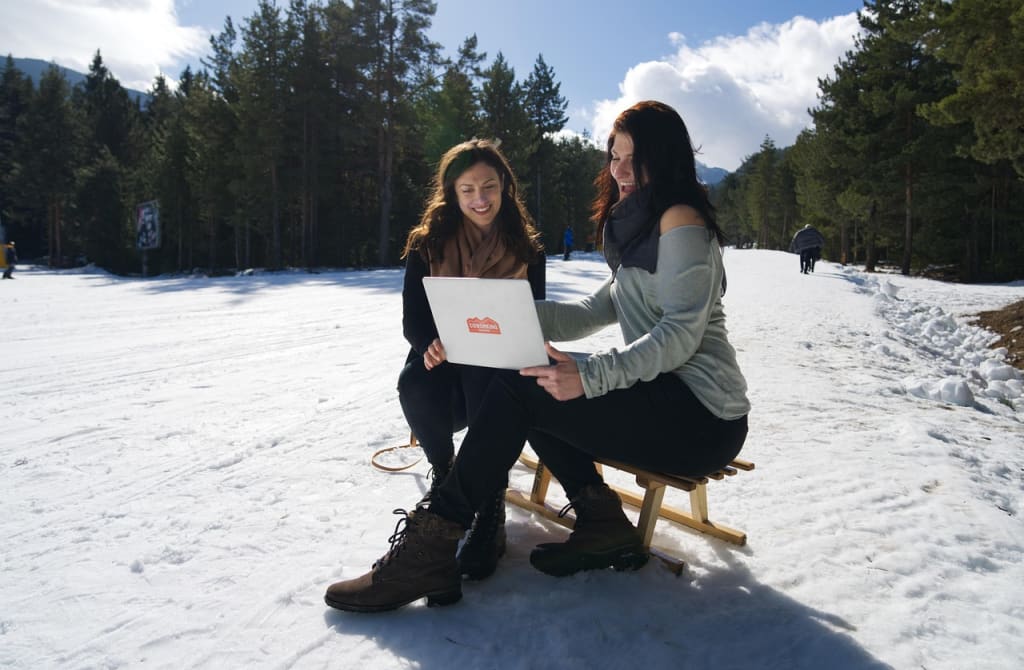
In recent years, we have experienced an unprecedented acceleration toward remote work that led to the emergence of a fast-growing demographic: Digital nomads. These so-called digital nomads use technology to do their jobs from anywhere, often traveling the world while they work. The change has substantial implications for economies, cultures, and individual lifestyles, leading to a reconsideration of what it means to work in the modern, globalized world.
The Remote Work Revolution
The COVID-19 pandemic sped up a shift that had been in motion, with millions of employees abruptly working from home. By 2021, 47% of organizations indicated plans to allow full-time remote work for employees, and 82% of employees wanted those practices post-covid (Gartner). Thus, a new workforce was born: digital nomads.
People who can do their jobs anywhere, thanks to technology, are called digital nomads. They travel to various countries and experience different cultures without taking a break from work. Nationally, the number of digital nomads — people who travel while earning a living remotely — grew to 11 million in 2021, compared with 7.3 million in 2019, according to a survey by the company MBO Partners. It indicates a major change in people’s attitudes toward work and life.
Economic Impacts
Digital nomads have a lot to say about the economies of the world. Its upshot has been a more decentralized workforce. Many nomads settle temporarily in countries with a lower cost of living, and this can affect the economy in those places. Are you experiencing the pull of pain because you’re surrounded by people that you used to go out with , but now you spend time in a Zoom room?
According to a report published by the Remote Work Association, digital nomads are worth around $786 billion to the world economy each year. This includes expenditures for housing, dining, and local services. As even more individuals redefine their lifestyles, nations have followed suit with programs to lure remote workers — “digital nomad visas.” Countries such as Estonia, Croatia, and Barbados have started initiatives to welcome digital nomads, which creates additional economic dynamism locally.
But this influx can also put a strain on resources in popular destinations, causing living costs to escalate for locals. Finding the equilibrium between being a friendly place for nomads and ensuring residents can still afford to live there is something lots of communities struggle with.
Collaboration and Assimilation
Digital nomadism promotes cultural exchange like never before. Nomads are commonly known to engage with local people, enter local culture, and add to the economic flow of the area. For instance, a graphic designer named Emily, from New York, spent three months in Chiang Mai, Thailand. “I signed up for a cooking class in the neighborhood, learned about Thai culture, and even worked with a local artist on a project,” she says.
Both nomads and communities benefit from this cultural exchange. But it also contributes to questions of cultural appropriation and the commoditization of local rituals.” As Nomads search for authentic experiences, they need to stay conscious of the fact that their presence can influence local cultures.
The need for nomads to connect has also led to unique communities that blend cultures as nomads swap experiences and resources. Startups like co-working spaces and commune living have sprung up worldwide to create camaraderie among those with similar interests. Such space offers workstations along with social space, networking opportunities, and a community.
Lifestyle: Freedom and Challenges
Often, the idea of being a digital nomad is most transformed by the issue of freedom. You can choose where you want to work when to work, and try new environments. For so many people, this flexibility allows for more job satisfaction and a better work-life balance. A Buffer study found that 32% of remote workers worked remotely primarily for flexibility.
Still, life does have its struggles. As digital nomads, they experience challenges, including social isolation, poor separation between work and leisure, as well as feeling pressure to be always productive. “I love living in a van full-time and traveling across North America, but it can be lonely,” admits Mark, a software engineer. I miss the companionship of an office."
Digital nomads, however, often grapple with issues both major and minor, such as access to quality healthcare, decent internet, and stable housing. Such uncertainty may breed stress and fatigue, especially among those feeling the need to stay consistently productive.
Future Predictions
The rise of remote work and digital nomadism is likely to continue in the future. Fewer overheads and a larger talent pool available from around the world have companies seeing the light. You can work from anywhere, and hence, this could lead to a more global workforce.
Also, technological advances such as virtual and augmented reality and even artificial intelligence can be used to further improve teleworking experience. As these tools become more advanced, digital nomads are likely to have more opportunities than ever to refer and connect with their colleagues across the world.
But the emergence of digital nomadism presents challenges as well for governments and local communities. They will need to tackle matters like taxation, employment rights, and the effects of mobile populations on housing and local economies. The key is to strike a balance in attracting digital nomads while ensuring that residents lead a good and comfortable life.
Conclusion
How the world is changing in ground-breaking ways because of digital nomads Remote work is becoming increasingly mainstream, and it is changing economies, cultures , and the ways that individuals live their lives. The prospect of a connected global workforce is an exciting one — with challenges that will need to be addressed thoughtfully.
This transition period demands that we learn how to get along and respect one another as nomads and locals meet in this novel environment. All of this strongly enables us to break free from geographical boundaries and blend so well with our work-life, no matter where we work, and hence work choice, community, and environment as a whole flourish. When it comes to this evolving story of work, however, the digital nomad phenomenon is a new frontier — rife with both potential and responsibility.
About the Creator
kalu ram meena
Inventive narrator mixing creative mind and knowledge. From nature's excellence to life's examples, I create content to rouse, illuminate, and enrapture. Go along with me on an excursion of revelation, each story in turn!
Keep reading
More stories from kalu ram meena and writers in Motivation and other communities.
Love in 50 Words: How to Craft Micro-Poetry That Wins Hearts (and Prizes)
Although the future is bright, this is a big challenge. One raindrop can send ripples across an ocean. It only takes one spark to start a wildfire. And in just 50 words, you can distill every sort of love — romantic, platonic, or self-love — into a format that stays with you well past the last syllable falling away. Vocal’s Love in 50 Words challenge is no ordinary contest; it is an invitation to carve raw emotion into poetry precise enough to go straight to the heart.
By kalu ram meena12 months ago in Motivation
“He Kept Going When No One Was Watching — And That Changed Everything”
No one ever noticed the days he almost gave up. There were no messages asking if he was okay. No one wondered why he became quieter. No one asked how much effort it took just to keep going. To the world, he was just another ordinary man. His name was Ayaan. Ayaan’s life didn’t collapse in one dramatic moment. It slowly faded. Missed opportunities. Rejected ideas. Silent disappointments. Every failure was small, but together they became heavy. He had dreams once. Big ones. Dreams that kept him awake at night, imagining a future where his hard work would finally matter. But over time, those dreams began to feel unrealistic—almost embarrassing. People around him seemed to move forward effortlessly. They celebrated promotions, achievements, and milestones. Ayaan watched from the side, smiling politely while feeling invisible. At work, his efforts were ignored. Among friends, his voice faded. At home, expectations weighed heavily on him. Slowly, a dangerous thought settled into his mind: “Maybe I’m not good enough.” That thought followed him everywhere. It followed him on crowded buses. It followed him into sleepless nights. It followed him every time he tried again and failed. One night, after scrolling through endless success stories online, Ayaan closed his phone and stared at the dark ceiling. His chest felt tight, not because of pain—but because of exhaustion. He whispered quietly, “How long do I keep trying?” There was no answer. But that night, Ayaan made a decision—not a loud one, not a confident one. A tired decision. He decided to keep going, even if nothing changed. The next morning felt the same. The same routine. The same doubts. The same fear of wasting his life. But Ayaan showed up anyway. He worked when no one praised him. He studied when no one guided him. He practiced when no one believed in him. Some days, motivation disappeared completely. On those days, discipline took over. He reminded himself: “I don’t need applause. I need progress.” Weeks passed. Nothing dramatic happened. No sudden success. No recognition. No miracle. But something subtle began to shift. Ayaan became calmer under pressure. He learned to sit with discomfort instead of running from it. He stopped comparing his journey to others. The silence that once scared him now became his training ground. Months later, a serious problem appeared at his workplace. It was complicated, risky, and easy to blame on someone else. Most people avoided it. Some pretended it wasn’t their responsibility. Ayaan didn’t announce himself. He didn’t seek attention. He simply started working. Late nights. Mistakes. Corrections. Learning. There were moments he wanted to quit. Moments when fear whispered, “You’re not ready.” But he answered back, “I’ll learn.” Slowly, the problem began to disappear. Not perfectly—but steadily. People noticed, quietly. One afternoon, his manager called him into the office. Ayaan expected criticism. Instead, he heard a question that stunned him: “Where did you learn all this?” Ayaan paused. How could he explain years of silent effort? How could he explain working when no one cared? He simply replied, “I kept going.” That moment didn’t change his life overnight. He didn’t become famous. He didn’t suddenly become successful. But it changed something far more important. His belief in himself. For the first time, Ayaan understood that life doesn’t always reward effort immediately. Sometimes, it watches. It watches who continues without praise. Who improves without recognition. Who grows in silence. Years later, Ayaan looked back at the version of himself who almost quit. The man who felt invisible. The man who thought no one was watching. And he smiled. Because he finally understood the truth: Life was always watching. Not to judge. Not to rush. But to see if he would keep going when it was hardest. The world doesn’t reward those who only work when they’re seen. It rewards those who build strength in silence. And sometimes, the moment that changes everything doesn’t come with applause. It comes quietly. After patience. After effort. After consistency. That is when everything finally begins to change. Final Message Keep going—even when no one is watching. Especially then.
By Inayat khan3 days ago in Motivation




Comments
There are no comments for this story
Be the first to respond and start the conversation.