
The Girl Who Refused to Sit in Silence
They tried to bury her voice with a bullet, but they only made it louder. This is the story of how a schoolgirl from Swat Valley became a global symbol of resistance.

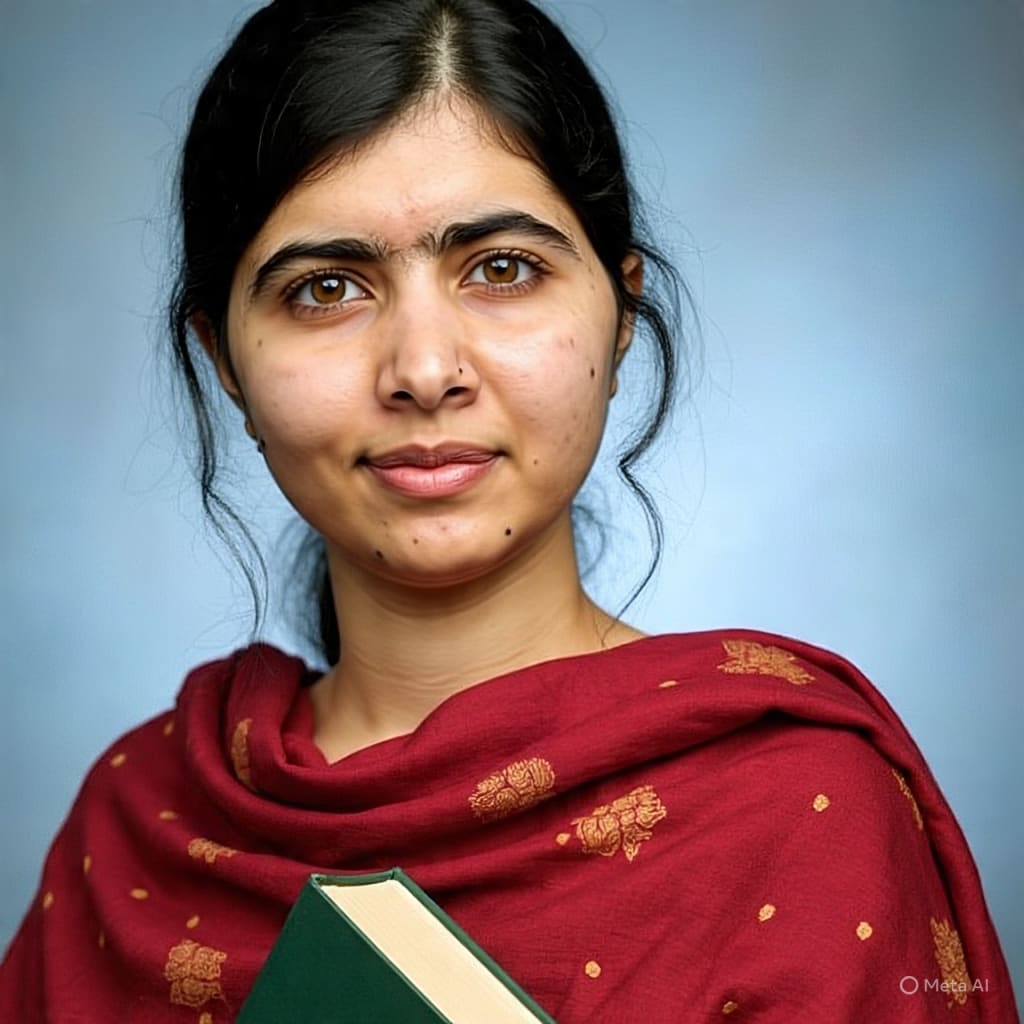
The story of Malala Yousafzai does not begin with the flash of cameras, the thunderous applause of the United Nations, or the weight of a Nobel Peace Prize medal around her neck. It begins much more quietly, in a place where the mountains scraped the sky and the rivers ran clear and cold.
It begins in the Swat Valley of Pakistan—a region so breathtakingly beautiful it was often called the "Switzerland of the East." But for all its physical elevation, it was a place where, for half the population, dreams were expected to stay low.
In many parts of the world, a girl’s future is often written for her before she is even born. It is a script of domesticity, silence, and obedience. But Malala was born into a different kind of household. Her father, Ziauddin Yousafzai, was a poet and a school owner who believed that education was not merely a curriculum, but a form of freedom. When Malala was born, he did not grieve the birth of a daughter as some in his culture did; he celebrated her. He looked into her cradle and saw a person, not a possession.
He didn't raise Malala to be quiet, obedient, or fearful. He raised her to look the world in the eye and ask: Why?
The Valley of Questions
From a young age, Malala possessed a curiosity that refused to be contained. While other children were content to memorize textbooks, Malala wanted to understand the mechanics of her society.
She saw the discrepancies early. She saw her brothers treated with a deference she was denied. She saw women disappearing behind veils and closed doors, their potential suffocated by tradition. She asked why some girls studied freely while others were forced to burn their books for heat. She asked why fear had the power to silence entire families. She asked why education—the simple act of reading and writing—was treated as a dangerous privilege rather than a fundamental human right.
For a while, life in Swat was peaceful. But then, the shadows began to lengthen.
The rise of the Taliban in the valley was not a sudden explosion, but a slow, suffocating creep. It started with radio broadcasts. A voice on the airwaves began preaching a distorted version of faith, one that demonized music, television, and, most aggressively, the education of girls.
The rules changed daily. One day, DVDs were banned; the next, barbers were forbidden from shaving beards. And then came the edict that would change Malala’s life forever: Schools for girls were declared forbidden.
The classroom doors were shut. The desks, once loud with the scratching of pencils and the whispers of friends, gathered dust. The uniforms were packed away. Overnight, thousands of futures were dimmed.
A Pen Mightier Than the Sword
Fear is a powerful silencer. In the face of public beatings and the constant threat of violence, most people in Swat kept their heads down. It felt safer that way. Survival meant invisibility.
But Malala, barely a teenager, felt something burning inside her that was stronger than fear. It was a sense of profound injustice. She realized that silence doesn't save you; it only erodes you.
"How dare the Taliban take away my basic right to education?" she asked in a speech at a local press club in Peshawar. She was only eleven years old.
Recognizing her articulation and bravery, a seemingly small opportunity arose. The BBC Urdu service was looking for a schoolgirl to blog anonymously about life under the Taliban. It was dangerous. It was unprecedented. And Malala volunteered.
Writing under the pseudonym "Gul Makai" (the name of a heroine from Pashtun folklore), she began to document the reality of the occupation. She wrote about the fear of walking to school in plain clothes to avoid detection. She wrote about the terrifying sound of artillery fire at night. She wrote about her books, her friends, and her simple, desperate desire to learn.
Her words were not filled with hatred or political rhetoric. They were the honest, piercing observations of a child. She wasn’t attacking an army; she was defending her classroom.
Her blog gained traction. Her voice reached beyond the jagged peaks of the Swat Valley. People began to wonder: Who is Gul Makai?
Eventually, the anonymity faded. Malala and her father became public figures, appearing in documentaries and interviews. She became the chair of the District Child Assembly Swat. She was winning national peace awards. Slowly, she transformed from a student into a symbol of resistance against ignorance.
But in the eyes of extremists, a girl with a book is a dangerous thing. A girl with a voice is even worse.
The Day the World Shook
Symbols attract danger. As Malala’s profile rose, so did the threats. Notes were slipped under her door. Comments appeared on social media. Most people assumed the Taliban wouldn't target a child—that there was a line even they wouldn't cross.
They were wrong.
On the afternoon of October 9, 2012, the air in the valley was crisp. Malala, then 15 years old, was sitting in the back of a small school van, squeezing in with her friends, chatting about exams and schoolwork. It was the most mundane of moments.
Suddenly, the van jolted to a halt. A masked gunman boarded the vehicle. He didn't ask for money. He didn't ask for the driver. He asked one question:
"Who is Malala?"
As her friends instinctively looked toward her, the gunman raised a pistol and fired three shots.
One bullet hit Malala in the left side of her head, traveling down her neck and lodging in her shoulder. The silence that followed the gunshots was heavier than the mountains surrounding them.
In that instant, the extremists believed they had succeeded. They believed that by shooting the girl, they would kill the idea. They thought the story would end there, in a pool of blood on the floor of a school bus.
But they had miscalculated.
The Second Life
Malala was airlifted out of Pakistan in critical condition. The world watched with bated breath. She was flown to Birmingham, England, where doctors fought to save her life. For days, she lay in a coma, her condition precarious.
The attack triggered a global outpouring of outrage. In Pakistan, millions signed a petition. Protests erupted worldwide. The gunman’s bullet had done the exact opposite of what was intended: instead of silencing one girl, it amplified her voice to a volume that could no longer be ignored.
When Malala finally woke up in a sterile hospital room in the UK, thousands of miles from her valley, she was confused. She couldn't speak. She couldn't hear out of her left ear. Her face was paralyzed on one side.
The physical recovery was grueling. There were multiple surgeries, months of rehabilitation, and the psychological trauma of displacement. She had to relearn how to smile. She had to adjust to a life in a foreign country, far from the home she loved.
But as her strength returned, so did her resolve.
In her memoir, she later wrote, "I had two options. One was to remain silent and wait to be killed. And the second was to speak up and then be killed. I chose the second one."
She realized that her survival was a second chance—a "second life" that had been given to her for a reason. The attack wasn’t just an assault on her body; it was an assault on every girl who dared to dream. And if they hadn't been able to stop her with violence, she would ensure they couldn't stop her with fear.
From Victim to Warrior
Malala didn't retreat into the shadows of witness protection. She stepped into the light.
On her 16th birthday, less than a year after the attack, she stood at the podium of the United Nations headquarters in New York. Dressed in the shawl of Benazir Bhutto, the slain Pakistani Prime Minister, she addressed an assembly of world leaders.
She didn’t speak with anger. She didn’t speak with a desire for revenge. She spoke with the calm, unshakable confidence of someone who has stared death in the face and found it wanting.
"The terrorists thought they would change my aims and stop my ambitions," she told the world. "But nothing changed in my life except this: weakness, fear, and hopelessness died. Strength, power, and courage were born."
It was a defining moment. Malala transitioned from a victim of terrorism to a warrior for peace.
Together with her father, she founded the Malala Fund, an organization with a mission as ambitious as it is necessary: a world where every girl can learn and lead. This wasn't just about building schools; it was about dismantling the systemic barriers—poverty, war, child marriage, and gender discrimination—that keep 130 million girls out of school today.
Her work took her from the refugee camps of Jordan to the school halls of Nigeria. She sat with presidents and prime ministers, not to take photos, but to hold them accountable. She demanded that they invest in the future of "half the population."
The Youngest Laureate
In 2014, at the age of 17, the girl from Swat received the ultimate recognition: The Nobel Peace Prize. She became the youngest laureate in history.
It was a moment of immense pride for her family and her country. But true to her character, Malala didn't treat the prize as a trophy to be displayed on a shelf. She treated it as fuel. She saw it as a mandate to work harder.
She famously joked that she found out she had won the Nobel Prize while she was in chemistry class, and after the announcement, she went right back to her studies. This duality became the hallmark of her life: a global icon who still had to worry about homework; a Nobel Prize winner who fought with her younger brothers over the remote control.
This grounded nature made her message even more powerful. She wasn't a distant, untouchable figure. She was a teenager, just like the millions of girls she was fighting for. She proved that you don't need to be old, wealthy, or powerful to create change. You just need conviction.
Oxford and Beyond
The girl who fought for the right to go to school eventually achieved her own personal dream. She was accepted into the University of Oxford—Lady Margaret Hall, the same college Benazir Bhutto had attended.
Walking the historic halls of Oxford, Malala completed the journey that began in her father’s humble school in Pakistan. In 2020, she graduated with a degree in Philosophy, Politics, and Economics.
Graduating was more than a personal milestone; it was a symbolic victory. The extremists had tried to stop her from finishing middle school. Instead, she finished one of the most prestigious universities in the world. Every essay she wrote, every exam she passed, was an act of defiance against those who wished to keep women uneducated.
The Legacy of the Voice
Today, Malala Yousafzai is more than a name; she is a movement.
Her story forces us to confront uncomfortable truths. It reminds us that education, something so many in the West take for granted—groaning about early alarms and heavy backpacks—is a luxury for millions. It is a lifeline that many risk their lives to grasp.
Malala’s life teaches us that courage is not the absence of fear, but the triumph over it. She was terrified when the Taliban patrolled her streets. She was terrified when she woke up in a hospital bed. But she did not let that terror dictate her actions.
Her journey shifts the narrative of the "victim." She refuses to be defined by the damage done to her. She is defined by what she did after. She transformed pain into purpose. She transformed oppression into opportunity.
Through the Malala Fund, she continues to amplify the voices of other girls. She passes the microphone to young activists in Brazil, India, Afghanistan, and beyond, creating a chorus of resistance that spans the globe.
The Power of One
As we look at the state of the world today, it is easy to feel small. The problems—war, inequality, extremism—feel mountainous, and we often feel like we are standing in the valley, looking up, voiceless and powerless.
But Malala’s story serves as a counter-narrative to despair. It reminds us that power does not always roar; sometimes, it speaks in the quiet determination of a child with a book.
Her message remains as simple and piercing today as it was when she stood before the United Nations:
One child, one teacher, one book, and one pen can change the world."
It is a reminder that the most powerful weapon against extremism is not a gun or a drone. It is a girl with a textbook.
Malala refused to sit in silence. And because she stood up, millions of others are now standing with her. Her story is far from over; in fact, the most important chapters are likely still being written—not just by her, but by the countless girls who looked at her life and realized that their voices, too, were made to be heard.
5 Key Takeaways from Malala's Journey
* Education is a Right, Not a Privilege: Malala's core message challenges the systems that treat education as a luxury reserved for the wealthy or the male.
* Courage is Contagious: When one person stands up, it empowers others to do the same. Malala's bravery sparked a global movement.
* The Power of Storytelling: By sharing her story on a blog, Malala humanized a conflict that the world was ignoring. Words have the power to pierce through political noise.
* Adversity into Opportunity: Malala used the platform given to her by a tragedy to help others. She didn't let the attack end her life; she let it begin a new one.
* Youth Can Lead: You do not need to wait until you are an adult to change the world. Malala began her activism at age 11.
If you enjoyed this story, please click the heart icon and share it to help spread the message that every girl deserves the right to learn.
About the Creator
Frank Massey
Tech, AI, and social media writer with a passion for storytelling. I turn complex trends into engaging, relatable content. Exploring the future, one story at a time
Keep reading
More stories from Frank Massey and writers in Motivation and other communities.
THE MAN WHO STARTED AT 65: The Untold Real Story of Colonel Sanders
Colonel Harland David Sanders was not born a legend. He was born poor, on September 9, 1890, in Henryville, Indiana—long before his white suit and pointy goatee became one of the world’s most recognizable business symbols. His life story is often shortened into a motivational quote, but the real version is much deeper, heavier, and more brutally human than any cliché about “never giving up.”
By Frank Massey 2 months ago in Motivation
Corrosion Resistance That Endures: The Strength of Hot-Dip Galvanized Steel
Steel remains essential to infrastructure, manufacturing, and development across the nation. However, corrosion constantly threatens its durability and performance. When steel comes into contact with moisture and oxygen, rust begins to form and slowly spreads. Over time, this process weakens structures and increases safety risks. Therefore, engineers and asset owners seek protection methods that deliver long-term reliability. Hot-dip galvanizing provides a proven answer to this ongoing challenge.
By Frontier Galvanizingabout 10 hours ago in Motivation
The Devil's Cut
“Comrade, finally you’re awake.” The voice was smooth, sensual. A flickering incandescent bar was all that lit the white, sterile room. All Vladimir remembered was everything going black. He tried to move his arms and found them strapped to the gurney.
By Matthew J. Fromm3 days ago in Fiction


Comments
There are no comments for this story
Be the first to respond and start the conversation.