
The Girl Who Couldn’t Walk — And Then Ran Faster Than Anyone: Wilma Rudolph
The girl with disability who won the Olympic Games

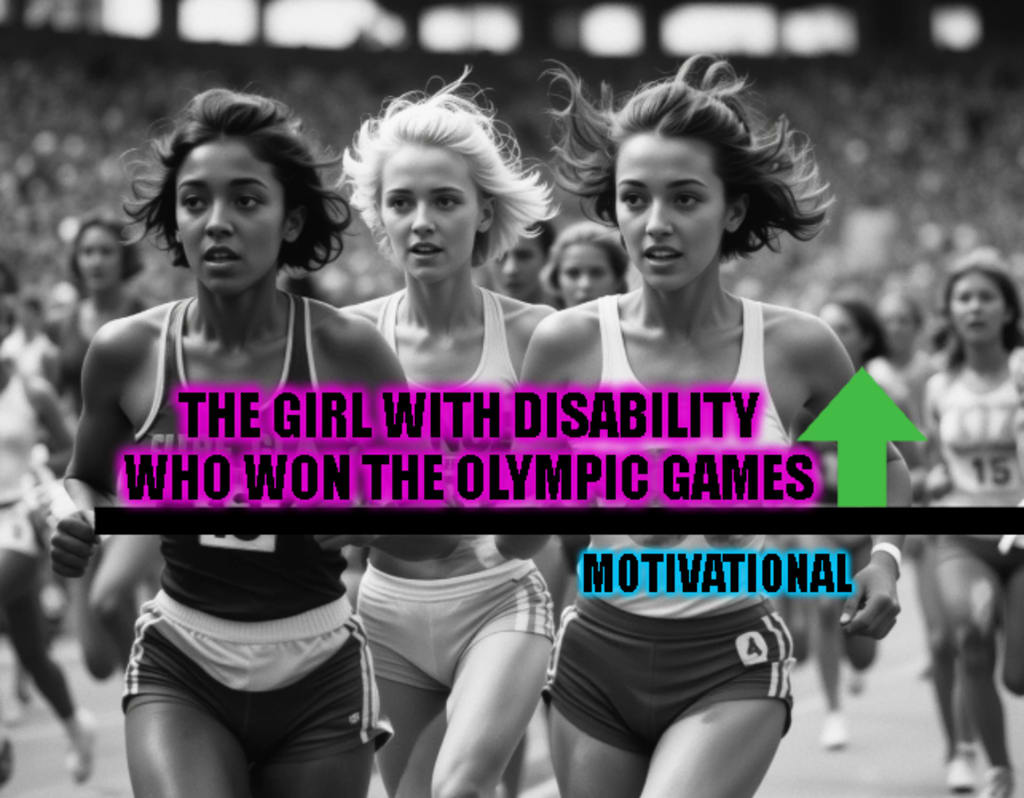
The Girl Who Couldn’t Walk — And Then Ran Faster Than Anyone: Wilma Rudolph
The girl with disability who won the Olympic Games
There are stories you hear as a child that seem almost like fairy tales—tales of people defying the odds, rising from the humblest beginnings, overcoming pain and prejudice and fear. Wilma Rudolph’s story is one of those, except it happened in real life. Her journey from a tiny, sickly girl in segregated Tennessee to an international symbol of hope, dignity, and athletic greatness isn’t just a sports story. It’s a blueprint for perseverance, self-belief, and the kind of courage that can change how the world sees itself.

Tennessee, 1940: A Difficult Beginning
Wilma Glodean Rudolph was born on June 23, 1940, in St. Bethlehem, Tennessee. She was the 20th of 22 children in the Rudolph family. Her father, Ed, worked as a railroad porter and handyman; her mother, Blanche, was a maid and cook. They lived in a small house in Clarksville, a town where poverty was common and segregation was law. There were no advantages waiting for Wilma at birth—she was born prematurely, weighing only 4.5 pounds, and spent her early days fighting just to survive.
Wilma’s childhood was marked by constant illness. She suffered from double pneumonia, scarlet fever, and, at age four, polio—a disease that, in the 1940s, struck fear into the hearts of parents across America. For Wilma, polio left her left leg paralyzed and twisted inward. The doctors at the local, whites-only hospital wouldn’t treat black patients, so her mother carried her, week after week, on a long bus ride to Nashville’s Meharry Hospital, the closest place that would provide care. At home, Blanche Rudolph and Wilma’s siblings spent hours massaging her leg, stretching it, bending it, never letting the muscles atrophy.
Wilma wore a metal leg brace for years. She watched her brothers and sisters run and play outside while she struggled to stand. She was determined, but there were days when it must have seemed impossible—when the weight of the brace, the teasing from other kids, and the constant pain all pressed in at once. But Wilma’s mother was relentless in her optimism. “Never, never give up,” she told her daughter. “Believe in yourself and there will come a day when others will have no choice but to believe with you.”
The world Wilma grew up in did not make things easy for a black girl with a disability. She was often left out of games at school. She was shy, quiet, and watched from the sidelines. But inside, she was gathering a quiet strength—a stubbornness that would become her greatest gift.
By age nine, Wilma was able to walk with the aid of a specially fitted orthopedic shoe. By twelve, after years of therapy and her family’s relentless care, she took off her brace for the last time. That day, she walked to church on her own, proudly, knowing she’d crossed a threshold that would change her life forever.
“I spent most of my time trying to figure out how to get out of that brace,” she later said. “I wanted so badly to be like the other kids. The first time I ran, it felt like I was flying.”

Discovering Her Passion: The First Steps in Sports
Wilma’s newfound freedom was intoxicating. She joined her school’s basketball team, even though she was the only girl and was, at first, too weak to keep up. She spent most games on the bench, but she didn’t care—just being on the team was a victory. She practiced endlessly, working to turn her thin, weak legs into something powerful. Her family, her church, and her teachers all noticed her drive.
At Burt High School, Wilma met Coach C.C. Gray, who saw something special in her. Under his guidance, she began to flourish as a basketball player, setting state records for points scored. But her true calling came when Tennessee State University’s track coach, Ed Temple, saw her play and invited her to his summer training camp. That invitation would change everything.
Ed Temple was a quiet, disciplined coach who believed in the potential of young women, especially black women, in a time when few others did. His Tigerbelles track program at Tennessee State University was legendary for producing strong, disciplined athletes. Wilma, just 14 at the time, was the youngest girl at camp—but also the fastest.
Coach Temple saw that Wilma was raw, but her speed and determination were unmatched. He took her under his wing, teaching her not just how to run, but how to believe in herself. She trained with the Tigerbelles after school and on weekends, often running on dirt tracks and in makeshift gyms because facilities for black athletes were scarce and underfunded.
Wilma’s progress was astonishing. She began winning races at the high school and state level, then at the national level. By age 16, she qualified for the U.S. Olympic team, earning a spot in the 4x100 meter relay at the 1956 Melbourne Olympics. She and her teammates won bronze—a huge accomplishment, but Wilma was hungry for more.
The years after Melbourne were not easy. Wilma returned home to finish high school, then enrolled at Tennessee State. She juggled schoolwork, training, and family obligations. As she grew stronger, her confidence soared. She dominated national competitions, setting records and winning championships. But she also faced daily reminders of the world’s racism and sexism—from segregated hotels and restaurants to skepticism about women’s ability to compete at the highest levels.
Through it all, Wilma kept her focus. “The triumph can’t be had without the struggle,” she said. “And I know what struggle is.” Her mother’s words echoed in her mind: “Never, never give up.”

1960 Olympics: The Making of a Legend
In 1960, Wilma Rudolph arrived in Rome for the Olympic Games. She was 20 years old, 5-foot-11, and all muscle and grace. The world’s press called her “The Black Gazelle.” But she was still recovering from a sprained ankle suffered only weeks earlier—a setback that might have ended another athlete’s dreams.
Rome was a city buzzing with anticipation. The Cold War was raging, political tensions ran high, and the Olympics were more than just sports—they were a stage for nations and ideologies. But for Wilma, the track was a place of freedom. She ran the 100 meters and left the field behind, winning gold. She dominated the 200 meters for a second gold. In the 4x100 meter relay, a fumbled baton almost cost her team the race, but Wilma grabbed it, surged ahead, and won her third gold medal.
She became the first American woman to win three gold medals in track and field at a single Olympics. She was hailed as the fastest woman in the world. The world took notice—not just of her speed, but of her poise, her smile, and her humble spirit.
When Wilma returned to Clarksville, a victory parade was planned. In the Jim Crow South, such events were always segregated. Wilma refused to attend unless the parade and banquet were open to everyone, black and white. City officials relented, making it the first fully integrated public event in Clarksville’s history. Wilma had not just broken records—she’d broken barriers.
She was honored by presidents and prime ministers, invited to the White House by John F. Kennedy, and celebrated around the world. But Wilma remained humble. She finished her degree at Tennessee State, became a teacher and coach, and focused on giving back to her community.

Life After Gold: Giving Others a Chance
Wilma never wanted her story to be just about her. She spent years traveling the country, speaking to young people about education, perseverance, and the power of dreams. She founded the Wilma Rudolph Foundation to promote amateur athletics and mentor underprivileged children. She coached track at DePauw University and worked on youth programs.
Wilma’s life was not without challenges. She raised four children as a single mother, battled illness, and faced the pressures of fame. But through it all, she remained an example of dignity, resilience, and quiet strength.
Wilma Rudolph died of brain cancer in 1994, at just 54, but her influence lives on. Stadiums, schools, and streets bear her name. She has been inducted into the U.S. Olympic Hall of Fame and the National Women’s Hall of Fame. Her image stands as a symbol not just of athletic greatness, but of the power to rise above circumstance.
Women’s sports in America—and the world—look different because of Wilma. She inspired generations of athletes, especially black girls who saw in her a path forward. She showed that greatness is not about where you start, but how you finish. She taught that setbacks are not the end, but the beginning of something new.

Lessons From a Life Well Run
Wilma Rudolph’s story is more than a tale of overcoming polio or winning gold medals. It is a lesson in faith, family, and the refusal to accept limits. It’s a reminder that our hardest battles can become our greatest strengths. Wilma didn’t just run fast—she ran toward possibility, dragging the world forward with each step.
When you’re tempted to give up, remember Wilma’s long nights in pain, her mother’s unwavering hope, and the tiny victories—one step, then another—that led to her triumph. Remember her standing tall at the finish line in Rome, smiling not just for herself, but for everyone who ever felt left behind.
We all have our own braces to shed, our own tracks to run. If Wilma could do it, what’s stopping us from taking the next step?
Wilma once said, “Winning is great, sure, but if you are really going to do something in life, the secret is learning how to lose. Nobody goes undefeated all the time. If you can pick up after a crushing defeat, and go on to win again, you are going to be a champion someday.”
That’s the real lesson of her life. Not every battle is won on the track. Sometimes, it’s won in the quiet moments—getting up when you fall, trying again when you fail, and knowing that the finish line is just the start of something new.
So, whatever your race is—whether it’s recovering from an illness, chasing a dream others say is out of reach, or just taking life one day at a time—remember Wilma Rudolph. Remember that courage is built from struggle, that hope is stronger than circumstance, and that the only real limits are the ones we accept.
Take off your brace. Stand up. And when you’re ready, run.
About the Creator
Kek Viktor
I like the metal music I like the good food and the history...
Keep reading
More stories from Kek Viktor and writers in Motivation and other communities.
📒Malala Yousafzai: The Girl Who Stood Up and Changed the World
Malala Yousafzai: The Girl Who Stood Up and Changed the World Some stories begin in quiet corners of the world, far from the spotlight. Some heroes are born not in palaces, but in valleys, surrounded by mountains, where their voices echo all the louder for the silence around them. Malala Yousafzai’s story is one of those—a story that reminds us that courage doesn’t depend on age, and that one voice, raised in hope, can ripple across continents.
By Kek Viktor8 months ago in Motivation
Influential Women Magazine: Where Modern Leaders Rise
Influence today is no longer about loud visibility or fleeting online fame. It is about substance, values, and real-world impact. Women across industries are redefining leadership by building businesses, driving innovation, mentoring communities, and shaping conversations that matter.
By influentialwomenmagazinea day ago in Motivation
How to Succeed at the Benson Directory®
Congratulations and welcome to the Benson Directory® employee #22391! As our newest call handler, you will have the privilege of speaking with dozens of unique and interesting people on a daily basis as well as the opportunity to earn bonuses for high performance. Contained within this handbook you will find a set of ease to follow instructions designed to help you settle in to your new role and begin paving the way to success.
By S. A. Crawford4 days ago in Fiction



Comments (1)
Wilma Rudolph's story is truly inspiring. It's amazing how she overcame so many challenges, from being born premature and sickly to dealing with polio. Her family's support was crucial. It makes me wonder what obstacles we might be facing in our own lives that seem insurmountable, but could be overcome with that same determination. I can't imagine how hard it must have been for her to watch others run and play while she was stuck with a leg brace. But she didn't let it stop her. It shows that with perseverance, anything is possible. We should all take a page from her book and keep pushing forward, no matter what.