
The Book That Healed Me When I Didn’t Know I Was Broken
How Iman Martzel’s The Aftermath of Our Wounds taught me to find beauty in pain and strength in healing.

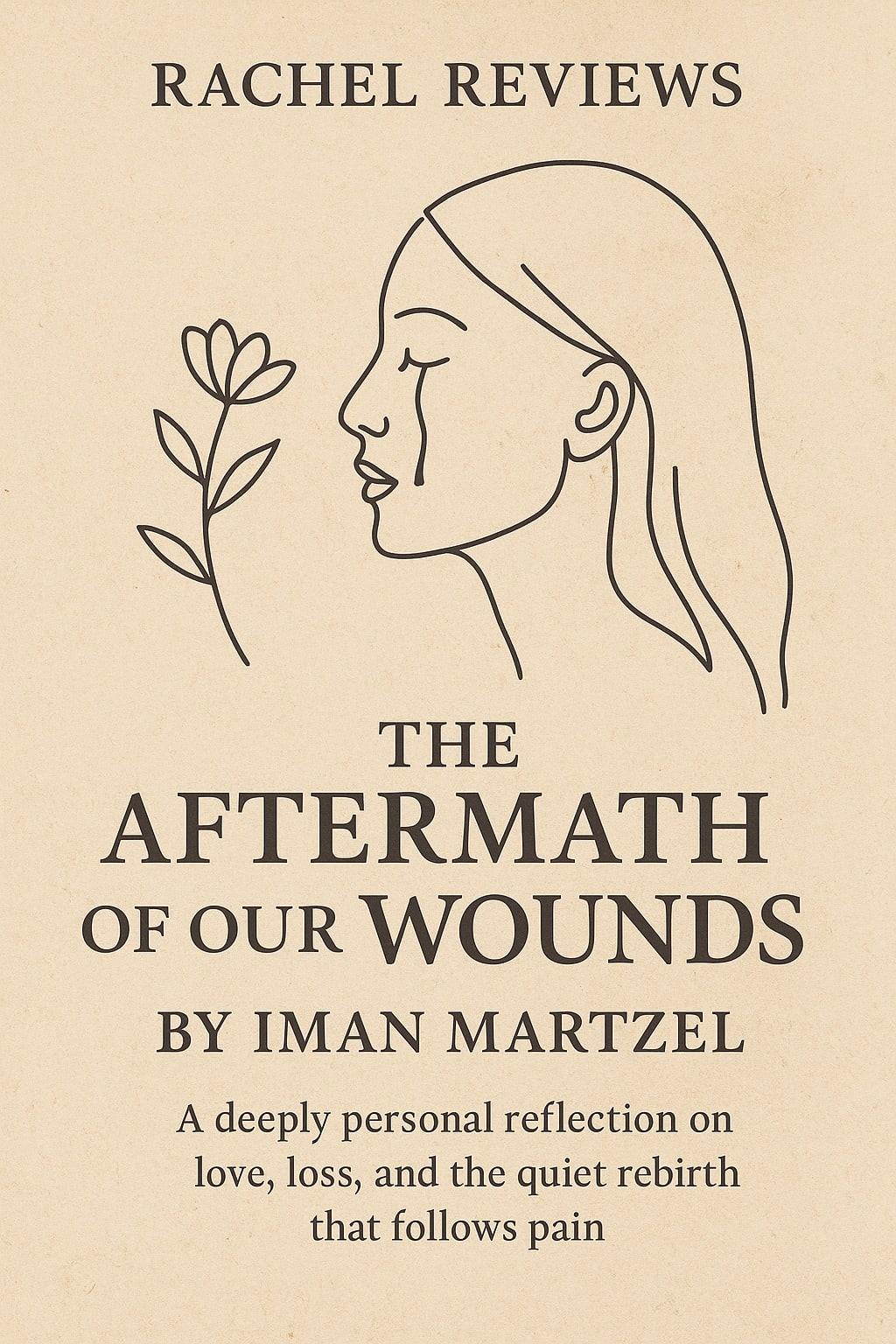
There are some books that don’t just tell a story — they reach inside you, find the places you’ve buried deep, and whisper softly, “I understand.”
That’s what The Aftermath of Our Wounds by Iman Martzel did for me.
When I first came across this book, I wasn’t looking for healing. I wasn’t even looking for inspiration. I was simply trying to fill a quiet evening with words that might distract me from my own restless thoughts. But Martzel’s writing didn’t distract me — it disarmed me. From the very first page, her voice felt intimate, raw, and familiar, as if she were writing from a place I had once stood myself.
The title alone — The Aftermath of Our Wounds — suggests that pain isn’t the story’s ending; it’s the beginning of what comes after. And that’s exactly what I found: a powerful exploration of what remains when the storm passes, when the tears dry, and when the silence finally begins to speak.
When Words Become Mirrors
There’s a line early in the book that stopped me completely:
“Some wounds never close because they’re not supposed to. They remind us that we once loved deeply enough to be hurt.”
I reread it three times before I could move on. Those words hit me like truth often does — quietly, but with force. I thought about my own wounds, the ones that time hadn’t neatly closed, the ones that still throb in the quiet moments. And suddenly, I didn’t feel ashamed of them anymore. Martzel’s words made me realize that pain isn’t something to hide from — it’s proof that we’ve felt deeply, that we’ve lived deeply.
Reading her work felt like holding up a mirror I’d avoided for too long. There’s something extraordinary about the way she captures emotion — not as something dramatic or exaggerated, but as something ordinary and sacred. The kind of emotion you carry in your chest during a long, silent bus ride. The kind that comes when you smile at someone but feel like crying inside.
Her writing isn’t polished in a commercial sense; it’s polished in truth. It’s as if each sentence has been carved from experience, smoothened by time, but still bearing the fingerprint of pain.
A Journey Through the Ruins
As I turned the pages, it felt less like reading and more like walking through the ruins of something once beautiful. But there’s light in those ruins — thin, golden light slipping through the cracks. That’s the kind of beauty Martzel captures so perfectly: fragile, uncertain, but still alive.
Rachel, the central voice of the book, feels more like a friend than a fictional narrator. She’s not perfect — she’s wounded, weary, and wonderfully real. Through her, Martzel explores what it means to survive, not just in body but in spirit. Rachel doesn’t deny her pain; she learns to live with it. She makes peace with her past the way you make peace with an old scar — not by pretending it isn’t there, but by acknowledging that it no longer controls you.
There’s a rhythm to the way Martzel tells Rachel’s story — part prose, part poetry. It’s not about grand gestures or neat resolutions. It’s about learning to breathe again, even when the air feels heavy. It’s about finding meaning in the broken pieces and realizing that maybe, just maybe, the cracks are where the light enters.
The Lessons That Stayed With Me
By the time I reached the final chapters, I had underlined so many sentences that the pages looked like a map of my own heart. Martzel’s writing taught me something I didn’t know I needed to learn: that healing is not a straight path. It’s a spiral — sometimes forward, sometimes backward, always moving toward understanding.
There’s another line that lingered with me long after I closed the book:
“Healing isn’t forgetting. It’s remembering differently.”
That one stayed. Because I’ve always thought healing meant moving on, erasing, or at least numbing the memories that hurt. But Martzel redefines healing as something gentler — a quiet acceptance of what has been, and a willingness to keep living despite it.
As I reflected on the book, I realized how much of myself I had seen in Rachel’s journey. The hesitation, the grief, the yearning to be whole again — all of it was there. But so was something else: hope. Not loud or triumphant hope, but quiet and steady. The kind that waits patiently at the edge of your pain until you’re ready to see it.
The Aftermath — and the Rebirth
When I finally finished The Aftermath of Our Wounds, I didn’t feel finished at all. I felt opened. Raw, but relieved.
This wasn’t just a story about suffering — it was about what comes after. About how we rebuild, how we rediscover the beauty in living, and how we learn to speak softly to the parts of ourselves that still ache.
Iman Martzel doesn’t write to impress; she writes to connect. Her words feel like conversation, confession, and comfort all at once. Through Rachel’s eyes, she offers a truth that so many of us forget: that the aftermath of our wounds isn’t a place of ruin — it’s a place of becoming.
I closed the book with tears in my eyes and gratitude in my heart. Gratitude for the pain that shaped me, for the people who helped me heal, and for writers like Martzel who remind us that our stories — no matter how broken — are still worth telling.
If you’ve ever carried something heavy and quiet in your heart, The Aftermath of Our Wounds will meet you there. It won’t fix you — no book truly can — but it will walk beside you while you learn to fix yourself.
Because in the aftermath of our wounds, there’s not just sorrow.
There’s survival.
There’s rebirth.
There’s yo
About the Author
Rachel writes about books that heal and stories that transform. She believes that literature is one of the most intimate forms of connection — between author and reader, between pain and healing, between past and possibility. Follow her on Vocal for more reflections on books that touch the heart and awaken the soul.
About the Creator
Rooh Ullah
Hi, I’m Rooh Ullah, a passionate writer sharing inspiring and meaningful stories on diverse topics. Join me on Vocal as I explore ideas and connect through words.
Keep reading
More stories from Rooh Ullah and writers in Motivation and other communities.
You are not a failure
“ You look sad, David, what’s going on?” the old man noticed, as David pulled out a chair when he entered the room. “ When I look at my life, I’m not happy. Nothing is working. I’m forty-three. I have no house, no money, no kids. I make minimum wage at my job to survive. Not to mention the credit card debts and some health issues. I think that I’m a failure,” David said, almost in tears.
By Michel Tetchi 3 days ago in Motivation



Comments
There are no comments for this story
Be the first to respond and start the conversation.