


I made the final fold to form the crane's head, tossed it into the growing pile, and frantically grabbed a new square of paper. We had to finish in time, we just had to! I fought back tears. Origami wasn't something you could rush. I took a deep breath and continued making one meticulous fold after another, calming as I did so. We could do it. It would work. Just breathe.
We called it "Peter Mac," but it was really called the Peter MacCallum Cancer Centre. We went there every day after school to visit our classmate Sam*, who had received her leukemia diagnosis at the beginning of our final year of high school. Despite having access to the best doctors in Australia, Sam was getting worse. The feeling of helplessness was overwhelming.
"Hey, I've got an idea of what we can do for Sam," my friend said one afternoon.
"Oh yeah?" I replied.
"Why don't we make her a thousand paper cranes, you know, like Sadako?"
I thought it was a great idea.
Having studied Japanese for over ten years, we all knew the story. Sadako was a young girl that survived the Hiroshima nuclear bomb, but later died of leukemia. Sadako began folding paper cranes while she was in hospital, believing the Japanese folktale that anyone who folds a thousand cranes is granted one wish. Sadako's wish was to live, and we had the same wish for Sam.
Sam had been to Japan on exchange for a year, and loved all things Japanese. Our origami cranes would give her hope, and help her keep fighting. It was something we could do to help. So my friends and I started folding, not realising what a huge project we had embarked upon.
We folded between classes, at lunch time, and during our free periods. Some of our teachers even let us continue during class. We folded, and folded, and folded.
Months later, we finally made it to one thousand. And Sam went into remission. We did it!
Unfortunately, that wasn't the end of her story.

Origami was a central part of my life while making those thousand paper cranes, and was invaluable in helping me deal with my friend's illness. But my relationship with origami began much earlier.
I distinctly remember the first time my Japanese teacher introduced our class to origami. I was eight years old. Many of the kids in my class had trouble making the most basic folds, but I was a natural. I blitzed through the few simple projects our teacher set, and moved on to more and more complicated origami in my spare time.
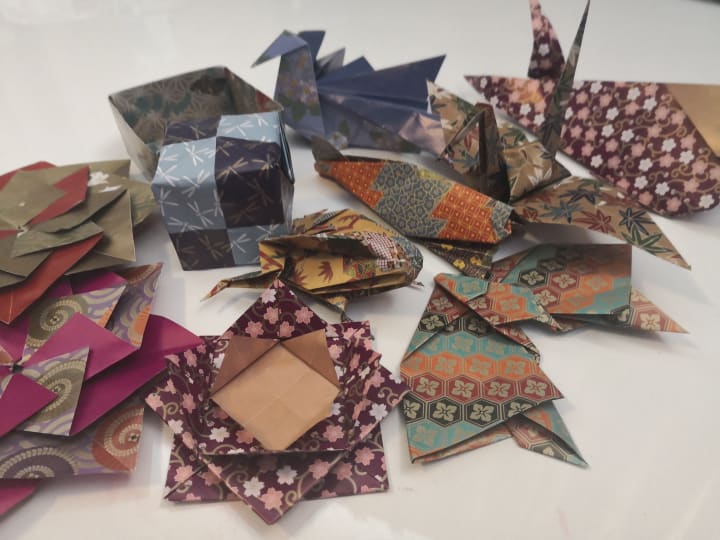
I soon found that sitting down and focusing on making the precise folds required for origami was a great way to relax, especially once I was proficient and no longer had to read the instructions. In stressful times, I could put my worries out of my mind and just focus on the feel of the beautiful paper under my fingertips.
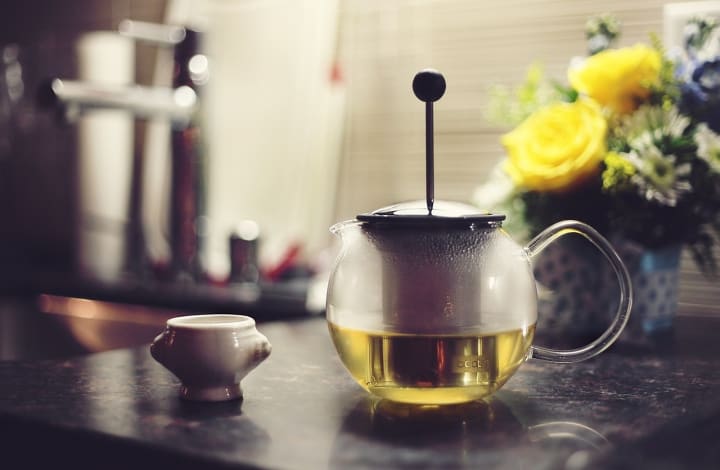
There isn't much that doing some origami and drinking a hot cup of green tea can't fix. Well, not "fix" exactly. But life happens, and origami is a great way to find some inner peace whatever the situation may be. These days I'll use anything as origami paper. A gum wrapper, a napkin, recycling. It always seems to impress friends and family, but I do it subconciously whenever there is a peice of paper near me! Every time I fold a crane I think of Sam.
Several years after her initial remission I got a phone call from Sam. I was walking home from the train station. We hadn't spoken for a few weeks, both busy with university life.
"Hey Sam, how's it going?"
"Won't keep you long, I'm just ringing around," she said in a businesslike tone, but her voice started to shake, "I got some bad news from my latest blood test. "
"Oh," I didn't know what to say, and didn't want to believe it.
"It's back," she said, "the leukemia."
"Oh," I said again.
I wished I knew what to say, but no words came to me. I'd stopped walking in the middle of the street.
"Okay then, I'll let you get on with it," she said after the long pause.
"Wait, wait," I said, "Can I come see you?"
"I'm not really feeling like seeing anyone at the moment," she said.
"Oh, okay, let me know when you are."
"Sure thing," she said.
"Alright, bye, " I said, hoping it wouldn't be too long before I could visit her.
"See you." Click.
Only months after this conversation, Sam succumbed to her leukemia. It had come back with a vengeance, and there was nothing more that could be done to treat it. The chemotherapy and bone marrow transplant hadn't been enough.
Folding those thousand paper cranes cemented my lifelong love of origami, and I still like to think that they contributed to Sam's remission. We all felt blessed to have those years with her before her illness returned. She was a bright and bubbly character who found a way to be happy no matter what was going on in her life. I am so grateful for the time we had together.
I will miss you always.
*Names have been changed for privacy.
If you are thinking of leaving a tip for this story, I ask you to instead consider donating to the Peter MacCallum Cancer Foundation at https://donate.petermac.org.au/
About the Creator
Keep reading
More stories from K M and writers in Motivation and other communities.
What I wish I knew in my 20s as a Muslim
Assulamu Alaykum, I wish I had reminded myself that I’m not meant to be perfect all the time. I just have to try. Same with my daily prayers. They don't have to be perfect right now; I just have to try and work towards what Allah expects of me, little by little.
By Jakayla Toney2 days ago in Motivation


Comments
There are no comments for this story
Be the first to respond and start the conversation.