
Navigating the Maze of Reality: Building Our Internal Map
Embracing Our Blindness, Unveiling Truth, and Pursuing Personal Goals

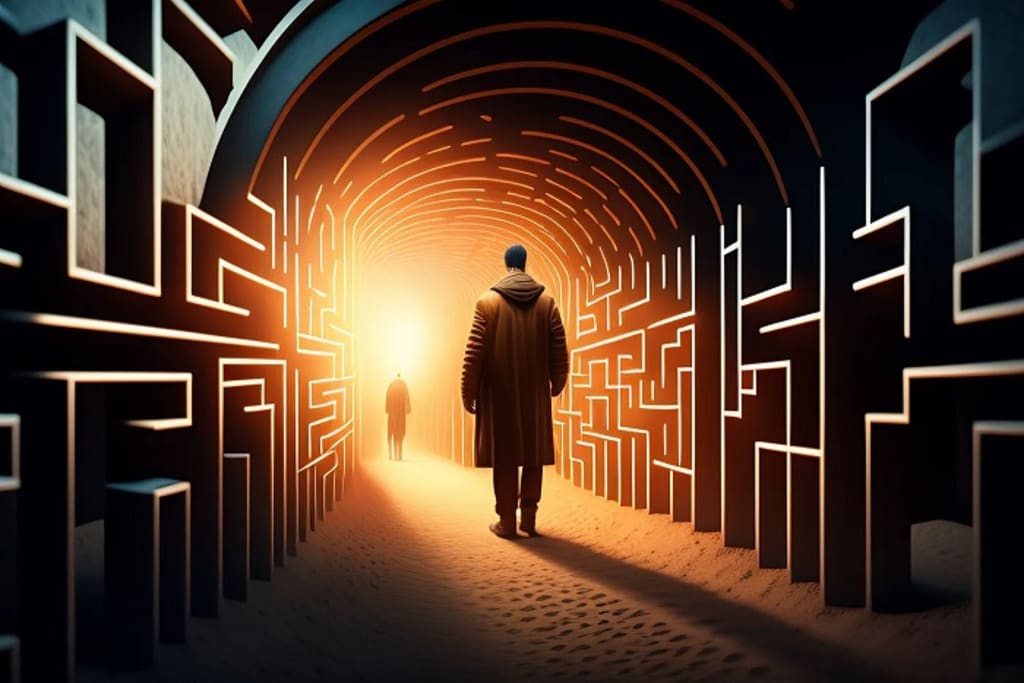
A blind individual finds themselves trapped in an expansive maze, devoid of straightforward paths and easy exits. As they navigate through the maze, they encounter various obstacles—a concrete statue, the sound of water from a pool—and grow increasingly frustrated in their search for an escape route.
In their despair, a man approaches them and instructs them to head north, claiming it leads to the exit. Filled with hope, they follow the advice but end up colliding with another barrier, feeling utterly disappointed. Another person comes forward, suggesting the exit lies to the east. Yet another offers specific instructions involving a combination of steps to reach the destination. Each person's guidance contradicts the others, leaving the blind individual perplexed and uncertain.
Realizing the futility of relying on others for directions, the blind person seeks the counsel of a wise man. When asked where they wish to go, they respond, "To the exit that will lead me to a happy family." The wise man acknowledges that he cannot provide directions to that particular exit as he has never been there. However, he shares what he knows about the maze—the structure, the presence of a pool, and other details. While it is an incomplete depiction, it proves invaluable in creating a more accurate mental map of the maze.
From that point forward, whenever someone offers directions, the blind person no longer listens but instead inquires about their understanding of the maze. This allows them to refine their map further, disregarding conflicting information by exploring those areas themselves and confirming the presence of walls. Gradually, they come to realize that everyone in the maze, including themselves, is blind.
Finally equipped with a comprehensive map, the blind person successfully finds the desired exit, reuniting with their family and finding contentment. However, with time, a profound realization emerges—the entire maze itself symbolizes reality.
The maze represents the complex fabric of reality, with its structures and walls embodying Truth. As humans, limited by our perceptual abilities, we are akin to the blind individual, unable to directly observe what is truly real. Instead, we construct maps—abstractions of our understanding, hypotheses of what we believe to be true. However, we can never fully comprehend the ultimate truth due to our inherent limitations.
The exit symbolizes our personal goals and desires, and the importance assigned to different elements of the map is subjective, contingent on our individual objectives. Society, represented by the other people in the maze, often offers advice and directives, but they too are blind and driven by their own unique motivations. Therefore, it becomes essential for each person to construct their own internal map, disregarding societal expectations, to navigate toward their personal goals.
Ultimately, the journey through the maze serves as a metaphor for the human experience, urging us to acknowledge our blindness, question societal norms, and forge our paths in pursuit of our own happiness and fulfillment.
Let's further elaborate on the interpretation of the maze metaphor and its implications.
The maze serves as a representation of the intricate and complex nature of reality itself. Just as a maze presents a convoluted network of pathways, dead ends, and obstacles, reality is similarly intricate, with numerous layers, perspectives, and hidden truths. It symbolizes the vast expanse of knowledge and the challenges we face in navigating through life.
Within the maze, the structures and walls represent the concept of Truth. Truth here refers to the underlying principles and fundamental aspects of reality that govern our existence. These truths may include scientific laws, philosophical concepts, moral values, or spiritual beliefs that shape our understanding of the world. The blind individual's encounters with various barriers in the maze reflect the limitations we face in comprehending the absolute Truth due to our restricted senses and cognitive capacities.
The map constructed by the blind person symbolizes our subjective interpretations and conceptualizations of reality. It represents our mental frameworks, beliefs, and hypotheses about the nature of existence. Just as the blind individual pieces together a map based on limited information, we build our understanding of reality by combining personal experiences, acquired knowledge, and societal influences. However, this map is an abstraction—a simplified representation of what we perceive to be true, rather than an exhaustive depiction of reality itself.
The notion of the exit in the maze holds great significance. It represents our individual goals, aspirations, and desires. Each person's idea of an "exit" may vary—be it finding personal happiness, achieving success in a particular field, attaining spiritual enlightenment, or realizing a sense of purpose. The importance we assign to different aspects of the map depends on our unique objectives and values. It highlights the subjectivity of human goals and the diversity of paths we choose to pursue.
The encounters with other people in the maze symbolize societal influences and external pressures. These individuals offer conflicting directions, reflecting the multitude of opinions, beliefs, and expectations present in society. However, just like the blind person, society itself is composed of individuals who are limited in their understanding and influenced by their own biases, perspectives, and desires. Recognizing this, the blind individual learns to question the advice of others and focuses on building their internal map based on their own experiences and observations.
The wise man in the story represents the search for wisdom and knowledge. Although he cannot provide directions to the specific exit the blind person seeks, he imparts valuable information about the maze's structure. This represents the pursuit of knowledge, self-reflection, and critical thinking. By gaining a deeper understanding of the maze's layout—its pools, walls, and other elements—the blind individual is empowered to refine their map and make more informed decisions.
Throughout the journey, the blind person's realization that they themselves are blind reflects a broader truth about human existence. We are all limited in our understanding, bound by our individual perspectives, biases, and cognitive limitations. This realization humbles us and prompts us to approach knowledge and truth with humility and open-mindedness.
In summary, the metaphor of the maze challenges us to acknowledge the complexity of reality, the limitations of our perception, and the subjective nature of our understanding. It encourages us to construct our internal maps of reality based on personal exploration, critical thinking, and the pursuit of knowledge. By navigating through the maze of life, questioning societal expectations, and aligning our actions with our personal goals, we can strive for a more fulfilling and authentic existence.
About the Creator
Keep reading
More stories from There is Something... and writers in Motivation and other communities.
Key Shifts to Propel Your Life Forward
Life is an ever-evolving journey that presents us with countless opportunities for growth and progress. However, in order to move forward and experience personal transformation, we often need to let go of certain habits, beliefs, and mindsets that may be holding us back. By relinquishing these hindrances, we create space for new perspectives and possibilities. In this article, we will explore seven key paradigms that can empower us to move forward in life and unlock our true potential.
By There is Something...3 years ago in Motivation
We Don’t Talk About the Good Days After Trauma
We talk a lot about trauma itself—the pain, the breaking point, the moment everything fell apart. We talk about survival like it’s a finish line. We talk about the scars, the before and after, the damage that never fully leaves.
By Imran Ali Shah4 days ago in Motivation
Wild Card Weekend Recap: What Happens Now?
I think I figured out why I love Wild Card Weekend so much. It's because it's the first playoff anything of the calendar year. The NFL season starts in the fall, and once upon a time, the champion was crowned either on or slightly before New Year's. The evolution of the NFL schedule has resulted in the playoffs starting just into the New Year, and currently, the final week of the season falls on the first weekend of the New Year, with Wild Card Weekend coming a week after that. So yes, chronologically, the NFL's Wild Card Weekend serves as the first playoff anything of the calendar year.
By Clyde E. Dawkins5 days ago in Unbalanced




Comments
There are no comments for this story
Be the first to respond and start the conversation.