
My Feet Will Carry Me
The Boy Who Refused to Give Up


In the winter of 1945, when the world was burning in war and hope seemed almost gone, a young Jewish boy named Solomon “Sally” Perel found himself trapped between survival and identity. His story, later known as My Feet Will Carry Me, is not just about escaping death—it is about courage, quick thinking, and the determination to live no matter the cost.
Sally was born in Germany to a Jewish family. When Adolf Hitler rose to power, life changed quickly and cruelly. Jewish families were stripped of rights, businesses were destroyed, and fear became part of daily life. On the night of Kristallnacht, when Nazi mobs attacked Jewish homes and synagogues, Sally’s world shattered. His family realized Germany was no longer safe.
To protect him, Sally’s parents sent him and his brother away to Poland. They hoped distance would mean safety. But war has a way of chasing those who try to escape it. In 1939, Germany invaded Poland, and the world once again turned upside down.
Sally and his brother were separated in the chaos. Alone and terrified, Sally ran. He wandered through forests and villages, hungry and desperate. Eventually, he was captured by Soviet soldiers. Realizing that admitting he was Jewish could bring danger, he made a quick decision—he claimed to be an ethnic German orphan. It was the first of many choices that would save his life.
The Soviets sent him to an orphanage in Russia. There, he learned Russian and tried to blend in. But his safety did not last long. In 1941, Germany invaded the Soviet Union. The orphanage was overtaken by Nazi troops. Sally now faced the very regime that had tried to destroy his people.
Again, survival required courage and quick thinking. When German soldiers questioned him, Sally spoke in perfect German. The soldiers were shocked. A “Russian orphan” speaking flawless German? They decided he must be Volksdeutscher—an ethnic German separated from his homeland. Instead of being executed as a Jew or enemy, he was treated as one of them.
From that moment, Sally began living the most dangerous lie imaginable. He became Josef Perjell, a proud German boy.
He was taken in by a German army unit as a mascot of sorts—a young helper who polished boots, carried messages, and lifted soldiers’ spirits. The men grew fond of him. They joked with him, shared food, and even protected him. The irony was cruel: the soldiers who would have killed him if they knew the truth now treated him like family.
But every day was filled with fear. Sally had to hide his Jewish identity constantly. One small mistake—one medical examination, one suspicious glance—could expose him. He avoided communal showers. He lived in terror of being discovered. His mind was always alert, always calculating.
As the war continued, Sally’s role changed. Because he spoke Russian, he was sometimes used as a translator during interrogations of captured Soviet soldiers. This placed him in an even more painful position. He was forced to stand beside the very army responsible for the suffering of his people, translating orders and questions.
Inside, he struggled with guilt and confusion. Who was he? A Jewish boy? A German soldier? Both identities fought within him. Yet survival demanded silence.
Later, Sally was sent to an elite Hitler Youth boarding school. There, he was fully immersed in Nazi ideology. The teachers preached loyalty to Hitler, racial superiority, and hatred toward Jews. Sally had to sit in classrooms and listen as people like him were described as enemies of humanity.
He learned to salute, to march, to shout slogans praising the regime that wanted him dead. Sometimes he even found himself repeating the propaganda automatically. It terrified him how easily he could blend in.
At school, he formed friendships. He laughed, studied, and played sports like any other teenager. But behind every smile was fear. He knew that if his secret was revealed, those same friends would turn against him instantly.
One of the most dangerous moments came during medical examinations. Circumcision was a clear sign of Jewish identity. Each time he feared being exposed. Through clever excuses and luck, he avoided discovery. But the tension never left him.
As the war turned against Germany, the atmosphere grew darker. Bombings increased. Supplies ran short. Teachers who once spoke confidently about victory began to look worried. Sally watched as the mighty army that seemed unstoppable began to crumble.
In 1945, as Allied forces advanced, chaos swept across Germany. Sally was forced into military service near the end of the war. Still pretending to be Josef, he wore a uniform of the very army that had destroyed his family.
Then came the final collapse. Germany surrendered. Sally was captured by American soldiers. For a moment, he hesitated. Should he continue the lie? Or reveal the truth?
This time, he chose honesty.
He told them he was Jewish.
The Americans were stunned. A Jewish boy who had survived the entire war inside the German army and Hitler Youth? It sounded unbelievable. But it was true. Through courage, intelligence, and an unbreakable will to live, Sally had survived one of the darkest periods in history.
After the war, Sally searched desperately for his family. The truth was heartbreaking. Most of them had perished in the Holocaust. The weight of survival became heavy. Why had he lived when so many others had not?
Eventually, he rebuilt his life. He emigrated to Israel, married, and started a family. For years, he kept his story quiet, unsure how others would understand it. But later, he shared his experience with the world, turning his life into a powerful testimony of survival.
The title My Feet Will Carry Me reflects the simple but powerful idea that as long as he could keep moving—physically and mentally—he had a chance to live. Each step he took away from danger, each quick decision, each lie told for survival carried him through the war.
His story raises difficult questions about identity and morality. Was he wrong to pretend? Could he have done anything else? In truth, a frightened teenage boy placed in impossible circumstances did what he had to do. Survival was not about heroism in shining armor. It was about endurance.
Sally’s journey teaches us that human beings can survive even the most unimaginable situations. It shows how identity can become both a shield and a burden. It also reminds us that history is not only made of armies and battles, but of individual choices made in moments of fear.
Above all, his story is about hope—the stubborn refusal to give up even when surrounded by hatred and war. While millions lost their lives during the Holocaust, Sally’s survival stands as a reminder that even in darkness, life can endure.
He walked through forests, battlefields, classrooms filled with propaganda, and barracks of soldiers who would have killed him if they knew the truth. And through it all, his feet carried him forward.
Not toward glory.
Not toward power.
But toward life.
And sometimes, choosing to live is the bravest act of all.
About the Creator
The best writer
I’m a passionate writer who believes words have the power to inspire, heal, and challenge perspectives. On Vocal, I share stories, reflections, and creative pieces that explore real emotions, human experiences, and meaningful ideas.
Keep reading
More stories from The best writer and writers in Motivation and other communities.
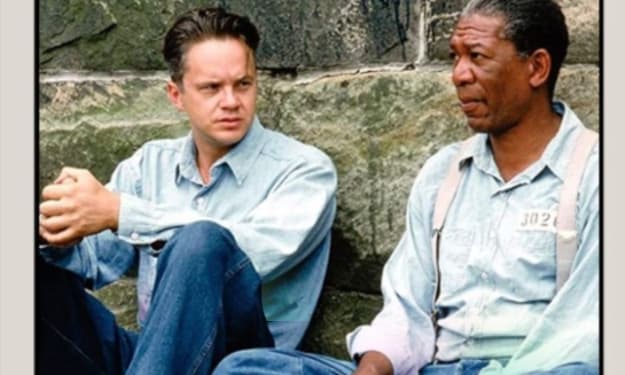
The Shawshank Redemption
In 1947, a quiet and intelligent banker named Andy Dufresne stood in a courtroom, accused of murdering his wife and her lover. Though he claimed he was innocent, the evidence seemed strong, and the judge sentenced him to two consecutive life terms at Shawshank State Penitentiary. With that heavy verdict, Andy’s old life ended, and a new, harsh reality began behind cold stone walls. Shawshank was a grim and unforgiving place. The prison was ruled not only by strict guards but also by fear and hopelessness. The warden, Samuel Norton, presented himself as a religious and moral man, yet beneath his calm voice was corruption and cruelty. Captain Hadley, the chief guard, enforced discipline with violence. For new prisoners, the first night was the hardest. Many broke down, unable to accept their fate. Andy arrived quiet and calm, which made other prisoners curious. Among them was Ellis “Red” Redding, a man who had spent many years in Shawshank and was known as “the man who could get things.” Red could smuggle small items into prison for a price. At first, Red thought Andy would not survive long. He seemed too soft, too educated for prison life. But Andy surprised everyone. Instead of breaking, he adapted. He spoke little but observed everything. One day, while working on the prison roof with other inmates, he overheard Captain Hadley complaining about taxes on an inheritance. In a bold move, Andy offered financial advice, explaining how Hadley could legally protect the money. At first, the guard threatened to throw him off the roof. But Andy calmly insisted he was only trying to help. Eventually, Hadley listened—and Andy’s advice saved him thousands of dollars. From that day on, Andy gained a small measure of protection. The guards began using his banking skills for their own benefit, asking him to fill out tax forms and manage finances. Even the warden noticed his talent. Andy was moved to work in the prison library and later handled the warden’s financial accounts. Life in Shawshank was still hard, but Andy held onto something rare—hope. Red often warned him that hope was dangerous in prison. “Hope can drive a man insane,” Red believed. Most prisoners accepted that Shawshank was their final home. They became “institutionalized,” unable to imagine life outside. But Andy refused to think that way. The prison library was small and neglected. Andy dreamed of expanding it, giving inmates access to books and education. For years, he wrote one letter every week to the state government, asking for funds and donations. The officials ignored him. But Andy did not give up. After six years, the government finally sent a small donation of books and money. Encouraged, Andy began writing two letters a week. Over time, the library grew into one of the finest prison libraries in the state. Through books and education, Andy gave the inmates something more valuable than comfort—he gave them dignity and possibility. He helped many prisoners earn high school diplomas. One young inmate, Tommy Williams, struggled with reading but eventually passed his exams with Andy’s guidance. Meanwhile, the warden used Andy for darker purposes. Andy managed illegal money laundering operations, creating a false identity named “Randall Stephens.” Under this fake name, Andy kept track of the warden’s corrupt profits from prison labor schemes. Though Andy appeared to cooperate, he was carefully building something for himself. Years passed. Andy remained calm, patient, and determined. Red watched him closely and slowly began to respect his quiet strength. The two men became close friends. Andy would often speak about the Pacific Ocean, about a small town in Mexico called Zihuatanejo. He dreamed of standing on a warm beach, feeling the sun on his face—a place with no walls. Then one day, Tommy revealed something shocking. While in another prison, he had met a man who bragged about killing a banker’s wife and her lover—an innocent banker who was sent to Shawshank for the crime. This story strongly suggested Andy was telling the truth all along. Hope surged within Andy. He asked the warden to reopen his case. But Warden Norton refused. He had no intention of losing his skilled financial manager. When Tommy insisted on speaking up, the warden silenced him permanently. In a cold act of cruelty, Tommy was shot by a guard under the excuse of trying to escape. Devastated but not broken, Andy seemed to withdraw into himself. Red feared that hope had finally destroyed him. But what no one knew was that Andy had been planning something for nearly twenty years. On the night of a violent thunderstorm, Andy asked Red to get him a rope. Red worried that Andy intended to harm himself, but he complied. That night, lightning cracked across the sky. The next morning, guards discovered Andy’s cell empty. Panic spread through Shawshank. The warden searched Andy’s belongings and threw a rock at a poster on the wall—only to discover a tunnel hidden behind it. For nearly two decades, Andy had been carving through the prison wall with a small rock hammer, a tool he had requested from Red years earlier. He had patiently scraped away at the stone, hiding the dust in the prison yard. On that stormy night, Andy crawled through the long tunnel, escaped through a sewage pipe, and emerged into the rain—free at last. He raised his arms to the sky as rain washed away years of suffering. But Andy’s plan did not end there. Using the fake identity he had created, he exposed the warden’s corruption by sending evidence to the authorities and newspapers. The police arrived at Shawshank. Captain Hadley was arrested, and Warden Norton, facing exposure and disgrace, chose a tragic end rather than imprisonment. Meanwhile, Andy traveled to Mexico and began a new life in Zihuatanejo, repairing boats near the blue ocean he had always imagined. Red remained in Shawshank, serving his sentence. Years later, he finally received parole. But freedom felt strange. The world had changed, and Red felt lost. He struggled with the idea of living outside prison walls. Remembering Andy’s words about hope and the Pacific, Red decided to follow a promise. Before escaping, Andy had told Red about a hayfield near a stone wall in Buxton, where something was buried beneath a tree. Red traveled there and found a small box containing money and a letter. In the letter, Andy encouraged Red to come find him in Mexico. For the first time in his life, Red chose hope over fear. He violated his parole and traveled south. The final scene of their story is simple yet powerful: Red walking along a sandy beach toward Andy, who stands repairing a boat beneath a bright blue sky. The walls of Shawshank had once seemed unbreakable. But patience, intelligence, and unshakable hope proved stronger than stone. The story of The Shawshank Redemption is not just about prison. It is about the human spirit. It reminds us that no matter how dark life becomes, hope can survive. And sometimes, hope is the one thing that can truly set a person free.
By The best writer 2 days ago in Motivation
How Kimmy British Is Building Trust and Income Through Short-Form Content
Short-form content has transformed the way people consume information, discover products, and connect with creators. While many focus on chasing trends or viral moments, Jamaican content creator Kimmy British has taken a different approach — one centered on authenticity, trust, and long-term brand building.
By Masha Lawrence2 days ago in Motivation



Comments
There are no comments for this story
Be the first to respond and start the conversation.