
The Shawshank Redemption
Hope Can Set You Free

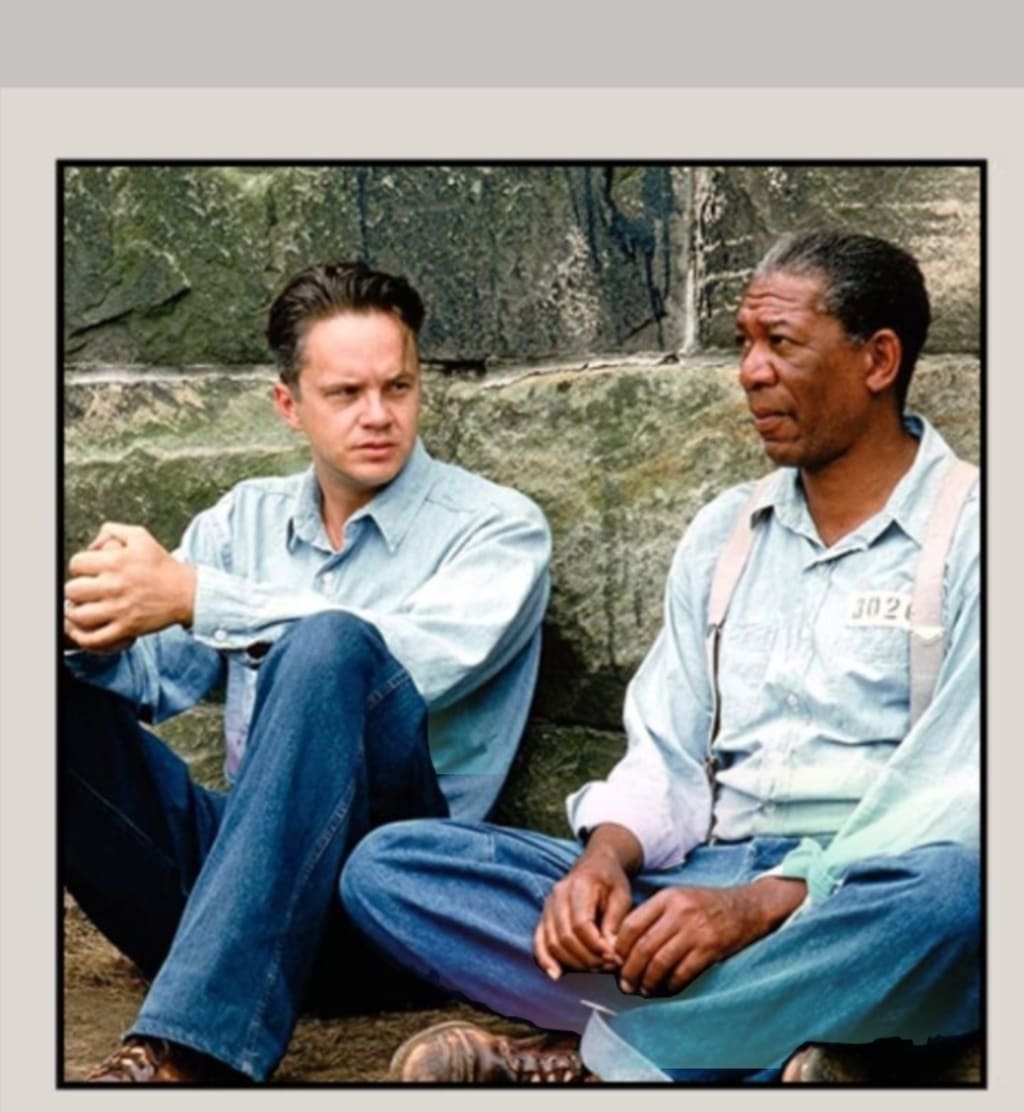
In 1947, a quiet and intelligent banker named Andy Dufresne stood in a courtroom, accused of murdering his wife and her lover. Though he claimed he was innocent, the evidence seemed strong, and the judge sentenced him to two consecutive life terms at Shawshank State Penitentiary. With that heavy verdict, Andy’s old life ended, and a new, harsh reality began behind cold stone walls.
Shawshank was a grim and unforgiving place. The prison was ruled not only by strict guards but also by fear and hopelessness. The warden, Samuel Norton, presented himself as a religious and moral man, yet beneath his calm voice was corruption and cruelty. Captain Hadley, the chief guard, enforced discipline with violence. For new prisoners, the first night was the hardest. Many broke down, unable to accept their fate.
Andy arrived quiet and calm, which made other prisoners curious. Among them was Ellis “Red” Redding, a man who had spent many years in Shawshank and was known as “the man who could get things.” Red could smuggle small items into prison for a price. At first, Red thought Andy would not survive long. He seemed too soft, too educated for prison life.
But Andy surprised everyone.
Instead of breaking, he adapted. He spoke little but observed everything. One day, while working on the prison roof with other inmates, he overheard Captain Hadley complaining about taxes on an inheritance. In a bold move, Andy offered financial advice, explaining how Hadley could legally protect the money. At first, the guard threatened to throw him off the roof. But Andy calmly insisted he was only trying to help. Eventually, Hadley listened—and Andy’s advice saved him thousands of dollars.
From that day on, Andy gained a small measure of protection. The guards began using his banking skills for their own benefit, asking him to fill out tax forms and manage finances. Even the warden noticed his talent. Andy was moved to work in the prison library and later handled the warden’s financial accounts.
Life in Shawshank was still hard, but Andy held onto something rare—hope. Red often warned him that hope was dangerous in prison. “Hope can drive a man insane,” Red believed. Most prisoners accepted that Shawshank was their final home. They became “institutionalized,” unable to imagine life outside. But Andy refused to think that way.
The prison library was small and neglected. Andy dreamed of expanding it, giving inmates access to books and education. For years, he wrote one letter every week to the state government, asking for funds and donations. The officials ignored him. But Andy did not give up. After six years, the government finally sent a small donation of books and money. Encouraged, Andy began writing two letters a week. Over time, the library grew into one of the finest prison libraries in the state.
Through books and education, Andy gave the inmates something more valuable than comfort—he gave them dignity and possibility. He helped many prisoners earn high school diplomas. One young inmate, Tommy Williams, struggled with reading but eventually passed his exams with Andy’s guidance.
Meanwhile, the warden used Andy for darker purposes. Andy managed illegal money laundering operations, creating a false identity named “Randall Stephens.” Under this fake name, Andy kept track of the warden’s corrupt profits from prison labor schemes. Though Andy appeared to cooperate, he was carefully building something for himself.
Years passed. Andy remained calm, patient, and determined. Red watched him closely and slowly began to respect his quiet strength. The two men became close friends. Andy would often speak about the Pacific Ocean, about a small town in Mexico called Zihuatanejo. He dreamed of standing on a warm beach, feeling the sun on his face—a place with no walls.
Then one day, Tommy revealed something shocking. While in another prison, he had met a man who bragged about killing a banker’s wife and her lover—an innocent banker who was sent to Shawshank for the crime. This story strongly suggested Andy was telling the truth all along.
Hope surged within Andy. He asked the warden to reopen his case. But Warden Norton refused. He had no intention of losing his skilled financial manager. When Tommy insisted on speaking up, the warden silenced him permanently. In a cold act of cruelty, Tommy was shot by a guard under the excuse of trying to escape.
Devastated but not broken, Andy seemed to withdraw into himself. Red feared that hope had finally destroyed him. But what no one knew was that Andy had been planning something for nearly twenty years.
On the night of a violent thunderstorm, Andy asked Red to get him a rope. Red worried that Andy intended to harm himself, but he complied. That night, lightning cracked across the sky. The next morning, guards discovered Andy’s cell empty.
Panic spread through Shawshank. The warden searched Andy’s belongings and threw a rock at a poster on the wall—only to discover a tunnel hidden behind it. For nearly two decades, Andy had been carving through the prison wall with a small rock hammer, a tool he had requested from Red years earlier. He had patiently scraped away at the stone, hiding the dust in the prison yard.
On that stormy night, Andy crawled through the long tunnel, escaped through a sewage pipe, and emerged into the rain—free at last. He raised his arms to the sky as rain washed away years of suffering.
But Andy’s plan did not end there. Using the fake identity he had created, he exposed the warden’s corruption by sending evidence to the authorities and newspapers. The police arrived at Shawshank. Captain Hadley was arrested, and Warden Norton, facing exposure and disgrace, chose a tragic end rather than imprisonment.
Meanwhile, Andy traveled to Mexico and began a new life in Zihuatanejo, repairing boats near the blue ocean he had always imagined.
Red remained in Shawshank, serving his sentence. Years later, he finally received parole. But freedom felt strange. The world had changed, and Red felt lost. He struggled with the idea of living outside prison walls. Remembering Andy’s words about hope and the Pacific, Red decided to follow a promise.
Before escaping, Andy had told Red about a hayfield near a stone wall in Buxton, where something was buried beneath a tree. Red traveled there and found a small box containing money and a letter. In the letter, Andy encouraged Red to come find him in Mexico.
For the first time in his life, Red chose hope over fear. He violated his parole and traveled south. The final scene of their story is simple yet powerful: Red walking along a sandy beach toward Andy, who stands repairing a boat beneath a bright blue sky.
The walls of Shawshank had once seemed unbreakable. But patience, intelligence, and unshakable hope proved stronger than stone.
The story of The Shawshank Redemption is not just about prison. It is about the human spirit. It reminds us that no matter how dark life becomes, hope can survive. And sometimes, hope is the one thing that can truly set a person free.
About the Creator
The best writer
I’m a passionate writer who believes words have the power to inspire, heal, and challenge perspectives. On Vocal, I share stories, reflections, and creative pieces that explore real emotions, human experiences, and meaningful ideas.
Keep reading
More stories from The best writer and writers in Motivation and other communities.
Ezomindus
In a valley where silence grew like silver grass, And the mountains seemed to hold their breath, There lived a soul whose name no map could claim—Ezomindus. He was no king of armies, no lord of stone halls, But a traveler of thought, a seeker of questions, A spark that refused to bow to fear or certainty. Ezomindus was born on a night When the moon hung low, swollen with mystery, And the wind whispered secrets through the cracks of the world. The elders, wise yet fearful, said, “This child will wander paths unknown, And his thoughts may burn like fire.” The stars, however, had their own counsel: “This child will wonder, And in his wondering, awaken others.” From his first breath, he listened—not just to people, But to the heartbeat beneath the soil, The rhythm of rivers carving their patient paths, The quiet ache of shadows folding over themselves. He heard the sorrow hidden inside laughter, The longing beneath simple words, The unspoken truths between two people’s eyes. While the villages built houses of brick and pride, Ezomindus built bridges of questions. “Why does the river never hold its shape?” he asked. “Why does the flame dance even as it dies?” “Why does the heart ache for what it cannot name?” His questions were neither rude nor loud; They were gentle arrows of thought, Piercing the illusions of routine and comfort. He wandered through forests older than memory, Where trees leaned close as if to hear him think. Roots twisted like ancient riddles, Leaves shimmered with the dust of forgotten stars. “Everything changes,” the trees whispered, “Even the one who asks.” Ezomindus was not afraid of change. He feared the stillness that numbed the mind. He saw cities wrapped in golden noise, People chasing shadows of approval, Running toward mirrors that reflected only themselves. He whispered to them softly, “Your chains are not iron—they are thoughts You never dared to examine.” Some laughed. Some scowled. Some left. A few felt something stir inside, A small trembling recognition of a mind not yet free. He carried no sword, yet battled storms of doubt. He climbed mountains that seemed to pierce the sky, Where air thinned into honesty, And only the purest thoughts could survive. At the summit, there was no throne, No crown, no prize—only a mirror of ice. In that mirror, he saw himself Not as hero nor as failure, But as a river of becoming. His courage and his fear flowed together, His wounds glimmered like constellations, His mind stretched out like the horizon itself. He understood at last: To conquer the world is smaller than conquering the mind. So he descended, carrying no gold, No trophies, no scrolls of fame, Only awareness. He spoke in marketplaces, empty fields, In the hush of midnight and the blaze of noon. “Do not fear the darkness,” he said. “It is the canvas upon which your light can paint.” As years passed, Ezomindus did not grow old in spirit. His eyes remained young with curiosity, His voice tender with truth. Children gathered around him, Drawn to the way he asked questions Instead of offering answers. “What is strength?” one child asked. He smiled and replied, “Strength is choosing truth Even when lies are easier, Even when the world calls for silence.” “What is freedom?” another asked. He touched the soil, the roots, the wind. “Freedom,” he said softly, “Is seeing your own thoughts Without becoming their prisoner.” “And what is love?” they asked. He paused, feeling the wind trace his weathered face. “Love,” he said, “Is the courage to let another soul breathe, To honor their mind as you honor your own, To walk beside them without claiming their journey.” Ezomindus became a legend, Not of battles won or lands conquered, But of minds awakened. He did not build empires of stone; He built awakenings, Invisible yet eternal, A revolution of thought, quiet yet unstoppable. When his final evening came, The sky blazed in amber farewell, And the valley seemed to lean closer in sorrow. He lay beneath the same moon That had watched his first breath. Around him stood those Who had once been lost in noise, Now awake to the rhythm of their own hearts. “Master,” they whispered, “What remains when you are gone?” Ezomindus looked at them, At their trembling hope, At their eyes opening wide to their own truths. “I remain,” he said, “In every thought you dare to examine, In every fear you face with courage, In every moment you wake instead of drift asleep.” His breath faded like a candle surrendering to dawn, Yet the valley did not grow silent. It hummed with awareness, Alive with the minds he had stirred. Ezomindus was never a body— He was a question set on fire, A space between impulse and reflection, A courage to look within. He was the whisper that said: Do not live asleep. Do not fear the depths of your own mind. For the greatest journey Is not across oceans or stars— It is through the vast, uncharted realm Of your own consciousness. Long after, children would trace his steps in the forest, Listening to the trees, to the rivers, Learning to see the unseen. They carried no scrolls, no crowns, Only the seed of questioning he had planted, A spark that refused to die. And so Ezomindus lives, Not in stone or story, But in every mind that dares to pause, Every heart that dares to reflect, Every soul that refuses to sleep While the world drifts blindly onward. For life is fleeting, And the noise of the world can drown the quiet, But the mind that awakens is eternal. Ezomindus taught this: To live is to be aware, To be aware is to be free, To be free is to walk the endless path Of truth, courage, and love. And somewhere, when the wind bends the silver grass And the moon hangs low like a question, A voice stirs inside the restless heart: “Do not live asleep. Do not fear your own depths. For the greatest journey Is not across oceans or stars— It is through the vast, uncharted Realm of your own mind.” Ezomindus is not gone— He is the question set on fire, The mind that will not sleep, The whisper inside every heart That chooses awareness over comfort, Courage over fear, Truth over illusion. And the valley, ever alive, Breathes on, Shimmering with the light of a mind awake.
By The best writer about 21 hours ago in Motivation
🅼🅸🅳🅽🅸🅶🅷🆃 🆂🅽🅰🅲🅺🆂
"It's 10 in Tuscon! We all know what that means... It's Time for Midnight Snacks with your man, Gerald Gee! Ready to spend the night together? Me too! I'm full of snacks and can't wait to regurgitate them all back into your hungry ears. Crack a brew! Pop some corn! Anything to get ready for one hell of a show where the talk maybe cheap but the words cut deep...
By Lamar Wigginsa day ago in Fiction



Comments
There are no comments for this story
Be the first to respond and start the conversation.